The Recovery Resilience: Bouncing Back from Setbacks

Resilience is not the absence of struggle. In recovery it is the quiet, practiced ability to meet relapse, stress, and unexpected life challenges and still return to the work of healing. It is the skill that turns a difficult day into data rather than a verdict. When people in recovery speak of “bouncing back,” they are describing this capacity: the inner and outer resources that allow someone to absorb a setback, learn from it, and continue moving toward long-term sobriety.
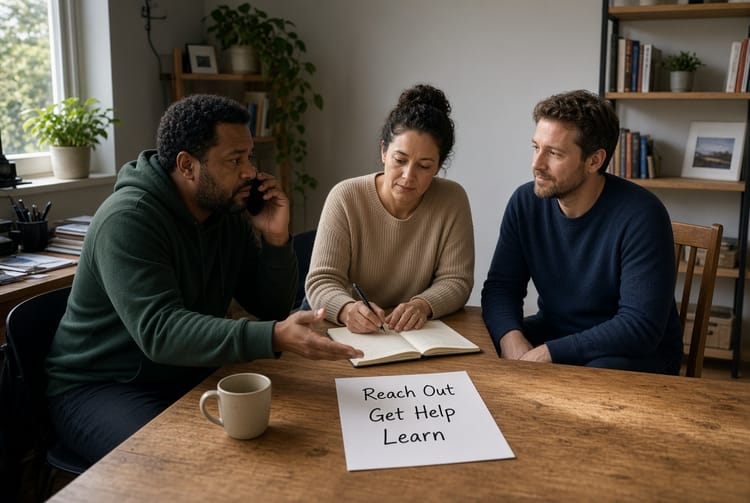
Bounce Back from Setbacks – Call for Support
This article examines what recovery resilience actually means, why it is essential for lasting change, and how it can be deliberately built through coping skills, support, and self-compassion. The goal is practical and hopeful: to show that setbacks do not erase progress and that resilience can be strengthened like any other recovery skill.
What Resilience Means in Recovery
In everyday language, resilience often sounds like toughness or the ability to “just get over it.” In recovery the meaning is more precise and more humane. Resilience is the capacity to recover equilibrium after disruption—whether that disruption is a lapse in abstinence, a surge of cravings, a family crisis, job loss, grief, or the ordinary friction of daily life.
A setback in recovery is any event that threatens the stability a person has worked to create. It may be a full relapse, a near-miss, or a period of intense emotional flooding that makes old patterns feel tempting. Resilience does not pretend these events are small. It acknowledges their weight and then asks a different question: What happens next?
Three core elements define resilience in this context:
- The ability to recognize a setback quickly rather than remaining in denial or shame.
- The capacity to use existing tools—or to reach for new ones—instead of collapsing into isolation.
- The willingness to treat oneself with the same steadiness one would offer a friend in the same situation.
This combination prevents a single difficult episode from becoming a complete return to previous patterns. People who develop recovery resilience still experience pain, doubt, and fatigue. They simply have more ways to move through those states without abandoning the larger commitment to sobriety.
Life after treatment is not a straight line. Triggers appear in unexpected places: an anniversary date, a familiar street, financial pressure, or even success that feels unfamiliar. Resilience is what allows someone to meet those moments with curiosity instead of catastrophe. It is the difference between “I failed, so everything is over” and “This is hard, and I still have choices.”
Why Resilience Matters for Long-Term Sobriety
Long-term sobriety is rarely the result of perfect days. It is the accumulated result of many imperfect days handled with increasing skill. Research and clinical experience consistently show that people who stay in recovery over years are not those who never stumble; they are those who recover from stumbles faster and with less self-destruction.
Without resilience, a relapse can trigger a cascade: shame, isolation, further use, and the belief that change is impossible. With resilience, the same event becomes information. The person can ask what was missing—sleep, connection, a coping plan—and adjust. That adjustment is what protects future days.
Resilience also protects against the quieter threats to recovery: chronic stress, unresolved grief, relationship conflict, and the slow erosion of hope. These pressures do not always produce an immediate lapse, yet they steadily weaken motivation. A resilient person has practices that restore energy and perspective before the pressure becomes overwhelming.
Consider the practical outcomes:
- Faster return to healthy routines after disruption.
- Reduced time spent in shame, which itself is a high-risk state.
- Greater willingness to ask for help early rather than waiting until crisis.
- Increased confidence that future challenges can be met.
Over months and years these outcomes compound. The person who can bounce back from a hard week is more likely to remain engaged with meetings, therapy, or outpatient care. Engagement, in turn, strengthens the very skills that make the next bounce-back easier. Resilience and long-term sobriety reinforce each other.
It is also worth naming what resilience is not. It is not pretending everything is fine. It is not suppressing emotion. It is not going it alone. Authentic recovery resilience includes honest acknowledgment of difficulty and the humility to use every available resource.
How to Build Resilience: Coping Skills
Coping skills form the first building block. They are the concrete actions a person can take in the moment when stress or craving rises. Effective coping is specific, rehearsed, and matched to the situation.
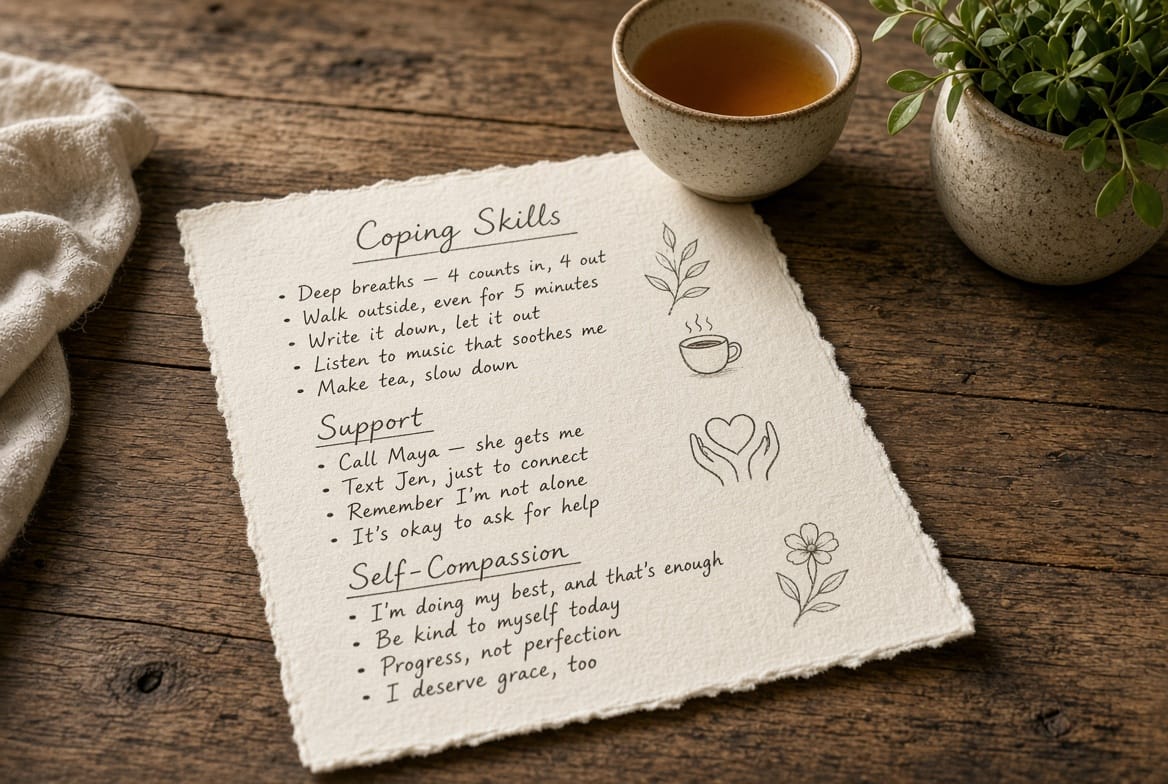
Begin with physiological regulation. When the nervous system is activated, thinking becomes narrow and old habits feel urgent. Simple, repeatable practices restore a wider range of choice:
- Slow, extended exhalations to signal safety to the body.
- Grounding techniques that name five things seen, four things felt, three things heard.
- Brief movement—walking, stretching, or changing rooms—to interrupt rumination.
Cognitive coping comes next. Many people in recovery carry harsh internal commentary after a setback. Learning to notice that commentary and replace it with accurate, compassionate language is a skill. Instead of “I always ruin everything,” a more resilient statement is “This was a difficult moment. I can take the next right step.”
Behavioral coping includes having a written plan for high-risk situations. The plan might list three people to call, two places to go, and one activity that reliably lowers intensity. The existence of the plan matters as much as its contents; it reminds the person that they have already thought about this moment and prepared for it.
Skill-building works best when it is practiced in calm periods, not invented during crisis. Regular rehearsal—through role-play in therapy, journaling, or daily check-ins—makes the skills available when they are most needed.
The Role of Support in Strengthening Resilience
No one builds recovery resilience in isolation. Support supplies perspective, accountability, and the lived reminder that other people have walked through similar terrain and continued.
Support takes several forms, each valuable:
- Professional support: therapists, counselors, and medical providers who can help interpret a setback without judgment and adjust the treatment plan.
- Peer support: people who understand the language of recovery and can offer both empathy and practical suggestions.
- Personal support: trusted family members or friends who have learned how to listen without rescuing or blaming.
The quality of support matters more than the quantity. A single reliable conversation can interrupt a downward spiral more effectively than a dozen superficial check-ins. Resilience grows when a person knows there is someone who will answer the phone and stay present even when the news is not good.
Asking for support is itself a resilient act. Many people in early recovery fear that reaching out after a lapse will confirm they have failed. In reality, timely contact often shortens the duration of the lapse and reduces associated harm. Programs that emphasize connection—group work, alumni networks, family education—create the conditions in which this kind of reaching-out becomes normal rather than exceptional.
Support also includes structural elements: stable housing, meaningful activity, and access to care. These external conditions reduce the background stress that makes bouncing back harder. When basic needs are met, more energy remains available for the inner work of resilience.
Self-Compassion as the Foundation of Lasting Change
Self-compassion is frequently the missing piece. People in recovery are often skilled at offering kindness to others and remarkably unskilled at offering it to themselves. After a setback, the inner voice can become punitive: “You should have known better. You wasted everyone’s time. You’ll never change.”
That voice does not produce growth. It produces hiding. Self-compassion interrupts the cycle by treating the struggling self with the same decency one would extend to anyone else in pain.
Self-compassion has three recognizable components:
- Mindfulness: seeing the difficulty clearly without exaggeration or minimization.
- Common humanity: remembering that struggle is part of the human condition, not a personal defect.
- Kindness: speaking and acting toward oneself with warmth rather than contempt.
Practicing these components does not mean lowering standards. It means creating the emotional safety required to examine what happened and to try again. Shame narrows attention; compassion widens it. From that wider view, better decisions become possible.
A practical starting point is to notice the tone of self-talk after a hard moment and to ask, “Would I say this to someone I care about?” If the answer is no, the language can be revised. Over time the revised language becomes the default.
Self-compassion also protects against the all-or-nothing thinking that turns one lapse into a complete collapse. A compassionate stance allows the person to say, “This happened. It does not define the entire effort. I can begin again today.”
Integrating the Skills into Daily Recovery Life
Building recovery resilience is not a one-time workshop. It is a set of habits that become part of ordinary days.
A useful daily framework includes:
- Morning intention: a brief review of possible stressors and the coping tools that will be used if they appear.
- Midday check-in: a short pause to notice physical and emotional state before small tensions accumulate.
- Evening reflection: honest acknowledgment of what went well and what was difficult, without self-attack.
- Weekly connection: at least one conversation with a support person that goes beyond surface updates.
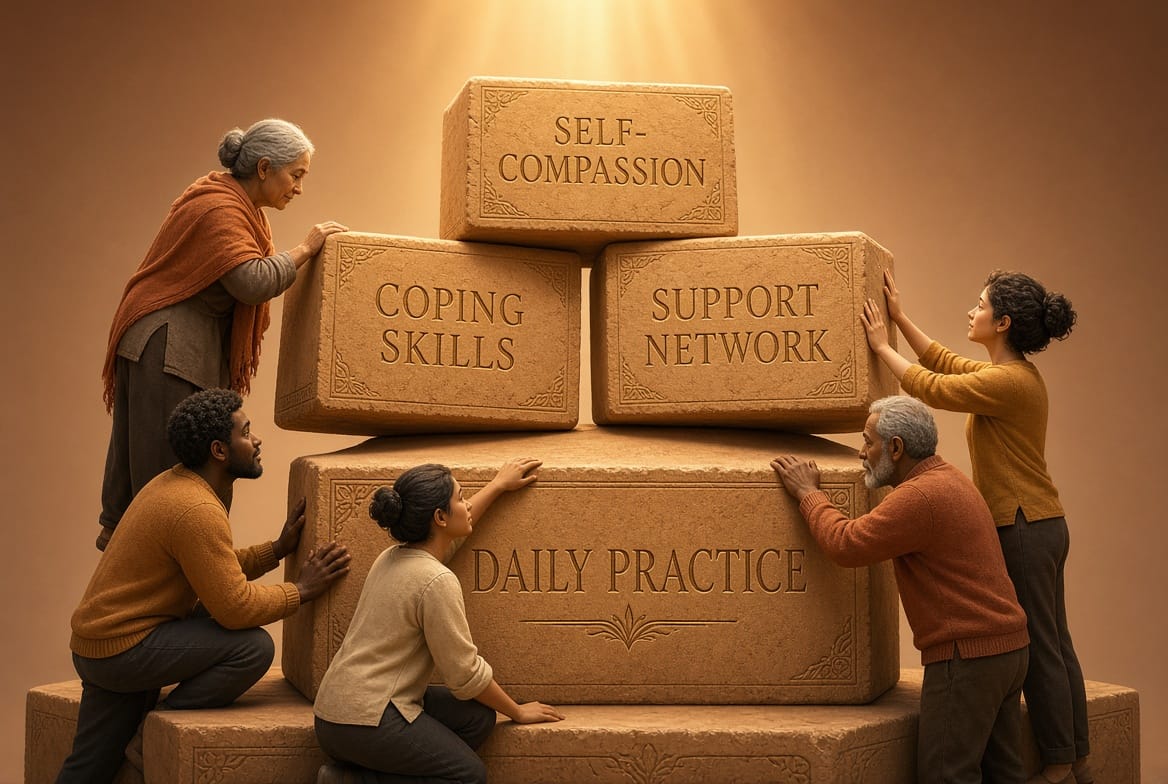
These practices keep the three building blocks—coping skills, support, and self-compassion—active rather than theoretical. They also create a record of evidence: the person can look back and see that they have already handled hard days and continued.
When a larger setback occurs, the same framework scales. The person uses physiological coping first, reaches out to support, and applies self-compassion so that analysis of the event can happen without additional injury. Then they adjust the plan and return to the daily rhythm.
Progress is measured not by the absence of difficulty but by the speed and quality of return. Each successful return strengthens the neural and behavioral pathways that make the next return easier. This is how resilience becomes durable.
A Reassuring Perspective on the Path Ahead
Recovery asks a great deal. It asks people to change relationships with substances, with themselves, and often with the people closest to them. It is understandable that the process includes moments of doubt and days that feel like steps backward. Resilience does not eliminate those moments. It changes their meaning.
A setback is no longer proof that the effort was wasted. It is information about what still needs attention. With coping skills ready, support available, and self-compassion practiced, the person can gather that information and keep going.
This capacity is learnable. It does not require a particular personality type or a perfect history. It requires willingness to practice, to ask for help, and to treat oneself as someone worth helping. Those three actions, repeated over time, produce the quiet strength that characterizes lasting recovery.
The work is ordinary and extraordinary at once: showing up on the days that feel easy and on the days that do not. Resilience is what makes both kinds of days possible.
Build resilience for lasting recovery. The skills described here can be developed inside a structured program that offers clinical guidance, peer connection, and a compassionate environment. If you or someone you care about is ready to strengthen the ability to bounce back from setbacks and protect long-term sobriety, reach out to learn about available programs.
Get Help Building Coping Skills – Call Now