The Recovery Relapse: What to Do If You Slip
A relapse can feel like the floor has dropped away. One moment you are following your plan; the next you are sitting with the familiar weight of shame, fear, and the question Did I just ruin everything? That feeling is real. It is also incomplete.
Call Now to Restart Recovery With Real Help
Relapse is common. It does not erase the work you have already done. It does not prove you are incapable of change. For many people in recovery, a slip is part of a longer, non-linear process rather than the end of that process. What matters most is not whether a slip happened. What matters is how you respond to it — with honesty, support, and a return to the tools that actually help.
This article is written for anyone who has just experienced a slip or is supporting someone who has. The tone here is compassionate and practical. You will find clear next steps, an explanation of why slips occur, and a reminder that getting back on track is both possible and common.
Relapse Is Not the Opposite of Recovery
Recovery is rarely a straight line. People often imagine a clean before-and-after story: using, then never using again. Real life is messier. Cravings, stress, isolation, untreated mental health symptoms, relationship conflict, boredom, celebration, and grief can all create openings. A slip (a brief return to use) or a fuller relapse (a return to previous patterns) can happen even when someone is highly motivated.
Seeing relapse as a moral collapse makes the next hours harder. Seeing it as information — painful information — makes the next hours more useful. The slip tells you something about triggers, gaps in support, or skills that still need strengthening. That information can be used.
Key truth: Many people who eventually sustain long-term recovery have experienced one or more slips. The difference is not perfection. The difference is returning to treatment, community, and daily practices instead of disappearing into secrecy.
Why a Slip Happens (Without Using It as an Excuse)
Understanding common factors does not excuse harmful behavior. It does reduce the spiral of self-attack that often follows a slip and keeps people stuck.
Typical contributors include:
- High-risk situations that were underestimated (certain people, places, times of day, or emotional states)
- Erosion of routine — missed meetings, skipped therapy, irregular sleep, poor nutrition
- Emotional overload — anger, loneliness, shame, or even unexpected joy that the old coping method used to “handle”
- Mental health symptoms that have not been adequately treated alongside substance use
- Overconfidence after a period of stability (“I’ve got this now”)
- Isolation and the belief that asking for help will disappoint others
None of these factors mean you are weak. They mean the conditions that once supported use can still appear. Recovery work is, in part, learning to notice those conditions earlier and respond differently.
The First Hours After a Slip: Respond, Don’t Disappear
The most dangerous period is often not the slip itself. It is the hours afterward when shame tells you to hide. Hiding tends to extend the episode. Reaching out tends to shorten it.
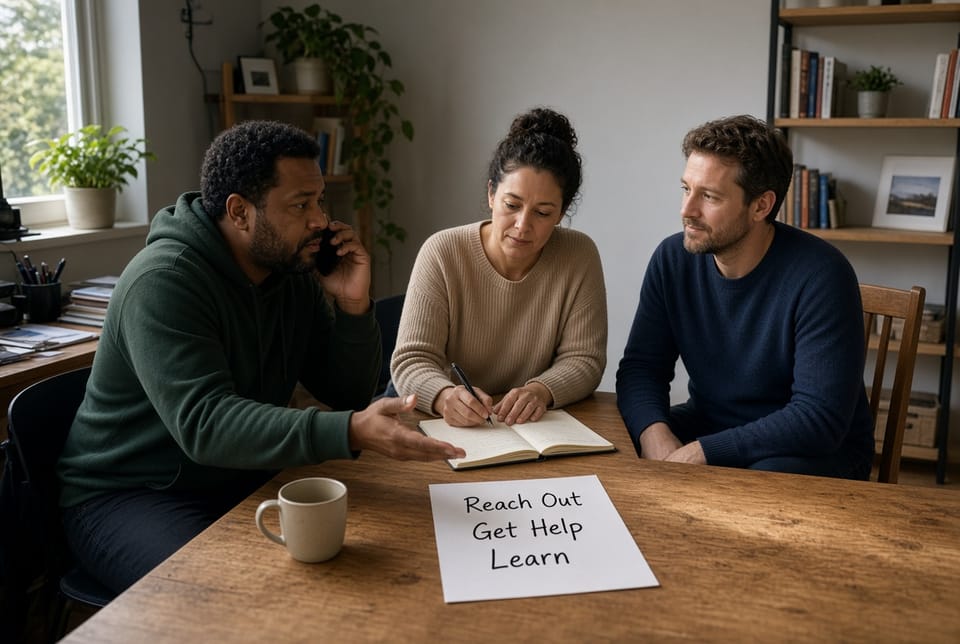
A compassionate response has three core movements: reach out, get back to treatment, and learn from the slip. These are not slogans. They are sequential actions.
1. Reach Out Immediately
Tell one safe person what happened. That person might be a sponsor, therapist, counselor, trusted friend in recovery, or a family member who has already agreed to be a support contact. You do not need a polished speech. A simple statement is enough: “I slipped. I need help getting back.”
If you do not have that person yet, use a professional line. Compassionate support is available at (619) 703-0255. Calling is not an admission that you have failed forever. It is a decision to stop being alone with the problem.
Practical notes for the first contact:
- Be specific about what happened and when, without turning the conversation into a confession marathon.
- Ask for the next concrete step (a ride, a meeting time, a same-day or next-day appointment).
- Stay in a safer environment if possible. Do not remain in the setting that just supported the slip if you can leave.
Secrecy feeds the cycle. Disclosure interrupts it.
2. Get Back to Treatment Without Delay
A slip is a signal to increase support, not to wait until you “feel ready again.” Readiness often arrives after you re-enter structure.
Depending on your situation, getting back to treatment may mean:
- Returning to an outpatient program or IOP
- Scheduling an urgent session with your counselor or psychiatrist
- Attending extra mutual-help meetings in the next 72 hours
- Considering a higher level of care if the slip is part of a larger collapse of stability
- Reviewing medication-assisted treatment options if they are appropriate and previously helpful
Do not wait for the shame to lift before you act. Action is often what begins to lift the shame.
If you left a program early, walking back in can feel humiliating. Most experienced clinicians have seen this many times. A good program will treat the return as clinical information, not as a personal disappointment in you.
3. Learn From the Slip Without Turning It Into a Life Sentence
After the immediate safety and support steps, look at the slip as data.
Useful questions (best asked with a counselor or trusted peer, not only in your own head):
- What was happening in the 24–48 hours before the slip?
- Which warning signs did I notice and ignore?
- What need was the substance briefly meeting (numbness, energy, belonging, sleep, relief from anxiety)?
- What support did I not use that was actually available?
- What is one small change I can put in place this week?
This is not an invitation to ruminate. Rumination sounds like “I always ruin things.” Learning sounds like “I skipped dinner, isolated after an argument, and walked into a high-risk setting with no plan.” One of those sentences leads somewhere. The other does not.

Why a Slip Is Not the End of Recovery
People often treat a slip as proof that “recovery didn’t work.” That conclusion is usually too fast.
Recovery did work in the periods of abstinence, insight, repaired relationships, better health, and new skills. A slip means those gains need reinforcement. It does not mean they were imaginary.
Think of physical rehabilitation after an injury. A setback in physical therapy is frustrating. It is not evidence that the entire rehabilitation was a waste. You adjust the plan, protect the injury, and continue. Substance use recovery follows a similar logic more often than public conversation admits.
Important distinction: A slip becomes more dangerous when it is followed by the belief “I’ve already blown it, so I might as well continue.” That belief is the real threat. Interrupt it early.
Self-Compassion Is a Clinical Tool, Not a Soft Extra
Harsh self-talk after a slip is extremely common and rarely helpful. It increases stress, which increases craving, which increases the chance of a longer relapse.
Self-compassion here does not mean pretending the slip was fine. It means telling yourself the same thing you would tell a friend in the same situation: this is serious, you are still worthy of help, and the next right action is available.
A simple internal script:
- “This happened.”
- “I am not the only person this has happened to.”
- “Hiding will make it worse.”
- “I can take the next step today.”
If self-compassion feels fake at first, borrow it from someone else. Let a counselor, sponsor, or support line hold the hope until you can feel it again.
Rebuilding Structure in the Days After
Once the immediate crisis is contained, rebuild the ordinary architecture of recovery. Slips often occur when the architecture has thinned.
Helpful rebuilds include:
- Restoring sleep and meal timing
- Re-entering daily or near-daily contact with support
- Identifying the highest-risk hours of the coming week and planning around them
- Removing or reducing access to substances when that is realistically possible
- Addressing the emotional event that preceded the slip rather than only the substance
- Asking whether mental health care needs to be intensified
Small, repeated actions outperform dramatic promises. “I will never do this again” is a feeling. “I will call my counselor tomorrow at 9 a.m. and attend a meeting tonight” is a plan.
Supporting Someone Else Who Has Slipped
If you are a partner, parent, or friend, your response matters. Anger is understandable. Contempt is costly.
A useful stance:
- Take the slip seriously
- Avoid lectures that the person already knows by heart
- Help with the next logistical step (appointment, transportation, childcare, a quiet place to stay)
- Do not become the only accountability system; professional care should carry that weight
- Protect your own limits so resentment does not silently take over
Loved ones can call for guidance as well. Compassionate support is available at (619) 703-0255.
When a Slip Signals the Need for a Higher Level of Care
Not every slip requires residential treatment. Some do. Consider a higher level of care when:
- The slip quickly becomes a binge or returns to previous intensity
- Medical or psychiatric risk is present
- The person cannot interrupt use despite wanting to
- The home or social environment is actively reinforcing use
- Previous outpatient efforts have repeatedly collapsed at the same point
Asking for more care is not a demotion. It is a match between the current problem and the current solution.

A Note on Shame, Identity, and Starting Again
Shame often disguises itself as honesty: “I’m just the kind of person who can’t do this.” That sentence collapses a temporary event into a permanent identity. Recovery asks you to separate the two.
You can acknowledge the slip fully and still refuse to let it become your name. People in long-term recovery frequently describe earlier slips as chapters, not as the title of the book.
Starting again may feel embarrassing the first time, the second time, or the fifth time. Embarrassment is not a clinical reason to stay stuck. The door back in remains open precisely because slips are anticipated in good treatment systems.
Get Back on Track After a Relapse
If you have slipped, you do not need a perfect speech or a brand-new personality. You need the next honest action.
- Tell someone safe.
- Return to treatment and structure.
- Study the slip without using it as a verdict.
- Rebuild the daily conditions that make the next slip less likely.
Relapse is common. Staying silent afterward is optional.
Get back on track after a relapse. You do not have to invent the path alone. The work you already did still counts. The next step can begin now.
Get Back Into Treatment After a Slip – Call Now