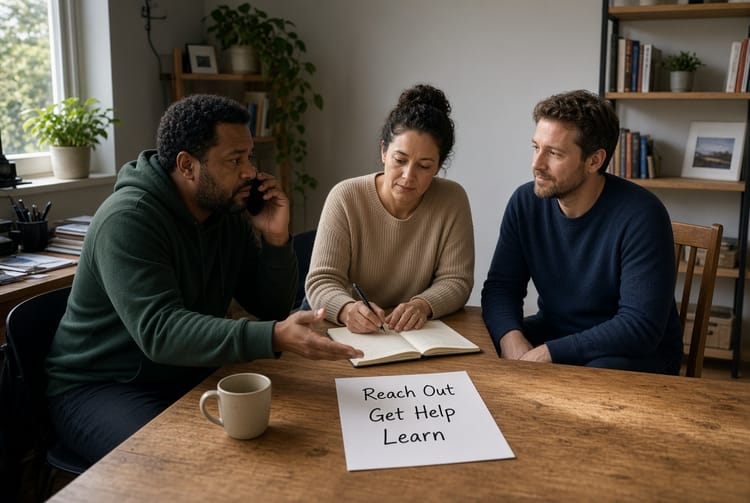
The Group Therapy in Recovery: Finding Connection and Support

In the journey of recovery, few experiences feel as isolating as facing challenges alone. Many individuals begin treatment carrying the heavy belief that no one else could possibly understand the weight of their struggles. Group therapy changes that reality. As a core treatment modality in professional rehab programs, group therapy creates a structured, safe space where people discover they are not alone. Through shared experiences, honest feedback, and mutual encouragement, participants rebuild connection and strengthen their commitment to lasting change.
Find Connection in Recovery – Call Now
This article explores what group therapy truly is, the measurable benefits it delivers, and exactly what you can expect when you join a session. Whether you are considering treatment for the first time or supporting a loved one, understanding this powerful approach can bring clarity and hope.
What Group Therapy Really Means
Group therapy is a guided form of counseling in which a small number of individuals meet regularly under the leadership of a trained therapist. Unlike individual sessions that focus solely on one person’s story, group sessions center on the collective. Members share personal experiences, offer support, and receive thoughtful feedback in real time.
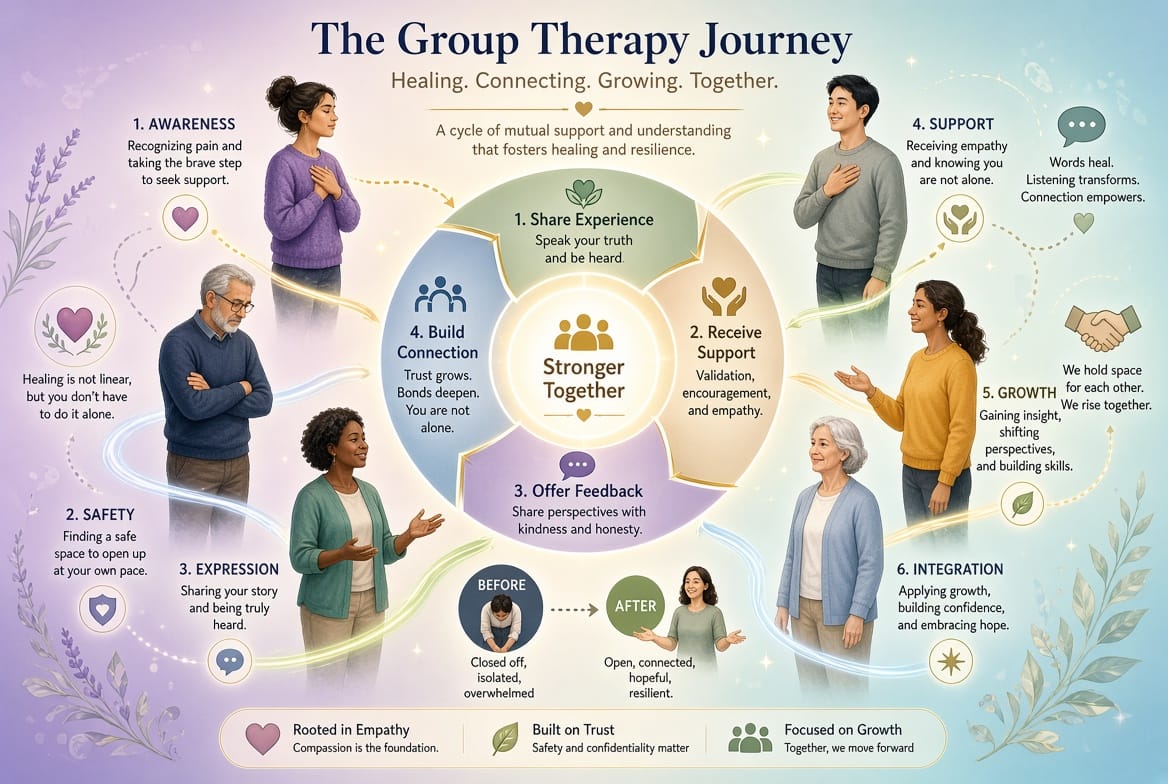
The process rests on three foundational elements:
- Shared experiences – Participants quickly realize that others have faced similar patterns of thinking, emotional pain, or behavioral struggles. This recognition dissolves the myth of uniqueness in suffering.
- Support – The group becomes a living network of encouragement. Members celebrate small victories and stand beside one another during difficult moments.
- Feedback – Honest, respectful observations from peers often illuminate blind spots that a single therapist might take longer to uncover. Hearing the same insight from multiple voices carries special weight.
Sessions typically last 60 to 90 minutes and occur several times each week within a structured rehab schedule. The therapist maintains a clear framework so that every voice is heard and safety remains the highest priority. Confidentiality agreements are established from the first meeting, creating an environment where vulnerability feels possible.
Because recovery involves both internal work and external relationships, group therapy addresses the interpersonal dimension that individual counseling alone cannot fully reach. It mirrors the real-world connections people will need after treatment ends.
Why Connection Matters So Deeply in Recovery
Isolation is one of the most common and damaging experiences reported by those entering rehab. Shame, secrecy, and the gradual narrowing of social circles often leave people feeling cut off from meaningful human contact. Group therapy directly counters this isolation by rebuilding community from the inside out.
When individuals sit with others who understand the terrain of recovery, several powerful shifts occur:
- The sense of being “the only one” fades.
- Hope becomes visible and tangible through the progress of peers.
- Accountability grows naturally because members care about one another’s outcomes.
- Social skills that may have eroded during active struggle are practiced in a low-risk setting.
These shifts are not abstract. They form the foundation for sustained recovery. People who feel connected are more likely to remain engaged in treatment, complete their programs, and continue healthy practices after discharge.
The Proven Benefits of Group Therapy
Research and clinical experience consistently highlight several key advantages of this modality. Here they are presented clearly so you can see their practical impact:
- Reduces isolation – Regular contact with peers who share similar goals replaces loneliness with belonging.
- Builds community – A genuine support network forms inside the treatment setting and often continues afterward.
- Encourages learning from others – Observing how someone else handled a trigger, repaired a relationship, or maintained motivation provides living examples that textbooks cannot match.
- Strengthens communication skills – Participants practice expressing feelings, setting boundaries, and listening actively.
- Increases motivation and accountability – Knowing that others notice progress (and setbacks) encourages consistent effort.
- Offers multiple perspectives – Feedback from several people can reveal patterns more quickly than one-on-one work alone.
- Normalizes the recovery process – Seeing that setbacks are common and manageable reduces fear of failure.
These benefits compound over time. Early sessions may feel awkward; later sessions often become sources of genuine warmth and insight. Many alumni of quality programs describe their therapy group as one of the most memorable and helpful parts of treatment.
What to Expect in a Typical Group Therapy Session
Walking into a first group session can feel intimidating. Knowing the usual structure helps reduce uncertainty.
Most sessions follow a predictable yet flexible format:
- Opening check-in – Each member briefly shares how they are feeling that day and any recent challenges or successes. This ritual grounds everyone in the present moment.
- Focused discussion or skill-building – The therapist may introduce a topic such as managing triggers, improving communication, or understanding emotional regulation. Members explore the topic through personal stories and guided questions.
- Peer feedback and support – After someone shares, others respond with observations, empathy, or practical suggestions. The therapist ensures feedback remains constructive and respectful.
- Closing reflection – The group ends with a short summary of insights gained and any commitments members wish to make before the next meeting.
The atmosphere is deliberately non-judgmental. Silence is allowed. Tears are accepted. Laughter, when it arises naturally, is welcomed. Over successive sessions, trust deepens and conversations become more authentic.
Participants are never forced to speak beyond their comfort level, yet most find that the longer they remain quiet, the more they eventually want to contribute. The therapist skillfully balances participation so quieter members are gently invited while more vocal members learn to make space for others.
How Group Therapy Complements Individual Work
While individual therapy allows deep exploration of personal history and private concerns, group therapy supplies the interpersonal laboratory where new insights can be tested. Many treatment plans intentionally combine both approaches.
In individual sessions a person might identify a pattern of withdrawing under stress. In the group that same person can practice staying present when anxiety rises, receive real-time encouragement, and observe how others handle similar moments. The two modalities reinforce each other, accelerating growth.
Family or couples sessions sometimes run parallel to the peer group, further expanding the circle of support. The peer group, however, remains unique because it consists of people walking the same recovery path at roughly the same time. That shared timing creates a special bond.
Addressing Common Concerns
It is normal to have questions or hesitations before beginning:
- “Will people judge me?”
Confidentiality rules and the therapist’s guidance keep the space respectful. Most members quickly discover that judgment is far less common than understanding. - “What if I have nothing useful to say?”
Simply listening is valuable. Over time, nearly everyone finds their voice. - “Is it safe to be honest?”
Safety is actively protected. Any breach of trust is addressed immediately by the facilitator. - “Will it feel too intense?”
Intensity is managed carefully. The therapist monitors emotional temperature and can shift focus or offer individual support if needed.
These concerns usually soften after the first two or three meetings as the group’s culture of mutual care becomes evident.
The Longer-Term Impact on Recovery
The connections formed in group therapy often outlast the formal treatment period. Many participants exchange contact information (within program guidelines) and continue informal support after discharge. Some join alumni groups or community recovery meetings that feel familiar because of the skills practiced in therapy.
Beyond social benefits, the practice of giving and receiving feedback builds emotional intelligence that improves relationships with family, friends, and colleagues. People leave treatment better equipped to ask for help, set healthy boundaries, and offer support to others—skills that protect recovery for years to come.

Integrating Group Therapy into a Comprehensive Treatment Plan
High-quality rehab programs view group therapy as one essential thread in a larger tapestry. Medical support, individual counseling, educational workshops, recreational therapy, and aftercare planning all work alongside the group experience. The synergy among these elements produces stronger outcomes than any single modality alone.
Therapists carefully match participants to groups based on stage of recovery, shared concerns, and interpersonal readiness. Some groups focus on early stabilization; others address advanced topics such as rebuilding trust or navigating life after treatment. This thoughtful matching ensures each person receives the most relevant support at the right time.
Taking the Next Step Toward Connection
Recovery is rarely a solitary path. The very act of sitting with others who understand the journey can become one of the most healing experiences a person encounters. Group therapy offers a proven, structured way to find that connection, reduce isolation, build community, and learn from the wisdom of peers.
If you or someone you care about is ready to explore this powerful treatment modality, help is available. Professional programs provide a safe, expertly guided environment where lasting change begins.
Build Your Recovery Community – Call Now