The Tooth Enamel Erosion: Causes, Signs, and Prevention
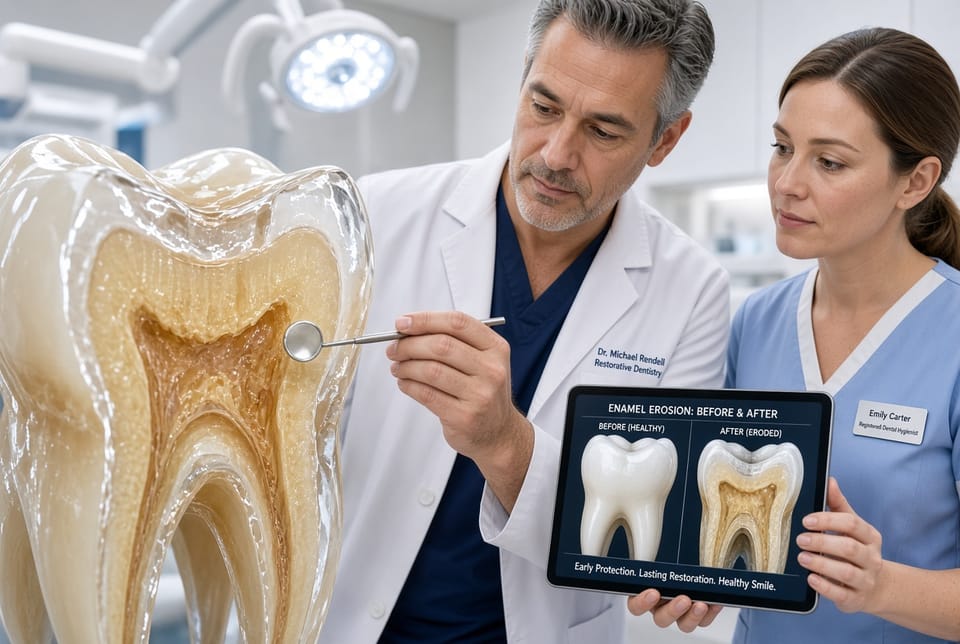
Tooth enamel stands as the hardest substance in the human body, forming a protective shield over every tooth. Yet this remarkable barrier faces constant challenges in daily life. When tooth enamel erosion begins, the outer layer gradually wears away, leaving teeth vulnerable. Understanding this common issue empowers you to take control before sensitivity or damage escalates. This comprehensive guide explores the primary causes, early warning signs, and practical prevention strategies so you can safeguard your smile with confidence.
Call Now to Strengthen & Protect Your Enamel
Enamel does not regenerate once lost. Unlike bone or soft tissue, it lacks living cells that repair themselves. That reality makes early awareness essential. Millions of people experience some degree of enamel wear without realizing it until discomfort appears. The good news is that modern dental care offers effective ways to slow or stop progression when action starts promptly. By recognizing triggers and adopting simple protective habits, most individuals can maintain strong enamel for decades.
Understanding How Enamel Protects Your Smile
Healthy enamel measures only a few millimeters thick yet performs several critical roles. It resists the forces of chewing, shields sensitive dentin underneath, and resists everyday temperature changes. When acids or mechanical forces attack this surface repeatedly, microscopic mineral loss occurs. Over time the surface becomes thinner, smoother, and less opaque. Enamel erosion differs from ordinary wear caused by aggressive brushing; it results primarily from chemical softening followed by physical abrasion.
The process often remains painless in early stages. Patients may notice only subtle changes in appearance or feel mild sensitivity to cold drinks. Left unaddressed, the condition advances, increasing the risk of cavities, chips, and the need for restorative work. Recognizing that enamel loss is preventable forms the foundation of long-term oral health. Regular professional evaluations combined with daily habits create a powerful defense.
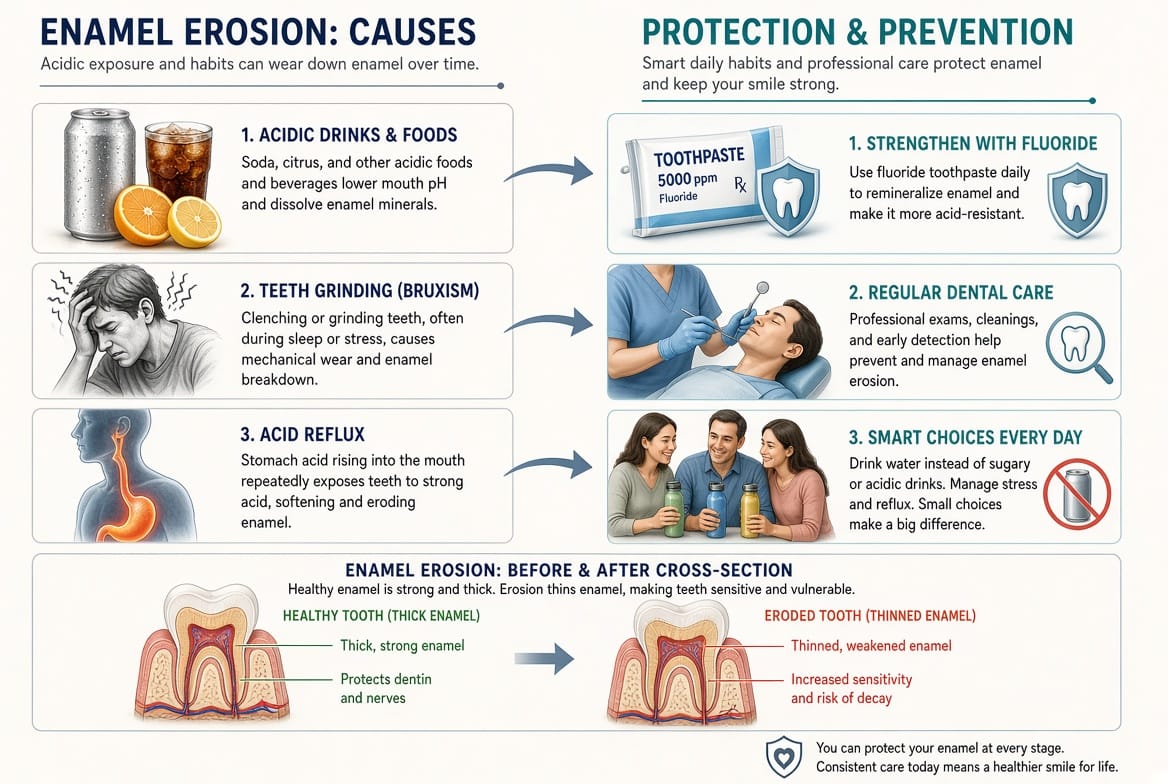
Primary Causes of Tooth Enamel Erosion
Several everyday factors contribute to the gradual breakdown of enamel. Identifying these sources allows targeted changes that protect remaining tooth structure.
- Acidic foods and drinks rank among the most frequent culprits. Citrus fruits, tomatoes, vinegar-based dressings, sports drinks, and carbonated sodas all contain acids that soften enamel on contact. Frequent sipping or prolonged exposure keeps the mouth in an acidic state for extended periods, accelerating mineral loss.
- Acid reflux and related digestive conditions introduce stomach acid into the oral cavity. When gastric acid repeatedly bathes the teeth, especially during sleep, the lower molars and upper front teeth suffer particular damage. Many people remain unaware of nighttime reflux until a dentist observes characteristic wear patterns.
- Teeth grinding or clenching, known as bruxism, adds mechanical stress. Although grinding alone does not dissolve enamel, it removes softened surface layers more rapidly once acids have weakened them. Stress, sleep disorders, or misaligned bites often drive this habit.
- Additional contributors include dry mouth, which reduces the protective buffering effect of saliva, and certain medications that lower saliva flow or increase acidity.
Each factor rarely acts in isolation. A person who enjoys citrus beverages while also grinding at night faces compounded risk. Understanding personal combinations helps prioritize the most effective interventions.
Recognizing the Signs of Enamel Erosion
Early detection dramatically improves outcomes. Watch for these progressive indicators:
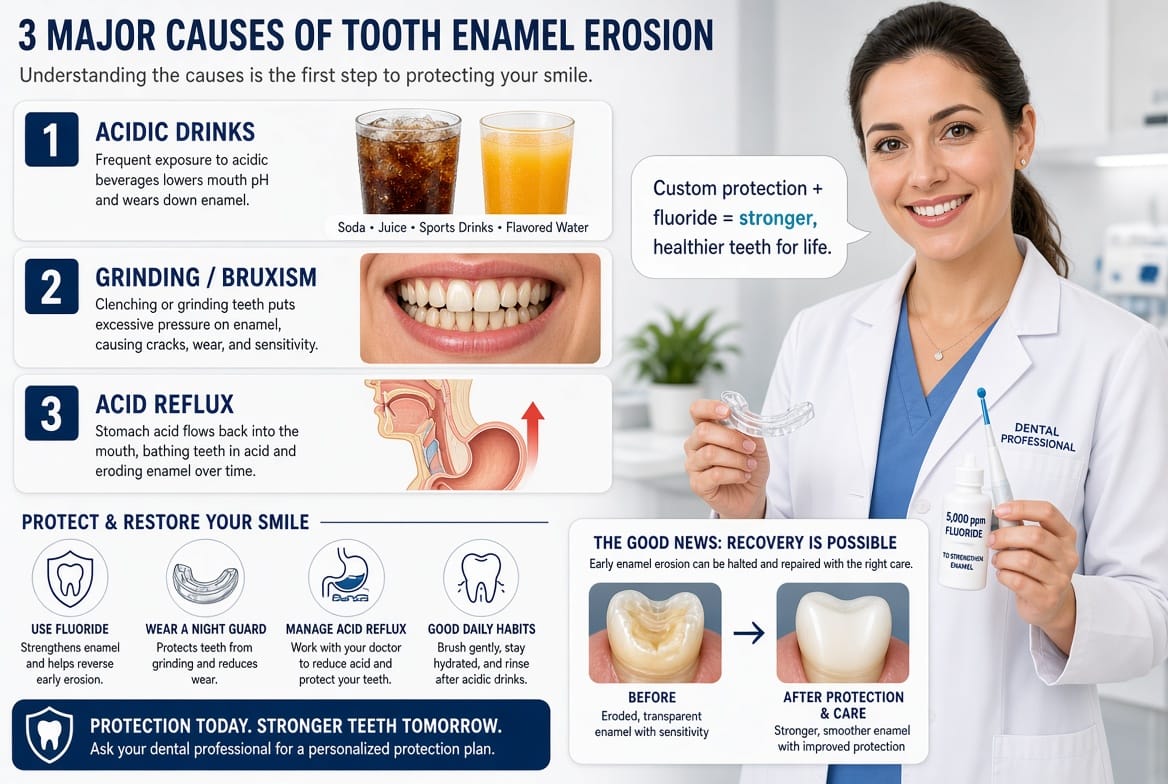
- Thinning enamel appears as a smoother, more rounded tooth surface. Edges may look worn or flattened.
- Increased transparency develops near the biting edges of front teeth. Light passes through more readily, giving a glassy or yellowish tint where dentin shows through.
- Heightened sensitivity to temperature, sweetness, or touch becomes noticeable. Cold air or ice water may trigger sharp, brief discomfort.
- Cupping or indentations form on the chewing surfaces of molars. These shallow depressions collect food and stain more easily.
- Yellowing occurs as the underlying dentin becomes more visible. The color shift differs from ordinary surface staining and resists typical whitening efforts.
- In advanced stages, small chips or rough spots appear, and teeth may feel sharper or more fragile.
These signs often develop gradually across months or years. Comparing current photos of your smile with older images can reveal subtle changes. Professional examination using magnification and special lighting detects loss long before it becomes obvious at home. Dentists also measure enamel thickness and assess bite forces to determine the severity and contributing factors.
Proven Prevention Strategies for Stronger Enamel
Protecting enamel relies on reducing acid exposure, strengthening remaining mineral content, and eliminating destructive habits. Consistent application of the following measures yields measurable improvement.
- Limit frequency of acidic foods and drinks rather than eliminating them entirely. Consume citrus or soda with meals instead of sipping throughout the day. Use a straw for acidic beverages to minimize contact with teeth. Rinse with plain water afterward to neutralize residual acid.
- Choose fluoride toothpaste and consider prescription-strength fluoride gels or rinses when recommended. Fluoride remineralizes early weak spots and increases resistance to future acid attacks. Many professional fluoride varnishes applied during dental visits provide extended protection.
- Address acid reflux through medical consultation. Elevating the head of the bed, avoiding late meals, and following prescribed therapy reduce nighttime acid exposure. A dentist can fabricate a custom night guard that also shields teeth from grinding.
- Manage bruxism with a professionally fitted occlusal guard. Over-the-counter versions rarely fit accurately enough to prevent damage. Stress-reduction techniques and, when appropriate, evaluation for sleep apnea further decrease grinding intensity.
- Maintain optimal saliva flow by staying hydrated, chewing sugar-free gum containing xylitol, and discussing dry-mouth remedies with your dental team.
- Schedule routine dental examinations and cleanings. Professional monitoring detects early erosion, removes plaque that holds acids against teeth, and allows personalized advice based on your specific risk profile.
These steps work synergistically. Reducing acid frequency gives fluoride more opportunity to strengthen enamel. Controlling grinding prevents mechanical removal of the softened surface. Together they create a resilient defense that preserves natural tooth structure.
Building Daily Habits That Support Long-Term Enamel Health
Consistency turns knowledge into lasting results. Begin each morning with a fluoride toothpaste applied using a soft-bristled brush and gentle circular motions. Avoid aggressive scrubbing that can abrade already softened enamel. Wait at least thirty minutes after consuming acidic foods before brushing so the surface has time to reharden through saliva contact.
Throughout the day, keep a water bottle nearby. Frequent sips help wash away acids and stimulate saliva. When choosing snacks, prefer cheese, nuts, or raw vegetables that stimulate protective saliva without adding acid. Limit pure fruit juice and energy drinks to occasional treats rather than daily staples.
Evening routines matter equally. If reflux symptoms occur, avoid reclining immediately after eating. A custom night guard worn consistently protects against both acid and grinding forces while you sleep. Keep the guard clean and replace it when wear becomes noticeable.
Professional partnership multiplies the effectiveness of home care. During regular visits, your dental team can apply concentrated fluoride, polish away early surface irregularities, and update prevention recommendations as your needs change. Digital imaging and enamel-thickness measurements provide objective progress tracking that motivates continued effort.
The Role of Professional Care in Enamel Preservation
While daily habits form the foundation, skilled dental guidance ensures optimal outcomes. Comprehensive examinations identify erosion patterns unique to each patient. Bite analysis reveals whether grinding or misalignment accelerates wear. Saliva testing can uncover buffering capacity issues that simple hydration cannot fully resolve.
When early mineral loss appears, remineralization therapies and protective sealants offer non-invasive support. In cases of more advanced thinning, bonded restorations or carefully planned contouring restore both function and appearance while protecting remaining enamel. The goal remains conservation of natural tooth structure whenever possible.
Patients often express relief once they understand that enamel erosion progresses slowly and responds well to intervention. Knowledge replaces anxiety with a clear action plan. Regular communication with your dental office keeps prevention strategies aligned with lifestyle changes, dietary shifts, or new medical diagnoses.
Moving Forward with Confidence
Tooth enamel erosion represents a manageable challenge rather than an inevitable decline. By identifying personal causes—whether acidic dietary patterns, reflux, grinding, or a combination—you gain the power to interrupt the process. Visible signs such as thinning, transparency, sensitivity, and cupping serve as valuable early alerts. Consistent prevention through reduced acid exposure, fluoride use, and professional oversight preserves strength and comfort for years ahead.
Your smile deserves proactive protection. Small, sustained adjustments today prevent more extensive treatment tomorrow. Enamel that remains intact continues to deliver the durability, aesthetics, and sensitivity control nature intended. Protect your tooth enamel.
Call Today for Personalized Enamel Prevention Advice