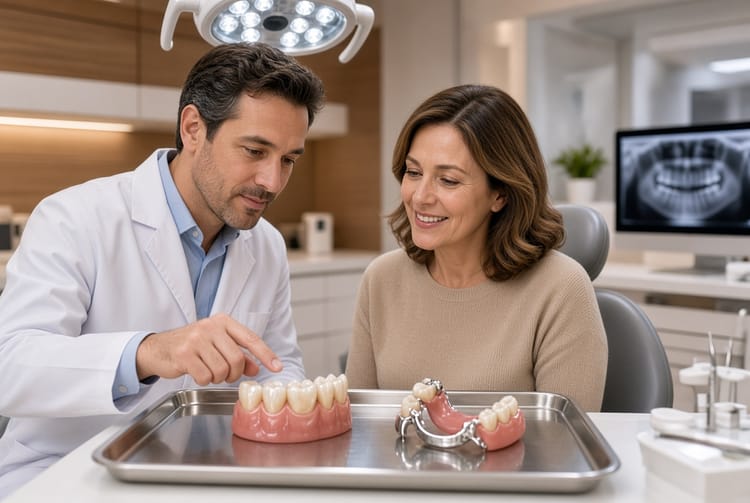
The TMJ Disorder: Symptoms, Causes, and Treatment Options

Jaw pain that lingers, clicking sounds when you chew, or headaches that seem to start at the temples can feel alarming. These symptoms often point to a common but frequently misunderstood condition known as temporomandibular joint disorder, or TMJ disorder. The good news is that most people who experience TMJ-related discomfort find meaningful relief through well-established, non-surgical approaches. This article explains what TMJ disorder is, why it develops, how it presents, and which treatment options — including night guards, physical therapy, and Botox — help patients regain comfort and function.
Call Now for a Professional TMJ Consultation
What Is TMJ Disorder?
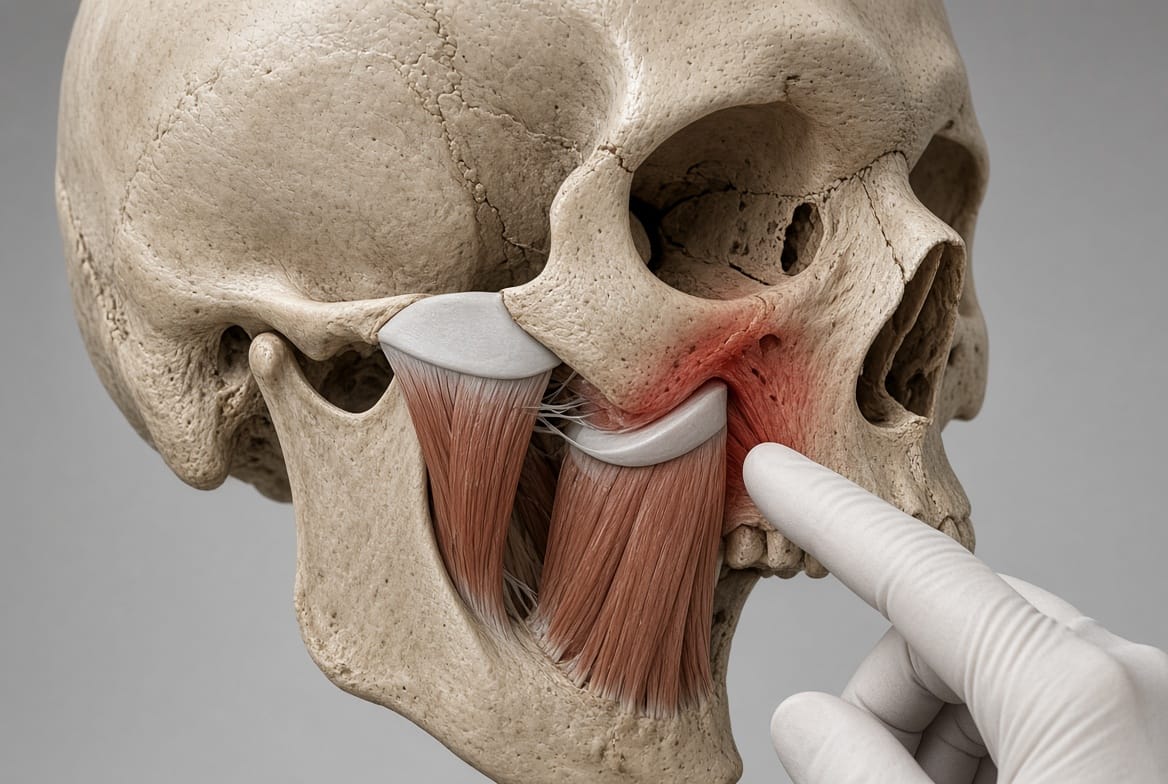
The temporomandibular joints are the two small but remarkably complex hinges that connect your lower jaw (mandible) to the temporal bones of your skull, one on each side of your face just in front of the ears. These joints allow you to talk, chew, yawn, and express emotion. Each joint contains a small disc of cartilage that acts as a cushion and helps the jaw move smoothly in a combination of hinge and sliding motions.
TMJ disorder (sometimes called TMD) occurs when the joints, the surrounding muscles, or the disc itself become strained, inflamed, misaligned, or damaged. The result is pain, restricted movement, or irregular joint sounds. The condition can affect one or both sides and ranges from mild, intermittent discomfort to chronic pain that interferes with daily life. Importantly, TMJ disorder is not a single disease but a group of problems involving the joint, the muscles of mastication, or both.
Because the joints sit so close to the ears and because the muscles of the jaw connect to the neck and temples, symptoms often radiate. That is why many patients first notice jaw pain together with ear fullness, temple headaches, or neck tightness. Understanding the anatomy helps explain why targeted treatment can be so effective.
Common Symptoms of TMJ Disorder
Symptoms vary from person to person and can fluctuate in intensity. The most frequently reported signs include:
- Jaw pain or tenderness, especially when chewing, speaking, or upon waking
- Clicking, popping, or grating sounds when opening or closing the mouth
- Headaches, often tension-type or concentrated around the temples
- Limited ability to open the mouth fully or a sensation that the jaw “catches”
- Ear pain, ringing, or a feeling of fullness without an ear infection
- Facial aching or fatigue in the chewing muscles
- Pain that radiates into the neck or shoulders
- Changes in how the upper and lower teeth fit together
Jaw pain is usually the symptom that prompts people to seek help. It may feel dull and constant or sharp during specific movements. Clicking does not always indicate a serious problem; many people have joint sounds without pain. However, when clicking is accompanied by pain or locking, evaluation is warranted. Headaches linked to TMJ disorder often worsen with stress or after long periods of talking or chewing.
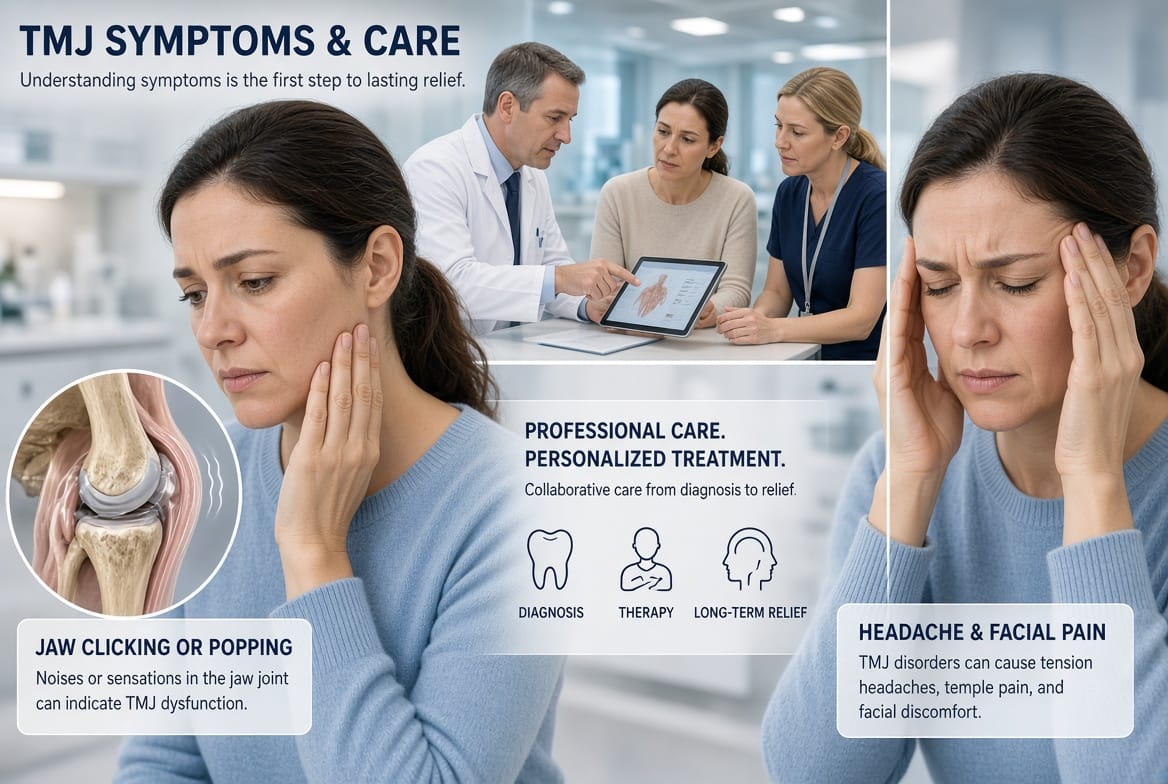
Not every person experiences all of these symptoms. Some notice only morning stiffness; others have pain that builds throughout the day. Tracking when symptoms appear (after meals, during stressful periods, or at night) provides valuable information for diagnosis and treatment planning.
What Causes TMJ Disorder?
Several factors can contribute to TMJ problems, and they often overlap.
Teeth grinding and clenching (bruxism) place excessive force on the joints and muscles, especially during sleep. Stress is a major trigger for this habit. Arthritis, including osteoarthritis and rheumatoid arthritis, can degrade the joint surfaces or the disc. Direct trauma from an injury, a fall, or even prolonged dental procedures may displace the disc or inflame the tissues. Bite misalignment or missing teeth can alter how forces travel through the joint. Connective-tissue differences or hormonal influences may also play a role in some individuals.
Poor posture, especially forward-head posture from long hours at a desk, increases strain on the jaw muscles and cervical spine. Habits such as chewing gum excessively, biting fingernails, or resting the chin on the hand add repetitive micro-trauma. In many cases no single cause stands out; the disorder develops from a combination of mechanical stress, muscle tension, and individual susceptibility.
Recognizing contributing factors is empowering. Once identified, many of them can be modified, which is why conservative care succeeds for the majority of patients.
How TMJ Disorder Is Diagnosed
A thorough evaluation typically begins with a detailed history and physical examination. The clinician will listen for joint sounds, measure how wide the mouth opens, palpate the muscles and joints, and observe how the teeth come together. Imaging such as panoramic X-rays, cone-beam CT, or MRI may be used when the disc position or bony changes need clarification. In most cases, advanced imaging is reserved for persistent or atypical presentations.
The goal is to distinguish muscle-related pain from internal joint derangement and to rule out other sources of facial pain. An accurate diagnosis allows treatment to be matched to the specific problem rather than applied in a one-size-fits-all manner.
Treatment Options That Relieve Jaw Pain
The majority of TMJ disorders improve with conservative, reversible therapies. Surgery is rarely the first or even the second choice. Treatment usually proceeds in a stepwise fashion, starting with the least invasive methods.
Custom Night Guards
An occlusal splint or night guard is one of the most widely used and effective tools. Worn during sleep, a properly fitted guard creates a protective barrier that reduces the force transmitted to the joints and muscles when grinding or clenching occurs. It can also help reposition the jaw slightly into a more relaxed relationship.
Custom laboratory-made guards are far superior to over-the-counter versions because they are tailored to the individual’s bite and joint position. Patients often notice reduced morning jaw pain and fewer headaches within a few weeks. Regular follow-up ensures the appliance continues to fit correctly as symptoms change.
Physical Therapy for TMJ
Physical therapy addresses the muscular and postural components of TMJ disorder. A therapist trained in orofacial pain uses gentle manual techniques to release tight muscles, restore joint mobility, and retrain movement patterns. Exercises may include controlled opening and closing, tongue-positioning drills, and stretching of the neck and shoulder girdle.
Postural education is equally important. Correcting forward-head posture reduces the load on the jaw. Heat, cold, ultrasound, or low-level laser may be added to decrease inflammation and pain. Most patients receive a home-exercise program so progress continues between visits. Consistency yields the best results; many people experience noticeable improvement in range of motion and pain levels within four to eight weeks.
Botox Injections for Muscle Relief
When muscle hyperactivity persists despite a night guard and physical therapy, Botox (botulinum toxin) can be a valuable next step. Small, precisely placed injections temporarily relax the masseter and temporalis muscles — the primary chewing muscles. Reduced muscle force lessens strain on the joints and often diminishes both jaw pain and associated headaches.
Effects typically appear within one to two weeks and last three to four months. The procedure is quick, performed in the office, and requires little downtime. Botox does not change the underlying bite or joint structure; it simply gives overworked muscles a chance to rest so other therapies can take hold. It is generally reserved for cases in which conservative measures have not provided sufficient relief.
Additional Supportive Measures
Short-term use of anti-inflammatory medication or muscle relaxants can calm an acute flare. Soft-diet modifications, avoiding wide yawning, and applying moist heat or ice help manage daily symptoms. Stress-reduction techniques such as mindfulness, breathing exercises, or counseling address the clenching component. In selected cases, an oral appliance worn during the day or referral to an orofacial-pain specialist may be recommended.
Self-Care and Prevention Strategies
Patients can actively support their recovery. Eat softer foods during flare-ups and cut food into smaller pieces. Avoid chewing gum and tough or chewy items. Maintain good sitting posture with the ears aligned over the shoulders. Practice gentle jaw relaxation: keep the teeth slightly apart, the tongue resting on the roof of the mouth, and the lips closed. Apply a warm compress for 10–15 minutes several times a day when muscles feel tight.
Adequate sleep and stress management reduce nighttime grinding. Regular dental check-ups allow early detection of wear patterns that signal bruxism. These simple habits complement professional treatment and help prevent recurrence.
When Professional Evaluation Is Needed
Seek care if jaw pain lasts more than a few weeks, if you cannot open your mouth normally, if the jaw locks, or if headaches and ear symptoms interfere with work or sleep. Early intervention typically leads to faster and more complete recovery. Most patients do not require surgery; the combination of a well-fitted night guard, targeted physical therapy, and, when appropriate, Botox produces substantial improvement for the large majority.
Finding Relief from TMJ Pain
Living with chronic jaw discomfort is unnecessary for most people. A structured evaluation identifies the specific factors driving your symptoms and matches them with proven treatments. Night guards protect the joints at night, physical therapy restores muscle balance and posture, and Botox offers additional relief when muscles remain overactive. Together these approaches address both the mechanical and muscular aspects of TMJ disorder.
If you recognize the symptoms described here — especially persistent jaw pain, clicking, or headaches — take the next step. A thorough assessment can clarify the diagnosis and outline a personalized plan.
Get Expert Help for Jaw Pain – Call Now