The Pediatric Dental Visit: What to Expect at Your Child’s First Appointment

A child’s first trip to the dentist does not need to feel mysterious. When families know what will happen, how to prepare, and why the appointment exists, the visit becomes a calm milestone rather than a source of worry. The goal of a first pediatric dental visit is simple: protect growing teeth, answer parent questions, and help a child begin comfortable dental care.
Reserve Your Child’s Age-1 Dental Visit
Most first appointments last about 30 to 45 minutes. They are designed around the child’s age, temperament, and number of teeth. A toddler may only need a brief look and parent coaching. An older preschooler may complete a fuller exam, a gentle cleaning, and fluoride protection. Either way, the visit is built to be short, kind, and educational.
Why the First Visit Should Happen Early
Pediatric dental specialists recommend a first visit by age 1, or within six months after the first tooth appears. That timing surprises many parents. Baby teeth can look temporary, so it is easy to assume dental care can wait. In reality, primary teeth help a child chew, speak clearly, hold space for permanent teeth, and shape the jaw.
Tooth decay can begin as soon as a tooth enters the mouth. Sugary liquids, frequent snacking, nighttime bottles, and incomplete brushing all raise cavity risk. Early childhood cavities can cause pain, poor sleep, eating problems, and infection. Decay in baby teeth can also affect the permanent teeth developing underneath.
Waiting until a child is old enough to “sit still” often means waiting until a problem is already present. A first cavity may hide between teeth or along the gumline. By the time a child complains, the tooth may need more involved care. An early visit gives the dentist a chance to stop that pattern with coaching, fluoride, and a realistic home plan.
An early appointment also creates a dental home. One trusted pediatric team follows your child’s growth, risk level, and habits over time. The first visit is less about treatment and more about prevention. The dentist looks for early warning signs, explains home care in plain language, and builds a plan before small issues become urgent.
Early visits reduce fear as well. A child who meets the dental team before any discomfort exists is more likely to accept later cleanings, X-rays, or treatment if they become necessary. Positive first memories teach a child that dental care is ordinary, safe, and helpful.
A pediatric dentist is trained to work with infants, toddlers, and children who may not sit still or communicate easily. The office setting is usually designed for young patients, with smaller instruments, a slower pace, and staff who know how to explain each step. Choosing that kind of setting can make the first appointment smoother for both the child and the parent.
How to Prepare Your Child Without Creating Worry
Preparation should feel light and matter-of-fact. Children notice adult tone quickly. If a parent sounds anxious, the child often absorbs that feeling. Speak about the visit the same way you would speak about a library trip or a well-child checkup.
Use simple, friendly words:
- “The dentist will count your teeth.”
- “Someone will help your smile stay strong and shiny.”
- “You can bring your favorite toy.”
Avoid words that plant fear. Phrases such as “It won’t hurt,” “Don’t be scared,” “needle,” “drill,” or “shot” can create a problem that did not exist. A first visit rarely includes those procedures.
Helpful preparation steps include:
- Read a short picture book about a cheerful dental visit a few days ahead.
- Play dentist at home with a toothbrush and a stuffed animal.
- Practice opening wide and saying “ahh” for a few seconds.
- Schedule the appointment when your child is usually rested and fed.
- Pack a comfort item, such as a small blanket or familiar toy.
- Arrive a few minutes early so the office does not feel rushed.
Bring notes on medications, medical conditions, feeding habits, fluoride use, thumb-sucking or pacifier habits, and questions you want answered. Write the questions down beforehand. If your child cries, that is common. Many toddlers protest new rooms and new faces. Pediatric teams expect this, keep a parent close, and focus on making the next visit easier.
What Happens When You Arrive
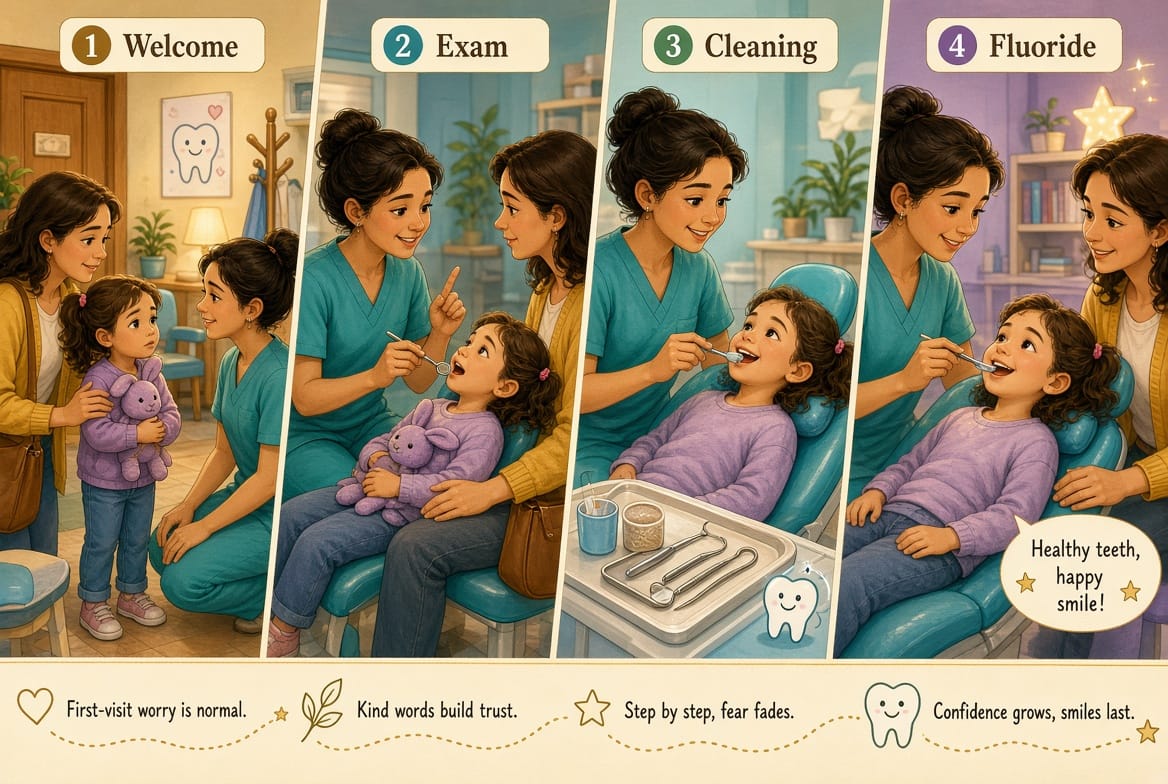
The appointment usually begins with a warm welcome. Staff introduce themselves, show the child the chair, and explain tools in child-friendly language. A mouth mirror may be called a tooth counter. A polishing brush may be a tickle brush. The overhead light may be a sunny light.
You will review a health history, including allergies, medications, birth history, speech concerns, mouth injuries, and family cavity history. The team also asks about bottles, sippy cups, juice, snacks, nighttime feeding, and home brushing. These details guide a caries-risk assessment.
Parents are typically invited to stay. For infants and many toddlers, the exam happens in a knee-to-knee position. The parent and dentist sit facing each other. The child rests against the parent, then leans back so the dentist can see the mouth while the child still feels held. Older children may sit in the dental chair with a parent nearby.
The Dental Exam
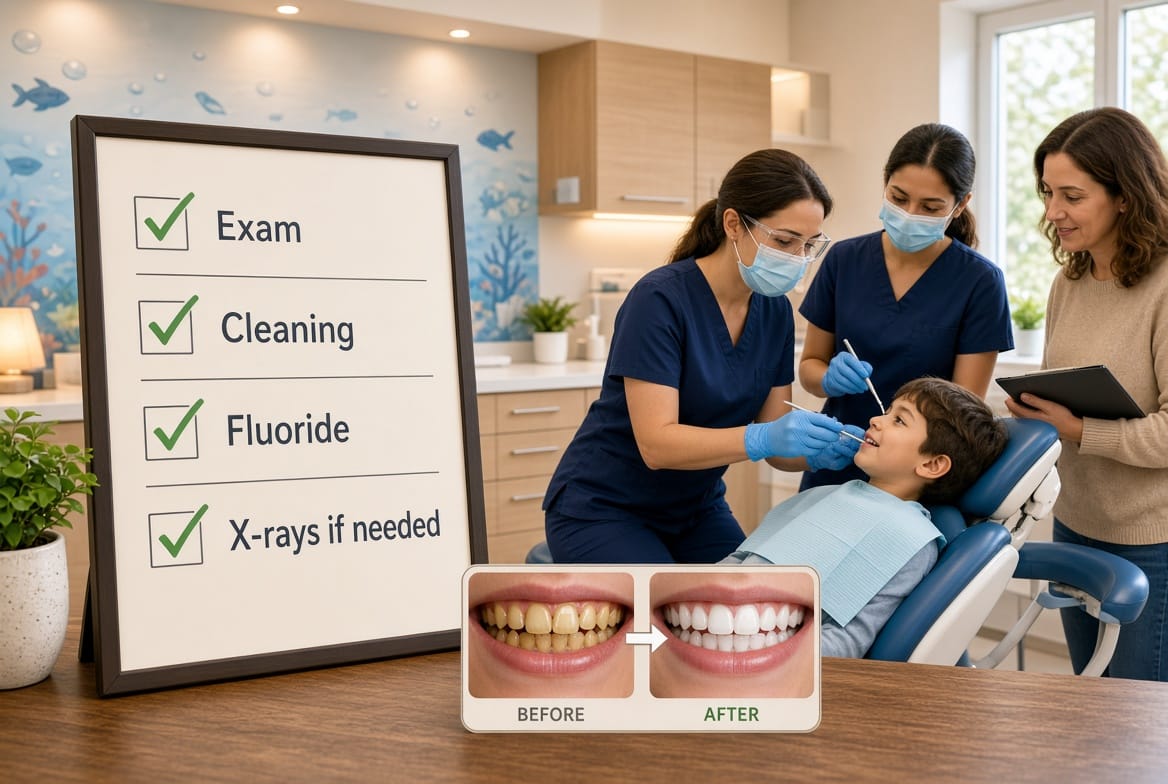
The oral examination is gentle and brief. The dentist checks erupted teeth, color, shape, spacing, gums, tongue, cheeks, lips, palate, bite, jaw growth, early decay or white-spot lesions, and habits that may affect the bite.
The dentist may count teeth aloud so the child hears a familiar rhythm. A small mirror and light help the team see surfaces that are hard to view at home. For many first visits, this look takes only a minute or two. The purpose is to understand development and catch problems while they are still easy to manage.
The exam also gives parents a baseline. You learn whether teeth are arriving on a typical schedule, whether cleaning at home is reaching the right surfaces, and whether diet or bottles are putting enamel at risk. If a concern is found, the dentist can explain whether it needs watching, a change at home, or a short follow-up visit.
Cleaning and Plaque Removal
A professional cleaning depends on age and cooperation. For the youngest children, cleaning may look like a careful toothbrush demonstration. The hygienist or dentist uses a soft brush to remove plaque and show parents how to angle the bristles along the gumline. This technique often reaches the back molars more consistently than hurried home brushing.
If the child is comfortable and has more teeth, the team may add a gentle polish with child-sized instruments. Plaque and food film are removed so enamel can be inspected more clearly and protected more effectively.
Flossing may be introduced when teeth touch. Many young children still have spaces, so flossing is not always needed yet. When contacts close, daily flossing becomes important because a toothbrush cannot clean those hidden surfaces.
If a child becomes restless, the team may pause. A first visit is successful when trust is protected. A partial cleaning plus a positive goodbye is often better than forcing a complete adult-style appointment.
Fluoride Protection
Fluoride varnish is commonly applied when teeth are present. The varnish is painted onto the tooth surface in a thin layer. Professional varnish stays on the enamel and helps teeth resist acid attacks from bacteria.
When used in the correct amount by a pediatric team, topical fluoride is a standard preventive tool. It can reduce cavity risk and support enamel that has early weak spots. After varnish is applied, the team will tell you whether the child should avoid crunchy foods or brushing for a short window so the coating can set.
At home, toothpaste amounts still matter:
- Younger than 3: a rice-sized smear of fluoride toothpaste
- Ages 3 to 6: a pea-sized amount
- Always supervise brushing and discourage swallowing
The dentist will tailor fluoride advice to your water source, cavity risk, and the child’s age.
X-Rays: Only When They Help
Dental X-rays are not automatic at every first visit. Many infants and young toddlers do not need them. The dentist can often see what is necessary with a visual exam, especially when baby teeth still have open spaces.
X-rays become useful when the team needs to check between teeth, under the enamel, around roots, or for development that cannot be seen from the surface. They may be recommended if there is suspected decay, trauma, delayed eruption, unusual spacing, or higher cavity risk. Modern pediatric offices typically use digital imaging with low exposure and protective shielding.
If X-rays are not taken, the visit is not incomplete. It means imaging was not necessary yet. The decision should be explained so parents understand both the benefit and the reason for waiting.
What Parents Learn Before Leaving
A strong first visit includes anticipatory guidance, or practical coaching for the months ahead. Expect conversation about:
- Brushing twice a day and how to position a wiggly toddler
- When to begin flossing
- Bottle, sippy-cup, and nighttime feeding habits
- Limiting frequent sips of juice, milk, or sweet drinks
- Healthy snack timing instead of all-day grazing
- Teething comfort that does not harm enamel
- Injury prevention as a child becomes more active
- Pacifier or thumb habits and when to reduce them
- How often to return, usually every six months unless risk is higher
Ask questions. Parents often want to know whether a white spot is decay, whether grinding is normal, whether a late tooth is a problem, or how to brush behind the last molars. The first visit is the right time to get those answers.
After the Appointment: Keep the Momentum
Celebrate cooperation, even if the visit was short. Praise sitting, opening, letting the dentist count teeth, or holding still for varnish. A sticker, extra story, or park stop can close the visit on a happy note. Avoid using sweets as the main reward if cavity risk is already a concern.
At home, start the new routine that same day. Brush together. Use the recommended toothpaste amount. Watch nighttime bottles and frequent sugar exposure. If the dentist noted a higher cavity risk, take that seriously. Extra fluoride, shorter recall visits, or diet changes can prevent a small concern from becoming a filling.
Continue regular care. The first appointment is the start of a pattern, not a one-time event. Children grow quickly. New molars appear. Habits change. A dental home lets the same team watch those changes and intervene early.
Habits formed in the first years of life tend to last. A child who watches a parent treat dental visits as routine is more likely to keep that attitude through school years. That is why the first appointment is worth doing well: it protects teeth now and shapes how a family thinks about prevention later.
A Reassuring Bottom Line for Families
Your child’s first dental appointment is designed to protect, not overwhelm. You can expect a welcome, a gentle exam, cleaning when the child is ready, fluoride when it will help, and X-rays only if they add useful information. You should also leave with a clear home plan.
The visit matters because baby teeth matter. Early care lowers the chance of pain, infection, and complicated treatment later. It also teaches a child that dental offices are places where people help.
If a first visit feels overdue, it is not too late. Schedule promptly, prepare with calm language, and choose a pediatric team that understands young children. Prevention is easier, kinder, and more effective when it starts early.
Start your child’s dental care early.
Call Today for a Pediatric Dental Consultation