The Tongue Scraper: Benefits for Oral Hygiene
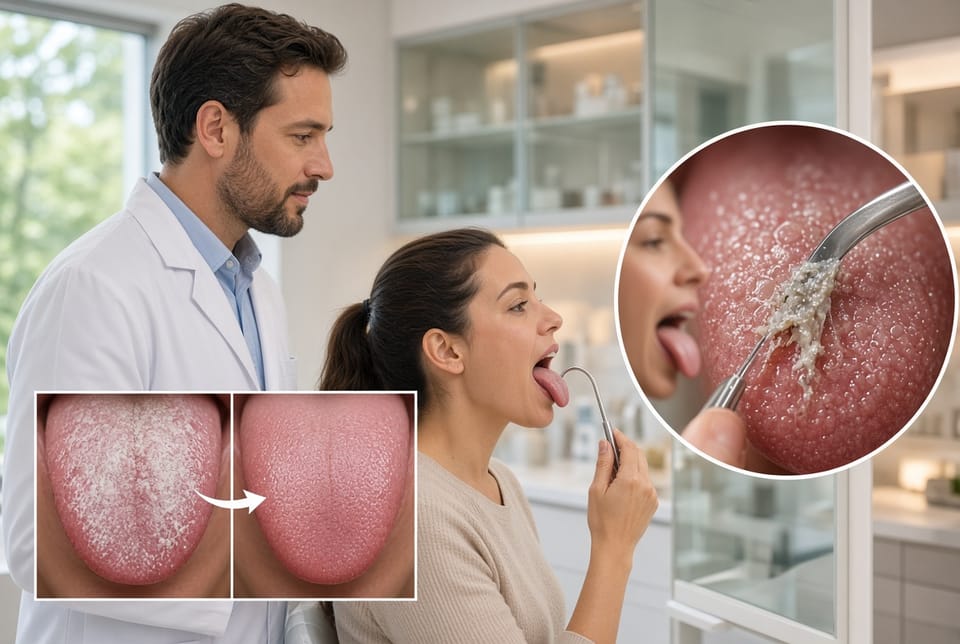
A clean mouth is more than white teeth and fresh-smelling toothpaste. The surface of the tongue is one of the largest reservoirs of oral bacteria and leftover food particles in the entire oral cavity. When that coating is left undisturbed, it can contribute to persistent bad breath, a dull sense of taste, and an overall heavier bacterial load. A tongue scraper is a small, inexpensive tool designed to address exactly that problem. This article explains what the tool does, why it matters, how to use it correctly, and how it fits into a complete oral-hygiene routine.
Get a Cleaner Tongue and Fresher Breath – Call Today
Why the Tongue Matters in Oral Hygiene
The tongue is covered with thousands of tiny projections called papillae. These create an uneven landscape where biofilm, dead cells, and microscopic food debris easily collect. Unlike the smooth enamel of the teeth, this textured surface is difficult to clean with a toothbrush alone. Over time the accumulated material can produce volatile sulfur compounds—the chemicals most responsible for halitosis. It can also blunt the function of taste buds and keep the mouth in a state of higher bacterial activity.
Daily mechanical removal of that coating is therefore a logical next step after brushing and flossing. The tongue scraper performs this task more efficiently than a toothbrush because its edge is designed to glide across the papillae and lift the film rather than simply smear it around.
What a Tongue Scraper Actually Does
A tongue scraper is a thin, slightly curved instrument—usually made of stainless steel, copper, or medical-grade plastic—that is drawn from the back of the tongue toward the tip. As it moves, it physically dislodges:
- Bacteria that thrive in the low-oxygen environment of the tongue coating
- Debris consisting of food remnants and sloughed epithelial cells
- The sticky biofilm that toothbrush bristles often miss
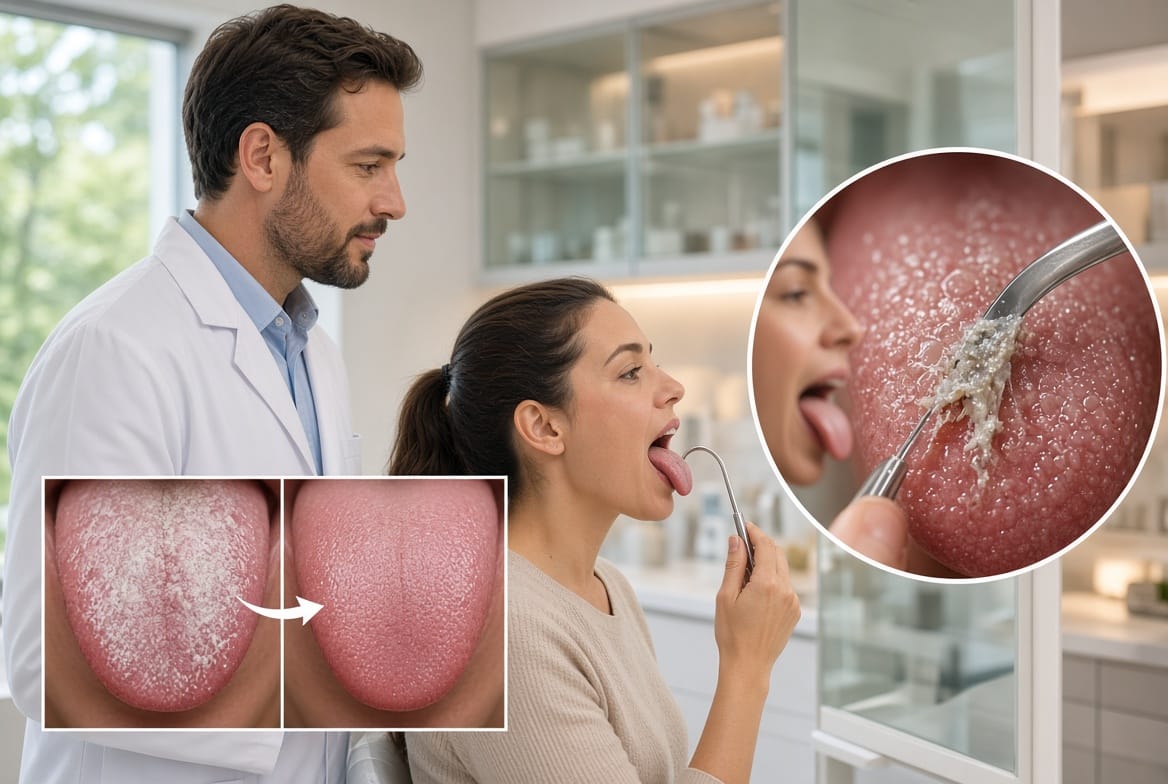
The action is purely mechanical. No chemicals are required. When performed gently and consistently, the scraper reduces the visible white or yellowish layer and leaves the tongue looking pinker and feeling cleaner. The result is not merely cosmetic; it changes the microbial environment of the mouth.
Core Benefits of Regular Tongue Scraping
The most noticeable advantages appear within days of consistent use.
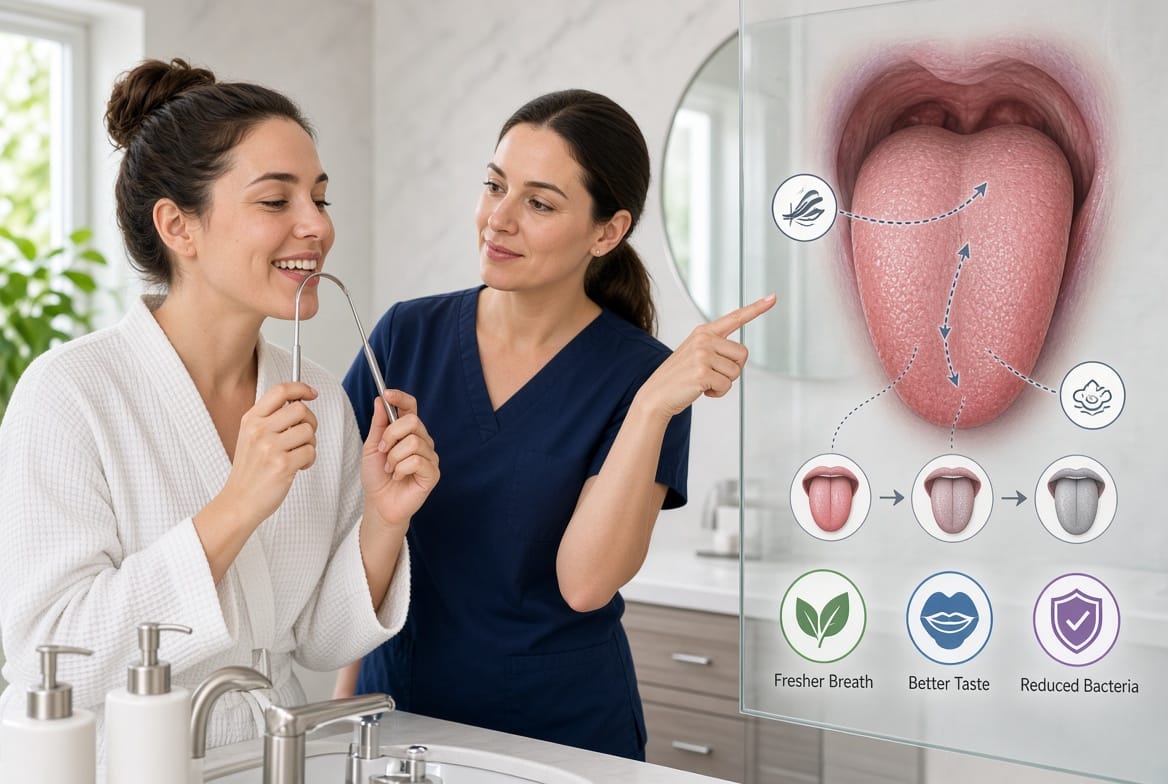
- Fresher breath. By removing the primary source of odor-causing compounds, a tongue scraper often produces a clearer, longer-lasting freshness than mouthwash alone.
- Better taste. Taste buds that are no longer buried under a thick coating can register flavors more accurately. Many people report that food tastes brighter after only a week of scraping.
- Reduced bacteria. Lowering the overall bacterial load on the tongue supports the work of brushing and flossing and may contribute to a healthier oral microbiome.
Additional, closely related benefits include a cleaner morning mouth-feel, reduced coating that can otherwise migrate toward the teeth and gums, and a simple daily ritual that reinforces overall oral-care habits.
These outcomes are not dramatic overnight miracles; they are the predictable result of removing a known reservoir of microbes and debris every day.
How to Use a Tongue Scraper Correctly
Proper technique is simple, takes less than thirty seconds, and should feel comfortable rather than aggressive.
- Stand in front of a mirror with good lighting and stick your tongue out as far as is comfortable.
- Place the scraper as far back on the tongue as you can reach without triggering a gag reflex.
- Apply light, even pressure—enough to feel contact but never enough to cause pain or bleeding.
- Draw the scraper forward in one smooth stroke toward the tip.
- Rinse the scraper under running water to remove the collected film.
- Repeat two or three times, covering slightly different areas of the tongue each pass.
- Finish by rinsing your mouth with water.
Most people find that performing this routine once in the morning and once at night, immediately after brushing, is sufficient. Those who experience a strong gag reflex can begin farther forward and gradually work farther back over several days.
Important safety notes: Never scrape so hard that the tongue becomes raw or sore. If you notice persistent irritation, reduce pressure or switch to a smoother-edged scraper. Individuals with certain oral conditions should check with a dental professional before adding any new tool to their routine.
Choosing and Caring for Your Scraper
Tongue scrapers come in two main families: reusable metal models (stainless steel or copper) and disposable or reusable plastic models. Metal scrapers are durable, easy to sanitize, and often preferred for their rigid yet gentle edge. Plastic versions are inexpensive and convenient for travel. Both can be effective when used correctly.
After each use, rinse the scraper thoroughly. Once a week, soak a metal scraper in warm water or a mild disinfectant solution recommended by your dentist. Replace a plastic scraper when the edge becomes worn or nicked.
Store the tool in a clean, dry place—ideally not in the same cup as toothbrushes if those brushes are still damp.
Integrating Tongue Scraping into a Complete Routine
Tongue scraping is most effective when it complements, rather than replaces, the rest of oral care:
- Brush twice daily with a fluoride toothpaste.
- Clean between teeth once a day with floss or interdental brushes.
- Scrape the tongue after brushing.
- Stay hydrated; a dry mouth allows coating to form more quickly.
- Visit a dental professional for regular examinations and cleanings.
The combination addresses the teeth, the spaces between them, and the large surface of the tongue. Together they create a more complete approach to oral hygiene.
Common Questions and Reassuring Answers
Many first-time users wonder whether the white coating they see is “normal.” A thin film is common, especially in the morning; a thick, persistent layer is a signal that mechanical cleaning can help. Others worry that scraping will damage taste buds. When performed with light pressure, the opposite occurs: taste buds become more accessible.
A short adjustment period is typical. The gag reflex usually lessens within a few days as the mouth becomes accustomed to the sensation. If discomfort continues, a narrower or more flexible scraper may be more comfortable.
Children can also benefit once they are old enough to cooperate and not bite the tool. Supervision and a child-sized scraper make the process safe and straightforward.
A Simple Tool with Lasting Value
The tongue scraper is not a complicated device and does not require special training. It is a straightforward mechanical solution to a straightforward biological reality: the tongue collects bacteria and debris, and those materials affect breath, taste, and the overall microbial balance of the mouth. Used gently and regularly, it delivers the three core benefits of fresher breath, better taste, and reduced bacteria while supporting the rest of a sound oral-hygiene program.
Start tonight. After you brush, take thirty seconds to scrape. Notice how the tongue feels in the morning. Over the following week, pay attention to breath and flavor. Most people find the change both noticeable and easy to maintain.
Improve oral hygiene with a tongue scraper. If you have questions about technique, product selection, or how tongue scraping fits with your existing dental care. A brief conversation with the team can help you add this simple, effective step with confidence.
Reduce Bacteria and Improve Taste – Call Now