The Thermal Fogging Deodorization: Penetrating Deep into Porous Materials
When water damage strikes, the visible destruction is only part of the story. Lingering, invisible odors trapped deep inside porous materials can turn a restored home into an uncomfortable space long after the water is gone. At Tradewinds Universal, we understand that true restoration means addressing both the moisture and the odors it leaves behind.
Eliminate Deep Odors Now – Call for Thermal Fogging!
Thermal fogging deodorization stands out as one of the most powerful specialized techniques available for eliminating stubborn smells that ordinary cleaning cannot reach. This advanced method transforms a carefully formulated deodorizing solution into an ultra-fine fog capable of traveling into the microscopic pores of drywall, wood, carpet padding, and other building materials where odor molecules hide.
Homeowners facing persistent musty smells, sewage odors from backups, or pet-related issues amplified by water intrusion finally have a solution that works at the source. This article explains exactly how thermal fogging achieves what surface treatments cannot, when it becomes the right choice, and why partnering with trained professionals delivers the peace of mind you deserve.
What Exactly is Thermal Fogging Deodorization?
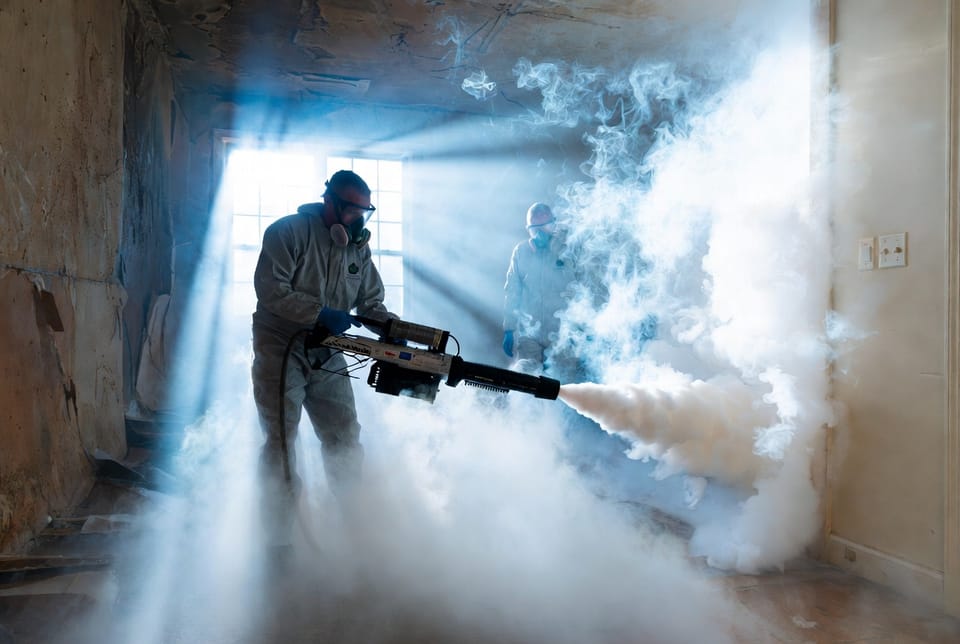
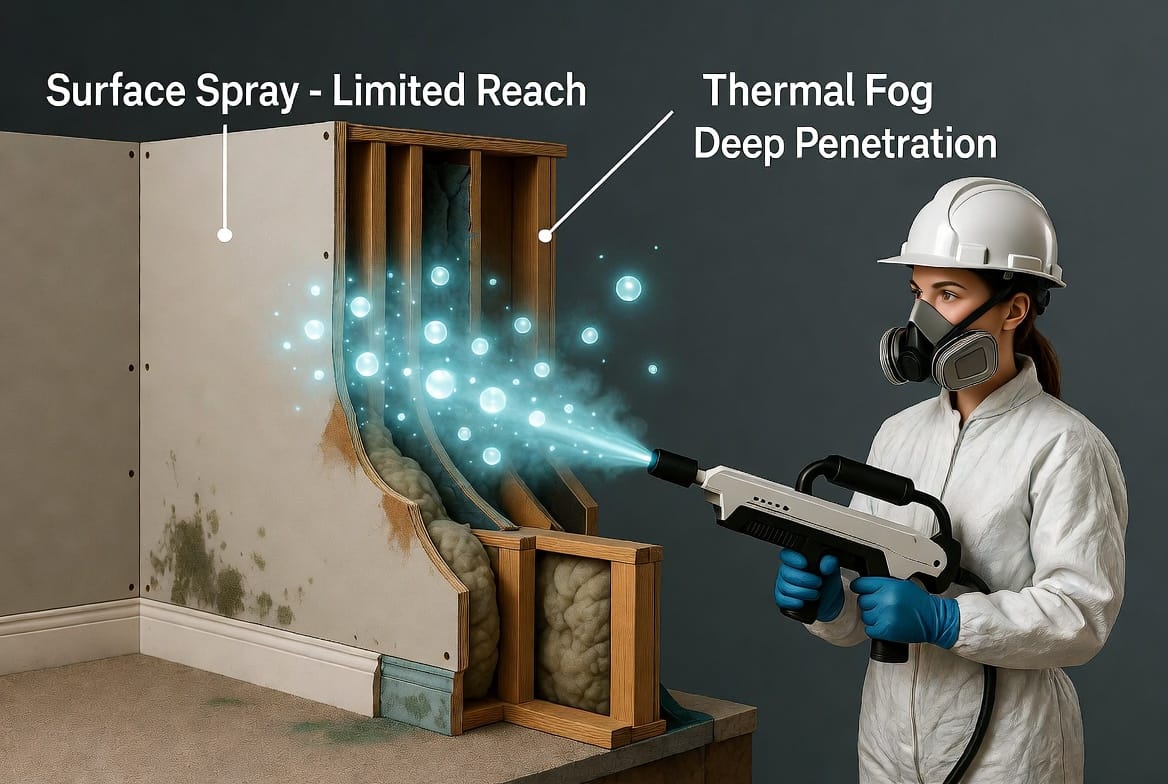
Thermal fogging is a specialized odor-neutralization process that uses heat to convert a liquid deodorant into a dense, microscopic fog. Unlike conventional sprays or foggers that merely coat surfaces, thermal fogging creates particles small enough to behave almost like a gas. These particles travel through the air, seep into cracks, and penetrate deep into the cellular structure of porous materials.
The process begins with a professional-grade thermal fogging machine. Inside the machine, the deodorizing solution is heated to a precise temperature, causing it to vaporize. As the vapor exits the nozzle and cools, it condenses into billions of tiny droplets — often smaller than one micron. This fine particle size allows the fog to infiltrate areas that liquid sprays simply cannot reach.
In water damage situations, moisture often soaks into subfloors, wall cavities, and insulation. Bacteria and mold begin breaking down organic material, releasing volatile organic compounds that create that unmistakable musty or sour odor. Thermal fogging targets these compounds directly inside the materials where they originate.
How Thermal Fogging Penetrates Deep into Porous Materials
The real power of this technology lies in its ability to reach where odors live.
Porous materials such as drywall, plywood, oriented strand board (OSB), carpet underlayment, and hardwood flooring act like sponges. Once water has penetrated them, odor-causing molecules become embedded within their structure. Standard cleaning methods only treat the surface, leaving the source untouched. Over time, odors return — sometimes stronger than before.
Thermal fog particles are engineered to be small enough to diffuse through these materials. They travel along the same pathways that water and air follow, reaching deep into the grain of wood, between drywall paper layers, and throughout carpet backing. Once inside, the active deodorizing agents bond with or neutralize the odor molecules at a molecular level.
This deep penetration is why thermal fogging succeeds where other methods fail. It does not mask odors — it eliminates them from within.
Why Thermal Fogging Outperforms Traditional Surface Treatments
Many property owners first attempt to solve odor problems with sprays, wipes, or DIY foggers. These approaches provide only temporary relief because they never address the root cause hidden inside porous materials.
Surface treatments sit on top of materials. They cannot travel behind baseboards, into wall cavities, or through carpet padding. As soon as the product dries or evaporates, trapped odors re-emerge. In contrast, thermal fogging delivers active deodorizers directly to the source.
Additional advantages include:
- Uniform coverage — The fog naturally expands to fill entire rooms and hidden voids.
- Molecular neutralization — Active ingredients interact with odor compounds rather than simply covering them.
- Efficiency — Large areas can be treated thoroughly in a fraction of the time required for manual cleaning.
- Reduced material replacement — In many cases, effective deodorization allows homeowners to keep drywall, subfloors, and cabinetry that might otherwise need costly removal.
When water damage has affected multiple rooms or when odors have had time to embed deeply, thermal fogging becomes the clear professional choice.
When to Consider Thermal Fogging for Odor Issues
Not every water damage job requires thermal fogging, but certain situations make it highly recommended:
- Sewer backups and contaminated water — Bacteria-laden water leaves powerful, persistent odors in flooring and walls.
- Prolonged moisture exposure — When water has sat for days, bacterial growth and mold-related smells become deeply embedded.
- Pet urine accidents combined with water intrusion — Urine salts and proteins soak into subfloors and padding, creating odors that intensify with moisture.
- Musty or sour smells after drying — Even after professional water extraction and dehumidification, some odors remain trapped inside materials.
- Combined incidents — Properties that have experienced both water damage and smoke exposure benefit from thermal fogging’s ability to address multiple odor sources simultaneously.
Our technicians perform a thorough odor assessment during every water damage project. When deep penetration is required, thermal fogging is integrated into the comprehensive restoration plan.
Specialized Applications: From Sewage to Musty Odors
Thermal fogging proves versatile across the most challenging odor scenarios commonly linked to water damage and related property issues.
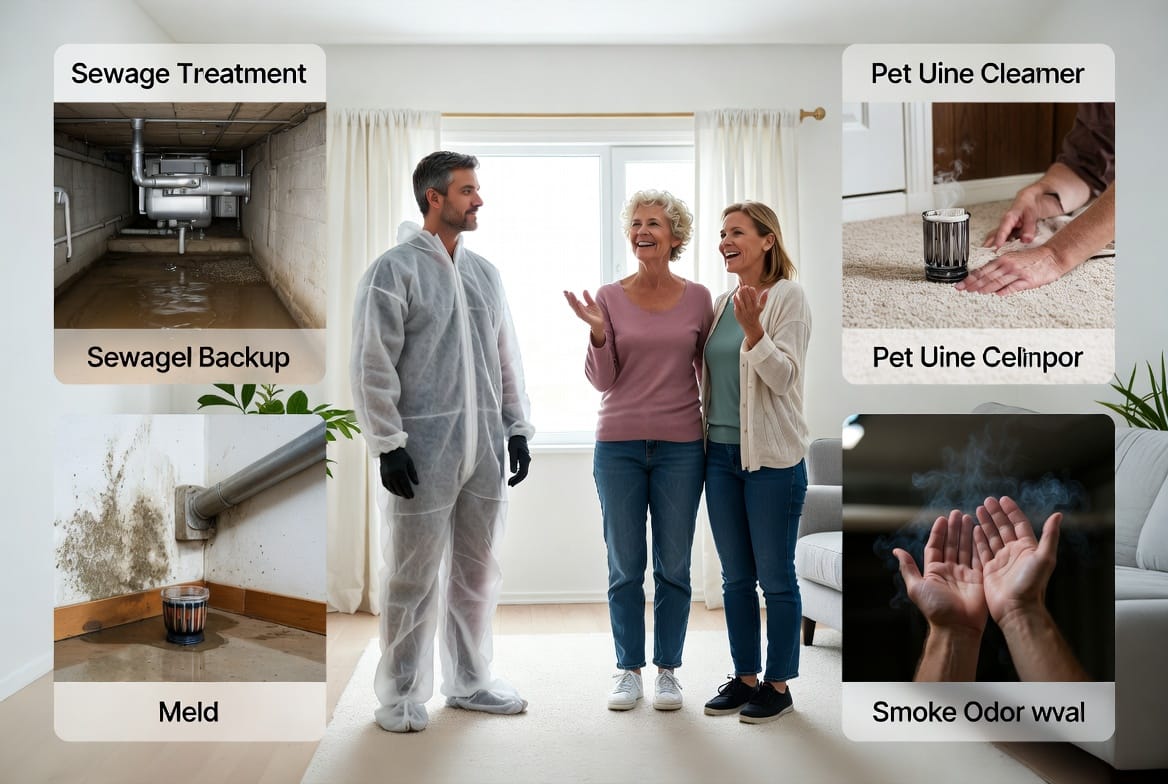
Common applications include:
- Sewage and black water odors — Catastrophic backups require aggressive neutralization deep within affected structures.
- Pet urine and animal odors — When flooding or leaks soak into flooring, urine crystals become reactivated and difficult to remove without deep treatment.
- Mold and mildew mustiness — Water damage creates ideal conditions for microbial growth; thermal fogging helps neutralize the associated volatile compounds.
- Smoke and fire-related odors — Even in primarily water-damage jobs, secondary smoke smells from electrical issues or nearby incidents can be addressed simultaneously.
Each situation receives a customized approach based on the specific materials affected and the severity of odor penetration.
The Professional Thermal Fogging Process: Step by Step
Homeowners often feel anxious about what to expect. Our structured process is designed for safety, effectiveness, and minimal disruption:
- Detailed Assessment — Technicians identify all affected areas and determine the extent of odor penetration into porous materials.
- Preparation — Furniture and sensitive items are protected. HVAC systems may be isolated or treated separately.
- Thermal Fog Application — Using calibrated equipment, the fog is released systematically to ensure complete coverage and deep penetration.
- Dwell Period — The fog is allowed to work, giving active ingredients time to neutralize odor molecules throughout the materials.
- Aeration and Verification — Spaces are ventilated, and our team performs sensory and, when appropriate, instrument-based confirmation that odors have been eliminated.
- Final Documentation — You receive clear records of the work performed as part of your restoration project file.
The entire process is completed by certified professionals who understand both the science of odor removal and the sensitivities of water-damaged environments.
Prioritizing Safety and Peace of Mind
Safety remains our highest priority. All deodorizing solutions used in thermal fogging are selected for their effectiveness and responsible environmental profile. Our technicians follow strict protocols for personal protective equipment, containment, and post-treatment ventilation.
After treatment, spaces are thoroughly aired out. Most families can safely return within a short period, often the same day, once clearance is given. We never compromise on your family’s health or the long-term integrity of your property.
The Long-Term Benefits of Deep Odor Elimination
Choosing professional thermal fogging delivers more than immediate relief. It protects your investment by:
- Preventing recurring odor complaints that can affect resale value.
- Reducing the likelihood of unnecessary demolition and replacement of materials.
- Improving overall indoor air quality and comfort.
- Providing documented proof of professional restoration for insurance purposes.
When odors are truly eliminated at the source, you regain full enjoyment of your home without constant reminders of past water damage.
Deep Odors Need Deep Penetration — Call for Thermal Fogging Today
Persistent odors after water damage do not have to become a permanent part of your life. Thermal fogging deodorization offers a proven, science-backed solution that reaches deep into porous materials where other methods stop at the surface.
At Tradewinds Universal, our experienced team combines advanced equipment with meticulous technique to deliver results you can trust. Whether you are dealing with sewage backup smells, musty mold-related odors, pet urine issues, or any other deeply embedded odor, we have the expertise to restore freshness from within.
Deep odors need deep penetration. Let us help you reclaim a clean, odor-free home.
Neutralize Stubborn Water Damage Odors – Call Us