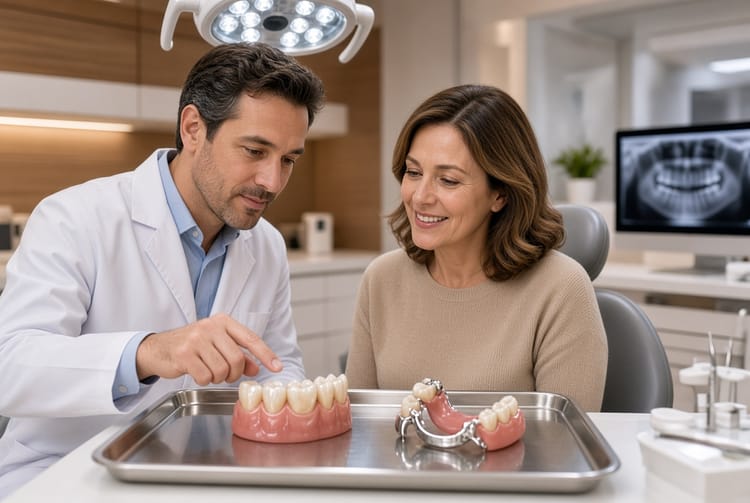
The Teeth Grinding Appliances: Night Guards vs. Splints
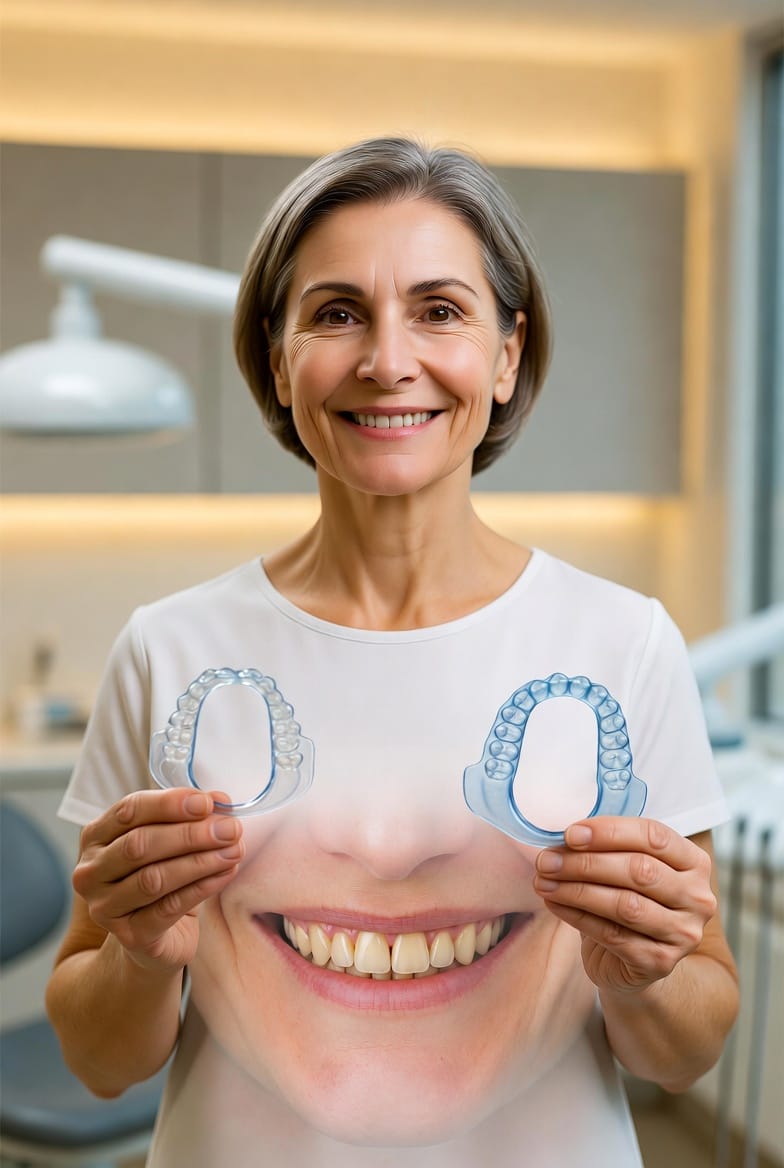
Bruxism, the medical term for teeth grinding and clenching, affects millions of adults and children, often occurring during sleep. Without intervention, it can lead to severe tooth wear, jaw pain, headaches, and even long-term damage to the temporomandibular joint (TMJ). Fortunately, dental professionals offer effective custom appliances designed to mitigate these risks: night guards and occlusal splints.
Protect Your Teeth from Grinding – Call Now!
While both devices are worn in the mouth to address grinding-related issues, they serve distinct purposes. Understanding the differences between night guards and splints empowers you to make informed decisions about your oral health. In this comprehensive guide, we explore how each appliance works, their unique benefits, and which may be right for your situation.
Protect your teeth from grinding. Ask about appliance options at (844) 578-2871.
Understanding Bruxism and Its Impact
Bruxism involves involuntary grinding or clenching of the teeth, most commonly during sleep. Many people remain unaware of the habit until a dentist notices flattened tooth surfaces or they experience morning jaw soreness.
Common symptoms include:
- Worn or chipped teeth
- Persistent headaches or earaches
- Jaw stiffness or clicking sounds
- Increased tooth sensitivity
- Disrupted sleep for you or your partner
Left untreated, bruxism heightens risks of cracked teeth, gum recession, and TMJ disorders that can cause chronic pain and limited jaw movement. Custom dental appliances provide a reliable, non-invasive first line of defense by cushioning teeth and relaxing jaw muscles.
What Are Night Guards?
Night guards (also called occlusal guards or bite plates) are primarily protective devices made from softer, flexible materials such as soft acrylic or dual-laminate designs. Dentists custom-fabricate them from precise impressions or digital scans of your teeth for a comfortable, secure fit.
These appliances create a barrier between upper and lower teeth, absorbing the intense forces generated during grinding. By preventing direct tooth-to-tooth contact, night guards preserve enamel and reduce pressure on the jaw muscles.
Key benefits of night guards:
- Excellent tooth protection — They cushion impacts and minimize wear.
- Soft, comfortable material ideal for nightly wear.
- Relatively affordable and quick to produce.
- Effective for mild to moderate bruxism focused on surface damage.
Patients often report immediate relief from morning jaw fatigue and noticeably less tooth sensitivity after consistent use. Night guards are especially reassuring for those whose primary concern is preventing further dental damage while they address underlying causes like stress or sleep disorders.
What Are Occlusal Splints?
Occlusal splints, sometimes referred to as stabilization splints or mandibular advancement devices in certain designs, are typically constructed from harder acrylic materials. They are more rigid and often serve dual purposes: protection and therapeutic jaw repositioning.
Unlike softer night guards, occlusal splints are engineered to guide the jaw into a more optimal position. This can help decompress the TMJ and alleviate muscle tension by redistributing bite forces more evenly across the teeth.
Key benefits of occlusal splints:
- Jaw repositioning capabilities — They can correct minor misalignments contributing to pain.
- Superior durability for heavy grinders.
- Targeted relief for TMJ disorders and associated headaches.
- Potential to reduce muscle hyperactivity over time.
Because of their hardness and precise design, splints require careful professional adjustment and regular follow-ups to ensure they continue fitting perfectly as your bite adapts.
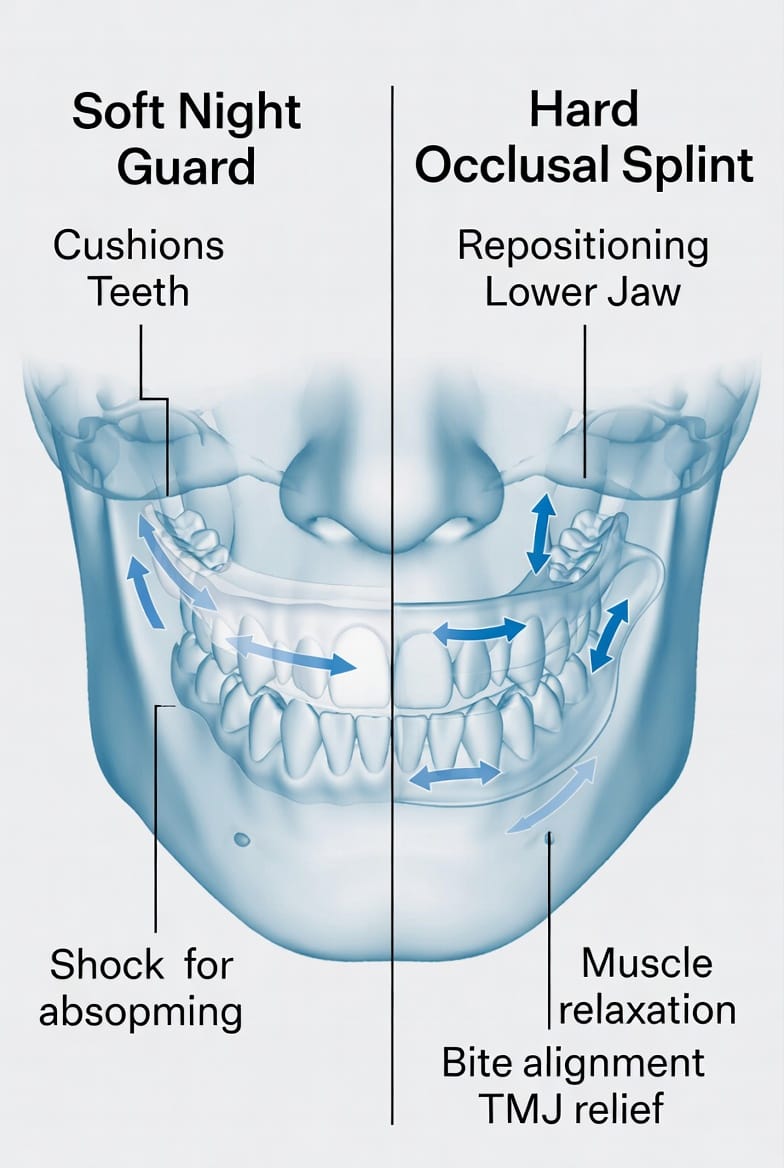
Key Differences: Night Guards vs. Occlusal Splints
Understanding these distinctions helps clarify why your dentist might recommend one over the other:
- Material and Comfort: Night guards use softer materials for all-night comfort, while splints employ harder acrylic for stability and precise control.
- Primary Function: Night guards focus on protection by absorbing shock. Occlusal splints emphasize therapeutic repositioning to treat underlying bite and joint issues.
- Treatment Focus:
- Night guards excel at preventing tooth wear in straightforward bruxism cases.
- Splints are preferred when TMJ pain, jaw misalignment, or severe muscle tension is present.
- Durability: Hard splints withstand intense grinding better long-term, though both require replacement every few years depending on wear.
- Adjustment Needs: Splints often need more frequent professional adjustments due to their repositioning role.
Both appliances are custom-made and far superior to over-the-counter boil-and-bite options, which can actually worsen bite problems if not properly fitted.
How Each Appliance Addresses Bruxism and TMJ Disorders
For Bruxism Management
Night guards act as a defensive shield, dramatically reducing the destructive effects of grinding on your enamel and restorations. Many patients notice their teeth appear less flattened after several months of use. The soft cushion also minimizes noise, improving sleep quality for couples.
Occlusal splints go further by interrupting the grinding cycle through jaw repositioning. This can lead to reduced frequency and intensity of clenching episodes as muscles learn a new, relaxed position.
For TMJ Relief
TMJ disorders often stem from imbalanced bite forces or chronic muscle strain. Softer night guards provide symptomatic relief by cushioning but may not address root alignment issues. Harder occlusal splints, by contrast, are specifically designed to stabilize the jaw joint, often resulting in decreased clicking, popping, and facial pain.
Clinical experience shows that patients with significant TMJ symptoms respond particularly well to splint therapy, sometimes combined with physical therapy or stress management techniques.
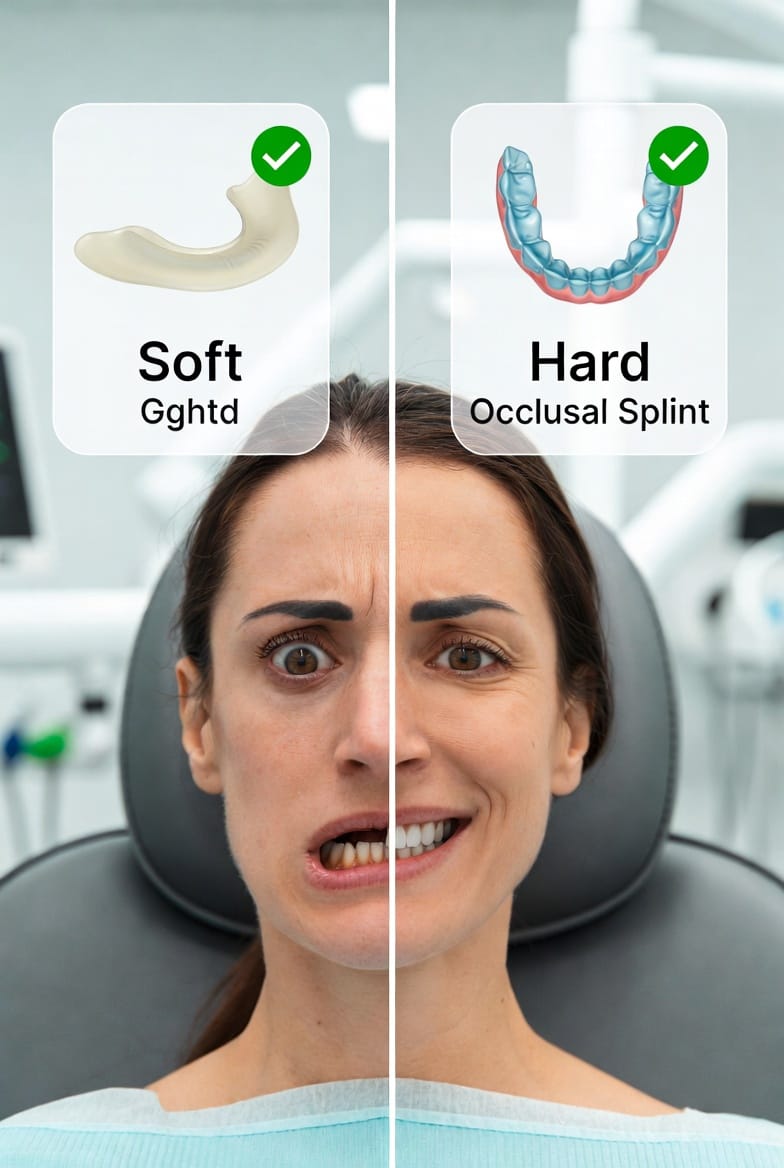
Choosing the Right Appliance for Your Needs
Your dentist will conduct a thorough evaluation, including bite analysis and possibly imaging, before recommending an appliance. Factors influencing the choice include:
- Severity of your grinding
- Presence of TMJ symptoms
- Existing dental work (crowns, bridges, implants)
- Sleep habits and lifestyle
- Budget and commitment to follow-up care
Reassuring note: Both options are safe, reversible, and highly effective when properly prescribed. Most patients adapt quickly and experience significant improvements in comfort and dental health.
Proper Care and Maintenance for Longevity
To maximize the benefits of your appliance:
- Clean daily with a soft toothbrush and non-abrasive denture cleaner (avoid toothpaste).
- Store in a protective case when not in use.
- Bring to every dental visit for professional inspection and adjustment.
- Never attempt to adjust or repair it yourself.
Consistent use combined with good oral hygiene and stress-reduction practices yields the best outcomes.
Long-Term Benefits and Peace of Mind
Investing in a professionally fitted night guard or occlusal splint is an investment in your overall well-being. Beyond protecting your smile, these appliances can reduce chronic pain, improve sleep quality, and prevent costly future dental repairs.
Many patients report feeling more confident and rested after incorporating the right device into their nightly routine. With proper care, these appliances deliver reliable protection for years.
Protect your teeth from grinding. Our experienced team can evaluate your specific situation and craft the perfect custom solution tailored to your needs.
Whether you're dealing with early signs of wear or longstanding TMJ discomfort, effective help is available. Don't let bruxism silently damage your smile — take control today with the right teeth grinding appliance.
Stop Teeth Grinding & Relieve TMJ Pain – Call for Consultation