The Tandem Breaker: When to Use and Code Restrictions
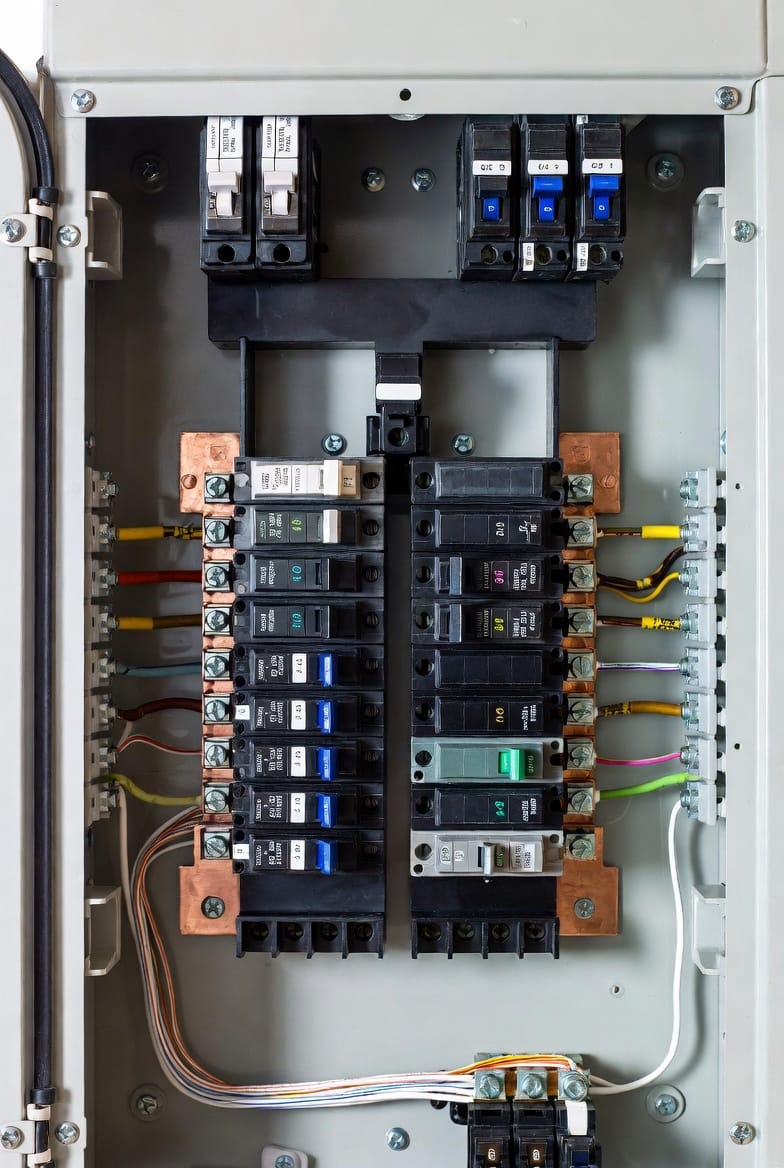
Tandem breakers offer a practical solution for homeowners and electricians facing limited panel space. These innovative devices, also known as twin breakers or half-size breakers, allow two circuits to share a single full-size slot. When properly applied, they provide essential relief without requiring a full panel replacement.
Get Expert Tandem Breaker Advice – Call Now!
In this comprehensive guide, we explore exactly what tandem breakers are, when they are permitted, key National Electrical Code (NEC) restrictions, and best practices for safe installation.
What Is a Tandem Breaker?
A tandem breaker combines two independent circuit breakers into one physical unit that occupies the space of a single standard breaker. Each half functions separately, protecting its own circuit while sharing the same connection points on the panel bus.
Key benefits include:
- Space efficiency — Ideal for panels nearing capacity
- Cost savings — Often cheaper than panel upgrades
- Code-compliant expansion — When manufacturer-approved and properly labeled
Unlike standard breakers, tandems have specific design features. The two poles operate independently but must be installed only in panels rated and labeled for their use.
Important distinction: Tandem breakers differ from double-pole breakers (which control 240V circuits) and GFCI/AFCI breakers that have additional protection features.
When Are Tandem Breakers Appropriate?
Tandem breakers serve as an excellent option in several common scenarios:
- Older homes with full electrical panels but no room for new circuits
- Adding lighting, outlets, or small appliances
- Minor renovations where full panel replacement is impractical
- Temporary solutions while planning a larger upgrade
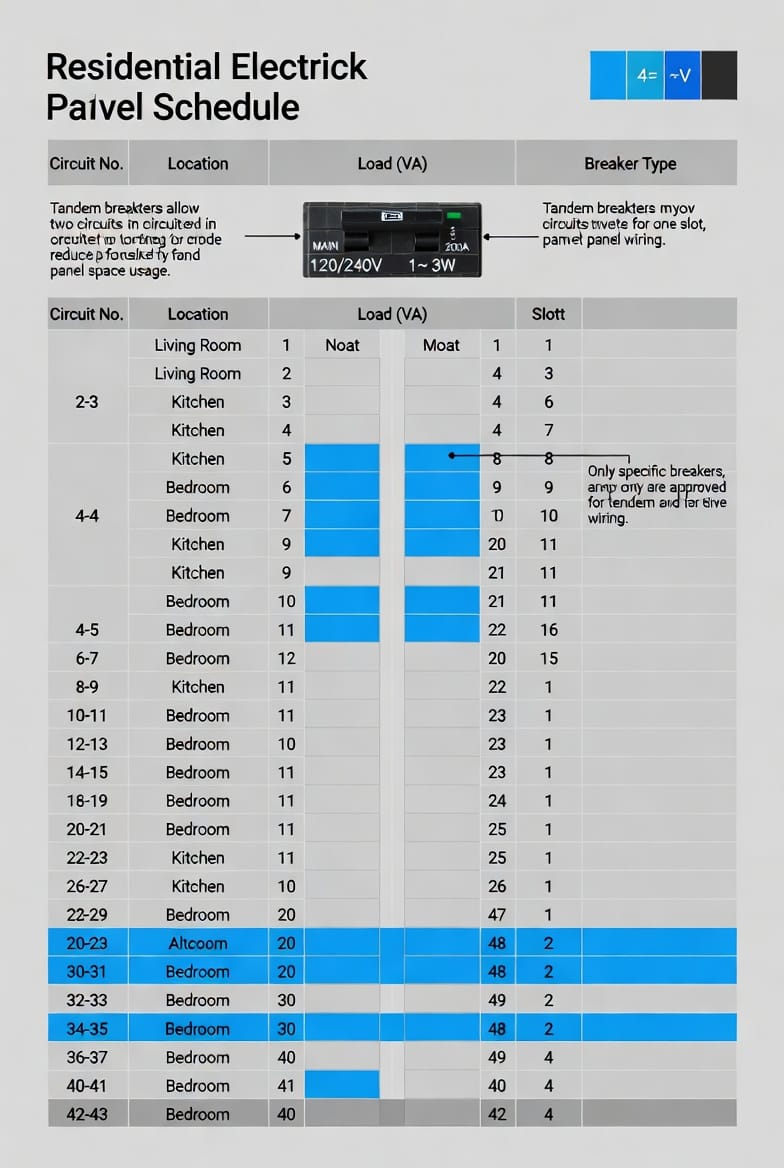
Always verify that your panel manufacturer explicitly lists tandem breakers as acceptable. Most modern panels from reputable brands include specific slots marked for tandems.
Approved Panel Types
Many residential load centers from Square D, Eaton, Siemens, and GE support tandems. Look for markings such as:
- “Accepts Tandem Breakers”
- Specific model numbers allowing CTL (Circuit Total Limitation) compliance
Pro tip: Check the panel label inside the door or cover. It clearly states the maximum number of circuits and whether tandems are permitted.
Critical Code Restrictions You Must Know
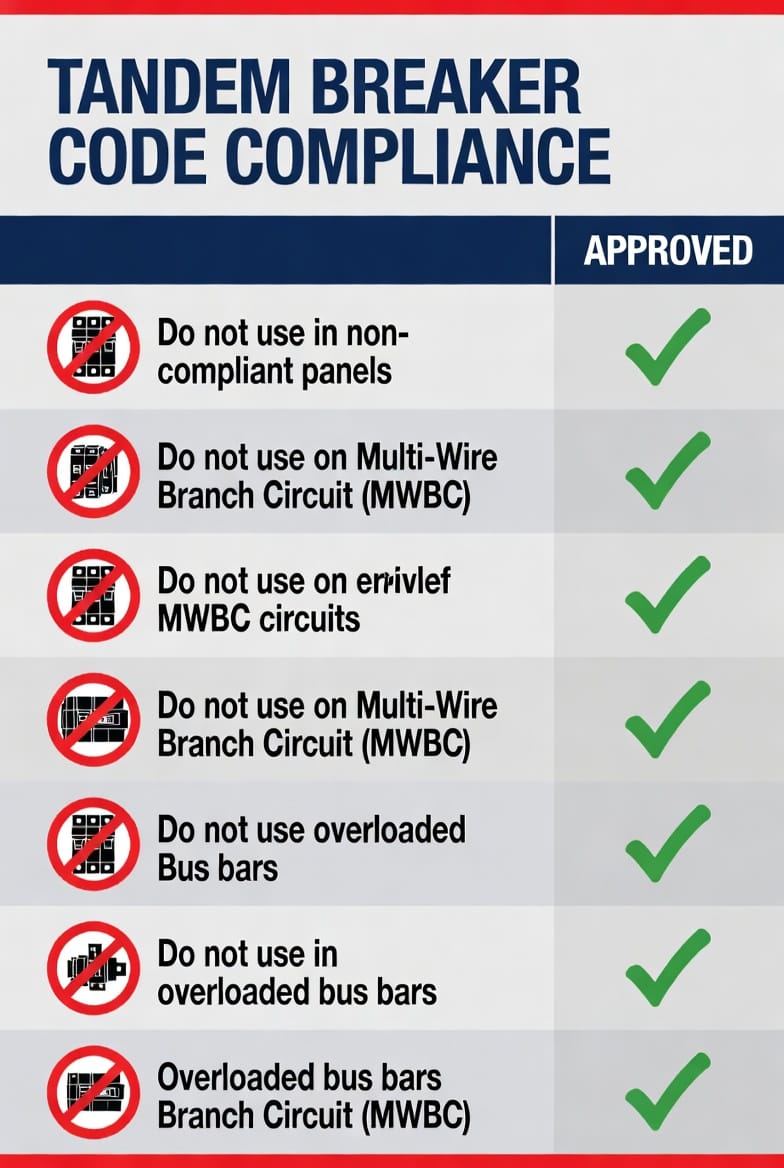
The National Electrical Code places strict limits on tandem breakers to maintain safety and prevent overloading.
Key restrictions include:
- Manufacturer approval required — Never install tandems in panels that do not list them
- Not for Multi-Wire Branch Circuits (MWBCs) — Tandems cannot replace proper double-pole breakers on shared-neutral circuits
- AFCI and GFCI limitations — Many jurisdictions prohibit tandems for circuits requiring arc-fault or ground-fault protection
- Bus bar limitations — Only use designated slots; overloading creates fire hazards
- Total circuit count — Must stay within the panel’s listed maximum
Bold warning: Installing tandem breakers in non-approved panels violates code and may void your insurance.
Understanding CTL Requirements
Circuit Total Limitation (CTL) rules ensure panels do not exceed designed capacity. Older non-CTL panels allowed more flexibility but posed higher risks. Modern panels strictly follow CTL guidelines.
Step-by-Step Evaluation Process
Before installing tandem breakers, follow this professional checklist:
- Inspect the panel — Note brand, model, and available slots
- Review manufacturer documentation — Confirm tandem compatibility
- Calculate loads — Ensure new circuits won’t overload the system
- Check local amendments — Some areas have stricter rules than NEC
- Consult a licensed electrician — Professional assessment prevents costly mistakes
Proper labeling remains essential. Every tandem installation requires updated panel directory information for future safety.
Common Mistakes to Avoid
Homeowners and even some contractors sometimes misuse tandem breakers. Here are frequent errors:
- Installing in obsolete panels that predate modern safety standards
- Using tandems on kitchen or bathroom circuits requiring GFCI protection
- Exceeding the panel’s ampacity through creative circuit additions
- Skipping load calculations before adding new circuits
These mistakes can lead to overheating, tripped breakers, or dangerous arc faults.
Benefits of Professional Installation
Working with qualified electricians ensures:
- Code compliance throughout the process
- Proper torque on all connections
- Accurate load balancing across phases
- Updated documentation for your records
Professional service also includes testing all circuits after installation.
When Tandem Breakers Aren’t Enough
Sometimes tandem breakers only provide temporary relief. Signs you may need a full panel upgrade include:
- Frequent breaker trips
- Warm or buzzing panel
- Dimming lights when appliances start
- Multiple extension cords in use
In these cases, a subpanel or complete service upgrade offers a long-term solution.
Maintaining Your Electrical Panel
After installing tandem breakers:
- Test circuits regularly
- Keep the panel directory updated
- Schedule periodic professional inspections
- Never add circuits without verification
Routine maintenance protects your home and family from electrical hazards.
Future-Proofing Your Electrical System
While tandem breakers solve immediate space issues, planning for future needs remains wise. Consider:
- Electric vehicle chargers
- Smart home systems
- Additional HVAC equipment
- Home office expansions
A licensed electrician can help develop a comprehensive electrical plan.
Tandem breakers represent a smart, code-compliant choice when used correctly. They deliver reliable performance while respecting the design limits of your electrical panel.
Important Safety Note: Tandem breakers aren’t suitable for every panel or situation. Improper use can create serious fire risks and code violations.
For expert evaluation of your electrical panel and professional tandem breaker installation. We provide thorough assessments, clear recommendations, and guaranteed code-compliant work that gives you peace of mind.
Protect your home with properly installed electrical solutions. Contact us now for a consultation.
Ensure Code-Compliant Electrical Upgrades – Call Today