The Security System Smoke and CO Detectors: Why Monitored Alarms Save Lives
When a fire starts or carbon monoxide begins to build inside a home, every second counts. Standalone smoke and CO detectors have saved countless lives over the decades, yet they still rely on someone being present to hear the alarm and call for help. That limitation disappears the moment those detectors become part of a professionally monitored security system.
Save Lives with Monitored Smoke & CO Detectors – Call Now!
Monitored smoke and carbon monoxide detectors do more than sound a loud local alarm. They instantly transmit a verified emergency signal to a 24/7 central monitoring station. Trained operators then dispatch the fire department or emergency services—even when no one is home. This life-safety integration is the critical difference between a device that merely warns and a system that actively saves lives.
In the following sections we examine exactly how monitored detectors work, why response speed improves so dramatically, the real-world advantages families gain, and practical steps for upgrading existing protection. The goal is clear: equip homeowners with authoritative knowledge so they can make confident decisions about protecting the people and property they value most.
How Monitored Smoke and CO Detectors Actually Work
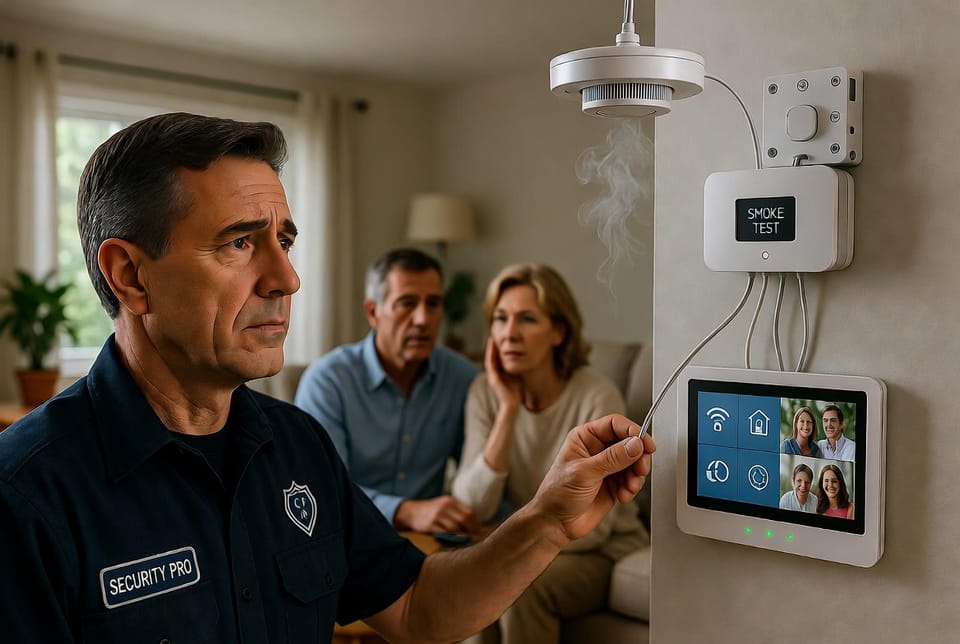
A traditional battery-powered or hardwired detector senses smoke particles or elevated carbon monoxide levels and sounds an internal siren. That is its entire job. A monitored smoke detector or monitored CO detector performs the same local alert and simultaneously sends a digital signal through the home security control panel to a UL-listed central station.
The sequence unfolds in seconds:
- The sensor detects the hazard.
- The control panel receives the signal and places an emergency priority call.
- A trained operator verifies the alarm (when possible) and immediately notifies the appropriate emergency services.
- First responders are already en route while the local siren continues to sound.
Because the communication path is supervised around the clock, the system also reports trouble conditions such as low batteries, sensor malfunctions, or loss of power. Homeowners receive proactive alerts long before a critical failure occurs.
This continuous supervision transforms passive warning devices into active life-safety partners. Whether the family is sleeping upstairs, commuting to work, or traveling across the country, the monitoring station stands ready to act the moment danger appears.
The Critical Advantage: Faster Emergency Response
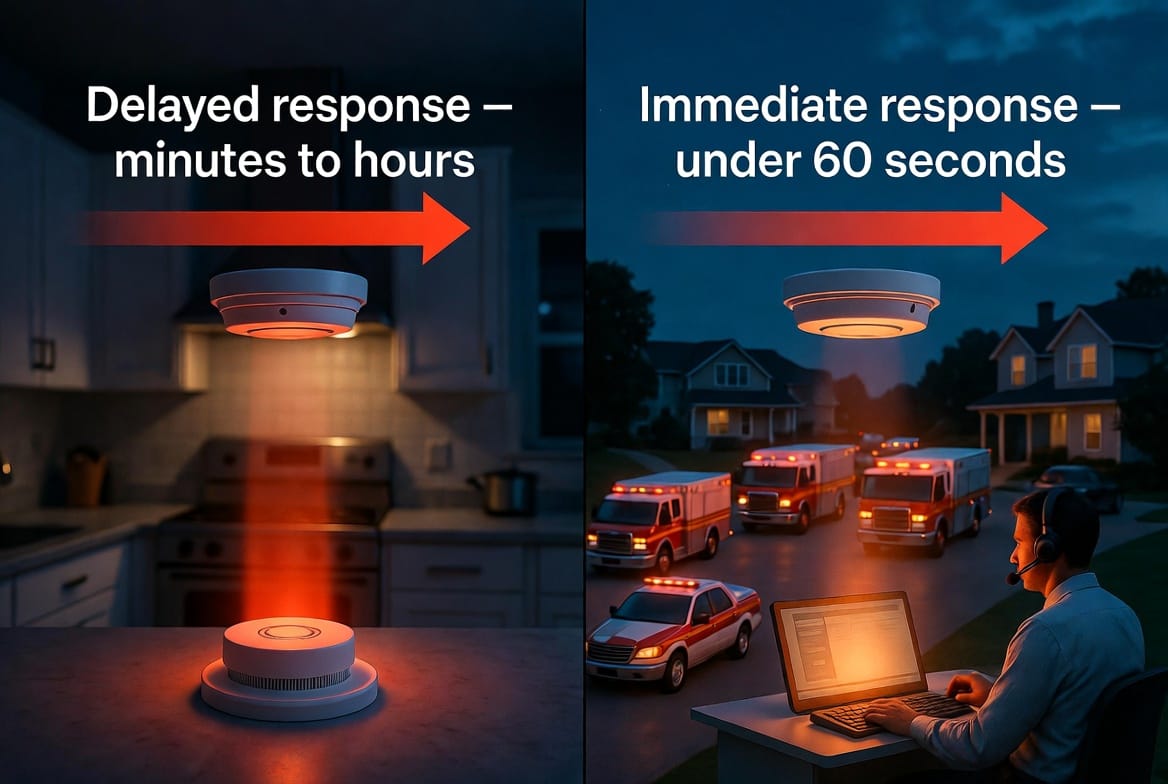
Speed is the single most important factor in fire and carbon monoxide emergencies. Independent studies repeatedly show that the majority of fire fatalities occur when occupants are asleep or when the home is unoccupied. In those situations a standalone detector can only ring until its battery dies. No one hears it. No one calls 911.
A monitored system removes that single point of failure. The moment the detector trips, the central station receives the signal—typically within 10 to 30 seconds—and begins the dispatch process. Fire departments often arrive while the fire is still in its early growth stage, dramatically reducing the chance of flashover and structural collapse.
The same principle applies to carbon monoxide. CO is colorless and odorless. By the time symptoms appear, occupants may already be incapacitated. A monitored CO detector ensures that help is summoned even if every person in the house has lost consciousness.
Life-Safety Integration Within a Complete Security System
Modern home security systems treat smoke and carbon monoxide detection as core life-safety functions rather than optional add-ons. When detectors are enrolled on the same panel that manages intrusion sensors, glass-break detectors, and panic buttons, several powerful synergies appear:
- Unified monitoring – One central station watches every zone. Operators already know the exact address, floor plan notes, and emergency contacts.
- Cross-verification – Smoke alarms can be paired with heat sensors or water-flow switches in sprinkler systems for faster confirmation.
- Automated actions – Upon a verified fire alarm the system can unlock doors for firefighters, turn on exterior lights, or shut down HVAC systems to limit smoke spread.
- Remote notifications – Homeowners receive simultaneous push alerts, text messages, and phone calls so they stay informed wherever they are.
These integrated capabilities create a layered defense that standalone devices simply cannot match. The result is not merely an alarm—it is a coordinated emergency response network operating on the homeowner’s behalf 24 hours a day.
Tangible Benefits That Protect People and Property
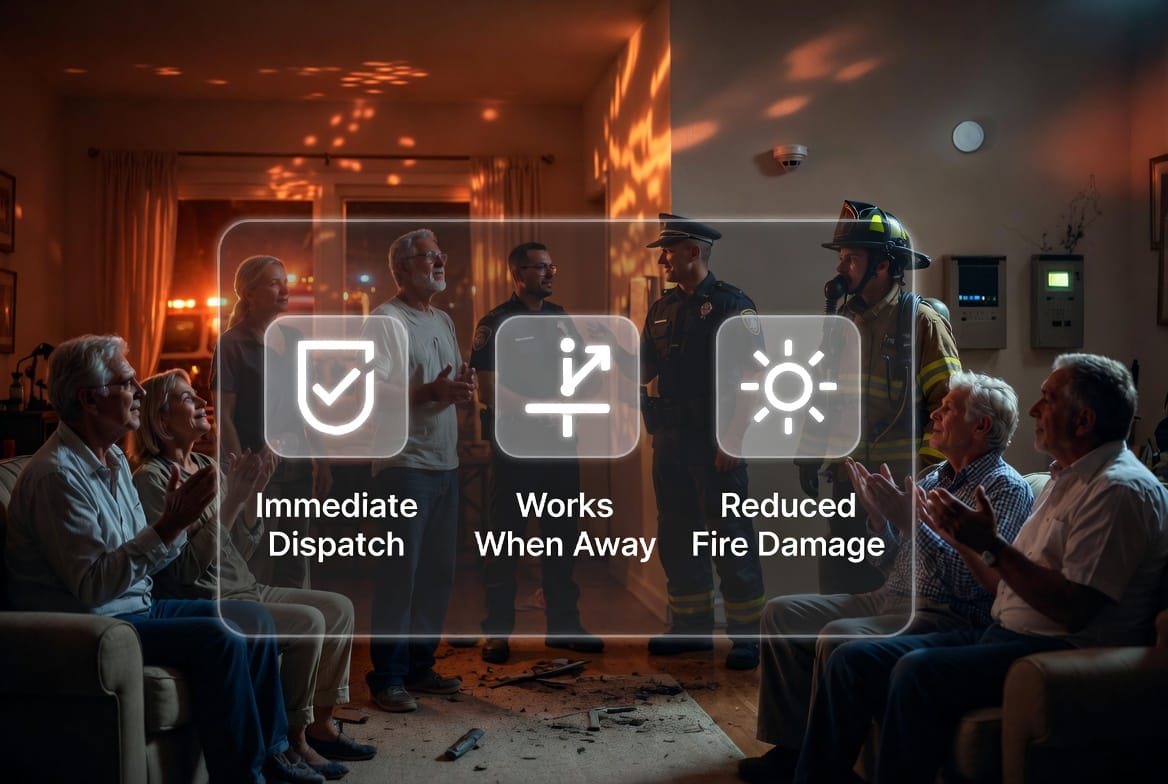
Homeowners who upgrade to monitored smoke and CO detectors consistently report three decisive advantages:
- Immediate professional dispatch – Trained operators contact emergency services without waiting for a resident to wake up, assess the situation, and dial 911.
- Protection that works when the house is empty – Vacations, overnight shifts, and school days no longer leave the property unprotected.
- Significantly reduced fire and CO damage – Earlier arrival of first responders limits flame spread, structural loss, and the deadly accumulation of carbon monoxide.
Additional secondary benefits include lower insurance premiums (many carriers offer discounts for professionally monitored life-safety systems), continuous system health checks, and peace of mind that cannot be measured in dollars.
Addressing Common Concerns with Clear Facts
Some homeowners worry that monitored detectors will produce frequent false alarms or high monthly costs. In reality, modern photoelectric and electrochemical sensors are highly resistant to cooking smoke and everyday humidity. Dual-sensor models further reduce nuisance trips. Monitoring fees for life-safety devices are typically modest and often bundled with existing security packages, delivering far greater value than the risk of an unmonitored emergency.
Others assume their current standalone detectors are “good enough.” The data disagree. Fire departments across the country continue to respond to fatal residential fires in homes that had working local alarms—yet no one was present or able to call for help. Monitored systems close that gap permanently.
Practical Steps to Upgrade Existing Protection
Transitioning to monitored smoke and CO detection is straightforward:
- Schedule a professional assessment of current detectors and control-panel capacity.
- Replace aging standalone units with system-compatible, dual-function smoke/CO sensors.
- Enroll the new devices on the monitoring service and test the full signal path.
- Review emergency contact lists and special instructions with the monitoring center.
- Confirm insurance discounts and update any smart-home integrations.
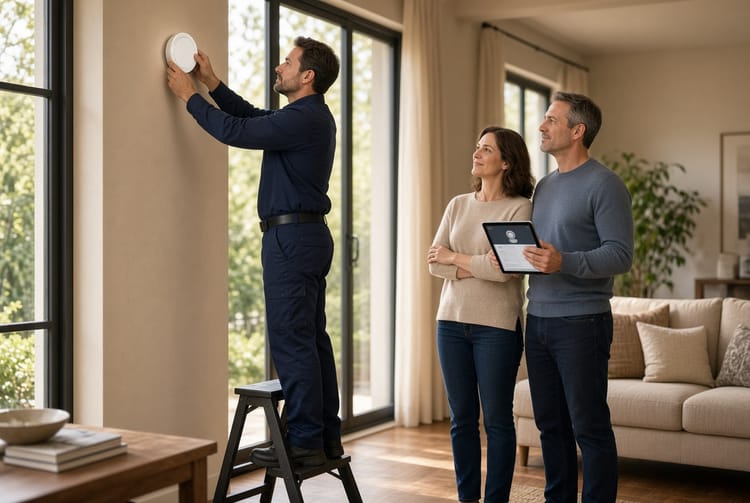
Qualified technicians handle the entire process, ensuring code compliance and optimal placement. Most upgrades can be completed in a single visit with minimal disruption.
Why Professional Monitoring Remains the Gold Standard
DIY smart detectors that send phone notifications are useful supplements, yet they still depend on a charged smartphone, functioning cellular network, and an awake, capable recipient. Professional central-station monitoring removes every one of those variables. Operators are trained, redundant communication paths are supervised, and emergency services are contacted by people whose sole job is rapid, accurate dispatch.
In life-safety situations, redundancy and human oversight are not luxuries—they are necessities. Monitored systems deliver both.
Conclusion: Monitored Life-Safety Devices Save Lives
The evidence is unambiguous. When smoke or carbon monoxide detectors are professionally monitored, emergency response begins the instant the hazard is detected—whether the family is home or thousands of miles away. Faster arrival of first responders means more lives preserved, less property destroyed, and greater peace of mind every single day.
Standalone alarms warn. Monitored alarms act. That single difference has already saved thousands of families and continues to do so every hour of every day.
If you are ready to protect your home with true life-safety integration, speak with a monitoring specialist today. The call is free, the information is clear, and the protection could one day prove priceless.
Faster Fire & CO Response Starts Here – Call for Monitored Detectors!