The Security System Siren: Indoor vs. Outdoor Placement
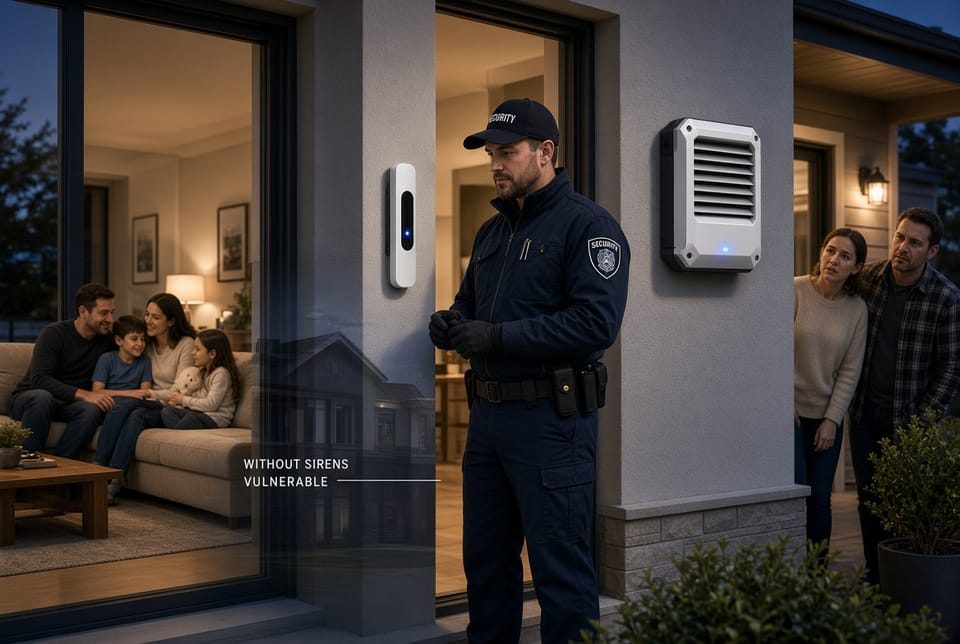
A reliable home security system does far more than simply detect motion or open doors. At its core sits one of the most powerful tools for immediate response and deterrence: the security system siren. This single component transforms silent alerts into unmistakable warnings that protect lives and property. Understanding where to place that siren—indoors or outdoors—can mean the difference between a quick resolution and a prolonged threat.
Call Now for Expert Indoor & Outdoor Siren Advice
In the following guide we examine the distinct roles of indoor and outdoor sirens, explore their unique advantages, and provide clear placement strategies. By the end you will know exactly how to position these devices for maximum effect, giving you confidence that your home is safeguarded with professional-grade precision.
Why the Siren Matters in Every Security System
Every modern alarm panel includes a siren as a primary response mechanism. When sensors trigger, the control unit activates the siren within seconds. The sound itself—typically 85 to 120 decibels—serves two critical purposes: it notifies people already inside the property and creates an environment so uncomfortable that most intruders abandon their plans.
Beyond volume, today’s sirens often integrate strobe lights, wireless connectivity, and battery backup. These features ensure the device continues working even during power outages. Choosing the correct placement amplifies every one of those capabilities. Incorrect placement, however, can leave gaps in coverage or reduce the psychological impact on would-be offenders.
A well-placed siren does more than make noise. It buys precious time for occupants to react, for neighbors to notice, and for monitoring centers to dispatch help. That is why the decision between indoor sirens and outdoor sirens—or the strategic use of both—deserves careful attention.
Indoor Sirens: Instant Alerts for Occupants and Immediate Discomfort for Intruders
An indoor siren is designed to operate within the living space of a home. Its primary mission is twofold: wake or alert everyone inside and make the environment intolerable for anyone who has already entered.
When an indoor siren activates, the piercing tone fills hallways, bedrooms, and common areas almost instantly. Occupants hear the warning regardless of whether they are sleeping, watching television, or working in a distant room. At the same time, the intense sound pressure level creates physical discomfort for an intruder. Most unauthorized individuals will retreat rather than endure prolonged exposure to 100-plus decibels of continuous noise.
Key Benefits of Indoor Placement
- Immediate notification of household members, including children and elderly residents who may not hear softer chimes.
- Psychological pressure that encourages rapid exit by the intruder.
- Protection against external weather and vandalism because the unit remains sheltered.
- Seamless integration with interior sensors such as motion detectors and door contacts.
Placement Tips for Indoor Sirens
Positioning an indoor siren correctly maximizes both alert range and discomfort factor. Follow these proven guidelines:
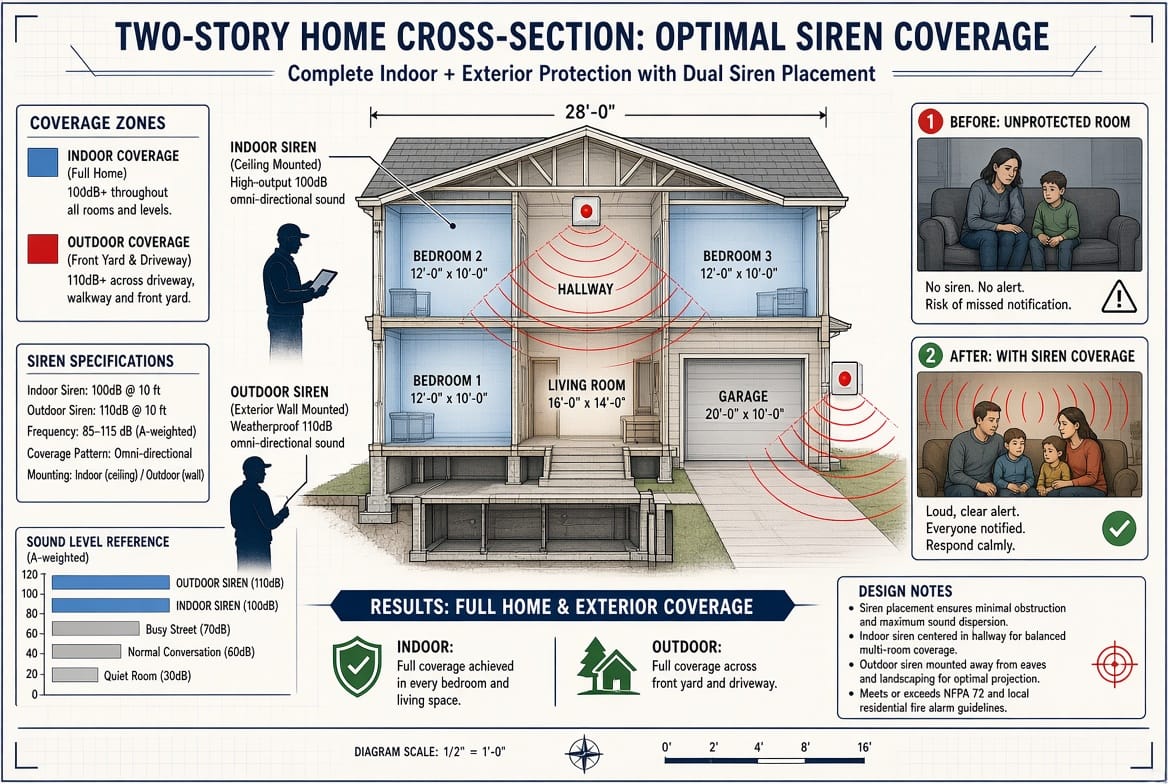
- Mount the device high on a central wall or ceiling, ideally between 7 and 9 feet above the floor, so sound waves travel freely through open spaces.
- Choose a location near the main living area or hallway junction so the tone reaches bedrooms and secondary rooms without obstruction.
- Avoid placing the siren inside closets, behind furniture, or near thick curtains that can muffle output.
- If the home has multiple floors, install at least one unit on each level to eliminate dead zones.
- Keep the siren at least three feet away from heat sources, air vents, or large metal objects that might interfere with wireless signals.
When these steps are followed, an indoor siren becomes an uncompromising guardian that prioritizes the safety of everyone already inside the residence.
Outdoor Sirens: Neighborhood Alerts and Pre-Entry Deterrence
While indoor units focus on those already inside, an outdoor siren operates on a different principle. Mounted on the exterior of the building, it broadcasts a powerful warning to the surrounding community and, crucially, attempts to stop an intruder before the person ever gains entry.
The moment perimeter sensors detect activity—such as a window being forced or a gate opening—the outdoor siren erupts. Neighbors hear the distinctive alarm tone and can quickly assess the situation or contact authorities. Simultaneously, the would-be offender faces an immediate auditory barrier that signals the property is actively monitored. Many intruders simply move on rather than risk the attention an exterior siren attracts.
Key Benefits of Outdoor Placement
- Early deterrence that often prevents forced entry altogether.
- Community awareness that multiplies the number of potential responders.
- Visible presence of the device itself, reinforcing the message that the home is protected.
- Ability to operate in harsh weather when proper weatherproof models are selected.
Placement Tips for Outdoor Sirens
Effective exterior positioning requires attention to both sound projection and physical security of the unit:
- Install the siren at least 8 to 10 feet above ground level on a wall facing the street or primary approach path so sound carries farthest.
- Orient the speaker toward open areas rather than solid fences or dense shrubbery that can absorb volume.
- Choose a location near the main entry points—front door, garage, or side gate—to confront threats at the earliest moment.
- Protect wiring by running it through conduit or using fully wireless models with long-range battery life.
- Ensure the housing is rated for outdoor use (IP65 or higher) and shielded from direct rain or extreme sun when possible.
- If the property is large, consider two outdoor units on opposite sides of the house for 360-degree coverage.
Correct outdoor placement turns the siren into a proactive shield that engages the neighborhood and discourages intrusion long before anyone steps inside.
Direct Comparison: Indoor Versus Outdoor Sirens
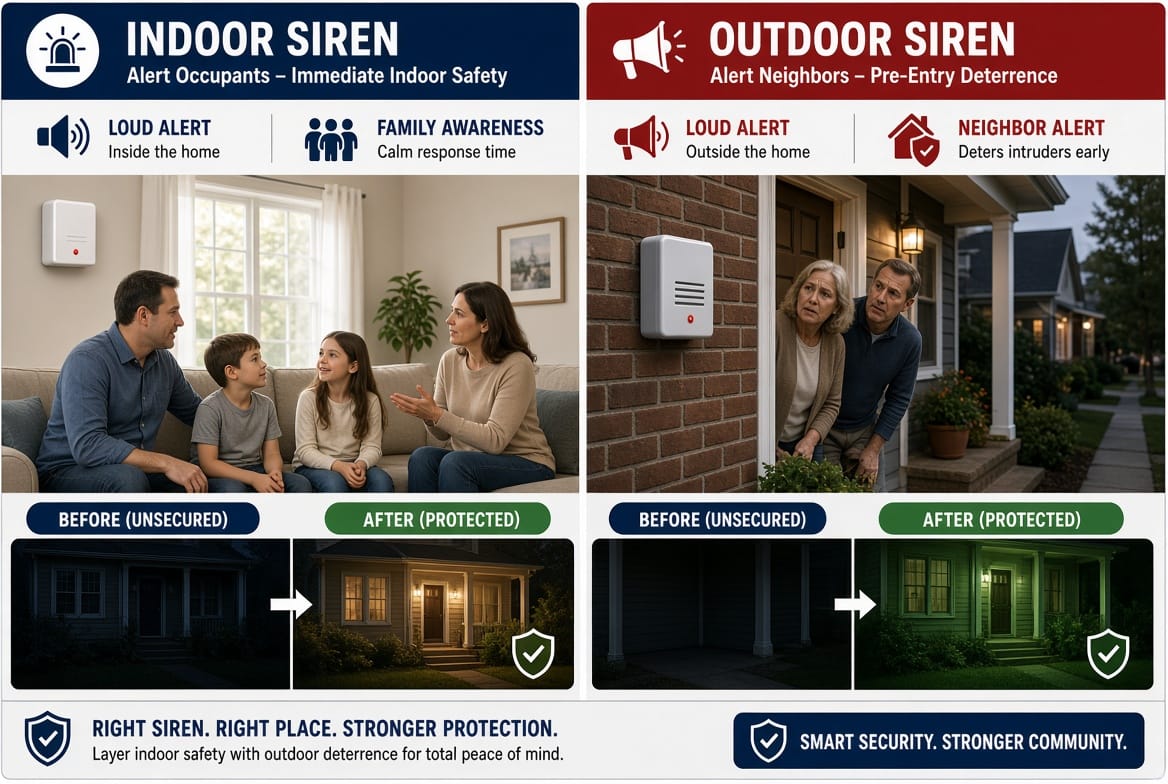
Understanding the complementary strengths of each type helps homeowners decide whether to use one, the other, or both.
Indoor sirens excel at protecting people already present. Their sound is contained, focused, and intensely uncomfortable for anyone who has crossed the threshold. They rarely disturb neighbors unnecessarily and remain safe from weather or tampering.
Outdoor sirens, by contrast, prioritize early warning and community involvement. They can stop a threat at the perimeter and leverage the eyes and ears of surrounding residents. Their visibility alone often acts as a silent deterrent even when silent.
Many professional installations combine both. An outdoor unit handles the first line of defense; an indoor unit ensures that once an entry occurs the occupants receive the strongest possible alert. This layered approach eliminates single points of failure and maximizes response speed.
Advanced Placement Strategies for Maximum Protection
Beyond basic mounting height and location, several refined techniques further strengthen performance:
- Conduct a sound-mapping walk-through. Activate a test tone and note any rooms or outdoor areas where the volume drops significantly; adjust or add units accordingly.
- Coordinate with existing sensors. Place the siren within reliable wireless range of the control panel and primary detection devices.
- Account for local ordinances. Some communities limit continuous outdoor alarm duration; choose models with automatic reset or dual-tone options that comply.
- Integrate visual elements. Pair the siren with a matching strobe light so hearing-impaired residents or distant neighbors receive a clear secondary signal.
- Schedule seasonal checks. Inspect outdoor housings for debris, moisture, or insect nests twice a year and test battery backup monthly.
These practices turn a standard siren into a finely tuned component of a comprehensive security architecture.
Common Placement Mistakes and How to Avoid Them
Even high-quality equipment underperforms when positioned poorly. Watch for these frequent errors:
- Mounting an outdoor unit too low, inviting vandalism or reduced sound travel.
- Hiding an indoor siren behind heavy drapes or inside a cabinet, muffling the alert.
- Relying on a single device for a multi-story or sprawling floor plan.
- Ignoring power and signal reliability, which can leave the siren silent during critical moments.
Correcting these issues restores full effectiveness and restores peace of mind.
Choosing the Right Siren Placement for Your Home
No universal formula fits every property. A compact urban apartment may rely primarily on a strong indoor unit, while a suburban house with large yards benefits from both indoor and outdoor coverage. Consider the following decision factors:
- Size and layout of the residence.
- Proximity of neighbors and local response times.
- Presence of children, elderly family members, or pets who need rapid indoor alerts.
- Risk profile of the neighborhood and history of attempted break-ins.
When uncertainty remains, a professional security assessment provides tailored recommendations based on real-world acoustics and threat patterns. The goal is always the same: ensure the siren activates at the right moment, reaches the right people, and creates the strongest possible deterrent.
Conclusion: Secure Your Home with Confident Siren Placement
Selecting between indoor sirens and outdoor sirens—or deploying both—directly influences how quickly threats are interrupted and how safely occupants respond. Indoor units guarantee that everyone inside receives an unmistakable warning and that intruders face immediate discomfort. Outdoor units extend that protection to the property line, enlisting neighbors and discouraging entry before it occurs.
With thoughtful placement, regular testing, and attention to coverage gaps, the humble security system siren becomes one of the most reliable defenders of your home. Take the next step today. Speak with a knowledgeable security advisor who can evaluate your specific layout and recommend the ideal combination of devices.
Your peace of mind is only one well-placed siren away.
Call Now for Fast, Professional Security Siren Setup