The Security System Remotes: Rolling Code vs. Fixed Code Technology

In today's world, home security is more important than ever. Your garage door serves as a primary entry point to your home, making the technology behind your security system remote a critical line of defense. If you're still relying on an older fixed code remote, you could be exposing your family and property to unnecessary risks.
Upgrade to Rolling Code Security – Call Now!
This comprehensive guide explores the evolution of garage door opener security, breaks down the key differences between fixed code and rolling code technology, and provides practical steps to assess and upgrade your system. By the end, you'll understand why transitioning to modern rolling code technology offers peace of mind and superior protection.
The Evolution of Garage Door Security Technology
Garage door openers have come a long way since their introduction. Early models from the 1970s through the mid-1990s relied on simple mechanisms that prioritized convenience over security. As wireless technology advanced, so did the threats. Code-grabbing devices and replay attacks became common tools for intruders.
Fixed code systems dominated the early era. These remotes transmitted the same unchanging signal every time the button was pressed. While innovative for their time, they left homeowners vulnerable as scanning technology improved.
The industry responded with rolling code technology (also known as hopping code) in the late 1990s and early 2000s. This advancement represented a major leap forward, generating a new, unique code with every use. Major manufacturers adopted it widely, significantly reducing the risk of unauthorized access.
Why does this matter today? A compromised garage often provides direct access to your entire home, including vehicles, valuables, and loved ones. Upgrading isn't just about convenience—it's about safeguarding what matters most.
Understanding Fixed Code Technology: The Older, Vulnerable Option
Fixed code remotes, sometimes called static or DIP switch systems, operate on a predetermined code set during manufacturing or installation. This code remains identical for every activation.
Key Characteristics of Fixed Code Systems
- DIP Switches: Many older models feature small physical switches inside the remote and receiver that must match exactly.
- Static Transmission: The same signal is sent every time, making it easy to intercept and replay.
- Limited Combinations: Early systems had relatively few possible codes, increasing the chance of duplication.
- Age Indicator: Typically found in systems installed before the late 1990s.
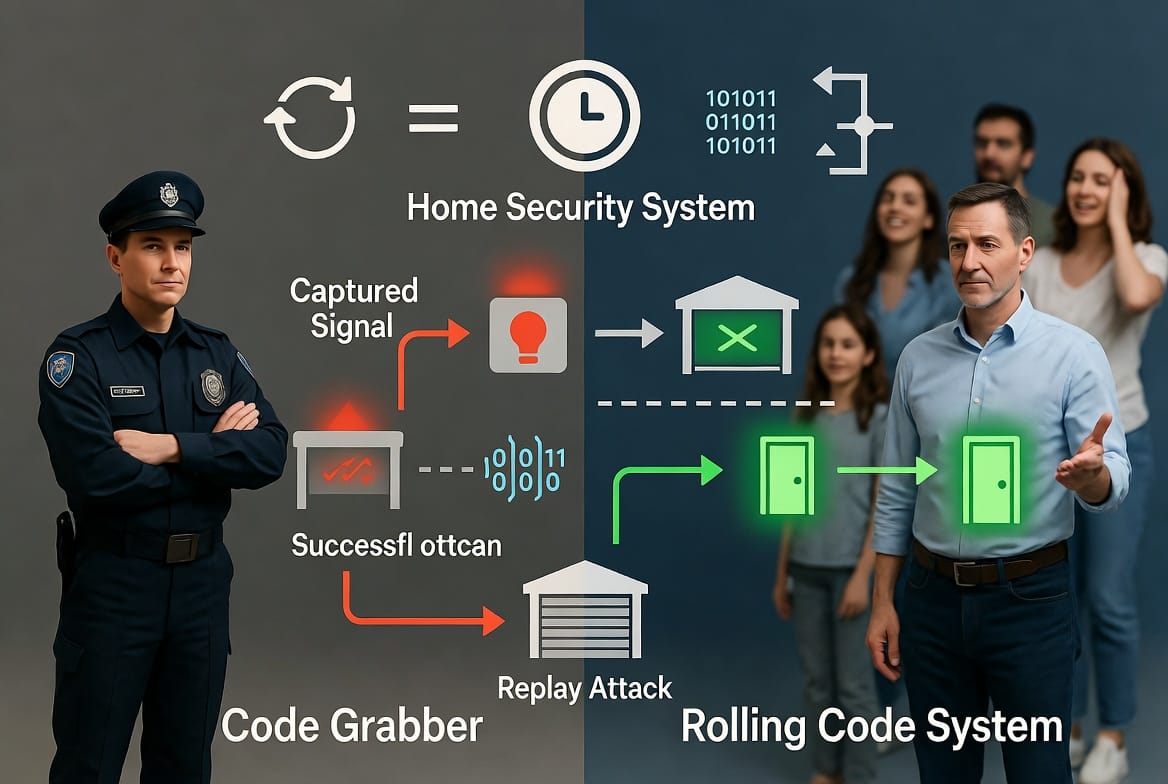
The primary risk is a replay attack. An intruder with a code grabber parked nearby can capture your remote signal and use it later to open the door undetected. This vulnerability has enabled numerous break-ins, turning a simple garage access point into a major security weakness.
Homeowners with older systems often remain unaware of these dangers until an incident occurs. Don't wait for a breach—proactive assessment is essential.
Rolling Code Technology: The Modern Standard for Security
Rolling code systems address fixed code weaknesses by dynamically changing the access code with every button press. The remote and receiver stay synchronized through sophisticated algorithms, typically offering billions of possible combinations.
How Rolling Code Works
- Code Generation: Each press creates a new unique code from a vast pool.
- Synchronization: The receiver expects the next code in the sequence and accepts it (often with a window for minor desyncs).
- Anti-Replay Protection: A captured code becomes invalid immediately after use, rendering replay attacks ineffective.
- Learn Button: Modern receivers include a "Learn" button for easy pairing of new remotes.
This technology has become the industry standard, providing robust defense against common hacking methods.
Benefits include:
- Dramatically reduced vulnerability to code grabbers.
- Peace of mind for families with valuables or vehicles stored in the garage.
- Compatibility with smart home integrations in newer models.
- Long-term reliability with proper maintenance.
How to Determine If Your Remote Uses Fixed or Rolling Code
Identifying your system type is straightforward. Here's how:
- Check the Age: Systems installed before 1996–2000 are likely fixed code. Newer ones generally use rolling code.
- Look for a Learn Button: Presence of a "Learn," "Train," or similar button on the motor unit usually indicates rolling code.
- Inspect the Remote: Fixed code models often have visible DIP switches or simpler designs. Rolling code remotes appear more modern and lack physical switches.
- Test with Programming: Attempting to program a universal remote like HomeLink can reveal the type—rolling code systems require the extra Learn button step.
- FCC ID Lookup: Search the FCC ID on your device for manufacturer details and security specs.
Signs It's Time to Upgrade Your Security System
- Your opener was manufactured before 2000.
- The remote uses physical DIP switches.
- No "Learn" button is visible on the unit.
- You've experienced unexplained garage door activity.
- You're concerned about neighborhood security trends.
Upgrading delivers immediate improvements in protection and often includes enhanced features like battery backup and smartphone integration.
Comprehensive Benefits of Switching to Rolling Code
Moving to a rolling code system offers numerous advantages beyond basic security:
- Enhanced Protection against wireless interception.
- Family Safety: Secure storage for vehicles and belongings.
- Insurance Advantages: Many providers recognize upgraded security with potential premium reductions.
- Convenience: Reliable performance with multiple remotes and smart controls.
- Future-Proofing: Compatibility with evolving smart home ecosystems.
Real-world impact: Homeowners who upgrade report greater confidence and fewer worries about unauthorized access.
Installation and Maintenance Best Practices
Professional installation ensures optimal performance. A qualified technician can:
- Assess your current setup.
- Recommend compatible rolling code models.
- Program remotes securely.
- Integrate with existing home automation.
Regular maintenance, such as battery replacement and signal testing, keeps your system operating at peak security levels.
Common Myths About Garage Door Security
Myth: "My garage is attached to the house, so it's safe enough."
Reality: Intruders target garages precisely because they provide discreet entry.
Myth: "Modern code grabbers can't breach rolling code."
Reality: While highly resistant, staying with the latest technology and proper setup maximizes defenses. Older rolling code variants may have known limitations.
Myth: "Upgrading is too expensive."
Reality: The cost of an upgrade is minimal compared to potential losses from a breach.
Taking Action: Secure Your Home Today
Your garage door remote is more than a convenience—it's a guardian of your sanctuary. Fixed code technology belongs in the past, while rolling code represents the secure future.
Don't leave your home vulnerable to outdated risks. A professional system review can identify weaknesses and recommend tailored solutions that fit your needs and budget.
Ready to upgrade? Contact our experts for a comprehensive security assessment.
Our team specializes in modern rolling code installations, ensuring your family enjoys the highest level of security and peace of mind. Whether you're in Dallas or surrounding areas, we're here to help safeguard what matters most.
Get Modern Home Security Protection – Call Now