The Security System Environmental Sensors: Freeze, Water, and CO Protection
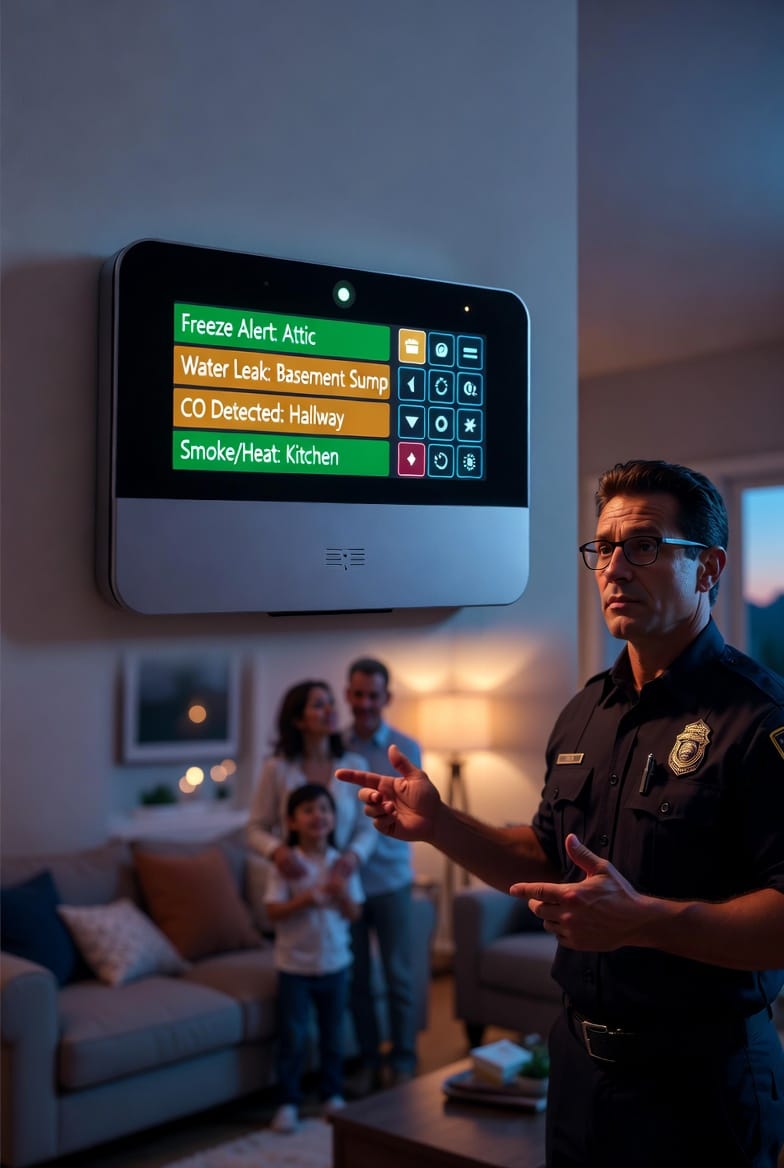
In today's world, a robust home security system does far more than deter intruders. It serves as a comprehensive guardian of your family's safety and your property's integrity. While many homeowners focus primarily on burglary protection, the most advanced systems integrate environmental sensors that monitor for hidden dangers capable of causing devastating damage or even life-threatening situations. These sensors—designed to detect freeze risks, water leaks, carbon monoxide (CO), smoke, and heat—provide round-the-clock vigilance through professional central station monitoring.
Add Life-Saving Environmental Sensors Today – Call Now!
This article explores how these essential components elevate your security system beyond basic alarms, delivering peace of mind and proactive protection. Whether you're a homeowner in Dallas or anywhere facing variable weather and everyday household risks, understanding these sensors can prevent costly repairs and, more importantly, safeguard lives.
Why Environmental Sensors Matter More Than You Think
Traditional security systems excel at detecting unauthorized entry, but many overlook the silent threats lurking within your home. Pipe bursts from freezing temperatures, undetected water leaks from failing appliances or sump pumps, and invisible carbon monoxide poisoning rank among the most common yet preventable household emergencies.
Professional security providers equip systems with specialized sensors that alert you—and trained monitoring professionals—before minor issues escalate. This layered approach not only minimizes property damage but also offers critical life-safety benefits. With 24/7 central station monitoring, signals reach experts who can dispatch help or notify you instantly, even if you're away or asleep.
Key advantages include:
- Early detection of environmental hazards
- Reduced insurance claims and potential premium discounts
- Integration with your existing security panel for seamless operation
- Customizable alerts via smartphone, text, or voice
Freeze Sensors: Preventing Costly Pipe Bursts in Cold Weather
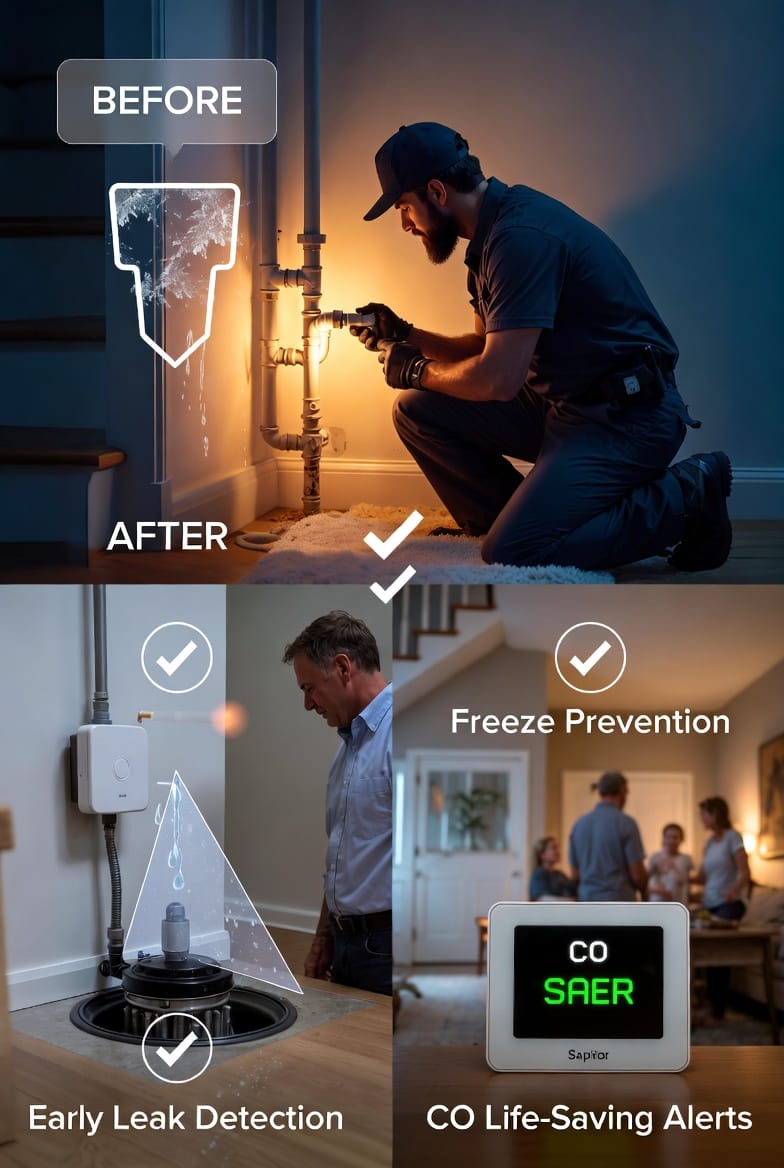
Winter weather in regions like North Texas can bring unexpected freezes, putting your plumbing at serious risk. Freeze sensors monitor temperature drops in vulnerable areas such as attics, basements, garages, and crawl spaces. When temperatures approach freezing, the sensor triggers an alert, giving you time to act—perhaps by activating heat tape, opening cabinets, or having a professional intervene.
Imagine returning from a trip to find your pipes burst, causing thousands in water damage and mold remediation. With integrated freeze protection, your central station receives the signal immediately and can contact you or an emergency responder. This proactive technology has saved countless homeowners from winter disasters.
How freeze sensors work effectively:
- Precise temperature thresholds tailored to your home's layout
- Wireless connectivity for easy installation without major renovations
- Alerts that escalate based on severity, from low-temperature warnings to urgent freeze risks
By addressing these issues promptly, families avoid structural damage and maintain a safe, comfortable living environment year-round.
Water Leak Sensors: Catching Hidden Floods Before They Destroy
Water damage ranks as one of the leading causes of homeowner insurance claims. Water leak sensors detect moisture from sump pump failures, appliance leaks (washing machines, water heaters, dishwashers), foundation seepage, or plumbing issues. Placed strategically near high-risk zones, these sensors send instant notifications when even small amounts of water appear.
Central station monitoring adds another layer: professionals verify the alert and can coordinate with restoration services quickly. This rapid response limits damage, prevents mold growth, and reduces repair costs significantly.
For busy families or frequent travelers, this technology provides reassurance that your home remains protected against silent water threats. Many systems also integrate with smart shut-off valves for automatic water control in severe cases.
Common scenarios where water sensors prove invaluable:
- Sump pump overflow during heavy Texas rains
- Slow leaks from aging pipes or faulty hoses
- Basement flooding that goes unnoticed until major damage occurs
Investing in water detection transforms potential nightmares into manageable, contained events.
Carbon Monoxide and Smoke/Heat Sensors: Invisible Life-Savers
Carbon monoxide (CO) is known as the "silent killer"—odorless, colorless, and undetectable without proper equipment. CO detectors in your security system monitor for this deadly gas produced by furnaces, fireplaces, generators, and vehicles. Placement near bedrooms ensures sleeping occupants receive early warnings.
When levels rise, the system alerts the central station, prompting immediate action such as contacting emergency services. Similarly, smoke and heat sensors detect combustion particles and rapid temperature increases, offering faster response than standalone units alone.
These life-safety features go beyond basic smoke alarms by providing monitored protection. Professional monitoring means help arrives even if family members cannot respond due to smoke inhalation or disorientation.
Critical benefits of integrated CO and smoke monitoring:
- Continuous 24/7 analysis rather than battery-dependent standalone devices
- False alarm reduction through advanced algorithms
- Unified system that correlates multiple sensor inputs for accurate threat assessment
Homeowners report greater confidence knowing their security system actively protects against these invisible dangers.
Sensor Placement Best Practices for Comprehensive Coverage
Proper installation maximizes effectiveness. Experts recommend:
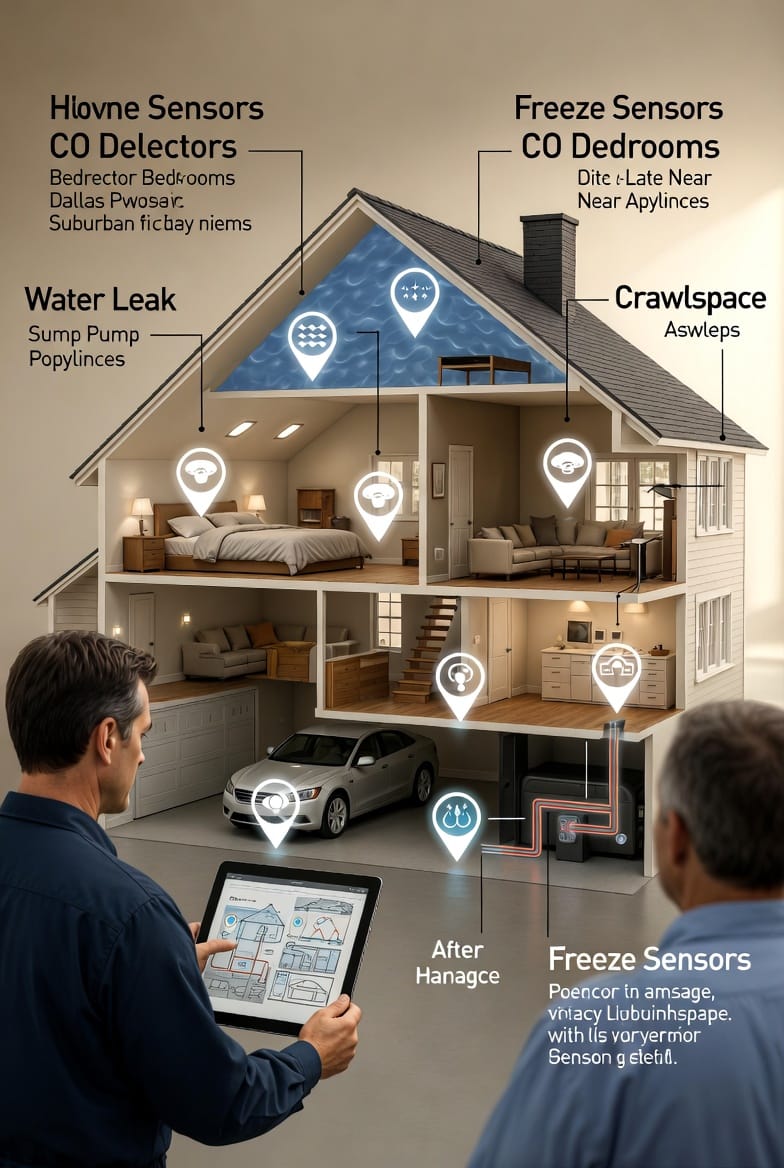
- CO sensors near sleeping areas and on every level of the home
- Water leak sensors in basements, near sump pumps, water heaters, and under sinks
- Freeze sensors in unheated spaces prone to temperature drops
- Smoke/heat detectors in kitchens, hallways, and garages
A professional assessment ensures your system covers your specific property vulnerabilities. Wireless technology allows flexible placement without compromising aesthetics or requiring extensive wiring.
Many systems offer expandable capabilities, allowing you to add sensors as your needs evolve—perhaps after a home renovation or seasonal weather pattern changes.
Integration with Central Station Monitoring
The true power of environmental sensors emerges through professional central station monitoring. Unlike self-monitored systems that rely solely on your phone notifications, central stations employ trained operators available around the clock. They verify alarms, contact you, and dispatch authorities or service providers when needed.
This human oversight proves especially valuable during environmental emergencies when you might be unavailable. Many providers offer two-way voice communication directly through the security panel, allowing quick assessment and guidance.
Additional Advantages and Peace of Mind
Beyond immediate protection, these sensors contribute to lower insurance premiums for many policyholders. Insurance companies recognize the value of monitored systems and often provide discounts for comprehensive coverage.
Regular system testing and maintenance ensure reliability. Professional installers handle battery replacements, software updates, and sensor calibration, keeping your protection current.
Families across Dallas and similar climates particularly benefit from this technology, where weather extremes and older housing stock increase risks. By choosing a fully integrated system, you invest in long-term security and well-being.
Choosing the Right System for Your Home
When evaluating options, prioritize systems with:
- UL-listed sensors and monitoring centers
- Battery backup for power outages
- Smartphone app integration for real-time status
- Scalability for future needs
A consultation with local experts helps tailor the setup to your property's unique characteristics.
Conclusion: Security Extends Far Beyond Intruders
Home security systems equipped with environmental sensors represent the gold standard in modern protection. They address freeze risks that prevent pipe bursts, water leaks that avert flooding disasters, and carbon monoxide threats that save lives. Combined with smoke/heat detection and reliable central station monitoring, they create a truly comprehensive safety net for your family and property.
Don't settle for partial protection. Enhance your system today with advanced environmental sensors and experience the reassurance of complete coverage. Contact our team to learn more about adding these life-saving features to your home security setup.
Prevent Pipe Bursts & CO Poisoning – Call for Expert Help!