The Security System Remote Monitoring: Difference Between Professional and Self-Monitoring
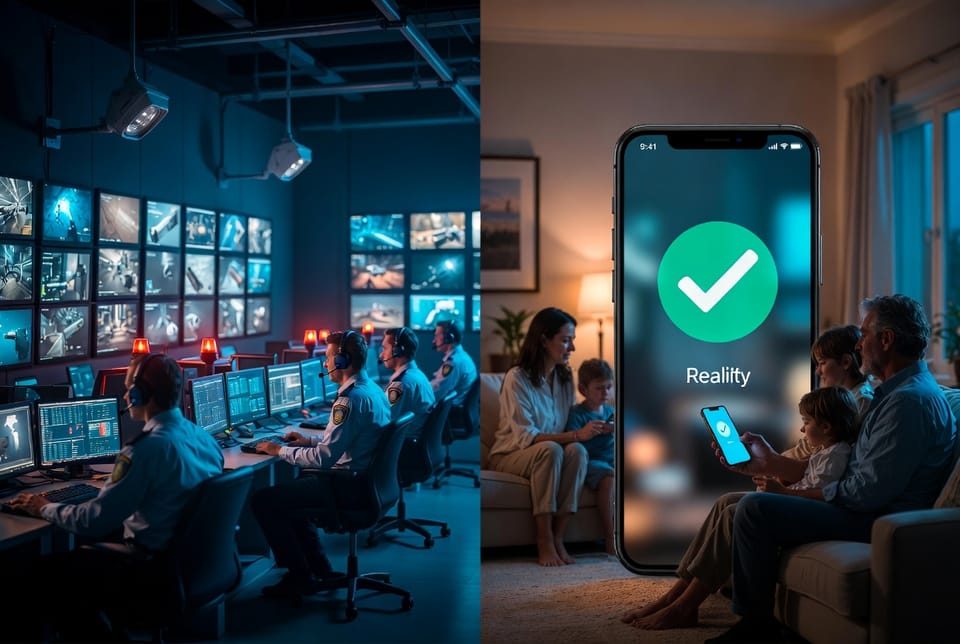
In today’s fast-paced world, home security has evolved far beyond simple locks and alarms. Modern security system remote monitoring gives homeowners powerful options to protect their families and property 24/7. But with choice comes an important decision: professional monitoring or self-monitoring?
Get Expert Help Choosing Professional or Self-Monitoring – Call Today!
This comprehensive guide explores the key differences, benefits, and considerations of each approach. Whether you’re a busy professional, a frequent traveler, or someone who values hands-on control, understanding these options will help you make a confident, informed decision for your home’s safety.
Professional monitoring connects your system to a dedicated central station that responds immediately, while self-monitoring puts the power directly in your hands through real-time app notifications. Both have strengths — the right choice depends on your lifestyle, needs, and peace of mind requirements.
What Is Professional Monitoring?
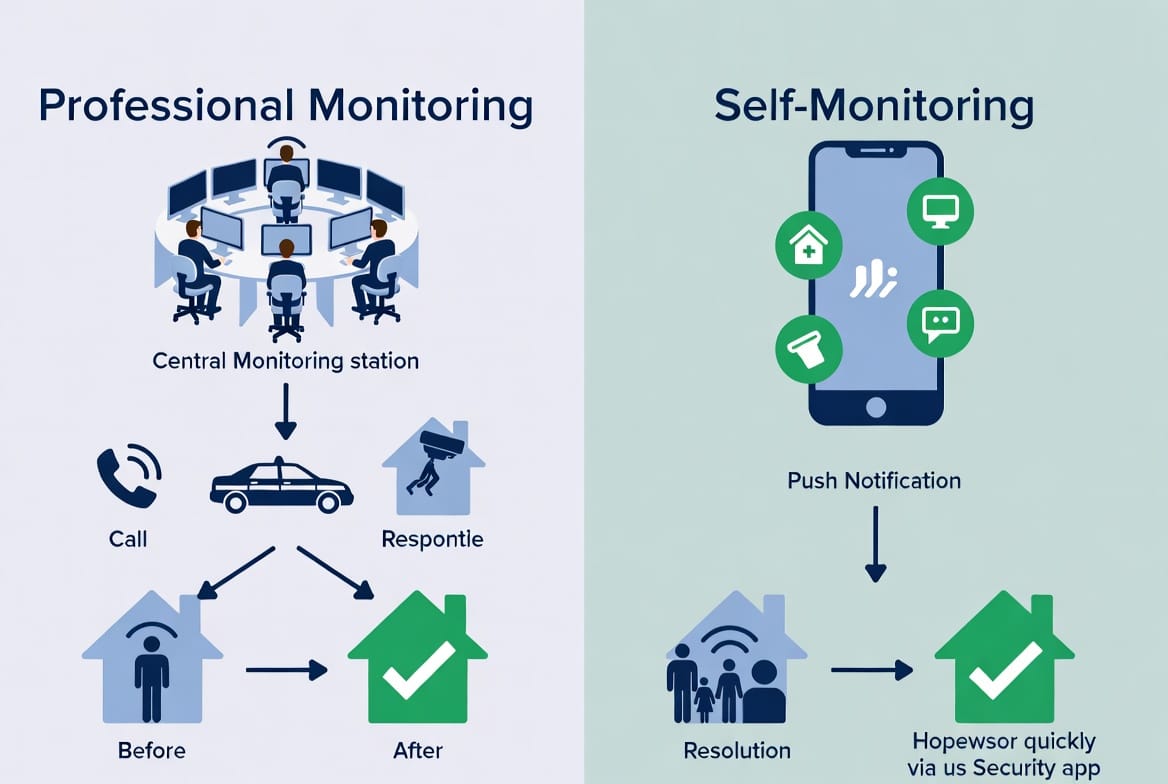
Professional monitoring involves a third-party central station that actively watches over your home security system around the clock. When an alarm triggers, trained operators verify the situation and take appropriate action — contacting you first, then dispatching emergency services if needed.
This service typically costs between $20 and $50 per month, depending on the provider and features included. It’s designed to deliver rapid response even when you’re unavailable, asleep, or away from your phone.
Key features of professional monitoring include:
- 24/7 central station oversight with certified operators
- Immediate verification and emergency dispatch (police, fire, or medical)
- Two-way voice communication capability in many systems
- Backup power and cellular connectivity for reliability during outages
- Detailed event logging and reporting
This option provides a strong safety net, particularly valuable for families with children, elderly members, or those who travel frequently.
Benefits of Professional Monitoring
The primary advantage of professional monitoring is reliable response when you can’t act. Life can be unpredictable — you might be in a meeting, on a plane, or simply sleeping deeply. A professional central station ensures help arrives quickly.
Peace of mind is another significant benefit. Knowing experts are watching over your property reduces anxiety and allows you to focus on daily life. Many insurance companies also offer premium discounts for professionally monitored systems, potentially offsetting monthly costs.
Professional monitoring excels in emergency scenarios. Operators follow clear protocols to distinguish between false alarms and genuine threats, reducing unnecessary dispatches while ensuring real incidents receive priority attention.
For homeowners who value comprehensive protection, professional monitoring delivers authoritative support that operates independently of your personal availability.
Understanding Self-Monitoring
Self-monitoring leverages smart technology to send alerts directly to your smartphone or other devices. When your security system detects activity, you receive instant notifications and can view live camera feeds, arm/disarm the system, and take action yourself — all through a user-friendly app.
This option is typically free with most modern security systems, making it an attractive choice for budget-conscious homeowners who prefer direct control.
Core elements of self-monitoring:
- Real-time push notifications and alerts
- Live video and audio access from anywhere
- Remote control of locks, lights, and thermostats
- Cloud storage for recorded events
- Customizable notification settings
Self-monitoring empowers users with immediate information and control, fostering a proactive approach to home security.
Advantages and Limitations of Self-Monitoring
Self-monitoring shines in convenience and cost savings. You maintain full control, responding to situations on your terms. Many people appreciate the empowerment of handling minor issues themselves — like checking on a delivery or confirming a family member arrived home safely.
However, it does require your availability and quick action. If you’re unavailable or miss an alert, response time depends entirely on when you see the notification. This can be a critical limitation during vacations, work hours, or nighttime emergencies.
Potential challenges with self-monitoring:
- Reliance on personal response time
- Risk of alert fatigue from frequent notifications
- Limited ability to dispatch authorities directly
- Dependence on reliable cellular or internet connection
Despite these considerations, self-monitoring works exceptionally well for tech-savvy individuals with flexible schedules who stay connected.
Head-to-Head Comparison: Professional vs Self-Monitoring
Understanding the practical differences helps clarify which option aligns best with your lifestyle.
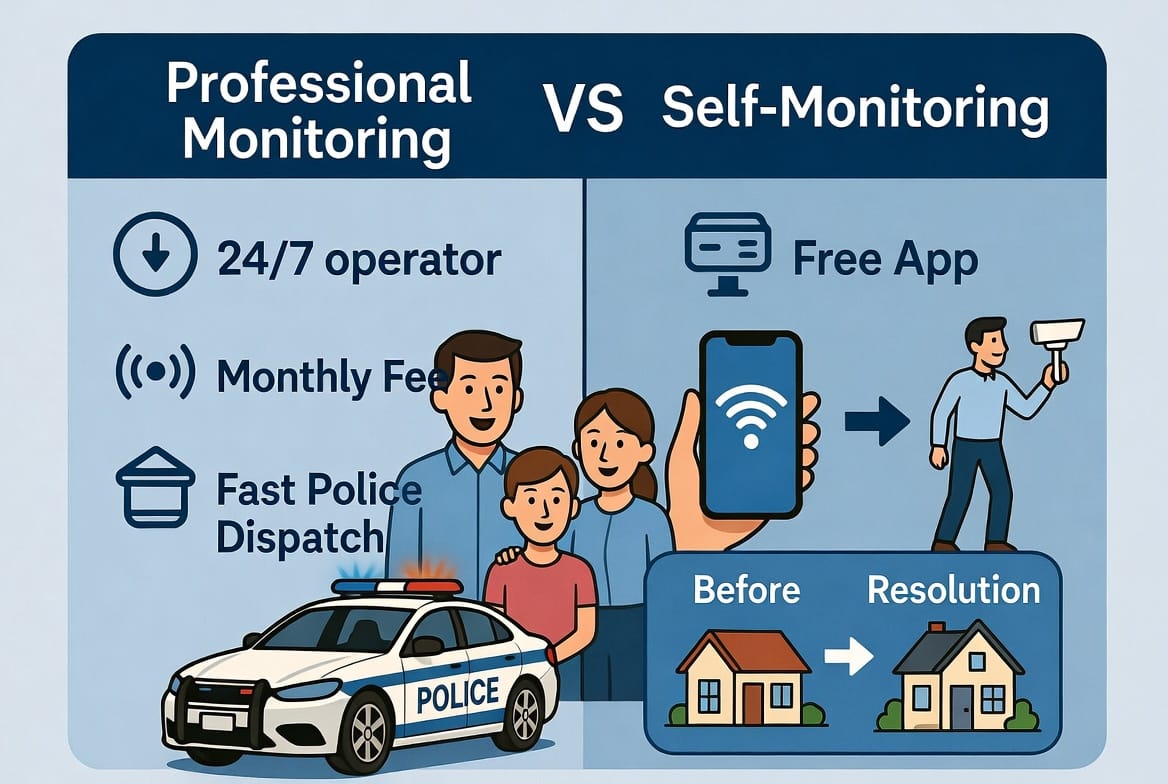
- Response Time: Professional monitoring offers the fastest emergency response through trained operators. Self-monitoring depends on how quickly you receive and act on alerts.
- Cost: Professional monitoring involves a monthly fee ($20–$50), while self-monitoring is generally included at no extra charge.
- Reliability: Professional systems provide redundant monitoring with backup power and multiple communication paths. Self-monitoring performance ties directly to your device connectivity and attention.
- Convenience: Self-monitoring gives you direct control and easy access. Professional monitoring handles situations automatically.
- False Alarm Management: Central stations often verify alarms before dispatching, potentially reducing fees. Self-monitoring requires you to manage this yourself.
- Integration: Both options work with modern smart home devices, but professional monitoring often includes enhanced features and support.
Bold key consideration: Many homeowners choose hybrid approaches — combining self-monitoring for daily convenience with professional backup for critical protection.
Lifestyle-Based Recommendations
Your daily routine and personal circumstances should guide your monitoring choice.
Choose professional monitoring if you:
- Travel frequently or spend long hours away from home
- Have young children, elderly family members, or pets
- Live in areas with higher crime rates
- Value maximum peace of mind and rapid emergency response
- Want potential insurance premium reductions
Opt for self-monitoring if you:
- Maintain a consistent, flexible schedule
- Prefer hands-on control and immediate information
- Have a strong tech comfort level
- Want to minimize ongoing costs
- Feel confident responding quickly to alerts
For many families, a balanced approach provides the best of both worlds. Modern systems often allow seamless switching or combining both monitoring methods based on your needs.
Common Concerns and How to Address Them
Many homeowners worry about false alarms and associated costs. Professional monitoring services typically include verification steps to minimize this issue. Self-monitoring users can reduce false alerts through proper system setup and zone customization.
Privacy is another important topic. Reputable companies maintain strict data protection standards. Review each provider’s policies to ensure your information remains secure.
System reliability during power or internet outages matters greatly. Look for systems with cellular backup and battery power to maintain protection regardless of conditions.
Making the Right Choice for Your Home
The decision between professional monitoring and self-monitoring ultimately comes down to matching your security needs with your lifestyle preferences. There’s no universal “best” option — only the solution that works optimally for your unique situation.
Consider these guiding questions:
- How often am I away from home or unavailable to respond?
- What level of hands-on involvement do I prefer?
- What is my budget for ongoing security costs?
- How important is rapid emergency dispatch to me?
Many experts recommend starting with a professional assessment of your property and discussing specific concerns with security specialists who understand both approaches.
Conclusion: Choose the Monitoring You Need
Home security system remote monitoring represents a significant advancement in protecting what matters most. Whether you select professional monitoring for its reliable 24/7 support or self-monitoring for its flexibility and cost-effectiveness, the goal remains the same: creating a safer environment for your family.
Take action today to enhance your home’s protection. Evaluate your lifestyle, consider the pros and cons outlined here, and choose the monitoring solution that gives you genuine confidence.
For personalized recommendations and to explore available options tailored to your needs. We’re here to help you find the perfect balance of technology, protection, and peace of mind.
Find the Perfect Home Security Monitoring for Your Lifestyle – Call Today