The Security System Pet Immunity: Avoiding False Alarms
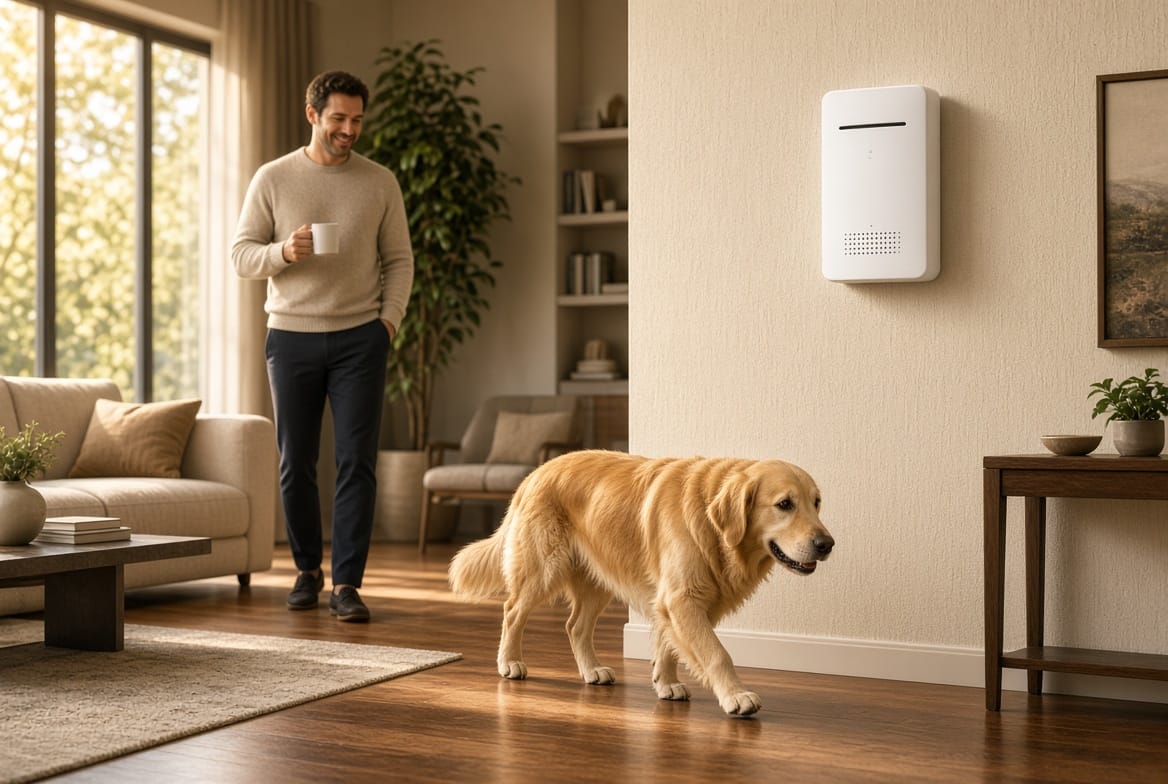
Pets bring joy, companionship, and a sense of home. They also create one of the most common frustrations in residential security: false alarms. A cat leaping onto a sofa or a dog crossing a living-room floor can send motion sensors into overdrive, producing unnecessary dispatches, neighbor complaints, and monitoring fees. Pet-immune sensors solve this problem without sacrificing protection. This feature allows the system to distinguish everyday animal movement from genuine human intrusion, keeping both your animals and your security system working in harmony.
Call Now for False-Alarm-Free Home Security
The following guide explains how pet immunity functions, how to set it up correctly, and where to place sensors so false alarms become rare rather than routine.
Why False Alarms Happen with Pets
Traditional passive infrared (PIR) motion detectors respond to changes in heat and movement. A human body radiating warmth while walking across a room produces a strong, large-area signal. A 15-pound cat or a 40-pound dog produces a smaller, lower heat signature, yet many older sensors treat both signals the same. The result is an alarm that sounds when no threat exists.
Repeated false alarms erode trust in the system. Homeowners begin to delay arming the alarm or ignore notifications. Professional monitoring stations may apply extra verification steps or even drop service after too many unnecessary calls. Pet immunity was developed specifically to restore reliability while still detecting an actual person entering the protected space.
How Pet-Immune Sensors Actually Work
Pet-immune motion sensors do not “see” animals and ignore them in a simple on/off way. They use a combination of hardware design and processing logic to evaluate the size and intensity of a heat signature.
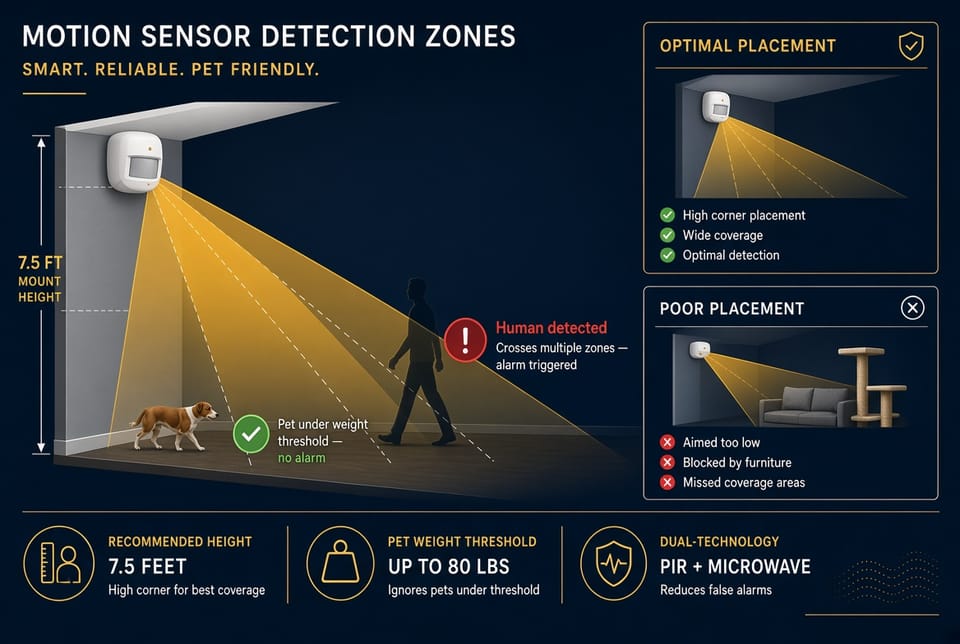
Most quality units employ dual-element or quad-element PIR detectors. These sensors look at the infrared pattern across multiple detection zones. A small animal typically occupies only one or two zones and produces a weaker temperature differential. A human adult usually crosses several zones at once and generates a stronger signal. The sensor’s processor compares the pattern against a programmed threshold.
Many models also incorporate a weight or size rating—commonly 40 pounds, 55 pounds, 80 pounds, or 100 pounds. The rating tells the sensor to disregard heat signatures consistent with animals below that mass. The algorithm is not a scale; it estimates mass from the combination of heat intensity, movement speed, and the number of detection zones activated.
Some advanced sensors add a second technology such as microwave Doppler. The PIR and microwave signals must both agree before an alarm is declared. A pet may trigger one technology but rarely both at the intensity and duration required for a confirmed event. This dual-technology approach further reduces nuisance trips while maintaining sensitivity to human-sized targets.
The sensor still detects a person crawling or walking slowly. Immunity applies only to signatures that fall below the designed threshold. That is why correct mounting height and aiming remain essential; even a pet-immune sensor can be defeated by poor placement.
Choosing the Right Pet-Immune Rating
Select a rating that comfortably exceeds the weight of your heaviest pet plus a modest safety margin. A 45-pound dog is better served by an 80-pound-rated sensor than a 40-pound unit. Multiple pets in the same room increase the chance that two animals will occupy detection zones simultaneously, so a higher rating or dual-technology sensor is prudent.
If your household includes both a large dog and several cats, treat the largest animal as the determining factor. Cats that climb furniture or jump onto counters can still create problems if the sensor is aimed too low or pointed at favorite perches. The rating is only one part of the solution; placement completes it.
How to Set Up Pet-Immune Sensors
Installation begins with reading the manufacturer’s specifications for mounting height and pet rating. Most units are designed for installation between 6.5 and 8 feet above the floor. Follow that range exactly.
After physical mounting:
- Connect the sensor to the control panel or wireless receiver according to the system instructions.
- Enter programming mode and confirm the device is recognized.
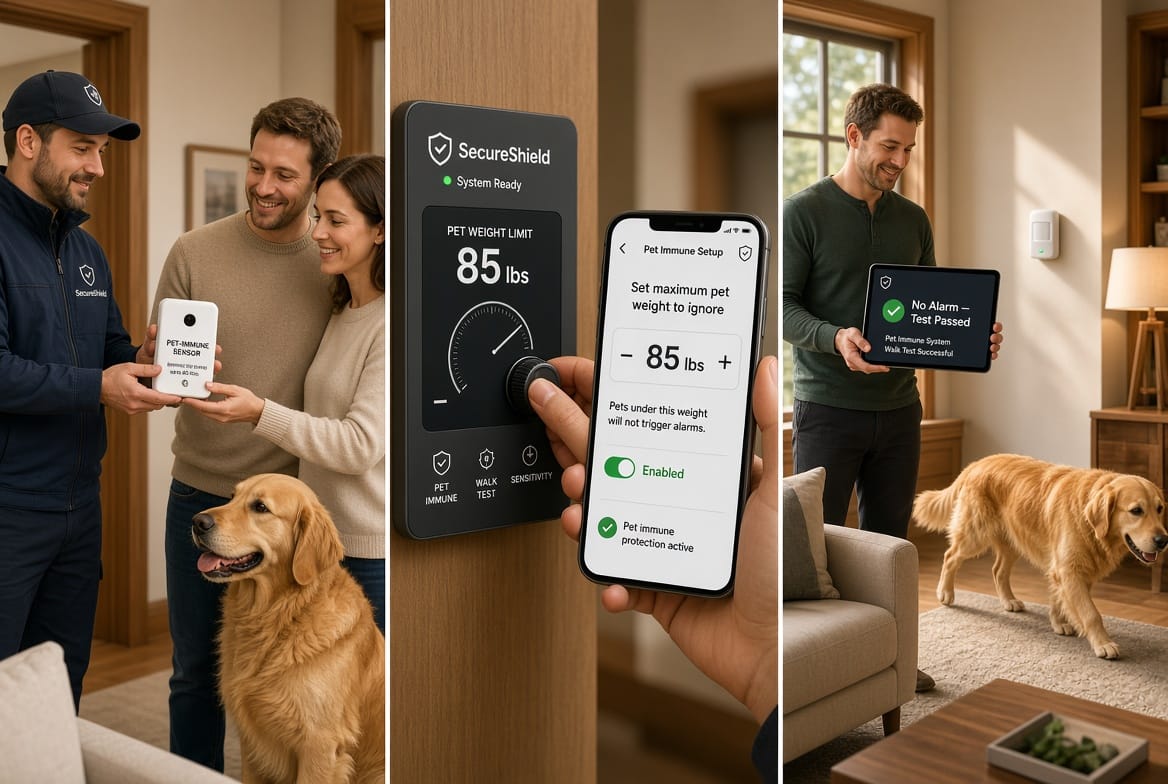
- If the panel or mobile app offers a pet-immunity or animal-weight setting, select the appropriate value.
- Walk-test the sensor with the system in test mode. First walk through the coverage area yourself to verify human detection. Then allow your pets to move normally while you observe whether any alarm is generated.
- Adjust the sensitivity or pulse-count setting if the unit permits it. A slightly higher pulse count (requiring more consecutive detections) often eliminates remaining nuisance trips without creating detection holes.
Perform the walk-test at different times of day. Sunlight moving across a floor, heating vents, or ceiling fans can occasionally affect PIR performance. Testing under real conditions reveals these issues before the system is relied upon.
If your system uses an app, enable notifications for sensor trouble or low battery so you learn of problems promptly. A sensor that has been knocked askew by a jumping dog will not provide reliable immunity.
Best Placement Practices to Avoid False Alarms
Placement determines whether the immunity feature works as intended. Follow these guidelines:
- Mount sensors in corners whenever possible. Corner placement gives the widest, most even coverage and keeps the detection pattern above typical pet pathways.
- Aim the sensor across the room rather than directly down a hallway that pets use as a racetrack.
- Keep the lower edge of the detection pattern at least 3–4 feet above the floor in rooms where pets roam freely. This is achieved by correct mounting height and slight downward tilt only when necessary.
- Never point a sensor at furniture, cat trees, window sills, or stair landings that animals regularly occupy.
- Avoid aiming at heat sources such as fireplaces, heating vents, or windows that receive strong afternoon sun. Rapid temperature changes can mimic motion.
- In multi-level homes, place sensors so they do not look down staircases if pets travel between floors frequently.
- Use more than one sensor in large open-concept spaces rather than relying on a single unit that must cover every possible pet path.
Hallways and kitchens often need special attention. Pets tend to linger near food bowls or follow family members. A sensor at the entrance to these rooms, mounted high and aimed to catch a person entering rather than an animal circling the island, usually performs well.
Bedrooms and home offices can use standard sensors if pets are not allowed inside when the system is armed. Consistency in household rules reduces the number of sensors that require the immunity feature.
Common Installation Mistakes
Even good equipment fails when installed incorrectly. The most frequent errors include:
- Mounting the sensor too low so the detection pattern sweeps across the floor where pets walk.
- Pointing the unit at a favorite sleeping spot or climbing structure.
- Using a 40-pound-rated sensor for an 55-pound dog and assuming the rating is conservative.
- Skipping the walk-test after installation or after rearranging furniture.
- Placing sensors opposite large windows where sunlight and outdoor movement create additional infrared changes.
- Forgetting that two medium-sized pets together can produce a combined signature closer to a human.
Correcting these issues usually requires only a small change in height, angle, or rating—not a complete system replacement.
Testing and Ongoing Maintenance
After initial setup, re-test whenever you add a new pet, move furniture, or change seasonal heating patterns. A simple monthly check takes five minutes: arm the system in stay or test mode, let the animals move naturally, and confirm no alarm occurs. Then walk through the same area yourself to verify detection still works.
Replace batteries on schedule. A weakening battery can cause erratic behavior that looks like a false alarm. Keep lenses clean; dust or cobwebs alter the infrared pattern the sensor expects.
If false alarms persist after these steps, the sensor may be defective or the immunity rating may be insufficient for your household. Most reputable manufacturers offer replacements or upgraded models with higher weight ratings or additional processing power.
Integrating Pet Immunity into a Complete Security Plan
Pet-immune motion sensors work best as part of a layered system. Door and window contacts remain the first line of defense and are unaffected by animals. Glass-break detectors add another layer that pets cannot trigger. Cameras with person-detection analytics can provide visual verification when a motion event does occur.
Many modern panels allow you to create custom arming modes. A “pets home” mode can bypass certain interior sensors while leaving perimeter protection active. This flexibility lets you keep the system armed during the day without generating constant alerts.
Professional monitoring companies appreciate households that use pet-immune technology because it reduces unnecessary dispatches. Some providers even offer rate discounts or faster response once they confirm the system has been optimized for animals.
Keep Your Pets and Your System Happy
A security system should protect the entire household, including the four-legged members. Pet-immune sensors make that possible by ignoring heat signatures below a designed weight and size threshold while remaining fully capable of detecting human intruders. Correct setup, thoughtful placement, and periodic testing turn a common source of frustration into a reliable, quiet guardian.
You do not have to choose between the freedom your pets enjoy and the peace of mind a monitored alarm provides. With the right equipment and a few careful installation decisions, both can coexist comfortably.
If you are ready to add or upgrade to pet-immune sensors. A specialist can review your floor plan, recommend appropriate weight ratings, and help you place devices so false alarms stay in the past. Keep your pets happy and your system dependable—protection and companionship belong together.
Call Today to Keep Pets and Alarms in Harmony