The Security System False Alarm Prevention: Adjusting Sensors
False alarms remain one of the most persistent frustrations for homeowners who rely on modern security systems. The sudden blare of sirens in the middle of the night, the embarrassment of explaining yet another unnecessary dispatch to local authorities, and the growing temptation to simply disable the system altogether can undermine the very peace of mind a security system is meant to provide. When sensors trigger without a genuine threat, trust in the entire setup erodes. The good news is that the majority of these incidents stem from identifiable and correctable issues rather than inherent flaws in the equipment. By understanding the root causes and making precise adjustments to sensors, homeowners can dramatically reduce false alarms while preserving—or even enhancing—the system’s ability to detect real intrusions.
Stop False Alarms Today – Call for Sensor Tuning!
The Everyday Frustration of Unwanted Alarms
Imagine settling in for the evening only to have the alarm panel erupt because a family pet darted across a room or a breeze rustled the curtains. These interruptions are more than inconvenient; they create real consequences. Repeated false dispatches can lead to fines from municipalities, strained relationships with neighbors, and a dangerous habit of ignoring or turning off the system. Over time, the homeowner may begin to question whether the investment in professional-grade protection was worthwhile. This cycle of irritation is common, yet it is almost always preventable through thoughtful sensor calibration rather than expensive equipment replacement.
The core issue usually lies not with the central control panel but with how individual sensors interpret their environment. Motion detectors, door and window contacts, and glass-break sensors are designed to be highly responsive, which is exactly why they sometimes overreact. Recognizing this sensitivity as a feature that can be fine-tuned, rather than a defect, is the first step toward reliable operation.
Primary Causes of False Alarms
Three categories account for the vast majority of nuisance activations: household pets, environmental factors such as wind, and simple user error. Addressing each category systematically restores confidence in the system.
Pets and Motion Detection Challenges
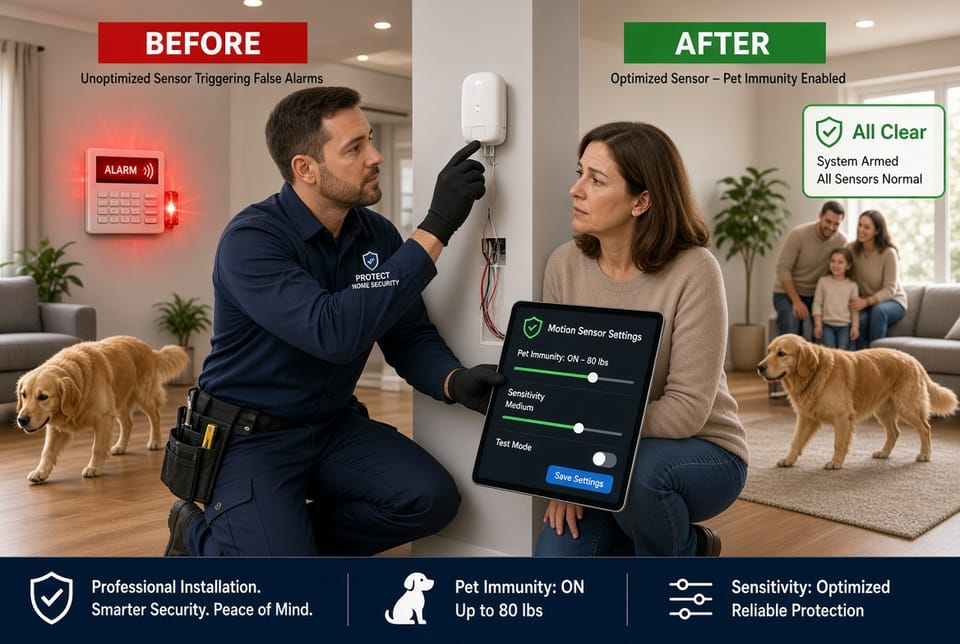
Household animals are among the leading triggers. A cat leaping onto a countertop or a medium-sized dog pacing through a hallway can easily register as human movement if the sensor lacks proper pet immunity configuration. Many motion sensors use passive infrared technology that detects heat signatures and movement patterns. Without adjustment, even a small pet can generate enough change to trip the alarm, especially in high-traffic living areas.
Wind, Drafts, and Environmental Movement
Outdoor or indoor air movement frequently fools sensors. Strong gusts can cause curtains to sway, plants to shift, or lightweight objects to fall. Temperature fluctuations near heating vents or sunny windows can also create heat-pattern changes that mimic an intruder. Door and window contacts may register as “open” when wind pressure flexes a frame just enough to break the magnetic seal momentarily. These environmental triggers are particularly common in older homes or properties with large windows.
User Error and Everyday Habits
Simple oversights compound the problem. Leaving a window slightly ajar while arming the system, walking through a protected zone immediately after activation, or failing to account for seasonal changes (such as holiday decorations hanging near sensors) all produce avoidable alerts. Even well-intentioned testing without following the manufacturer’s procedure can leave sensors in an overly sensitive state.
How to Adjust Sensors for Accurate Detection
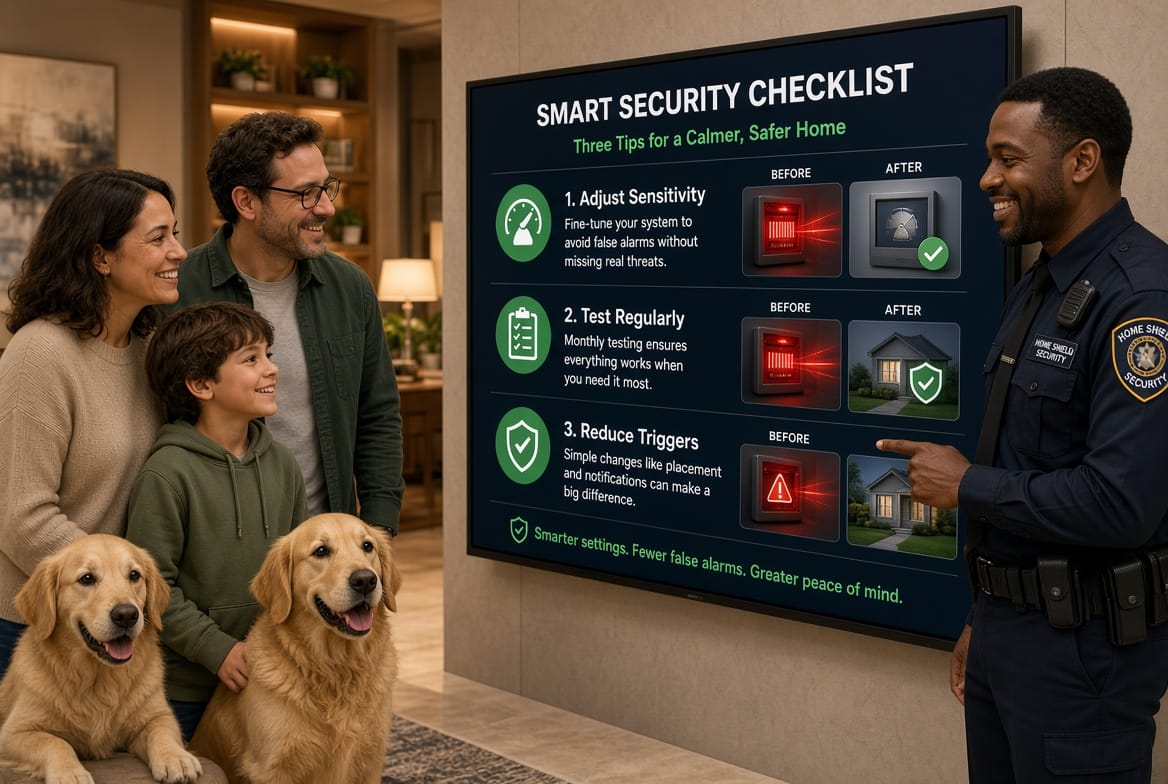
The most effective prevention strategy is targeted adjustment of three key sensor attributes: pet immunity, sensitivity levels, and physical placement. These modifications require no specialized tools in most cases and can be performed by the homeowner or a technician in a single visit.
Enabling and Optimizing Pet Immunity
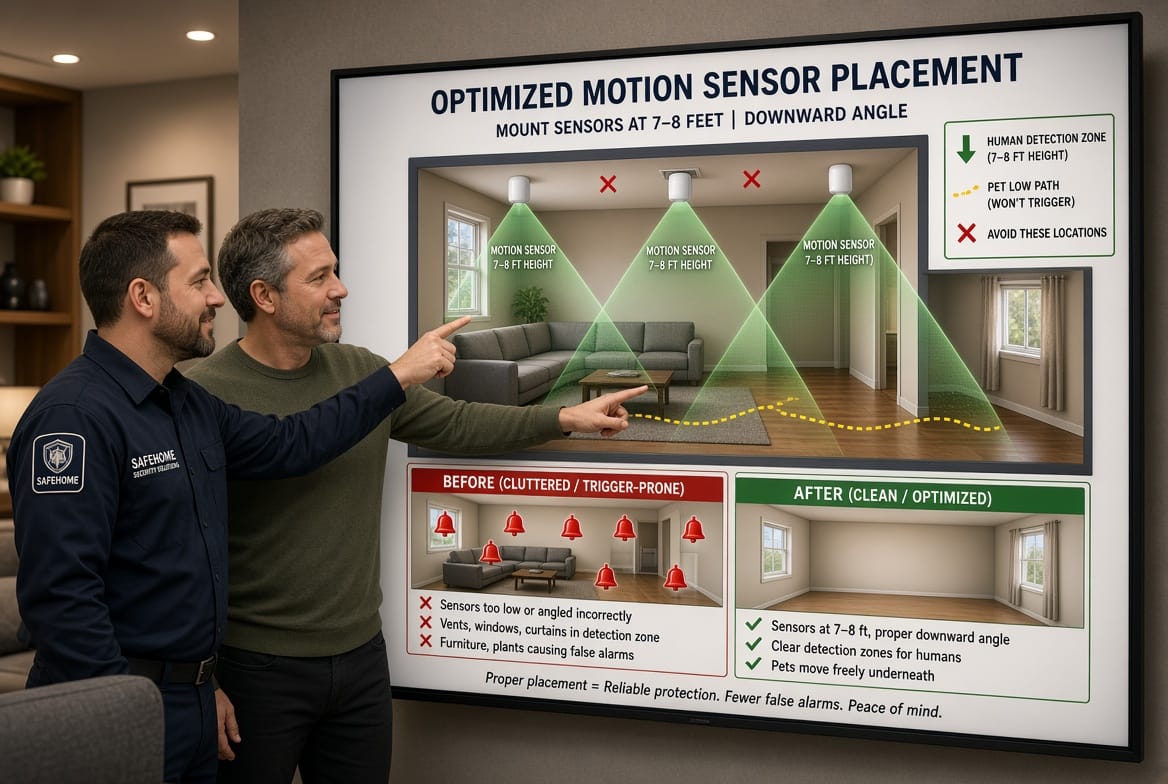
Modern motion sensors often include a dedicated pet immunity setting that ignores animals below a specified weight threshold, commonly 40 to 80 pounds depending on the model. Activating this feature typically involves accessing the sensor’s programming menu via the control panel or a companion app and selecting the appropriate weight class. After the change, conduct a controlled walk-test with the actual pets present to confirm they no longer trigger the zone while a person still does. Combining pet immunity with strategic placement—mounting the sensor higher on the wall and angling it slightly downward—further reduces animal-related false alarms without creating detection gaps.
Calibrating Sensitivity Settings
Sensitivity controls how readily a sensor reacts to movement or environmental change. Lowering the setting decreases the chance of wind or minor temperature shifts causing an alert, yet dropping it too far risks missing a slow-moving intruder. The recommended approach is incremental adjustment: reduce sensitivity by one increment, then perform a thorough walk-test covering every approach path. Repeat until the sensor reliably detects a person at normal walking speed but ignores typical household activity. Many systems allow separate sensitivity profiles for “stay” versus “away” modes, offering additional flexibility. Always document the original factory setting so it can be restored if needed.
Strategic Sensor Placement
Even perfectly calibrated sensors will produce false alarms if installed in problematic locations. Ideal placement keeps motion detectors at least six to eight feet above the floor, aimed away from heat sources, direct sunlight, and frequently used doorways. Avoid pointing sensors directly at windows or HVAC vents. For door and window contacts, ensure the magnet and sensor remain aligned within the manufacturer’s specified gap even when the frame expands or contracts with weather. Relocating a single poorly positioned sensor often eliminates an entire category of nuisance triggers.
Practical Tips to Minimize Future False Alarms
Consistent habits and periodic maintenance keep adjustments effective over the long term. The following practices form a reliable routine:
- Perform a complete system walk-test at least once every three months and after any furniture rearrangement or seasonal décor changes.
- Keep sensors clean; dust accumulation on lenses can alter detection patterns and increase sensitivity unpredictably.
- Close windows and interior doors before arming, and use the system’s “chime” feature during the day to become familiar with which zones activate under normal conditions.
- Consider dual-technology sensors that require both motion and another confirmation (such as microwave or glass-break) before sounding an alarm; these significantly reduce isolated environmental triggers.
- Schedule an annual professional inspection to verify firmware updates, battery health, and overall calibration.
- Educate every household member—including guests and pet sitters—on proper arming procedures and the location of sensors.
Implementing even three of these steps typically produces a noticeable drop in unwanted activations within the first month.
The Long-Term Value of Proper Sensor Tuning
When sensors operate as intended, the security system recedes into the background—quietly protecting the home without constant interruption. Families regain the ability to move freely, pets can enjoy the house without restriction, and the psychological burden of “crying wolf” disappears. Reliable detection also means that when the alarm does sound, occupants and monitoring professionals treat it with the seriousness it deserves. This restored trust is the true measure of a well-adjusted system.
False-alarm reduction is not a one-time project but an ongoing partnership between the homeowner and the technology. Small, informed changes compound into substantial peace of mind.
Reduce false alarms for reliable protection. For personalized assistance with system tuning, sensor calibration, or a comprehensive review of your current setup. A brief conversation can identify the precise adjustments your home needs and restore the confidence that your security system will respond only when it truly matters.
Get Expert Sensor Adjustments – Call Now!