The Security System Entry Delay: Setting Proper Times for Convenience and Safety
In the world of home security systems, few features blend everyday practicality with critical protection quite like the entry delay. This essential configuration gives homeowners the time they need to enter their property and disarm the system without triggering an immediate alarm. When set correctly, it delivers seamless convenience while preserving rock-solid safety.
Set Perfect Security Delays for Your Home – Call Now!
Proper entry delay settings prevent frustration, reduce false alarms, and ensure your family moves through daily routines with confidence. Yet many homeowners leave default settings untouched, unaware that a simple adjustment can transform their system’s performance. This comprehensive guide walks you through everything you need to know about configuring entry delay times — from understanding the basics to tailoring them for your unique household.
By the end, you’ll have the knowledge to optimize your security system for both comfort and protection. And if you prefer expert assistance, professional programming support is just a call away.
Understanding Entry Delay: What It Is and Why It Matters
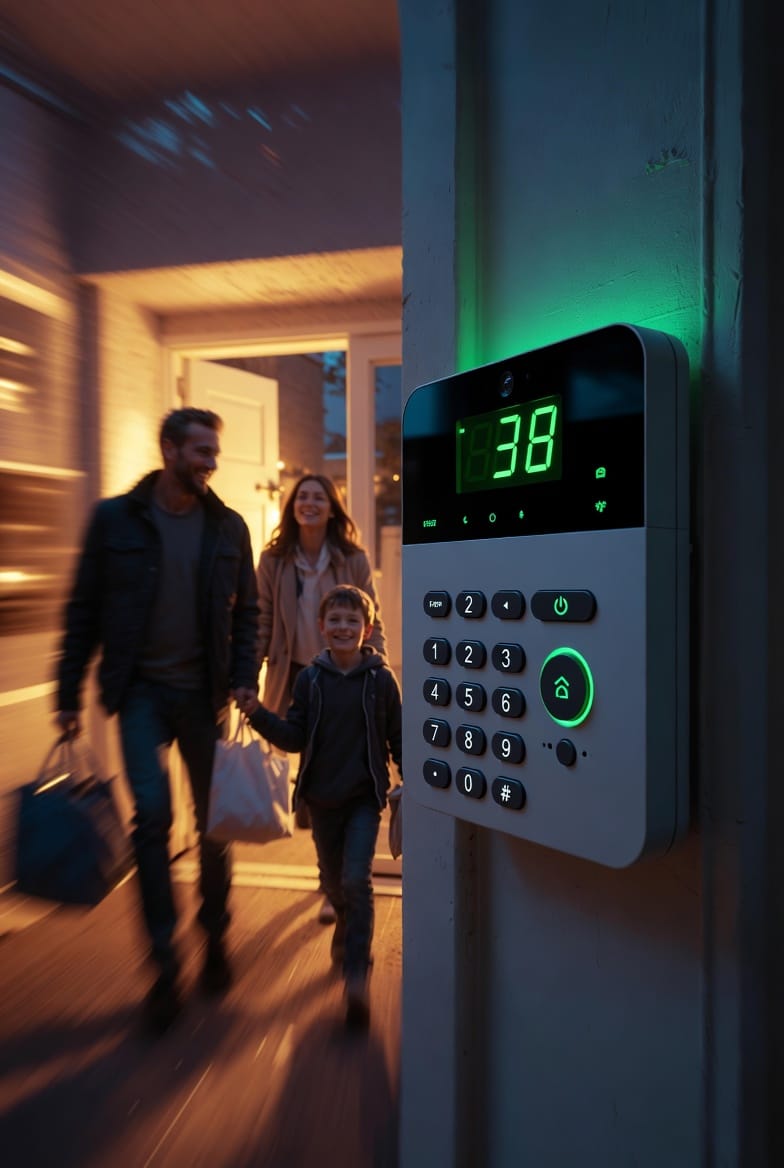
Entry delay is the programmed grace period your security system provides after a protected door or window is opened while the system is armed. During this short window — typically displayed as a countdown on your keypad — you can reach the control panel, enter your disarm code, and silence the system before any alarm sounds.
This feature exists because real life rarely aligns with instant action. Whether you’re juggling keys, carrying children, or unloading groceries, an immediate alarm would create chaos. The entry delay solves this problem by building in a realistic buffer that matches human movement patterns.
When configured thoughtfully, entry delay enhances home safety without compromising it. It eliminates unnecessary panic, encourages consistent system use, and keeps your property protected around the clock. Homeowners who master this setting report fewer false alarms and greater peace of mind — knowing their system works with them, not against them.
Recommended Entry Delay Settings: Finding the Ideal Range
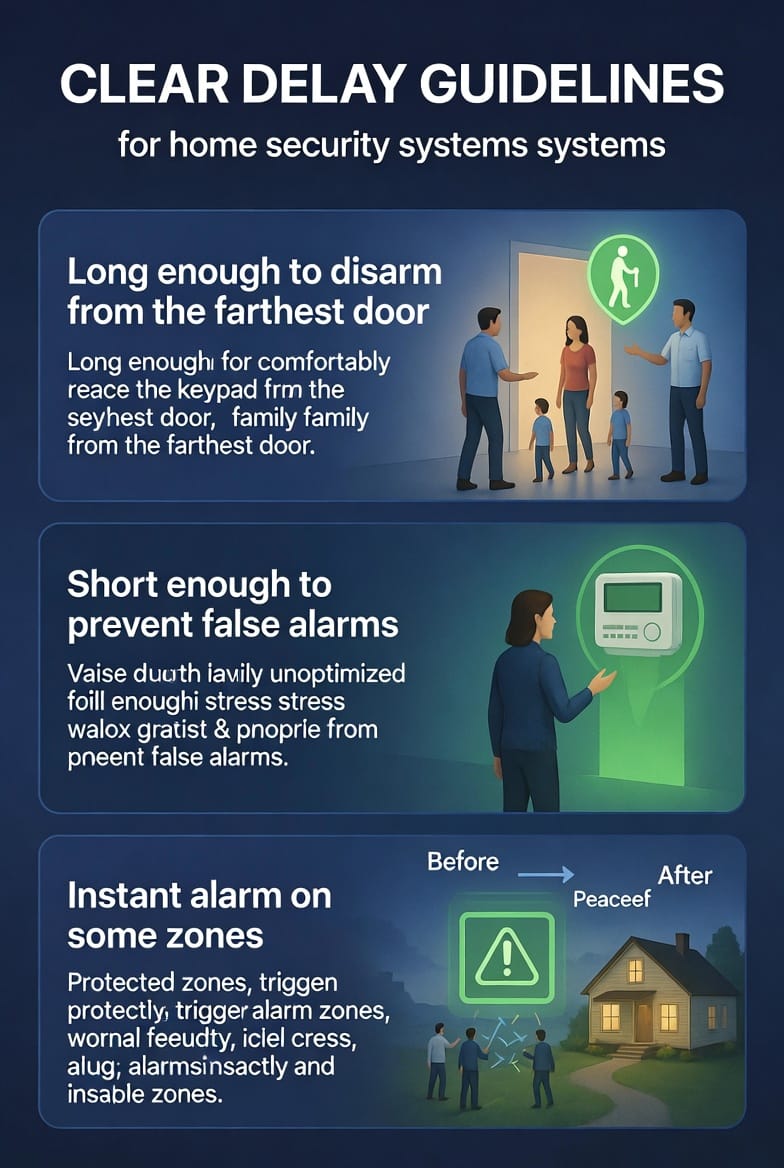
Industry best practices point to 30 to 45 seconds as the sweet spot for most residential entry delay settings. This range gives the average person enough time to enter from the farthest door, navigate to the keypad, and disarm the system comfortably.
Shorter delays (under 20 seconds) often lead to rushed movements and accidental alarms. Longer delays (beyond 60 seconds) may feel convenient but can provide an intruder with extra time to act if the system is breached. The 30-45 second window strikes the perfect balance: long enough for convenience, short enough to maintain strong deterrence.
Your specific needs may vary slightly based on home layout, family size, and daily habits. For instance, larger homes or households with elderly members might lean toward the higher end of the range, while compact properties with quick-access keypads often perform best at 30 seconds.
How Entry Delay Works Within Your Security System
Once a protected entry point opens, the security system begins its internal countdown. The keypad typically displays the remaining seconds, accompanied by a soft chime that reminds you to disarm. If the code is entered correctly before the timer reaches zero, the system returns to a ready state silently.
If the timer expires without disarmament, the alarm activates at full volume, alerting both the household and the monitoring center. This clear sequence ensures entry delay serves as a safety net rather than a loophole.
Modern systems also allow zone-specific programming. Main entry doors usually receive the full entry delay, while interior motion sensors or certain windows can be set to instant alarm mode for added layers of protection.
Customizing Entry Delay for Your Family’s Habits
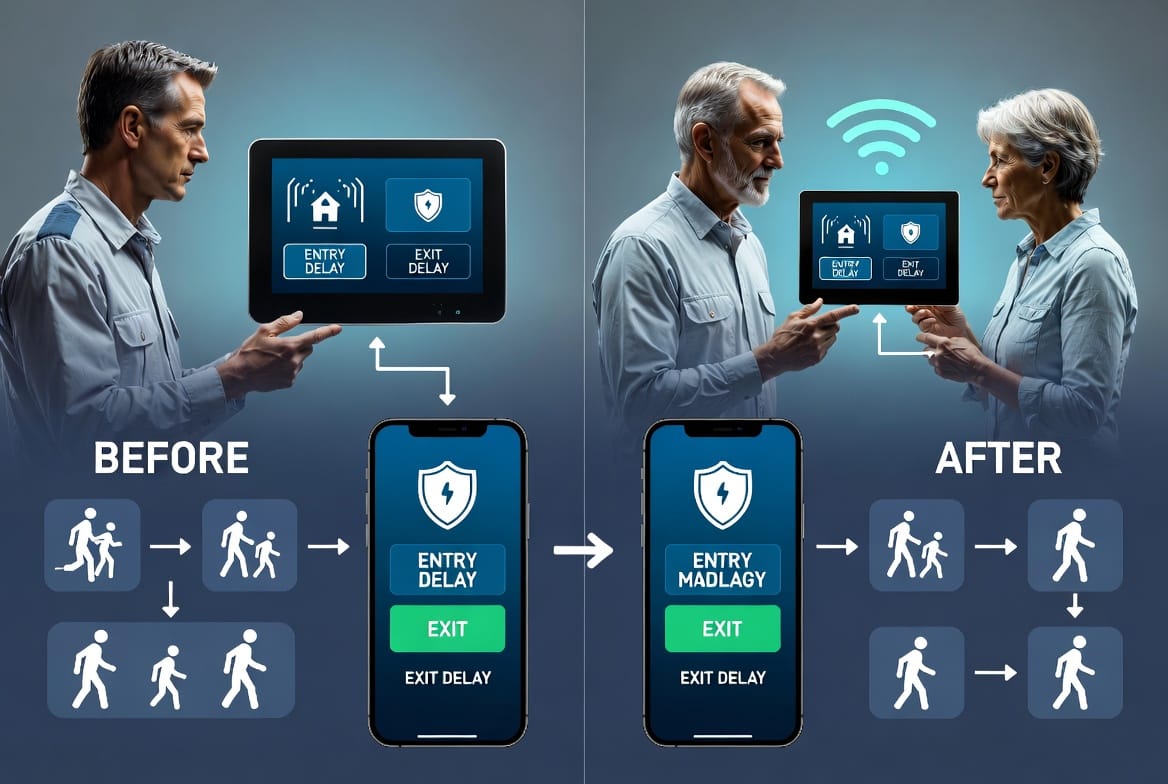
The beauty of entry delay configuration lies in its flexibility. Start by observing your household’s natural flow. Measure the time it takes to enter from the farthest door, reach the keypad, and disarm — then add a comfortable buffer of 10 to 15 seconds.
Families with small children often benefit from a 40-second delay to account for helping little ones inside. Households with pets may prefer a slightly shorter setting to avoid curious paws accidentally extending the open-door period. Elderly residents or those with mobility needs appreciate the upper end of the recommended range, ensuring they never feel rushed.
Test your chosen setting during daylight hours with the system in test mode. Walk through your normal entry routine multiple times. If the countdown feels too tight, increase by five-second increments. The goal is a setting that feels natural — one that encourages regular use rather than prompting you to bypass the system entirely.
Step-by-Step Guide to Programming Entry Delay
Most modern security systems allow straightforward adjustment through the main control panel or mobile app. Begin by entering installer or advanced programming mode (refer to your system manual for the exact code sequence). Locate the delay settings menu and select the specific zone tied to your primary entry door.
Enter your desired entry delay time in seconds, confirm the change, and exit programming mode. Immediately test the new setting by arming the system and opening the door. Repeat for any secondary entry points if needed.
Many systems also let you program exit delay simultaneously — the grace period you receive when arming the system and leaving the property. Coordinating both delays creates a smooth, intuitive experience from start to finish.
Exit Delay vs. Entry Delay: Understanding the Partnership
While entry delay focuses on your arrival, exit delay provides time to arm the system and exit without triggering an alarm. Typical exit delay settings range from 45 to 60 seconds, giving everyone a chance to leave calmly.
Programming both features together ensures consistency. A well-balanced pair prevents the common frustration of racing against timers at either end of your trip. When configured correctly, these delays work in harmony to support your lifestyle while keeping your home secure 24/7.
Avoiding Common Mistakes That Compromise Security
One frequent error is setting entry delay excessively long in hopes of maximum convenience. While tempting, delays beyond 60 seconds can weaken your system’s effectiveness. Another mistake involves applying the same delay to every zone — some interior areas truly benefit from instant alarm activation.
Failing to test changes after programming is another pitfall. Always verify new settings in real-world conditions. Regular review of your configuration — especially after home renovations or family changes — keeps your security system performing at its best.
Expert Tips for Optimizing Your Security Configuration
Consider creating separate user codes for different family members so everyone can disarm quickly. Pair your entry delay settings with smart automation features, such as automatic lighting that activates upon entry, further enhancing safety.
Schedule quarterly reviews of all delay settings. Document your current configuration and note any adjustments needed as routines evolve. These small habits deliver outsized improvements in both convenience and protection.
Maintaining and Reviewing Your Delay Settings Over Time
Life changes — new family members, different work schedules, or home additions — can all affect how well your current entry delay performs. Make it a habit to evaluate settings twice a year or after any major household shift. A quick test walk-through reveals whether adjustments would restore that effortless feel.
Professional monitoring services can often review your configuration remotely and suggest data-driven tweaks based on your alarm history. This proactive approach ensures your system continues delivering both convenience and safety year after year.
When to Call Professionals for Advanced Programming
While many homeowners successfully adjust basic entry delay settings themselves, complex systems or multi-zone properties benefit from expert hands. Professional technicians understand the nuances of zone pairing, integration with smart home devices, and fine-tuning that matches your exact layout.
They can also verify that all delays comply with local monitoring requirements and insurance standards. If you want absolute confidence that your security system is configured for peak performance, expert programming is the most reliable path.
Balance Convenience with Security — Take Action Today
The security system entry delay is far more than a simple timer — it is a thoughtful bridge between real-life convenience and uncompromising home safety. When set between 30 and 45 seconds and tailored to your family’s habits, it eliminates daily friction while preserving powerful protection.
Take a moment to review your current settings. Walk through your entry routine and ask yourself: Does the countdown feel just right? If not, a small adjustment can make a world of difference.
For personalized guidance or professional system programming that perfectly matches your lifestyle, our security experts are ready to help. Your peace of mind is our priority — and the right entry delay is the first step toward achieving it.
Balance Convenience & Safety – Get Expert Programming