The Security System Cellular Backup: Why It's More Reliable Than Wi-Fi

Home security has evolved far beyond simple door sensors and loud sirens. Today’s systems connect to professional monitoring centers that can dispatch help within seconds of an alarm. Yet the path that signal travels from your control panel to the monitoring station determines whether help actually arrives. Many homeowners still rely on standard internet or Wi-Fi connections for that critical link. That choice introduces avoidable risk. A dedicated cellular backup removes those vulnerabilities and delivers the consistent protection modern households require.
Upgrade to Cellular Backup Today – Call Now!
This article examines the two primary monitoring paths, explains why cellular technology outperforms internet-dependent systems, and shows how upgrading to cellular backup transforms reliability. The goal is clear: give you the facts needed to choose a monitoring solution that works every time, under every condition.
Understanding Professional Monitoring Options
Professional monitoring centers operate around the clock. When an alarm triggers, the control panel transmits an encrypted signal containing the zone that activated, the time, and account details. Operators verify the event and, if necessary, contact emergency services or the homeowner.
Two transmission methods dominate the market:
- Internet or Wi-Fi monitoring
- Cellular (or dual-path cellular) monitoring
Some systems combine both, using cellular as the primary or backup channel. The difference in performance becomes obvious when everyday network problems arise.
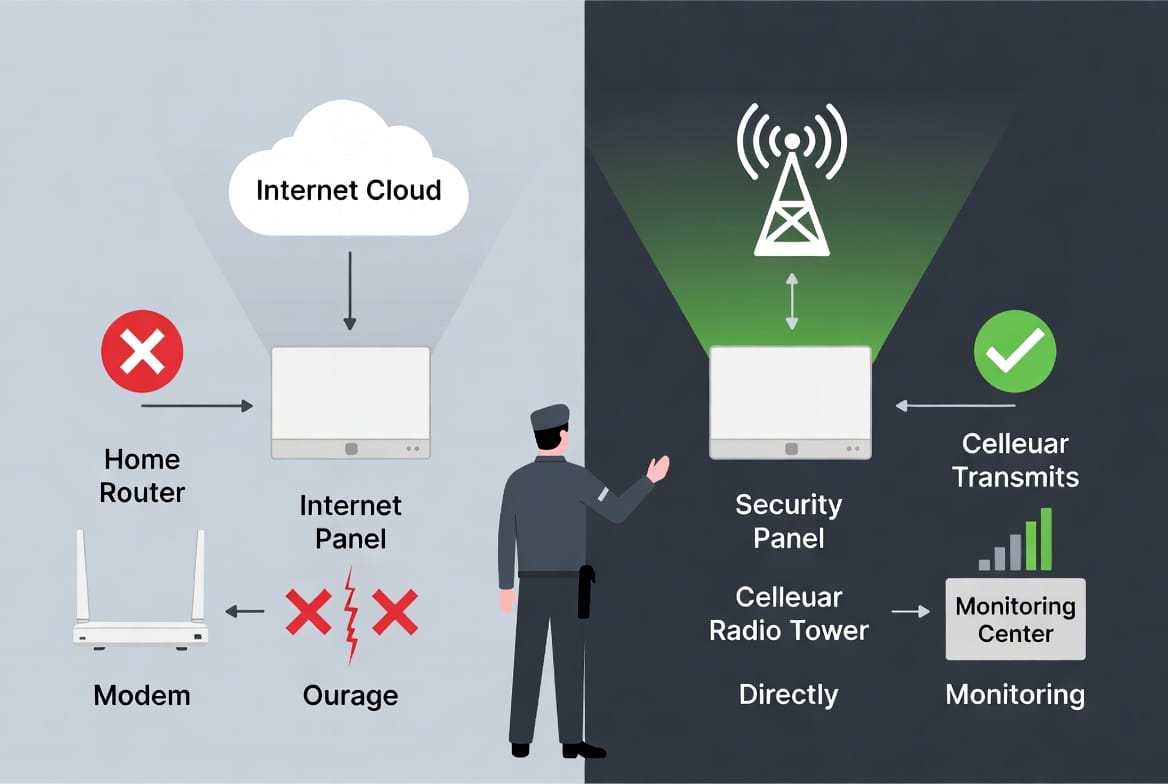
Internet monitoring depends on your home broadband service and the local network infrastructure. Cellular monitoring uses a dedicated cellular radio that communicates directly with the monitoring center over the same commercial networks that power mobile phones. No home Wi-Fi router, no modem, and no ISP involvement are required for the cellular path.
How Wi-Fi and Internet Monitoring Actually Work
In a typical Wi-Fi setup the control panel connects to your home router. The router then forwards the alarm signal through your internet service provider’s network to the monitoring center’s servers. The process appears seamless under ideal conditions. The panel lights up, the signal travels, and operators respond.
The chain, however, contains multiple single points of failure:
- The home router can lose power or freeze
- The modem can drop the ISP connection
- Local internet outages can last hours or days
- A determined intruder can cut the external cable or disable the Wi-Fi network
Any break in that chain stops the alarm signal before it ever leaves the house. Many homeowners discover this limitation only after an incident occurs during a storm or after a simple power interruption.
The Real Risks of Relying on Wi-Fi Alone
Internet-dependent systems remain vulnerable to conditions that occur regularly in residential areas. Power outages knock out both the router and the modem. Service providers perform maintenance that temporarily severs connections. Weather events damage outdoor cables. Even routine router firmware updates can interrupt connectivity for several minutes—long enough for an alarm to go unanswered.
Intruders understand these weaknesses. Cutting the visible internet cable or jamming the Wi-Fi signal is a known tactic. Once the connection is gone, the monitoring center receives nothing. The siren may still sound locally, yet no professional help is summoned. That gap between local noise and external response is exactly where cellular backup provides decisive advantage.
Introducing Cellular Backup Technology
A cellular backup module is a small radio installed inside or connected to the security control panel. It operates on commercial cellular networks (typically LTE or 5G) and maintains a constant, encrypted link to the monitoring center. The radio receives power from the panel’s battery backup, so it continues functioning during household power failures.
When an alarm activates, the panel first attempts the primary path. If that path is unavailable, the cellular radio instantly transmits the identical signal over the cellular network. Many modern systems treat cellular as the primary path and use internet only as a secondary option, or they send signals simultaneously on both paths for maximum speed and redundancy.
Because the cellular path never travels through the home’s internet equipment, it remains unaffected by router failures, ISP outages, or cable cuts. The only requirement is cellular coverage in the area—an almost universal condition in populated regions.
How Cellular Backup Operates Independently
The cellular radio authenticates with the network using a unique identifier similar to a mobile phone’s SIM. Once registered, it maintains a low-bandwidth heartbeat signal that confirms the path is open. When an alarm occurs, the full event packet is transmitted in a fraction of a second. Monitoring centers receive these packets through dedicated cellular gateways designed for high reliability and low latency.
No wires run from the panel to the outside world for the cellular path. Nothing can be cut with a pair of scissors. The radio itself sits protected inside the locked panel enclosure. Signal strength is continuously monitored and reported, allowing technicians to address weak coverage before it becomes a problem.
This independence is the core reason professionals recommend cellular technology for any system intended to protect people and property.
Direct Comparison: Cellular Versus Wi-Fi Monitoring
The practical differences become clear when the two methods are placed side by side.
- Network dependency
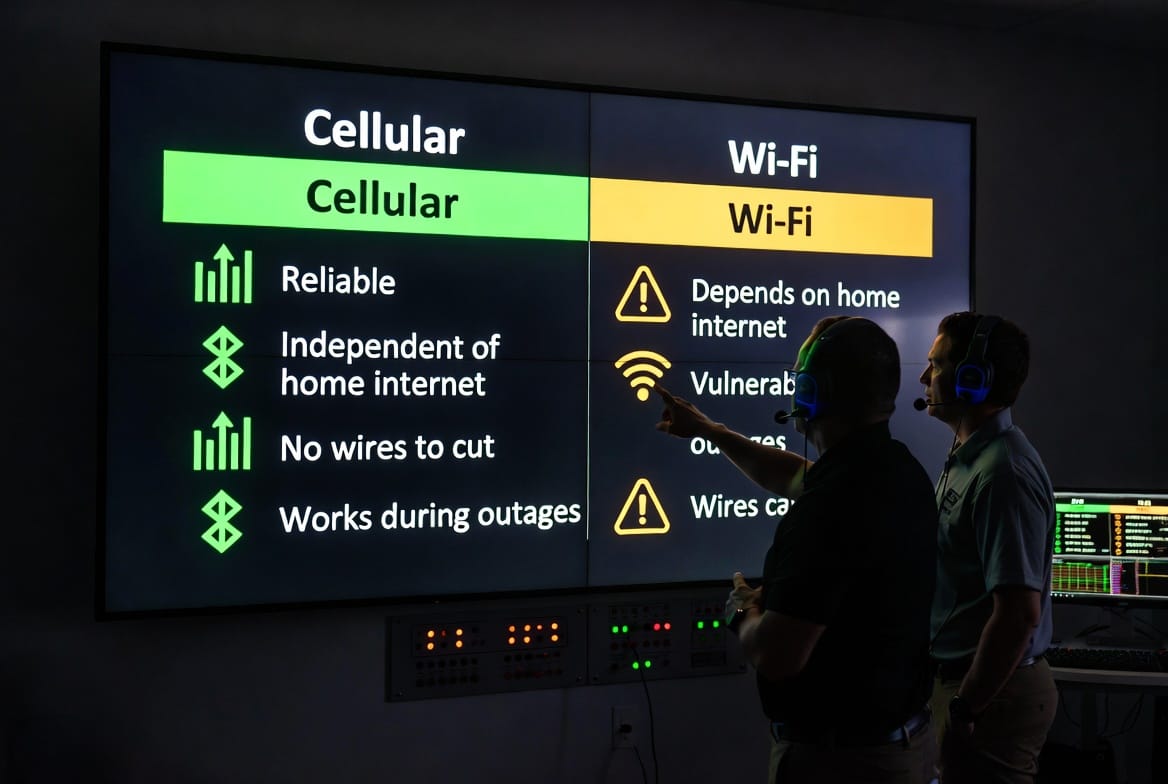
Cellular uses a dedicated commercial network. Wi-Fi relies on the home internet connection and local router. - Power outage performance
Cellular continues operating on the panel’s battery backup. Wi-Fi fails when the router or modem loses power. - Physical vulnerability
Cellular has no external wires to cut. Wi-Fi signals travel through cables that can be severed or Wi-Fi that can be jammed. - Internet service interruptions
Cellular remains unaffected by ISP maintenance or regional outages. Wi-Fi stops transmitting the moment the broadband link drops. - Speed and consistency
Cellular delivers consistent transmission times measured in seconds. Wi-Fi performance varies with household network congestion and ISP quality. - Long-term reliability
Cellular modules are designed for continuous operation with minimal maintenance. Wi-Fi paths inherit every weakness of consumer networking equipment.
These distinctions explain why insurance providers and security professionals increasingly view pure internet monitoring as insufficient for high-value or high-risk properties.
Real-World Situations Where Cellular Backup Proves Essential
Consider a severe thunderstorm that knocks out power across a neighborhood for six hours. Homes relying solely on Wi-Fi lose monitoring the moment the router battery dies or the modem resets. Systems equipped with cellular backup continue reporting every sensor activation throughout the outage. When the power returns, the cellular path has already protected the property for the entire duration.
Another common scenario involves deliberate interference. An intruder who identifies the external internet cable and severs it expects the alarm to remain silent to the outside world. With cellular backup active, the panel still transmits the intrusion signal. Monitoring operators receive the alert and can coordinate a response while the local siren continues deterring the intruder.
Even routine household events create risk. A child unplugs the router to charge a device. A firmware update reboots the modem overnight. A temporary ISP glitch lasts twenty minutes. In each case the cellular path remains available, ensuring the monitoring center never loses contact with the property.
Technical Advantages That Matter Over Time
Cellular modules incorporate several engineering features that enhance long-term performance. Multi-carrier support allows the radio to select the strongest available network if one carrier experiences congestion. Automatic signal strength reporting alerts the monitoring company to developing coverage issues. Encrypted protocols protect the data stream from interception or spoofing.
Battery life is another practical benefit. Because the cellular radio draws power only when transmitting or maintaining its heartbeat, it places minimal additional load on the panel’s backup battery. Most systems maintain full cellular functionality for 24 hours or longer after a power failure—well beyond the duration of typical outages.
Firmware updates for cellular modules can often be delivered over the air, reducing the need for technician visits. This remote capability keeps the communication path current without interrupting protection.
Addressing Common Concerns About Cellular Monitoring
Some homeowners worry about monthly cellular fees. While a small recurring charge applies, the cost is modest compared with the value of uninterrupted protection. Many providers bundle the cellular service into the overall monitoring package, making the incremental expense transparent and predictable.
Others question coverage in rural areas. Modern LTE and 5G networks reach the vast majority of residential locations. Professional installers test signal strength during setup and can recommend external antennas or dual-path configurations when needed. In the rare location where cellular coverage is marginal, hybrid systems still offer significant improvement over pure internet monitoring.
Privacy considerations are handled through industry-standard encryption and regulated monitoring center practices. The cellular path transmits only alarm data and system status—never video or personal content unless the homeowner specifically enables those features.
Why Security Professionals Recommend Cellular as the Standard
Industry best practices have shifted decisively toward cellular or dual-path systems. The reason is straightforward: reliability cannot be optional when the purpose of the system is to summon help. Monitoring companies track transmission success rates across their entire customer base. Cellular paths consistently demonstrate higher successful delivery percentages than internet-only paths, especially during regional events that affect broadband services.
Insurance carriers also recognize the difference. Some policies offer modest discounts for systems that incorporate cellular backup because the reduced risk of failed signals translates into fewer unreported claims. More importantly, the presence of cellular technology provides documented evidence that the homeowner took reasonable steps to maintain continuous protection.
For families with children, elderly residents, or valuable assets, the peace of mind that accompanies a proven independent communication path is difficult to overstate. Knowing that an alarm will reach the monitoring center regardless of local internet conditions removes a significant source of residual anxiety.
Practical Steps to Upgrade Existing Systems
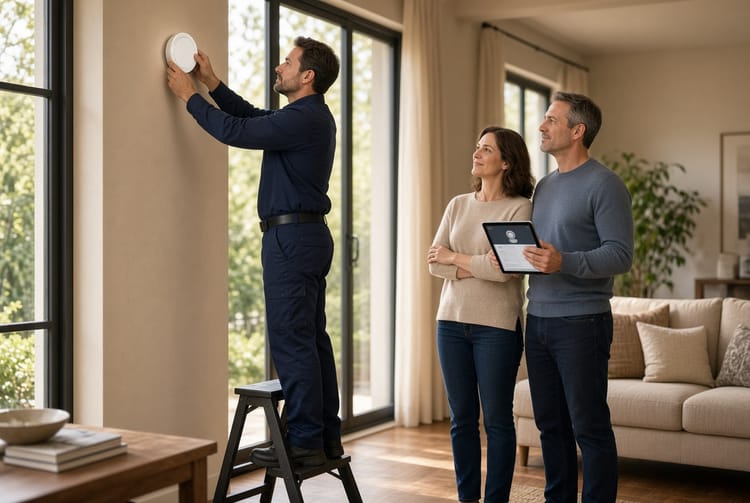
Most current security panels support cellular modules as add-on hardware. A qualified technician can install the radio, activate the cellular account, and test both primary and backup paths in a single visit. Older systems that lack expansion capability can often be replaced with modern panels that include cellular communication as a standard feature.
During the upgrade process the technician verifies signal strength at the installation location, programs the monitoring center account, and walks the homeowner through any new status indicators on the panel. The entire process typically requires less than two hours and leaves the property protected throughout.
Homeowners who currently rely on internet-only monitoring can request a dual-path configuration. In this arrangement the system transmits on both cellular and internet simultaneously or uses cellular as the primary path. The result is immediate improvement in reliability without discarding existing sensors or cameras.
The Clear Recommendation for Continuous Protection
Internet and Wi-Fi connections serve many household purposes effectively. They are not, however, engineered for the mission-critical task of delivering alarm signals under adverse conditions. Power failures, service interruptions, and physical attacks against network infrastructure remain everyday realities. A cellular backup neutralizes those threats by providing an independent, wireless path that continues operating when every other connection has failed.
The technology is mature, widely available, and supported by professional monitoring centers nationwide. The incremental cost is modest. The improvement in reliability is substantial. For any household that values consistent protection, the decision to move beyond pure internet monitoring is both practical and prudent.
Upgrade to cellular for reliable protection. A short conversation with a security specialist can confirm coverage at your address, outline available options, and schedule a convenient installation. Continuous protection should never depend on the same network that streams entertainment or powers household devices. Cellular backup ensures the alarm signal always has a clear, independent route to the people who can help.
Protect Your Home When Wi-Fi Fails – Call Now