The Security System Arming Modes: Stay, Away, and Night
Choosing the correct arming mode on your home security system is one of the most important decisions you make each day. The right selection balances strong protection with everyday convenience, ensuring sensors respond exactly when and where they should. Modern systems typically offer three primary modes—Stay, Away, and Night—each designed for a specific lifestyle situation. Understanding these modes empowers you to maximize safety without unnecessary false alarms or restricted movement inside your home.
Master Stay, Away & Night Modes – Call for Expert Help
This guide explains how each mode functions, which sensors it activates, and the ideal real-world scenarios for its use. By the end, you will feel confident selecting the mode that matches your routine and protects what matters most.
Understanding How Arming Modes Work
Every professional security system relies on a network of perimeter sensors (door and window contacts) and interior sensors (motion detectors, glass-break sensors, and sometimes cameras). When you arm the system, the control panel decides which of these devices stay active. The three main modes simply change that decision based on whether people remain inside the house.
Selecting the proper mode prevents two common problems: leaving gaps in coverage when the home is empty, or triggering alarms every time someone walks through a hallway while the family is still home. Manufacturers engineer these modes after years of studying real household patterns, giving users flexible, reliable options.
Stay Mode: Protection While You Are Home
Stay mode is the go-to choice whenever people occupy the house but still want exterior protection. In this configuration the system keeps all perimeter sensors fully active—every door and window contact remains armed—while most interior motion detectors stay disarmed. You and your family can move freely from room to room without setting off an alarm.
Typical sensor behavior in Stay mode includes:
- Door and window contacts ready to trigger instantly if opened
- Glass-break sensors often remaining active for extra window protection
- Motion detectors in hallways, living areas, and stairwells turned off
- Optional delay timers on the main entry door so residents can exit or enter briefly without cancellation
Use cases for Stay mode are numerous and practical:
- Evenings when the family gathers in the living room or kitchen
- Weekend afternoons spent indoors watching movies or working from home
- Situations with guests or children moving throughout the house
- Times when a pet might otherwise walk past a motion sensor
Because interior sensors are largely inactive, Stay mode dramatically reduces the chance of false alarms caused by normal household activity. At the same time, the active perimeter creates a secure “shell” around the building. If an intruder forces a door or window, the system responds immediately, sounding the siren and notifying the monitoring center.
Many homeowners also appreciate the psychological benefit. Knowing the exterior remains guarded allows everyone to relax. Parents can focus on dinner, children can play, and remote workers can concentrate without constantly checking locks. For households that spend significant time at home, Stay mode becomes the default daytime and early-evening setting.
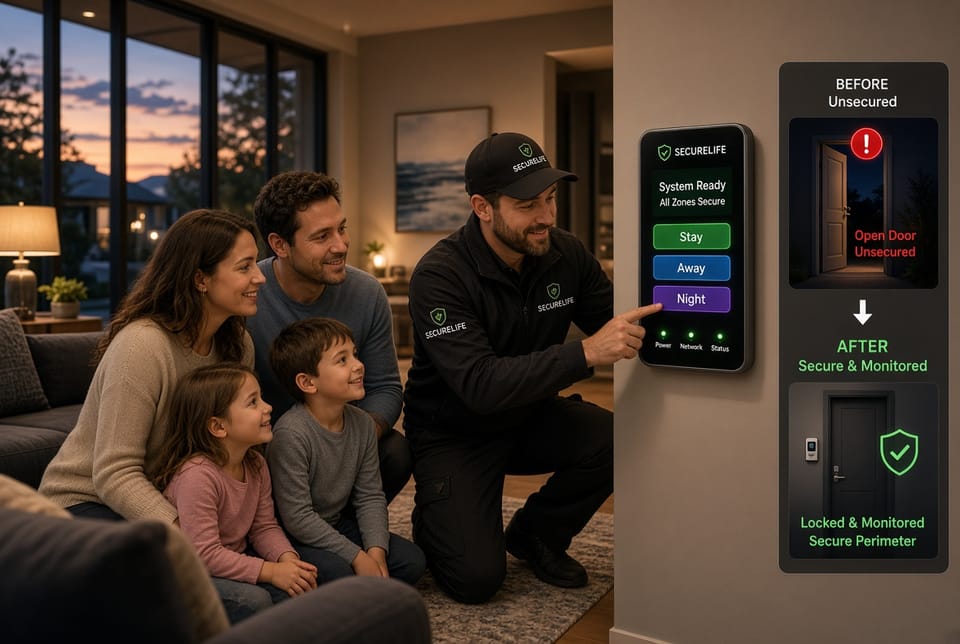
To arm in Stay mode, simply enter your code or use a key fob, then select the Stay option on the keypad or mobile app. Most systems provide a short exit delay so you can still step outside to retrieve the mail or walk the dog before the perimeter fully arms. Once the delay expires, the green “armed” indicator confirms protection is in place.
Away Mode: Complete Coverage When the House Is Empty
When no one remains inside, Away mode delivers maximum security by activating every sensor—both perimeter and interior. Motion detectors throughout the home join the door and window contacts, creating layered detection that covers entry points and interior spaces alike.
Key characteristics of Away mode include:
- All door and window contacts armed
- Every motion detector active and ready
- Glass-break and shock sensors typically enabled
- Longer exit and entry delay periods to accommodate locking the door and walking to the car
- Immediate response if any sensor trips after the delay ends
Ideal use cases for Away mode center on absence:
- Leaving for work or school each morning
- Weekend trips, vacations, or overnight stays elsewhere
- Errands that take the entire household away for several hours
- Times when the home sits empty during daytime hours
Because interior motion sensors are live, an intruder who somehow bypasses a door or window will still be detected the moment they move through a room. This dual-layer approach significantly raises the difficulty of a successful break-in. Professional monitoring centers treat Away mode alarms with high priority, often dispatching authorities faster when both perimeter and interior zones report activity.
One practical tip: always perform a quick walk-through before arming in Away mode. Close all windows, lock secondary doors, and ensure pets are either secured in a motion-free zone or that pet-immune sensors are properly calibrated. Many modern systems allow you to bypass individual sensors temporarily if a window must stay open for ventilation, but the rest of the house remains fully protected.
Arming in Away mode is equally straightforward. After entering your code, choose the Away button. The system usually gives a longer countdown—often 30 to 60 seconds—so you can exit calmly. Once the countdown finishes, the keypad or app displays the armed status, and you can leave with full confidence that the entire property is under watch.
Night Mode: Balanced Security for Sleeping Hours
Night mode (sometimes labeled “Sleep” or “Night Stay”) bridges the gap between Stay and Away. It keeps the full perimeter active while selectively enabling certain interior sensors—usually those covering hallways, staircases, or areas near bedrooms. Motion detectors in living rooms or kitchens often remain off so residents can still get a glass of water or check on children without triggering an alarm.
Typical sensor pattern in Night mode:
- All exterior door and window contacts armed
- Selected interior motion sensors (hallways leading to bedrooms, main stairwells) active
- Living-area and kitchen motion sensors left inactive
- Optional glass-break sensors remaining on for windows near sleeping quarters
Primary use cases for Night mode revolve around overnight protection:
- Bedtime routines when the household settles in for sleep
- Late-night hours when exterior threats remain a concern but free movement inside bedrooms is needed
- Homes with multiple floors where stairwell coverage adds an extra layer without restricting the main living space
- Situations involving elderly family members who may rise during the night
The selective interior activation gives peace of mind that an intruder cannot move freely toward sleeping areas, yet family members retain reasonable freedom of movement. Many systems let you customize exactly which interior zones stay active in Night mode, allowing fine-tuning for unique floor plans or lifestyles.
Arming for the night usually involves a short exit delay or none at all, since everyone is already inside. A quick code entry or one-touch button on the bedside keypad or smartphone app places the system into Night mode. Status lights or app notifications confirm the change, and the household can rest knowing both the outer shell and critical interior paths remain guarded.
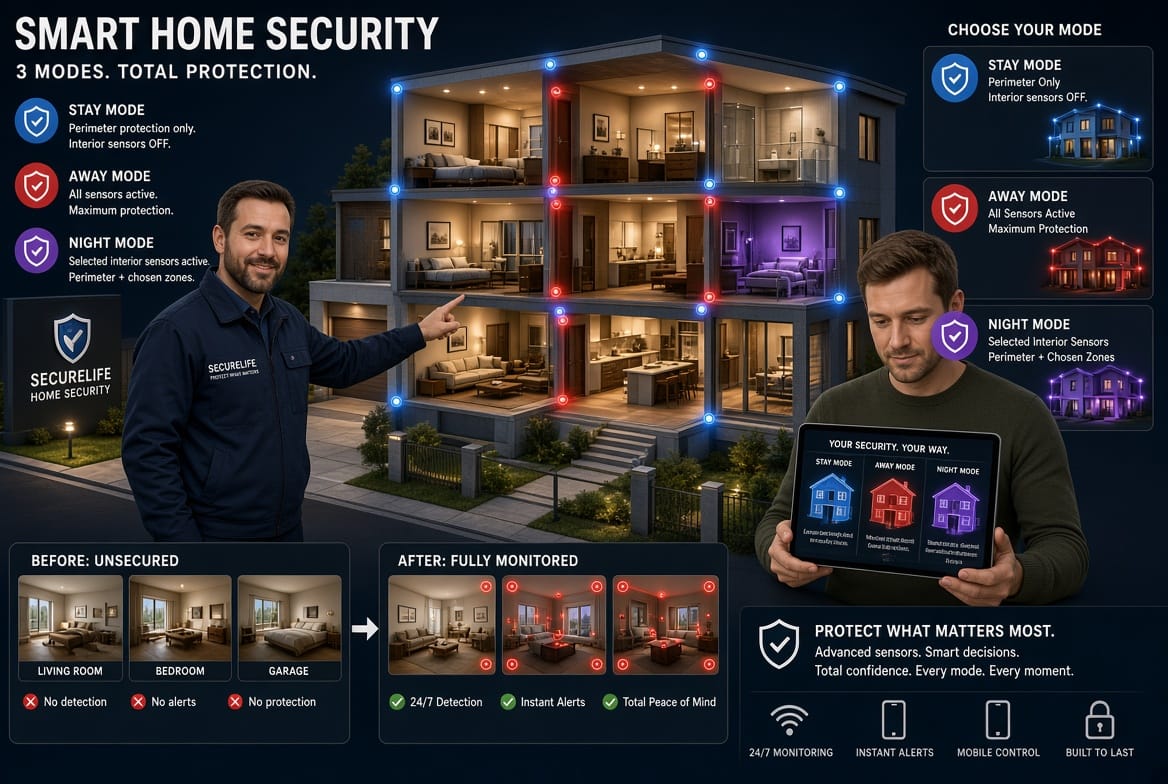
Comparing the Three Modes Side by Side
A quick reference helps solidify the differences:
- Stay Mode
– Perimeter sensors: Active
– Interior motion: Mostly inactive
– Best for: Occupied home during day or evening - Away Mode
– Perimeter sensors: Active
– Interior motion: Fully active
– Best for: Empty home - Night Mode
– Perimeter sensors: Active
– Interior motion: Selectively active
– Best for: Overnight hours while sleeping
Understanding these distinctions eliminates guesswork. Homeowners who switch modes thoughtfully experience fewer false alarms, faster emergency response when needed, and greater overall confidence in their system.
Practical Tips for Seamless Mode Selection
Consistency and awareness turn good habits into strong protection. Consider these authoritative recommendations:
- Establish a household routine: Stay after arriving home, Away when departing, Night at bedtime.
- Use the mobile app to check current mode status from any room or even while away.
- Test sensors periodically so you know exactly which zones activate in each mode.
- Train every family member on the simple keypad or app steps required to change modes.
- Review entry and exit delay times with your provider to match your daily pace.
- If pets or unusual floor plans exist, ask a technician to customize Night mode zones for optimal balance.
Professional installers can also enable features such as automatic mode switching based on time of day or geofencing that arms Away when the last phone leaves the property. These refinements further reduce the chance of human error.
Why the Right Mode Matters for Long-Term Safety
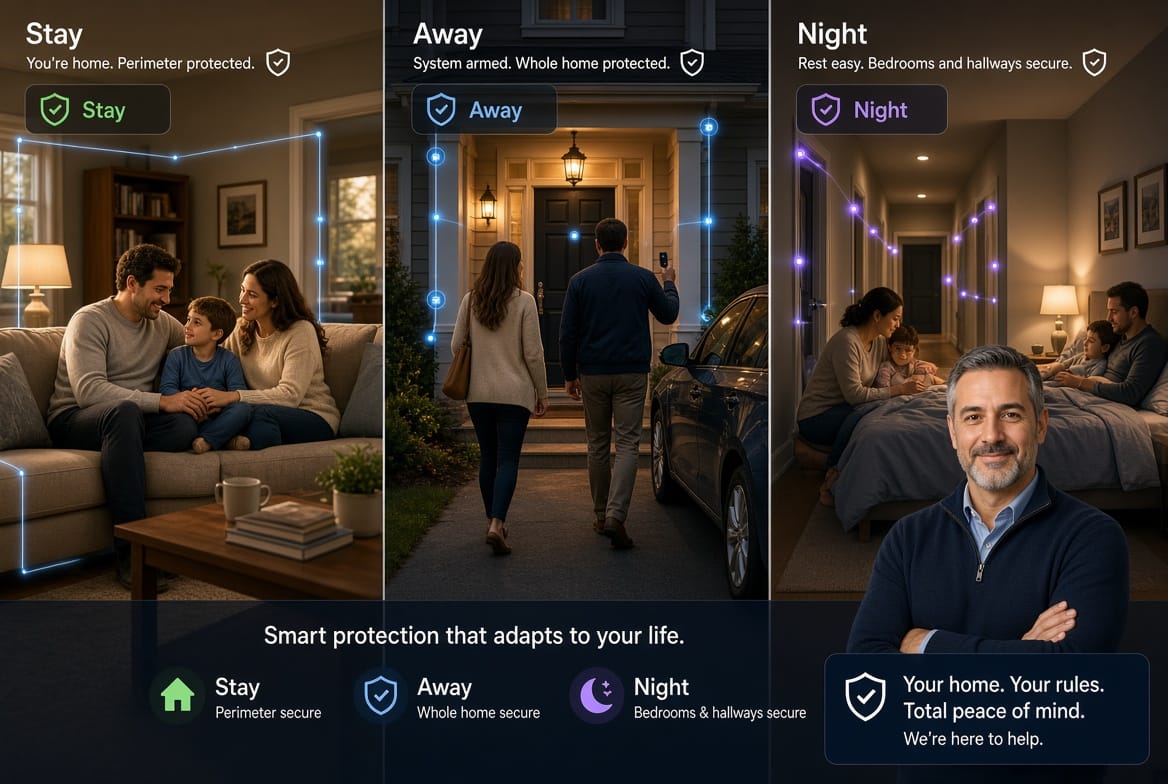
Selecting the appropriate arming mode is more than a technical detail—it is a daily act of care for your home and loved ones. Stay mode preserves freedom of movement while still guarding against exterior threats. Away mode creates comprehensive coverage the moment the house empties. Night mode adds targeted interior awareness precisely when vulnerability feels highest.
Over time, consistent use of the correct mode builds a reliable security posture. Monitoring centers receive clearer signals, response times improve, and insurance providers often view properly used systems more favorably. Most importantly, residents sleep better, work more productively, and enjoy their living spaces without lingering worry.
Modern keypads and apps make switching effortless. A few taps or button presses place the exact level of protection you need at that moment. Combined with professional monitoring, these modes form a flexible shield that adapts to real life rather than forcing life to adapt to rigid rules.
Final Thoughts and Next Steps
The three primary arming modes—Stay, Away, and Night—give every homeowner precise control over their security system. By matching the mode to the situation, you activate the right sensors at the right time, minimize false alarms, and maintain strong protection around the clock.
Use the right arming mode for your situation. Whether you need freedom of movement inside an occupied home, complete coverage while away, or balanced overnight security, the correct choice is only a button press away.
If you have questions about your current system settings, want help customizing zones, or simply wish to confirm which mode best fits your lifestyle, professional support is ready.
Your home deserves protection that adapts to the way you live. Mastering Stay, Away, and Night modes is the straightforward path to that peace of mind.
Call Now to Optimize Your Stay, Away & Night Settings