The Roof Underlayment: Felt vs. Synthetic vs. Self-Adhering Membranes
When it comes to protecting your home, the roof underlayment is the unsung hero that works silently beneath the shingles. This critical layer forms the secondary waterproofing barrier that shields your roof deck from moisture, wind-driven rain, and unexpected leaks when shingles are damaged or displaced. Without a properly chosen and installed underlayment, even the highest-quality shingles cannot deliver their full potential. Homeowners often focus solely on the visible shingles, yet the underlayment determines long-term roof performance, durability, and peace of mind.
Get Expert Underlayment Advice – Call Now!
In this comprehensive guide, we compare the three primary options available today: traditional felt paper, modern synthetic underlayment, and self-adhering membranes (commonly known as ice and water shields). You will discover the strengths, limitations, and ideal applications for each type so you can make an informed decision that protects your investment for decades. Rest assured, selecting the right underlayment is one of the smartest steps you can take to safeguard your home against the elements.
Understanding the Critical Role of Roof Underlayment
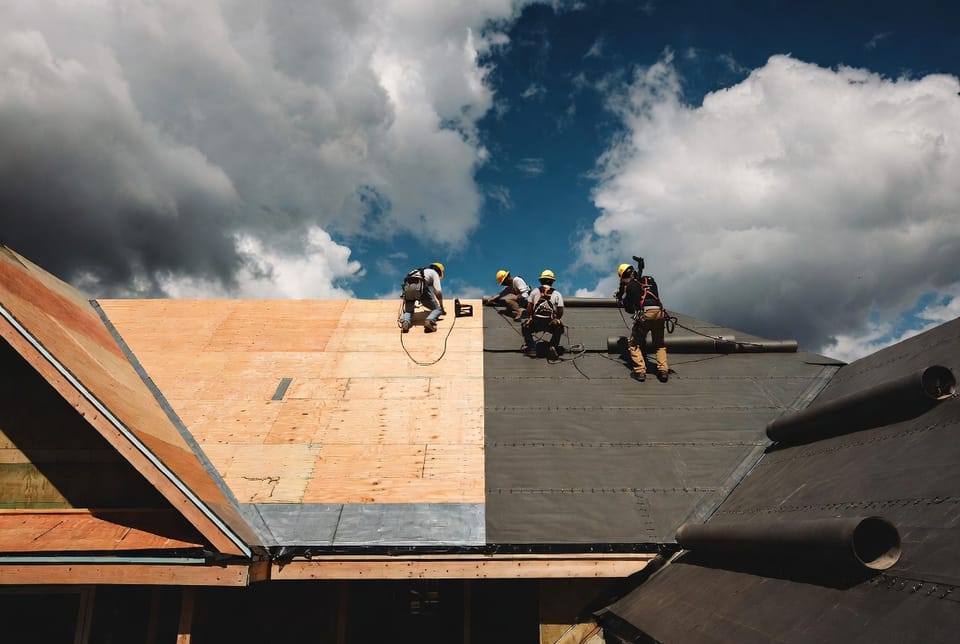
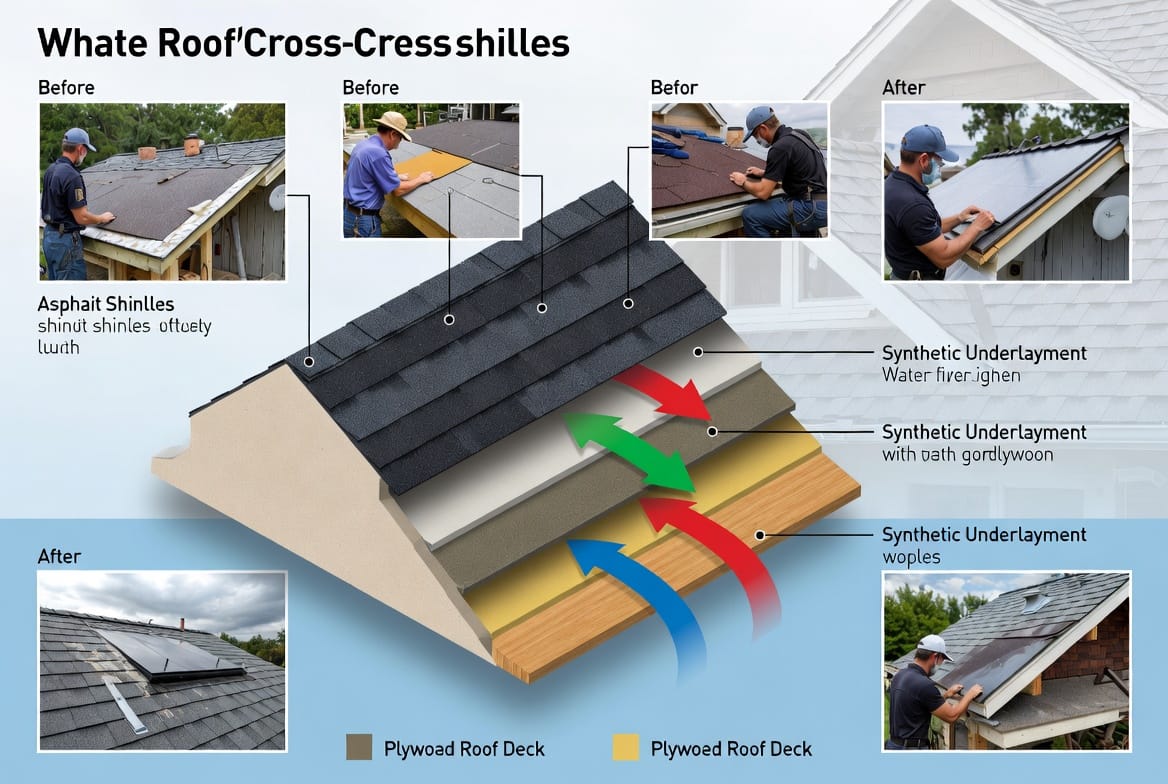
Roof underlayment sits directly on the plywood or OSB roof deck and beneath the shingles. It serves as your roof’s insurance policy. Even premium shingles can suffer from installation gaps, wind uplift, or storm damage. When that happens, the underlayment prevents water from reaching the structural deck, framing, and interior of your home.
Proper underlayment reduces the risk of costly leaks, mold growth, rot, and premature roof failure. It also contributes to better attic ventilation and energy efficiency. Modern building codes in many regions now require enhanced underlayment in vulnerable areas, reflecting its importance in today’s extreme weather patterns. Choosing correctly means fewer repairs, higher home value, and greater confidence every time it rains.
Traditional Felt Paper Underlayment: Time-Tested and Budget-Friendly
Traditional felt paper, also called asphalt-saturated felt or tar paper, has protected American roofs for over a century. Available in #15 and #30 weights, this organic or fiberglass-reinforced material is saturated with asphalt to create a basic moisture barrier.
Key advantages include:
- Affordable cost – often the lowest upfront price per square foot
- Proven track record – reliable in moderate climates for standard installations
- Easy to source – available at any lumberyard or home improvement store
However, felt paper has notable limitations. It is heavy, making it more labor-intensive to install on steep slopes. When exposed to rain during construction, it can absorb moisture, wrinkle, and tear easily. Its UV resistance is limited, so prolonged exposure before shingle installation can degrade performance. In high-wind or heavy-rain areas, felt may not provide the best secondary protection if shingles fail.
Ideal applications for traditional felt paper include:
- Standard sloped roofs in dry or temperate climates
- Budget-conscious projects where extreme weather is rare
- Homes where simple, code-minimum protection meets local requirements
While felt remains a solid choice for many basic installations, today’s homeowners increasingly seek lighter, more resilient alternatives that reduce long-term risk.
Modern Synthetic Underlayment: Lighter, Stronger, and Built for Today’s Demands
Synthetic underlayment represents the evolution of roofing technology. Manufactured from durable polypropylene or similar high-performance polymers, these products weigh significantly less than felt – often 50% lighter – while delivering superior strength and weather resistance.
Benefits that set synthetic underlayment apart:
- Exceptional tear resistance – resists punctures and installation damage
- Superior UV resistance – can remain exposed for weeks or months without degradation
- Enhanced walkability – textured surface provides better traction for roofing crews
- Moisture barrier performance – sheds water effectively without absorbing it
- Faster, safer installation – lighter rolls reduce crew fatigue and speed up the job
Because synthetic underlayment is lighter, it places less stress on the roof structure while still meeting or exceeding code requirements. Its strength allows for wider coverage with fewer seams, reducing potential leak points. Many synthetic products also feature printed guidelines that ensure precise overlap and proper fastening, minimizing human error.
Best applications for synthetic underlayment include:
- Most residential and light commercial roofs
- High-wind regions where durability matters
- New construction or re-roofing projects where crews need to work efficiently
- Homes in areas with frequent rain or variable weather
Professional roofers prefer synthetic underlayment for its reliability and ease of use. Homeowners appreciate the long-term protection and reduced risk of callbacks or repairs.
Self-Adhering Membranes: Maximum Protection Where It Matters Most
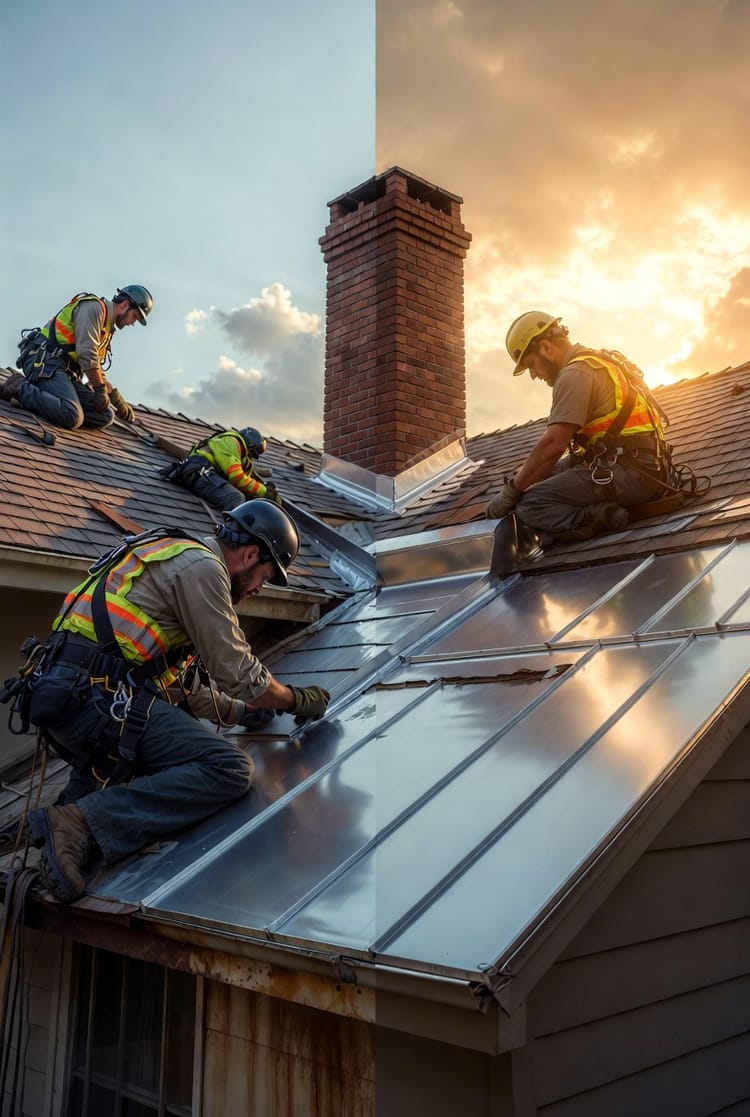
Self-adhering membranes, often called ice and water shields, provide the ultimate defense in the roof’s most vulnerable zones. These rubberized asphalt sheets feature a peel-and-stick backing that bonds directly and permanently to the roof deck.
Once applied, the membrane self-seals around every nail and fastener, creating a watertight seal that prevents water from migrating beneath the underlayment. This technology is especially effective against ice dams in cold climates, wind-driven rain in coastal areas, and leaks around valleys, eaves, skylights, chimneys, and vents.
Standout features of self-adhering membranes:
- Superior adhesion – sticks aggressively to plywood or OSB
- Self-sealing technology – eliminates leaks at penetration points
- High-temperature stability – performs in extreme heat and cold
- Long-term durability – maintains flexibility without cracking
Recommended applications include:
- Eaves and valleys – where water and ice accumulate
- Low-slope sections – where drainage is slower
- Around all roof penetrations – chimneys, pipes, vents, and skylights
- High-risk climates – heavy snow, ice storms, or hurricane-prone regions
Many building codes now mandate self-adhering membranes in these critical areas, even when the rest of the roof uses felt or synthetic underlayment. The combination approach delivers maximum protection without unnecessary expense across the entire roof.
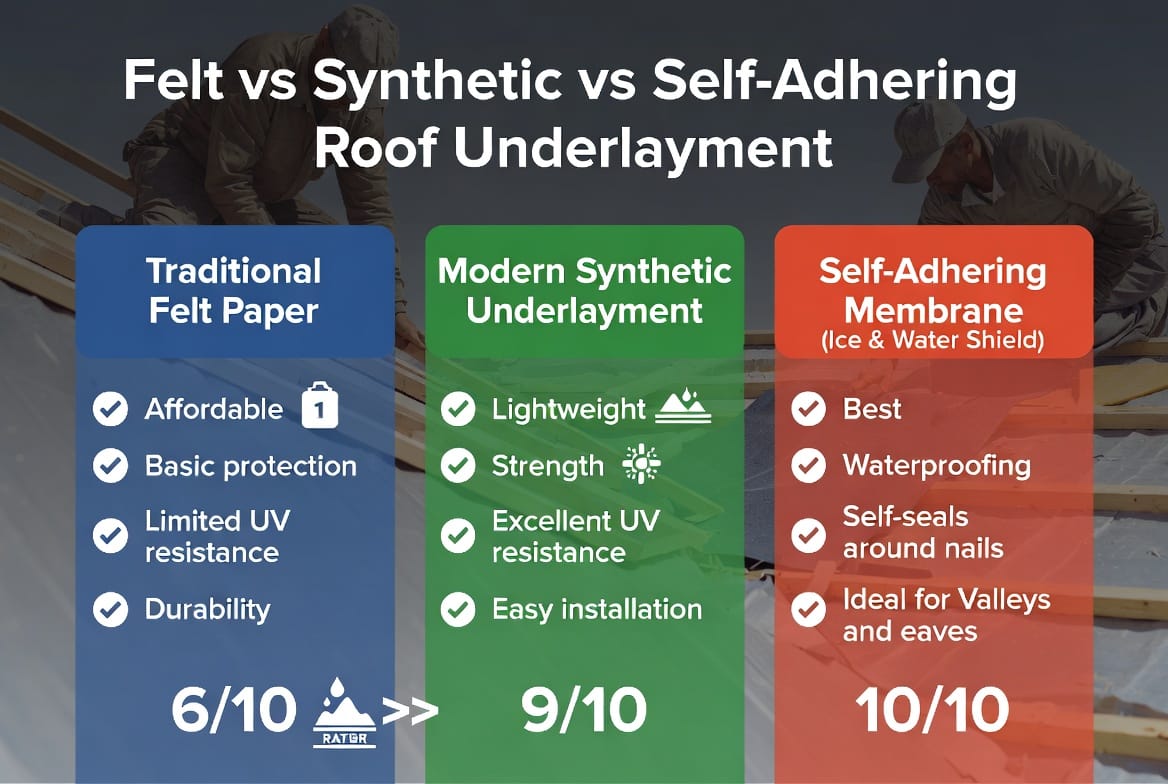
Side-by-Side Comparison: Felt vs. Synthetic vs. Self-Adhering Membranes
Understanding the differences at a glance helps you choose wisely:
- Felt paper is inexpensive but heavy and more vulnerable to moisture and tearing.
- Synthetic underlayment offers light weight, high strength, and UV resistance, making it ideal for the main roof surface.
- Self-adhering membranes excel in valleys and eaves, providing the best waterproofing where leaks are most likely.
Each type serves a specific purpose. Many professional installations combine synthetic underlayment across the main field with self-adhering membranes in high-risk zones for optimal performance and value.
Choosing the Right Underlayment for Your Roof
The best choice depends on your climate, roof design, budget, and local building codes. In moderate conditions, high-quality synthetic underlayment often delivers the best balance of performance and value. Homes in snowy regions benefit from self-adhering membranes at the eaves and valleys paired with synthetic elsewhere. Budget-driven projects in low-risk areas may still use traditional felt successfully when installed correctly.
Always consult with a licensed roofing professional who can evaluate your specific roof and recommend the optimal combination. The small additional investment in premium underlayment pays for itself many times over by preventing water damage and extending the life of your entire roofing system.
Professional Installation Ensures Lasting Results
Even the best underlayment performs only as well as it is installed. Proper overlap, correct fastening patterns, and attention to detail around flashings and penetrations are essential. Experienced crews understand how to integrate different underlayment types seamlessly, creating a continuous protective barrier from ridge to eave.
When you work with qualified professionals, you gain more than just materials – you receive expert assessment, code compliance, and the confidence that your roof will withstand whatever nature delivers.
Protect Your Home with Confidence
Your roof is one of the largest investments in your home. The roof underlayment you choose today determines how well that investment is protected tomorrow. Whether you select traditional felt, modern synthetic, or self-adhering membranes for critical areas, the right decision delivers years of reliable, worry-free performance.
Protect Your Home with Better Underlayment – Call Today