The Roadside Assistance: What's Covered and What's Not
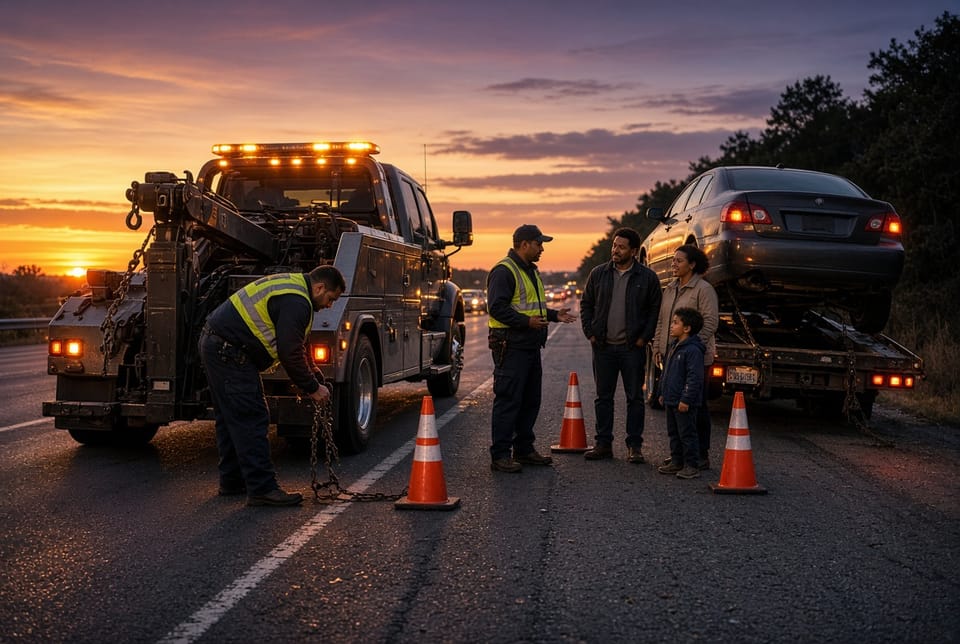
Roadside assistance is one of the most valuable yet frequently misunderstood add-ons available with auto insurance. When your vehicle stops unexpectedly, this coverage can turn a stressful breakdown into a manageable inconvenience. Understanding exactly what roadside assistance typically covers and what it does not cover helps you use the benefit wisely, avoid surprise costs, and stay protected.
Get Clear Roadside Assistance Answers – Call Today
This comprehensive guide explains standard coverage details, common service limits, important exclusions, and practical steps you can take today. The information reflects typical industry practices found in many auto insurance policies. Always review your specific policy declarations because exact terms vary by insurer and plan level.
Why Roadside Assistance Matters for Every Driver
A sudden mechanical issue, dead battery, or flat tire can happen to anyone. Without roadside assistance coverage, you may face expensive out-of-pocket charges for a tow truck, locksmith, or fuel delivery—often $150 to $400 or more depending on location and time of day. With the right protection in place, a simple phone call usually brings trained help within a reasonable time.
Roadside assistance is designed for non-accident mechanical and convenience problems. It is not a substitute for collision coverage or comprehensive coverage. Knowing the difference prevents frustration when a claim is declined.
Most policies offer this benefit either as a built-in feature or an inexpensive optional endorsement. The annual cost is typically modest compared with the peace of mind it provides.
What Roadside Assistance Typically Covers
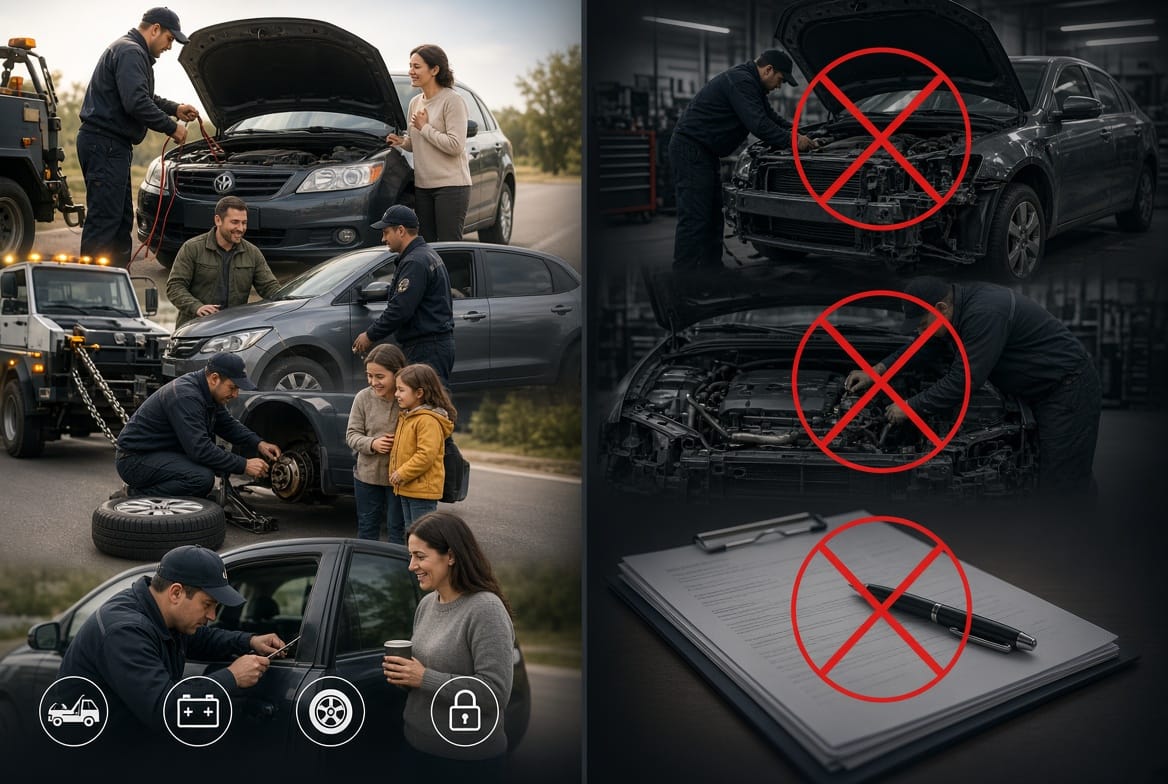
Standard roadside assistance programs focus on getting you mobile again or transporting the vehicle a limited distance to a repair facility. The five most common services are towing, jump-starts, flat-tire changes, lockout assistance, and emergency fuel delivery.
Towing Service
Towing is the cornerstone of most plans. If your vehicle cannot be driven safely, a dispatched truck will transport it to the nearest qualified repair shop or another location within the policy’s mileage limit.
Typical limits include:
- Distance: Often 5 to 15 miles on basic plans; premium plans may allow 50–100 miles or more.
- Frequency: Many policies cap the number of tows per policy year (commonly 3–5).
- Destination: Usually the closest approved facility unless you pay the extra mileage.
Towing from an accident scene is sometimes handled differently and may fall under collision coverage instead.
Battery Jump-Starts
A dead battery is one of the most frequent reasons drivers request help. Technicians arrive with professional jumper equipment and attempt to start the vehicle.
This service is generally covered without mileage restrictions because it occurs at the breakdown location. If the battery is beyond revival, the technician will usually recommend towing.
Flat Tire Changes
When you have a usable spare tire, roadside assistance typically includes removing the flat and installing the spare. The service does not include repairing the punctured tire or providing a new tire.
If no spare is present or the spare is also damaged, the vehicle is usually towed instead.
Vehicle Lockouts
Locked keys inside the car or a malfunctioning electronic lock can leave you stranded. Most programs send a technician equipped with non-destructive unlocking tools.
Coverage normally applies only to unlocking the vehicle. It does not pay for a replacement key or lock repair if the original key is lost.
Emergency Fuel Delivery
Running out of gas happens more often than many drivers admit. Fuel delivery usually includes bringing a small quantity (commonly 2–3 gallons) so you can reach the nearest station.
You are generally responsible for the cost of the fuel itself. The service fee for delivery is covered.
Additional services sometimes included in higher-tier plans are winching (when the vehicle is stuck just off the pavement) and minor on-site adjustments.
Important Limits That Apply to Covered Services
Even when a service is listed as covered, limits almost always apply. Understanding these boundaries prevents unexpected bills.
- Mileage caps on towing are the most common restriction. Exceeding the free miles usually means you pay the difference at the truck’s standard rate.
- Annual usage limits prevent unlimited calls. Once the yearly maximum is reached, additional requests become out-of-pocket.
- Geographic restrictions may exclude certain remote or off-road locations.
- Vehicle type limitations sometimes exclude commercial vehicles, motorcycles, or cars with extensive aftermarket modifications.
- Time-of-day or weather surcharges are rare with insurance-provided service but can appear with third-party dispatchers.
Always confirm current limits by calling the number on your insurance card or reviewing the policy endorsement.
What Roadside Assistance Does Not Cover
Clarity about exclusions is just as important as knowing the benefits. Roadside assistance is not repair insurance and is not accident insurance.
Accident-Related Damage
Damage resulting from a collision—even a minor fender-bender—is handled through collision coverage, not roadside assistance. The tow from an accident scene may be covered under the collision deductible provisions rather than the roadside benefit.
Mechanical or Body Repairs
Technicians are not authorized to perform engine work, transmission service, brake replacement, or body repairs. Any parts or labor beyond the basic roadside task are your responsibility.
Replacement Parts and Tires
A new battery, new tire, or replacement key fob is never included. The service gets you to a shop or provides a temporary fix only.
Storage Fees and Extended Waiting
If the repair shop is closed or the vehicle must be stored overnight, storage charges are typically excluded.
Pre-Existing or Negligent Conditions
Some policies exclude coverage when the breakdown results from lack of maintenance (for example, ignoring a known bald tire) or illegal modifications.
Rental Cars and Trip Interruption
Basic roadside plans rarely include a rental vehicle or hotel reimbursement. Those benefits usually require a separate endorsement or higher-tier roadside package.
Recognizing these exclusions helps you budget correctly and choose additional coverages if needed.
How to Request Service and What to Expect
When you need help, follow these steps for the smoothest experience:
- Move the vehicle as far off the roadway as possible and turn on hazard lights.
- Call the dedicated roadside number listed on your insurance card or app.
- Provide your policy number, exact location, and a description of the problem.
- Stay in a safe location until the technician arrives.
- Confirm any potential extra charges before work begins.
Response times vary by location, traffic, and weather but are generally 30–90 minutes in urban and suburban areas.
Keep your insurance card and a charged phone accessible. Many insurers now offer app-based dispatch with real-time tracking.
Common Misconceptions About Roadside Coverage
Several myths persist and can lead to disappointment.
- “It covers any tow, any distance.” Most plans have clear mileage limits.
- “The technician will fix the car.” They provide only the listed convenience services.
- “It’s only useful for long trips.” Daily local breakdowns are the most common claims.
- “I already have towing through my credit card.” Credit-card benefits often have stricter limits and reimbursement requirements.
Reviewing your actual policy language eliminates these misunderstandings.
Benefits of Adding or Upgrading Roadside Assistance
The advantages extend beyond the immediate service call.
- Predictable costs instead of surprise invoices.
- Access to a pre-screened network of providers.
- Reduced stress during an already difficult moment.
- Potential discount when bundled with other auto coverages.
For many drivers the annual premium is lower than the cost of a single independent tow.
Practical Tips to Reduce the Chance of Needing Service
Prevention remains the best strategy.
- Maintain proper tire pressure and tread depth.
- Test your battery before extreme weather seasons.
- Keep at least a quarter-tank of fuel.
- Carry a charged portable jump starter and basic tools.
- Schedule regular maintenance according to the manufacturer’s schedule.
These habits lower both the frequency of calls and the likelihood of being stranded in an inconvenient location.
Choosing the Right Level of Coverage
Insurers typically offer tiered options:
- Basic: Core services with shorter towing distances and fewer annual uses.
- Standard: Increased mileage and additional services such as winching.
- Premium: Longer tows, more annual events, and sometimes trip-interruption benefits.
Evaluate your driving patterns, typical trip distances, and comfort with risk when selecting a level. Families who travel frequently or live in rural areas often benefit from higher limits.
Final Thoughts: Stay Informed and Prepared
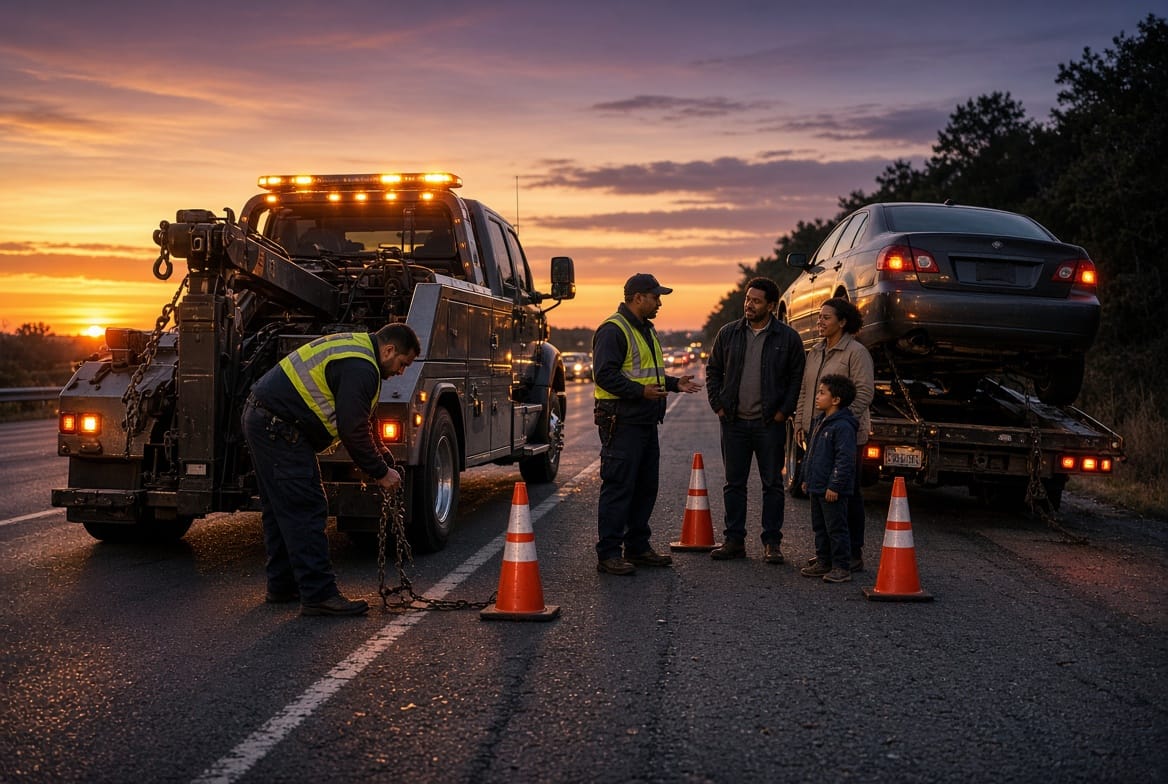
Roadside assistance delivers genuine value when you understand both its strengths and its boundaries. It reliably handles towing within stated limits, jump-starts, spare-tire installation, lockouts, and emergency fuel delivery. It does not pay for accident repairs, mechanical overhauls, replacement parts, or unlimited long-distance tows.
Take a few minutes today to locate your policy documents or insurance app and confirm the exact terms that apply to your vehicle. Knowing your coverage in advance removes uncertainty when you need help most.
If you have questions about current options, available upgrades, or how roadside assistance fits with your overall auto policy, knowledgeable representatives are ready to assist.
Prepared drivers enjoy greater confidence on every trip. Make sure your roadside assistance details are clear so the next unexpected stop becomes nothing more than a brief pause on the journey.
Call Today and Avoid Surprise Breakdown Costs