The Collector Car Insurance: Benefits and Requirements
Collector vehicles represent more than transportation. They embody history, craftsmanship, and personal passion. Standard auto policies often fail to protect that investment properly. Collector car insurance fills the gap with specialized terms designed for vehicles that spend most of their time stored rather than driven. This article explains how the coverage works, who qualifies, what insurers require, and why the right policy delivers both financial protection and peace of mind.
Insure Your Classic Properly – Call Now
Understanding Collector Car Insurance
Collector car insurance is a niche product written for automobiles, trucks, and motorcycles that owners treat as collectibles rather than daily transportation. Insurers recognize that these vehicles typically accumulate far fewer miles, reside in secure storage, and hold values that do not follow ordinary depreciation curves.
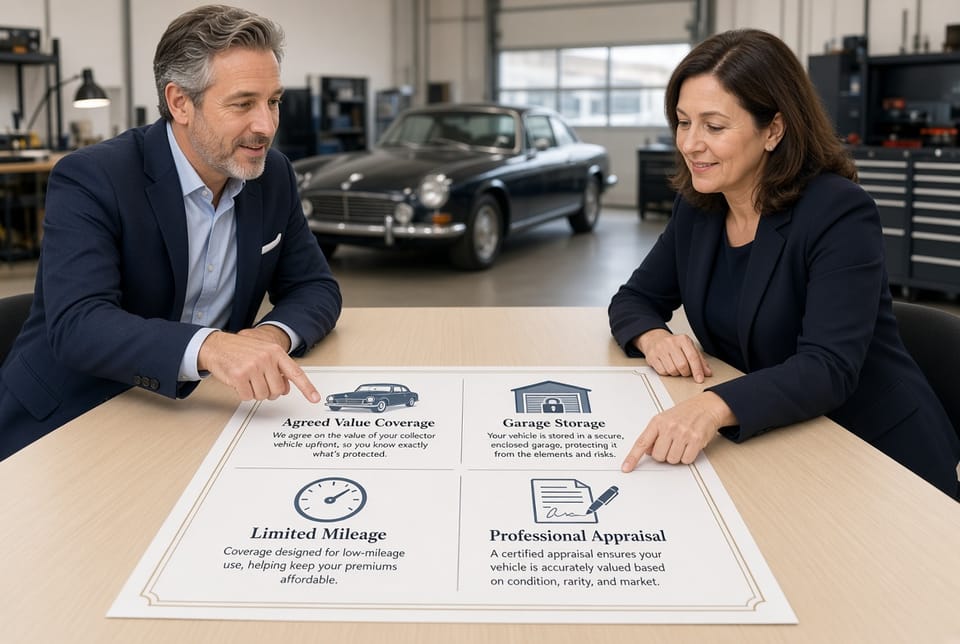
The two features that distinguish the coverage most clearly are agreed value settlement and limited-use underwriting. Under an agreed-value policy the owner and insurer lock in a specific dollar amount at the start of the term. If a total loss occurs, that pre-set figure is paid. There is no argument over actual cash value or market depreciation. Limited-use provisions restrict annual mileage—commonly between 2,500 and 5,000 miles—and require the vehicle to be stored in a locked garage when not in use.
Specialized claims handling completes the picture. Adjusters familiar with vintage parts, original-equipment specifications, and restoration standards manage repairs. The result is restoration that preserves authenticity rather than a generic replacement.
Core Benefits That Set the Coverage Apart
Owners choose collector policies for several concrete advantages.
- Guaranteed payout amount. Agreed value eliminates the uncertainty that accompanies actual-cash-value settlements.
- Lower premiums relative to usage. Because the vehicle is driven infrequently and stored securely, the statistical risk of collision or theft drops, and rates reflect that reality.
- Expert claims service. Restoration shops and parts specialists work with insurers who understand originality requirements.
- Flexible usage allowances. Many policies still permit participation in car shows, club tours, and occasional pleasure drives.
- Additional coverages often bundled. Spare parts, trailers, and even clothing or tools used at events can be scheduled.
These benefits only apply when the vehicle and owner meet underwriting standards. The next sections detail those standards.
Eligibility: Which Vehicles Qualify
Not every older car automatically qualifies. Insurers look for vehicles that function as collectibles.
Typical eligibility criteria include:
- Age or collectible status—usually 20–25 years or older, or a recognized limited-production or historically significant model.
- Primary purpose other than commuting or commercial work.
- Ownership by an individual who already maintains a separate daily-driver policy.
- Documentation of maintenance and, in many cases, membership in a recognized car club.
Vehicles used as regular transportation, modified for racing, or left outdoors year-round generally fall outside the program. Insurers want to see that the car is a cherished asset rather than a substitute for an everyday sedan.
Storage and Usage Requirements
Two operational rules appear in nearly every collector policy: garage storage and limited mileage.
Garage storage means the vehicle must occupy a fully enclosed, lockable structure when not being driven. Carports, open-sided sheds, or street parking usually disqualify the risk. Climate control is not always mandatory, yet many underwriters view it as a positive factor because it reduces corrosion and deterioration.
Limited mileage is equally strict. Most carriers cap annual use at a few thousand miles. Owners typically submit odometer photographs at renewal. Exceeding the limit can void coverage or trigger a change to a standard policy with higher premiums and actual-cash-value settlement.
These restrictions exist because they keep the risk profile low. A car that travels 3,000 miles a year and sleeps in a locked garage presents a far smaller chance of loss than one driven daily and parked on the street.
The Appraisal Process and Agreed Value
Setting the agreed value requires documentation. Owners usually supply:
- Recent professional appraisal or detailed market comparables.
- High-resolution photographs of the exterior, interior, engine bay, and any unique features.
- Records of restoration work, original invoices, and provenance if available.
The insurer reviews the package and proposes a value. Once both parties sign, that figure becomes the amount payable in a total-loss situation. Periodic re-appraisal—often every three to five years—keeps the number current as values fluctuate.
An accurate appraisal protects both sides. The owner avoids under-insurance; the insurer avoids over-paying. Because the process is collaborative rather than adversarial, most collectors find it straightforward.
How Collector Policies Differ from Standard Auto Insurance
A conventional auto policy uses actual cash value. After a loss the insurer subtracts depreciation, leaving the owner with a check that rarely covers a full, authentic restoration. Deductibles, rental-car limits, and parts-sourcing rules also follow mass-market logic.
Collector coverage reverses those defaults. Agreed value replaces depreciation calculations. Claims teams source period-correct parts. Some policies even waive deductibles for certain losses or include coverage for diminution in value after a repaired accident. The trade-off is the usage and storage discipline already described.
Owners who try to insure a true collector vehicle on a standard policy often discover gaps only after a claim. The specialized product closes those gaps before they become expensive surprises.
Additional Considerations and Common Questions
Many collectors wonder whether they can still drive the car to work occasionally. Most policies prohibit regular commuting. A short trip to a weekend event is usually acceptable; daily office use is not.
Another frequent question concerns modifications. Tasteful, reversible upgrades that enhance originality or safety generally remain acceptable. Performance modifications intended for track use typically move the vehicle into a different, more expensive category.
Club membership sometimes earns a modest discount and also signals to underwriters that the owner participates in a community that values preservation. It is rarely an absolute requirement, yet it strengthens an application.
Steps to Secure Proper Coverage
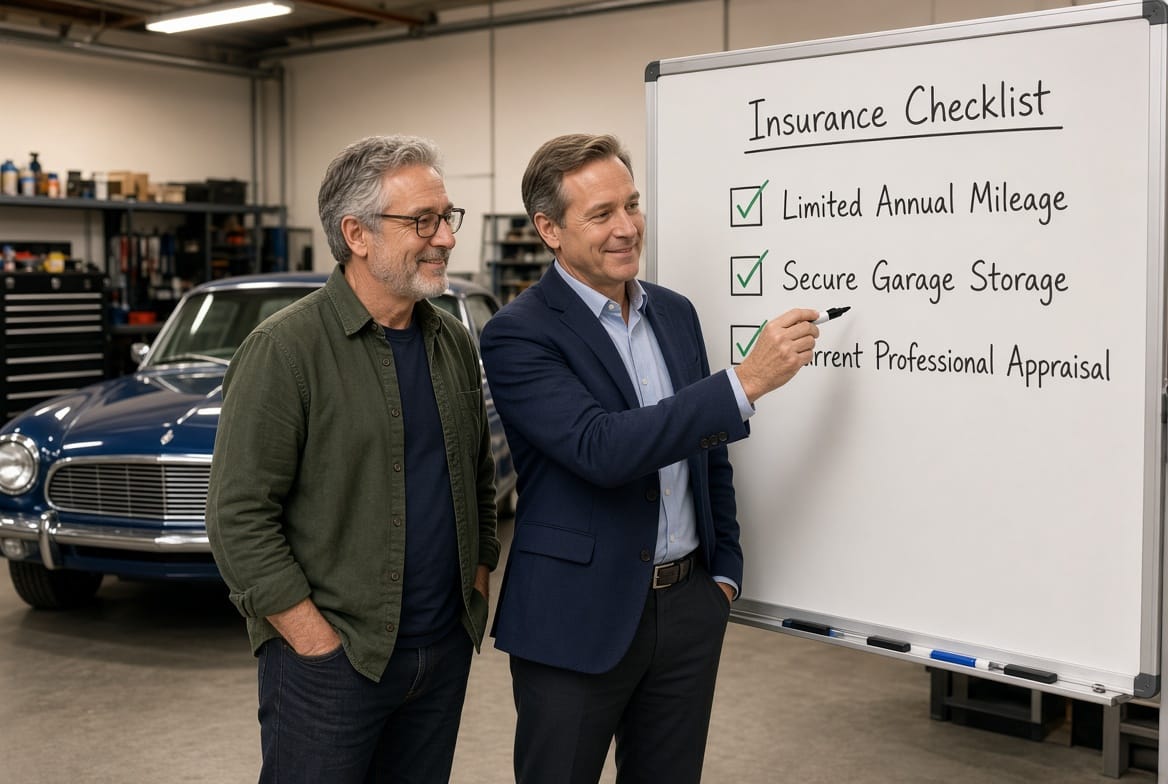
Obtaining collector car insurance follows a clear sequence:
- Confirm the vehicle meets age or collectible criteria and is not a daily driver.
- Gather photographs, maintenance records, and an independent appraisal.
- Contact a specialist who writes collector policies rather than a general-lines agent unfamiliar with the niche.
- Review the proposed agreed value, mileage limit, and storage wording.
- Bind the policy and store the vehicle according to the contract.
- Photograph the odometer and garage at each renewal.
Following these steps produces a policy that matches the asset instead of forcing the asset into a mass-market template.
Final Advice
A collector vehicle deserves coverage written for collectors. Agreed-value protection, expert claims handling, and underwriting that rewards careful storage and limited use work together to preserve both the car and the owner’s financial position. Standard policies leave too many gaps for vehicles whose value lies in originality and rarity.
Insure your collector car properly. Speak with a specialist who understands the requirements and can tailor the terms to your specific automobile. Taking that step today protects the investment you have already made in time, money, and passion.
Call Now for Specialized Collector Coverage