The Rideshare Insurance Endorsement: What Uber and Lyft Drivers Need
In today's gig economy, driving for Uber and Lyft offers flexible income opportunities for millions of Americans. However, many drivers overlook a critical aspect of their work: proper insurance coverage. Without the right protection, a single accident could lead to devastating financial consequences.
Get Rideshare Coverage Today – Call Now!
This comprehensive guide explores the rideshare insurance endorsement—an essential add-on that bridges dangerous coverage gaps for gig drivers. Whether you're a full-time driver or supplementing your income on weekends, understanding these nuances ensures you stay protected on every trip.
Why Standard Auto Insurance Falls Short for Rideshare Drivers
Personal auto insurance policies are designed for everyday commuting and errands, not commercial activities like transporting passengers for pay. Most standard policies explicitly exclude business use of your vehicle, leaving you exposed once you log into a rideshare app.
Rideshare companies like Uber and Lyft provide some commercial insurance, but it only activates under specific conditions. This creates significant vulnerabilities that a rideshare insurance endorsement can address.
Key risks without proper coverage include:
- High out-of-pocket costs for vehicle repairs or medical bills.
- Liability claims from passengers or other drivers that exceed available limits.
- Policy cancellation by your personal insurer if they discover unreported rideshare activity.
By adding a rideshare endorsement to your existing policy, you extend personal coverages seamlessly into your gig work, providing peace of mind and continuous protection.
Understanding the Three Critical Periods of Rideshare Driving
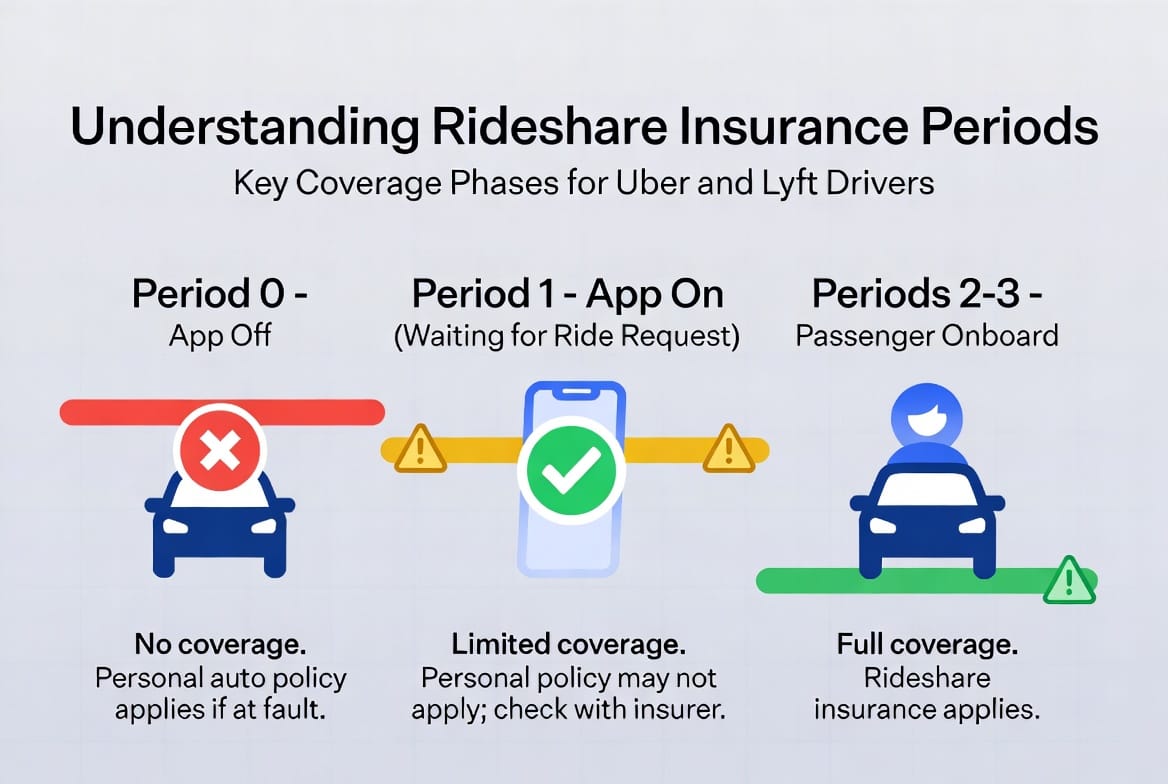
Rideshare insurers and companies divide your driving time into distinct periods. Knowing these helps you identify where coverage gaps exist.
Period 0: App Off – Personal Use Only
When your rideshare app is completely closed, your personal auto insurance serves as the primary coverage. This period covers standard personal driving activities. However, once you decide to earn, the dynamics change immediately.
Period 1: App On, Waiting for a Ride (The Most Common Gap)
This is the riskiest phase for many drivers. Your app is active, you're logged in and available, but you haven't yet accepted a specific ride request.
Personal policies often exclude coverage here due to business-use clauses. While Uber and Lyft provide contingent liability (typically lower limits like $50,000 per person/$100,000 per accident), this may not suffice for serious incidents. Comprehensive and collision coverage for your own vehicle are frequently absent or limited.
A rideshare insurance endorsement shines in this period by extending your personal liability, comprehensive, and collision protections, filling the dangerous void.
Periods 2 and 3: En Route or With Passenger
Once you accept a ride (Period 2) or have a passenger in the vehicle (Period 3), the rideshare company's commercial policy becomes primary, often with higher liability limits up to $1 million. Your personal policy may act as secondary if needed.
Even here, gaps can appear—especially for damage to your own car if comprehensive/collision isn't fully addressed. An endorsement ensures smoother claims and better overall protection.
The Critical Coverage Gaps Gig Drivers Face
Many drivers assume the company's insurance has them fully covered. Unfortunately, this is rarely true:
- Liability shortfalls in Period 1 can leave you personally responsible for damages or injuries.
- No coverage for your vehicle in waiting periods means repair bills fall entirely on you.
- Exclusions in personal policies for "for-hire" use can result in denied claims and potential policy lapse.
- High deductibles and lower limits from TNC policies increase your financial exposure.
Real-world impact: An accident during a Period 1 wait could mean thousands in uncovered repairs, legal fees, and lost income—risks that grow with more hours driven.
What a Rideshare Insurance Endorsement Provides
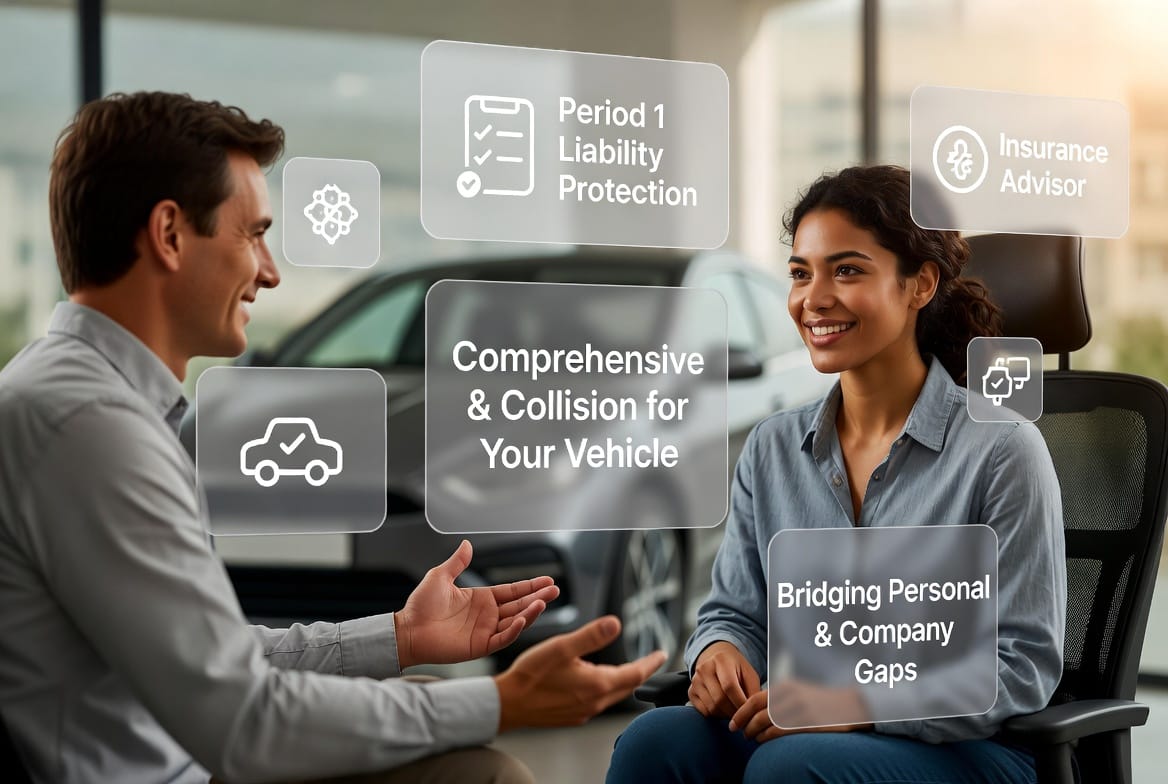
A rideshare endorsement (sometimes called TNC or gig driver coverage) is an affordable add-on to your personal auto policy. It typically costs $15–$30 extra per month but delivers substantial protection.
Core benefits include:
- Extended liability during all active periods.
- Comprehensive and collision coverage for your vehicle while logged in.
- Gap filling between personal and company policies.
- Uninsured/underinsured motorist protection enhancements.
- Peace of mind for you and your passengers.
Major insurers like Progressive, State Farm, Allstate, and others offer these endorsements in most states. Some provide standalone rideshare policies for greater flexibility.
How to Get Properly Covered as an Uber or Lyft Driver
- Review your current policy – Contact your insurer and disclose your rideshare activities honestly.
- Ask specifically for a rideshare endorsement – Explain your driving hours and platforms used.
- Compare options – Shop around for the best rates and coverage levels.
- Document everything – Keep proof of coverage and understand claim procedures.
- Stay informed – Laws vary by state, so confirm requirements in your area.
Don't assume your existing coverage suffices. Proactive steps today prevent major headaches tomorrow.
Additional Considerations for Rideshare Drivers
Beyond basic liability and physical damage, think about uninsured motorist coverage, rental reimbursement, and medical payments. Full-time drivers may benefit from higher limits or commercial policies.
Maintenance and safety also play roles in lowering premiums: safe driving records, vehicle upkeep, and defensive driving courses can lead to discounts.
For families relying on rideshare income, proper coverage protects not just your vehicle but your livelihood and loved ones' financial security.
Common Myths About Rideshare Insurance
Myth: "The company's insurance covers everything."
Reality: It has limitations, especially in waiting periods.
Myth: "My personal policy is enough if I don't tell them."
Reality: Non-disclosure can void claims entirely.
Myth: "Endorsements are too expensive."
Reality: The low monthly cost far outweighs potential accident expenses.
Educating yourself debunks these myths and empowers better decisions.
Real Stories and the Importance of Being Prepared
Imagine logging in for a busy evening shift, waiting for your first ping, only to be involved in a fender-bender. Without an endorsement, repair costs and liability could escalate quickly. Drivers who added coverage report smoother claims and greater confidence on the road.
Statistics show gig economy participation continues to rise, making specialized insurance more relevant than ever.
Final Advice: Protect Yourself on Every Ride
Driving for Uber and Lyft can be rewarding, but only when you're fully protected. Don't drive rideshare without proper coverage. A rideshare insurance endorsement is the smart, responsible choice that safeguards your vehicle, finances, and future.
Contact a knowledgeable insurance professional today to discuss adding the right endorsement to your policy.
By taking this step, you drive with confidence, knowing that unexpected events won't derail your success in the gig economy.
Close Your Coverage Gaps – Call Today!