The Retail Fixture Disposal: Dumpsters for Store Remodels
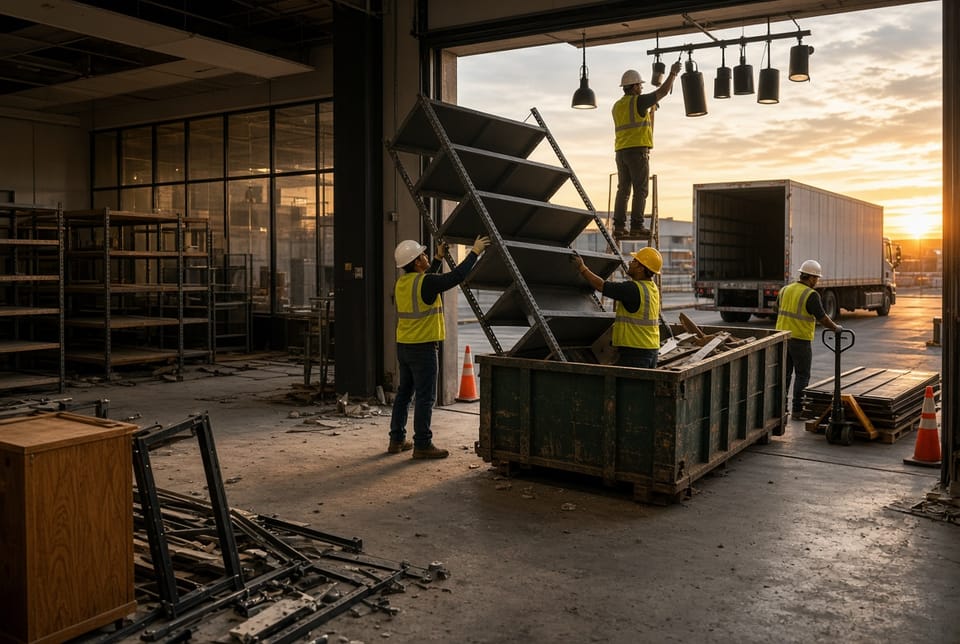
Retail environments change constantly. New layouts, updated branding, refreshed merchandising, and evolving customer expectations force store operators to replace retail fixtures on a regular cycle. Shelving systems that once defined the sales floor, gondola displays that held product, lighting that set the mood, and supporting furniture all become surplus when a remodel begins. The practical question for every retailer is not whether those items must leave the building, but how they leave it safely, legally, and cost-effectively.
Get Your Store Remodel Cleared Fast – Call Now!
Commercial dumpster rental solves that problem at scale. A properly sized roll-off or front-load container parked at the loading dock or in a designated staging area gives renovation teams a single, controlled destination for everything that cannot stay. The result is a cleaner job site, a faster timeline, and a clearer path through the three responsible options every retailer should consider: recycling (especially metal), donation of still-usable pieces, and disposal of items that have reached the end of their useful life.
This article explains how retail stores actually use dumpsters during fixture change-outs, what belongs in each stream, and how a professional commercial service keeps the entire process compliant and efficient.
Why Store Remodels Generate So Much Fixture Waste
A typical mid-size specialty or grocery remodel can generate several tons of mixed materials in a matter of days. Fixtures are bulky, often bolted or wired in place, and rarely uniform. One section of gondola may be powder-coated steel; the next may include particle-board endcaps, acrylic sign holders, and fluorescent or LED lighting assemblies. When the new planogram arrives, the old system has to come down quickly so electricians, flooring crews, and merchandisers can work.
Without a dedicated dumpster, debris piles in aisles, blocks emergency exits, and creates trip hazards. Temporary storage in the back room only delays the problem and can violate fire-code clearances. A commercial container placed at the outset of demolition gives the project a predictable rhythm: dismantle, sort on the spot when possible, and load. That rhythm is what keeps remodel calendars from slipping.
Retailers also face landlord, municipal, and corporate sustainability requirements. Many leases now include language about responsible waste handling. Cities increasingly restrict what can go into mixed construction dumpsters. Corporate ESG reports ask for diversion rates. A well-planned fixture disposal program using dumpsters addresses all three pressures at once.
Common Retail Fixtures That End Up in Dumpsters
Not every item follows the same path, but the inventory is surprisingly consistent across formats.
- Shelving and gondola systems — steel uprights, beams, decks, and back panels. These are the heaviest and most recyclable items on most jobs.
- Display fixtures — slatwall, gridwall, endcaps, dump bins, and specialty merchandisers. Mix of metal, wood, and plastic.
- Lighting — track heads, pendants, recessed cans, and older fluorescent fixtures. Some contain recyclable aluminum or copper; others require special handling for ballasts.
- Furniture and checkout elements — registers stands, customer-service desks, fitting-room benches, and stockroom tables.
- Signage and décor — channel letters, hanging graphics, mannequin bases, and seasonal props that no longer match the brand.
Each category has a preferred destination, which is why sorting at the dumpster edge matters.
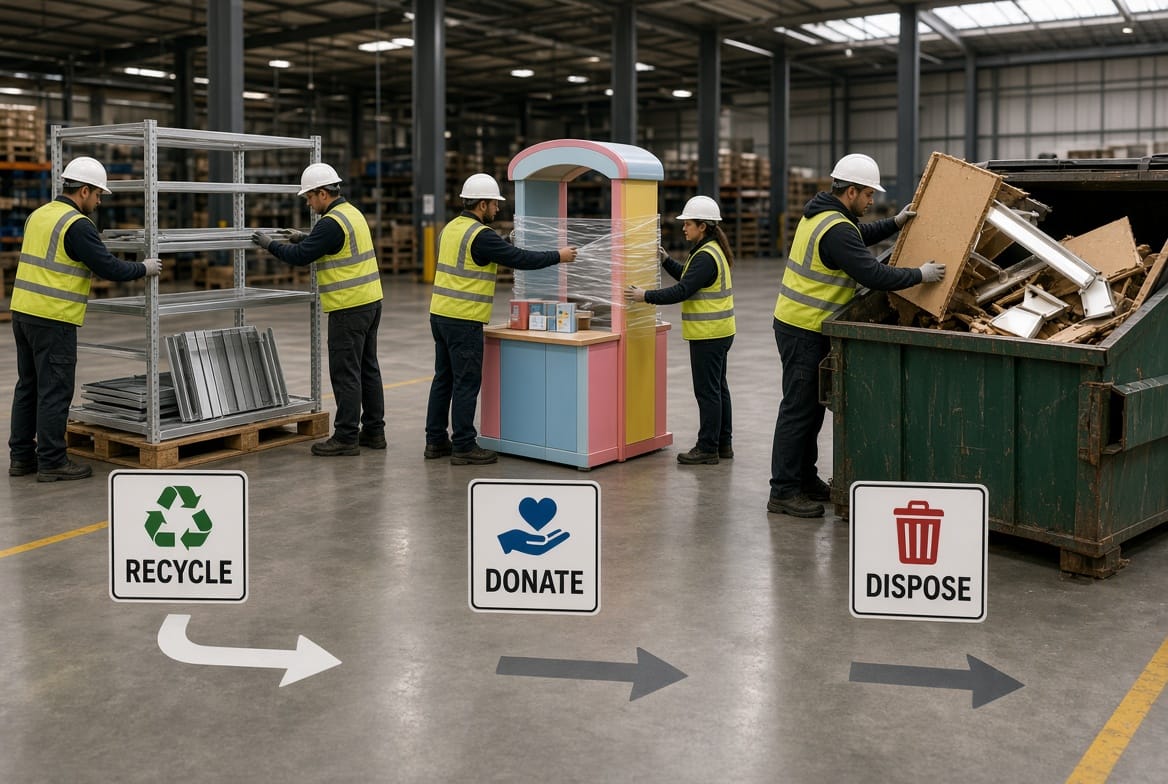
The Three Pathways: Recycle, Donate, Dispose
Responsible retail fixture disposal is not a single action. It is a decision tree applied item by item.
Recycling Metal and Other Recoverable Materials
Steel shelving and gondola components are high-value scrap. When they are kept relatively clean and free of excessive wood or plastic attachments, they can be diverted from landfill and processed at a metals recycler. Aluminum lighting housings and copper wiring add further recovery value. A commercial dumpster service that understands retail work can often stage a separate metal-only container or coordinate a scheduled scrap pickup once the dumpster is full of sorted steel.
The environmental and financial benefits are immediate. Diverting metal reduces landfill fees and, in many markets, generates a modest rebate that offsets rental cost. It also supports the retailer’s sustainability narrative with measurable tonnage.
Donation of Usable Items
Not every fixture is worn out. Gently used slatwall panels, intact display tables, or complete lighting kits that simply no longer match the new aesthetic can have a second life. Habitat for Humanity ReStores, school theater programs, pop-up retailers, and non-profit thrift operations frequently accept these items when they are clean, complete, and delivered or made available for pickup.
Donation requires a little extra coordination—photos, inventory lists, and scheduled collection—but it keeps usable product out of the waste stream and can generate a tax-deductible receipt. Items that fail the “still functional and presentable” test move to the next option.
Disposal of Unsellable or Contaminated Material
Particle-board endcaps that have absorbed years of floor wax, cracked acrylic, broken glass shelves, and lighting fixtures with failed ballasts belong in the general construction dumpster. These materials have little or no secondary market and would contaminate a recycling or donation load. The dumpster’s purpose here is containment and compliant transport to a permitted facility.
The key risk is mixing streams. A single load of mixed wood, metal, and electronics can be rejected or charged as contaminated. Clear labeling, on-site sorting tables, and crew briefings prevent that outcome.
Planning the Dumpster for a Retail Fixture Project
Success begins before the first upright is unbolted.
Right-size the container. A 20-yard or 30-yard roll-off is typical for a single-store remodel; larger department or grocery projects may need 40-yard units or multiple drops. Over-sizing wastes money; under-sizing creates extra hauls and delays.
Location and access. The dumpster must sit on a surface that can support its weight when full, stay clear of fire lanes, and allow the truck to enter and exit without blocking customer or delivery traffic. Many retailers schedule the drop for after-hours or during the first demolition day.
Permits and landlord approval. Some municipalities require a street-occupancy permit if the container sits on public pavement. Shopping-center leases often demand proof of insurance and a certificate of disposal. A commercial provider experienced with retail work handles these details as part of the service.
Timing the haul. Coordinate the final pickup with the project schedule so the container does not sit idle after the last fixture is loaded. Most services offer scheduled or on-call removal.
These operational details sound mundane, yet they are the difference between a remodel that stays on budget and one that accumulates extra rental days and surprise fees.
Safety, Compliance, and Risk Management
Fixture removal is physical work. Heavy steel sections, overhead lighting, and tight aisles create pinch points, fall hazards, and electrical risks. A dumpster parked at the dock reduces the distance crews must carry material and keeps walkways clear. Still, basic protocols remain essential:
- Lock-out/tag-out on any powered fixtures or lighting circuits.
- Proper lifting techniques or mechanical assists for long gondola runs.
- Personal protective equipment—gloves, eye protection, and high-visibility clothing.
- Daily housekeeping so loose hardware and broken glass do not accumulate around the container.
From a regulatory standpoint, retailers must also consider whether any fixtures contain regulated materials (older fluorescent lamps, certain paints, or treated wood). A knowledgeable dumpster rental partner can flag these items and arrange separate handling so the main load remains acceptable at the disposal facility.
The reassuring reality is that these requirements are routine for commercial services that specialize in retail and construction work. They have already built the checklists, insurance coverage, and facility relationships that an individual store manager would otherwise have to assemble from scratch.
Cost Drivers and How to Control Them
Dumpster pricing for fixture jobs is driven by three variables: container size and rental period, tonnage or haul frequency, and contamination. Metal-heavy loads that can be recycled often cost less than mixed construction debris. Donation of bulky but usable pieces reduces the volume that must be hauled. Clear communication with the crew about what belongs in the dumpster prevents the expensive “contaminated load” surcharge.
Many retailers discover that the total cost of a professionally managed dumpster program is lower than the hidden costs of improvised solutions—overtime spent moving piles, delayed trade contractors, or last-minute dump runs in box trucks. The container becomes a predictable line item rather than an emergency expense.
Best Practices for a Smooth Fixture Change-Out
- Walk the sales floor with the project manager and dumpster provider before demolition begins; mark items for recycle, donate, or dispose.
- Stage a small sorting area next to the dumpster so metal can be set aside and donation pieces wrapped or palletized.
- Photograph donated items and keep a simple inventory for tax or ESG reporting.
- Brief every contractor who will generate waste so they use the correct container.
- Schedule the final haul to coincide with the last day of fixture removal, not days later.
- Ask the service for a waste ticket or diversion report; many retailers now need that documentation.
These steps take little extra time and produce a visibly cleaner, safer, and more professional job site.
Turning Fixture Disposal into a Repeatable Process
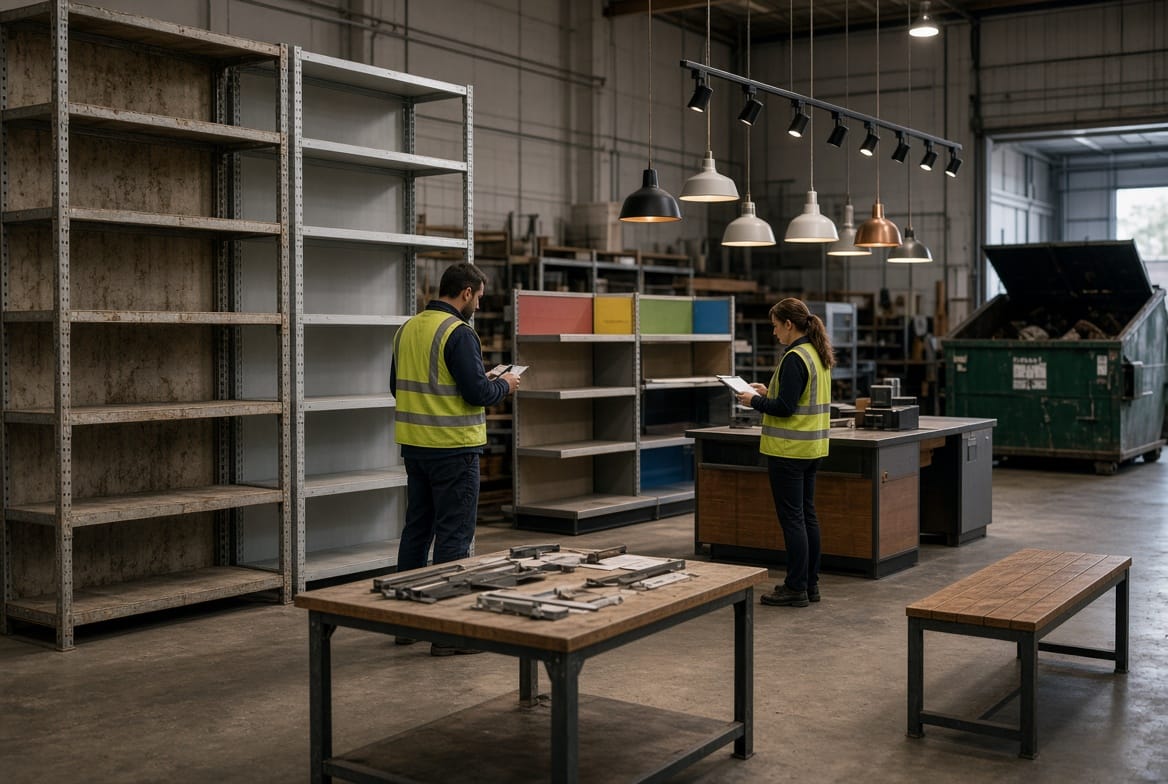
Once a retailer has completed one well-run remodel with dumpsters, the playbook becomes reusable. The same container sizes, the same sorting logic, and the same vendor relationship can be applied to the next location or the next seasonal reset. Over time the company builds institutional knowledge: which fixtures historically yield the most scrap value, which donation partners are reliable, and how many days a 30-yard container typically lasts on a given store format.
That institutional knowledge is an operational advantage. Remodels stop feeling like chaotic events and start feeling like controlled projects with predictable waste outcomes.
Efficient retail fixture disposal does not require a retailer to become a waste-management expert. It requires a clear plan, the right container on site at the right time, and a commercial partner who understands both the physical realities of store construction and the three responsible destinations for every piece that comes off the floor.
When the last outdated gondola is loaded and the dumpster is hauled away, the sales floor is ready for the new fixtures that will serve customers for years to come. The old ones have been given the most appropriate next step—recycled, donated, or disposed of—without slowing the project or creating unnecessary risk.
Call Now for Fast Dumpster Rental for Store Remodeels