The Restaurant Grease Trap Cleanout: Proper Disposal
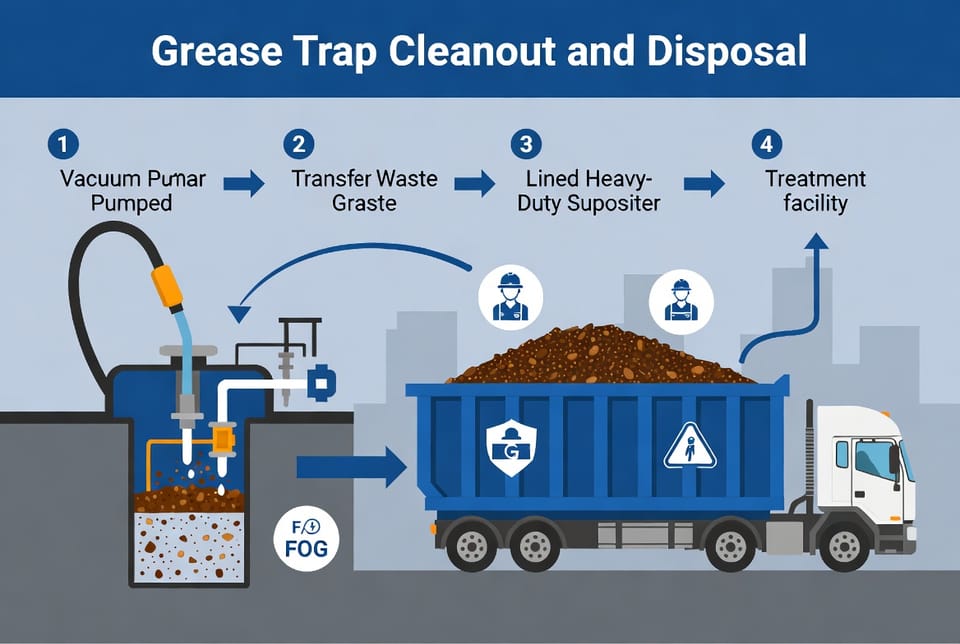
Restaurants generate significant volumes of grease trap waste every day. This mixture of food scraps, cooking grease, and solids accumulates in grease interceptors and must be removed regularly. Proper disposal through specialized dumpster rental services protects plumbing systems, prevents environmental harm, and keeps operations fully compliant with health department rules.
Call Now for Compliant Restaurant Grease Trap Disposal
Ignoring correct handling leads to clogged pipes, foul odors, heavy fines, and potential shutdowns. This guide explains exactly how restaurants manage grease trap cleanouts using commercial dumpsters, focusing on weight considerations, odor control, and health department compliance. The information is practical, authoritative, and designed to help kitchen managers and facility operators make confident decisions.
Understanding Grease Trap Waste in Restaurant Operations
Every commercial kitchen produces wastewater loaded with fats, oils, and grease (FOG) plus food particles. Grease traps, also called grease interceptors, capture these materials before they enter the sewer system. Over time the trap fills with a dense combination of solidified grease, food solids, and residual liquids.
When the trap reaches capacity, a professional cleanout is required. The extracted material cannot simply be poured down a drain or left in regular trash. It must go into a designated dumpster engineered for this type of waste. Restaurants rely on commercial dumpster services because the volume and characteristics of the material demand specialized containment.
The waste is heavy, sticky, and potentially odorous. It also carries strict regulatory requirements. Using the right dumpster ensures safe transport to approved disposal facilities while protecting staff, customers, and the surrounding environment.
Why Dumpsters Are Essential for Grease Trap Disposal
Standard trash bins cannot handle grease trap contents. The material is too dense and messy. Commercial dumpster rental providers supply containers specifically suited for FOG and solids. These units feature reinforced walls, secure lids, and often liners or absorbent materials to manage liquids and prevent leakage.
Restaurants schedule regular cleanouts—typically every one to three months depending on volume—and coordinate with dumpster delivery so the waste can be transferred immediately. The process keeps the kitchen running smoothly and avoids emergency plumbing calls.
Proper dumpster use also supports sustainability goals. Many disposal facilities recycle usable oils or process solids in controlled environments rather than sending everything to landfill. This reduces the overall environmental footprint of restaurant operations.
Step-by-Step Grease Trap Cleanout and Disposal Process
A professional cleanout follows a clear sequence. First, technicians open the grease trap and measure the accumulation. They then use vacuum trucks or specialized pumps to extract the mixture of grease, food scraps, and solids.
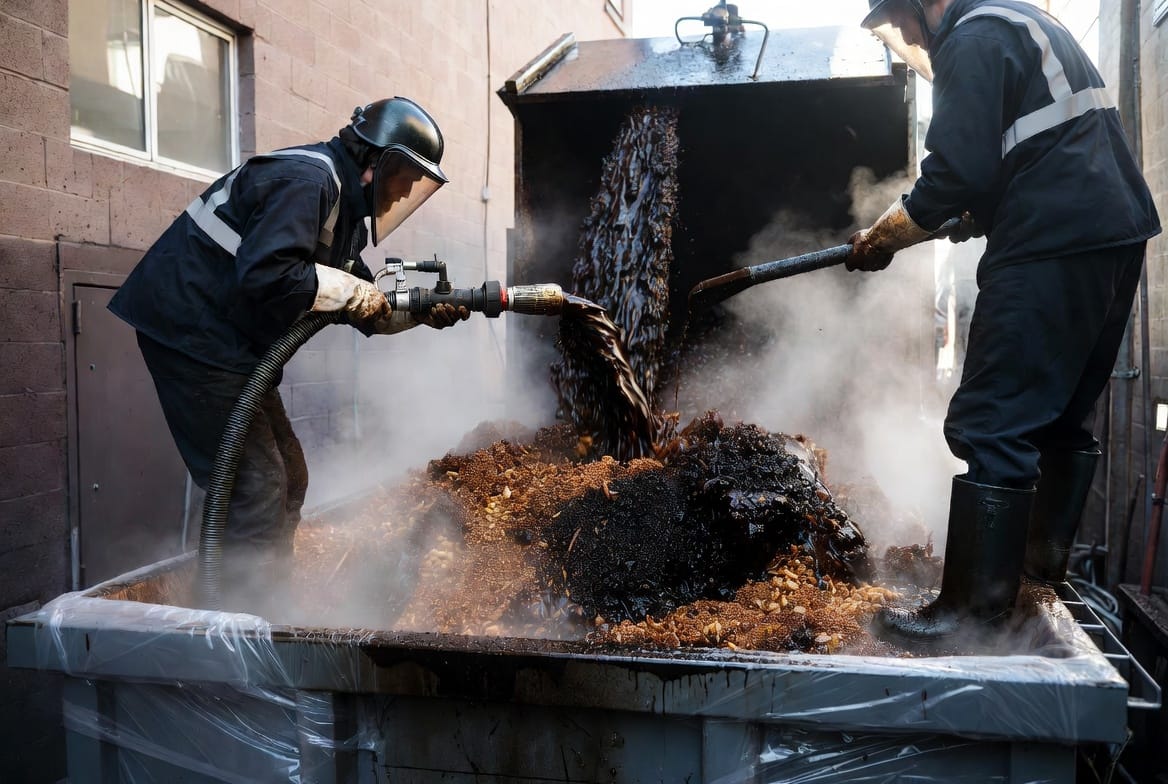
Once removed, the material is transferred into the waiting dumpster. Careful loading prevents spills and ensures the container stays within safe operating limits. After transfer, the trap is thoroughly cleaned, inspected, and returned to service.
The filled dumpster is later hauled to a permitted facility. There the waste undergoes processing that may include separation of recoverable oils, dewatering of solids, and compliant final disposal.
Critical Considerations for Dumpster Use
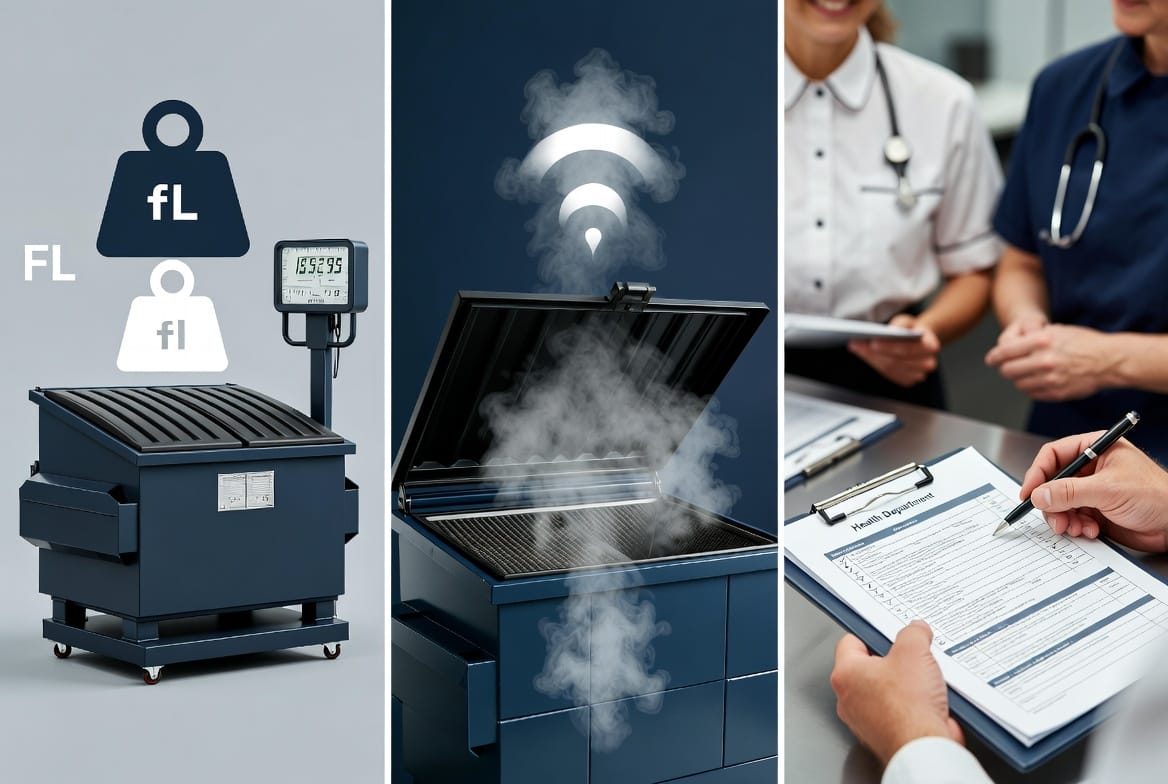
Three primary factors determine successful grease trap waste management: weight limits, odor control, and health department compliance. Addressing each one protects the restaurant from operational disruptions and regulatory issues.
Weight Limits and Structural Safety
Grease trap waste is surprisingly heavy. A mixture of solidified grease and wet food solids can weigh far more than ordinary trash of the same volume. Overloading a dumpster risks structural damage, transportation hazards, and additional fees.
Commercial dumpster providers supply units rated for high-density loads. Operators must monitor fill levels carefully and request appropriately sized containers. Typical recommendations include:
- Selecting a dumpster with sufficient capacity for the expected cleanout volume
- Avoiding the temptation to compress waste beyond safe limits
- Coordinating pickup schedules so the container is emptied before it becomes excessively heavy
- Using absorbent materials or liners when residual liquids are present
Exceeding weight limits can cause the dumpster to settle unevenly or become difficult to transport. Professional services calculate expected weights based on trap size and restaurant volume, then match the equipment accordingly. This proactive approach keeps every cleanout smooth and safe.
Odor Control Strategies
Grease trap waste produces strong, persistent odors if not managed properly. The combination of decomposing food solids and rancid oils creates an environment that attracts pests and generates complaints from neighboring businesses or customers.
Effective odor control begins with the dumpster itself. High-quality commercial containers feature tight-sealing lids and, in many cases, carbon filters or odor-neutralizing treatments. Additional best practices include:
- Scheduling cleanouts and dumpster pickups promptly so waste does not sit for extended periods
- Using specialized liners or absorbent pads that lock in liquids and reduce surface exposure
- Applying approved odor-control products designed for FOG waste
- Positioning the dumpster away from kitchen entrances, outdoor dining areas, and public walkways
- Maintaining regular cleaning of the dumpster exterior and surrounding area
When these measures are followed, the dumpster remains a contained, low-odor solution rather than a source of complaints. Restaurants that prioritize odor management protect their reputation and maintain a pleasant environment for staff and guests.
Health Department Compliance Requirements
Health departments and local environmental agencies enforce strict rules governing grease trap maintenance and waste disposal. Non-compliance can result in fines, forced closures, or legal action. Proper dumpster use forms a key part of meeting these standards.
Core compliance elements include:
- Documenting every cleanout with date, volume removed, and disposal destination
- Using only permitted haulers and disposal facilities
- Ensuring the dumpster is leak-proof and properly labeled for FOG waste
- Keeping records available for inspection
- Following local frequency requirements based on restaurant size and grease production
Many jurisdictions require restaurants to maintain a grease management plan that specifically addresses dumpster handling. Working with a knowledgeable commercial service simplifies this process. Providers familiar with local regulations supply the correct containers, handle transportation legally, and often assist with documentation.
Regular audits of the disposal process help identify any gaps before an inspector arrives. Consistency in following approved procedures demonstrates good faith and significantly reduces regulatory risk.
Choosing the Right Dumpster Service for Grease Trap Waste
Not every dumpster rental company handles FOG materials. Restaurants should select providers experienced with commercial kitchen waste. Key selection criteria include:
- Proven track record with restaurants and food-service clients
- Availability of reinforced, sealed containers suitable for heavy, odorous loads
- Knowledge of local disposal regulations and approved facilities
- Flexible scheduling that aligns with cleanout timing
- Transparent pricing that accounts for weight and special handling
A reliable partner will deliver the dumpster on time, ensure it is properly prepared, and remove it promptly after loading. This coordination minimizes kitchen disruption and keeps the entire process efficient.
Many services also offer educational support, helping kitchen staff understand best practices for trap maintenance between professional cleanouts. This partnership approach reduces overall waste volume and extends the life of plumbing systems.
Best Practices for Ongoing Grease Management
While dumpster disposal handles the end stage, upstream habits reduce the amount of waste generated. Simple kitchen protocols make a measurable difference:
- Scraping plates and cookware thoroughly before washing
- Using strainers in sinks to catch food particles
- Training staff on proper FOG disposal habits
- Scheduling preventive trap inspections
- Avoiding the use of chemical emulsifiers that can push grease farther into the system
These habits lower the frequency of major cleanouts and keep dumpster loads more manageable. Combined with professional disposal, they create a complete grease management system that supports both operational efficiency and regulatory peace of mind.
Environmental and Operational Benefits of Proper Disposal
Correct handling of grease trap waste delivers multiple advantages. Environmentally, it prevents FOG from entering waterways where it can cause blockages and pollution. Operationally, it protects expensive plumbing infrastructure from costly repairs. From a business perspective, it avoids fines and maintains uninterrupted service.
Restaurants that treat dumpster-based disposal as a routine, professional process rather than an afterthought gain a competitive edge. Clean, compliant operations enhance reputation with customers, landlords, and inspectors alike.
Common Mistakes to Avoid
Several pitfalls can undermine even well-intentioned efforts:
- Using undersized or standard trash dumpsters not rated for grease waste
- Allowing filled containers to sit too long, increasing odor and pest risks
- Failing to document disposal for compliance records
- Overloading beyond safe weight thresholds
- Choosing the lowest-cost provider without verifying regulatory knowledge
Avoiding these errors is straightforward when restaurants partner with experienced commercial services and follow established protocols.
Building a Reliable Cleanout Schedule
Consistency is the foundation of successful grease trap management. Most restaurants benefit from a fixed calendar that aligns trap cleanouts with dumpster delivery and pickup. Factors influencing frequency include:
- Restaurant seating capacity and menu style
- Volume of fried or oily foods prepared
- Size and type of grease interceptor installed
- Local health department recommendations
Reviewing the schedule quarterly allows adjustments based on seasonal volume changes or menu updates. A predictable rhythm reduces stress and ensures the dumpster is always available when needed.
The Role of Professional Support
While some smaller operations attempt in-house handling, the complexity of weight, odor, and compliance makes professional assistance the smarter choice for most restaurants. Trained technicians understand the material characteristics and regulatory landscape. They supply the correct dumpsters, manage the loading process safely, and guarantee legal disposal.
This support frees kitchen managers to focus on food quality and customer experience rather than waste logistics.
Final Recommendations for Restaurant Operators
Grease trap cleanouts are a non-negotiable part of commercial kitchen operations. Using specialized dumpsters for the resulting food scraps, grease, and solids addresses the three critical concerns of weight limits, odor control, and health department compliance. When these elements are handled correctly, restaurants operate more smoothly, stay within legal boundaries, and protect both their infrastructure and the environment.
Establish clear procedures, select a knowledgeable dumpster provider, and maintain thorough records. The result is a reliable system that supports long-term success.
Ensure Health Department Compliance – Call for Dumpster Rental Now