The Rental Car Insurance: Using Your Personal Policy When Traveling

Renting a car while traveling opens up freedom and flexibility, but it also brings important questions about insurance coverage. Many travelers assume the rental company’s offerings are mandatory or the only option. In reality, your personal auto insurance policy often extends to rental vehicles, potentially saving you money and providing familiar protection.
Get Rental Car Coverage Clarity – Call Now!
Understanding how your existing coverage works with rental cars empowers you to make informed decisions, avoid unnecessary expenses, and travel with confidence. This comprehensive guide explains everything you need to know about using your personal policy for rental cars, when supplemental coverage makes sense, and practical steps to protect yourself on every journey.
Understanding Rental Car Insurance Basics
Rental car companies offer several insurance products at the counter, but these are not always required if you have adequate personal coverage. The key is knowing what your own auto insurance policy already provides when you drive a temporary vehicle.
Personal auto policies typically follow the driver rather than the car in many situations. This means your liability, collision, and comprehensive coverages may apply to a rental under specific conditions. However, nuances exist based on your policy terms, the rental location, and the type of vehicle.
Travelers who research these details often discover they can decline expensive add-ons from the rental agency, focusing instead on their trusted personal coverage.
Key benefits of relying on your personal policy include:
- Consistent deductibles and coverage limits you already understand
- No surprise gaps in protection during domestic or international travel
- Potential cost savings by avoiding redundant rental insurance fees
- Seamless claims process through your established insurer
How Your Personal Auto Policy Extends to Rental Cars
Most standard personal auto insurance policies extend coverage to rental vehicles used for personal or business purposes, treating the rental similarly to your own insured car. This extension usually applies as long as the rental is temporary (typically under 30 days) and you are listed as an authorized driver.
Liability coverage is one of the most critical protections that travels with you. If you cause an accident while driving a rental, your personal liability limits generally apply, protecting you against claims for bodily injury or property damage to others. This continuity provides reassurance, especially in unfamiliar driving environments.
Collision and comprehensive coverage often extend as well. This means damage to the rental car from an accident (collision) or non-collision events like theft, vandalism, or weather (comprehensive) may be handled through your policy after your deductible.
However, coverage is not unlimited. Always verify with your insurer before travel, as some policies include restrictions based on vehicle class, rental purpose, or geographic location.
Pro tip: Contact your insurance provider ahead of time. A quick call can confirm exact terms and even document your coverage for the rental company if needed.
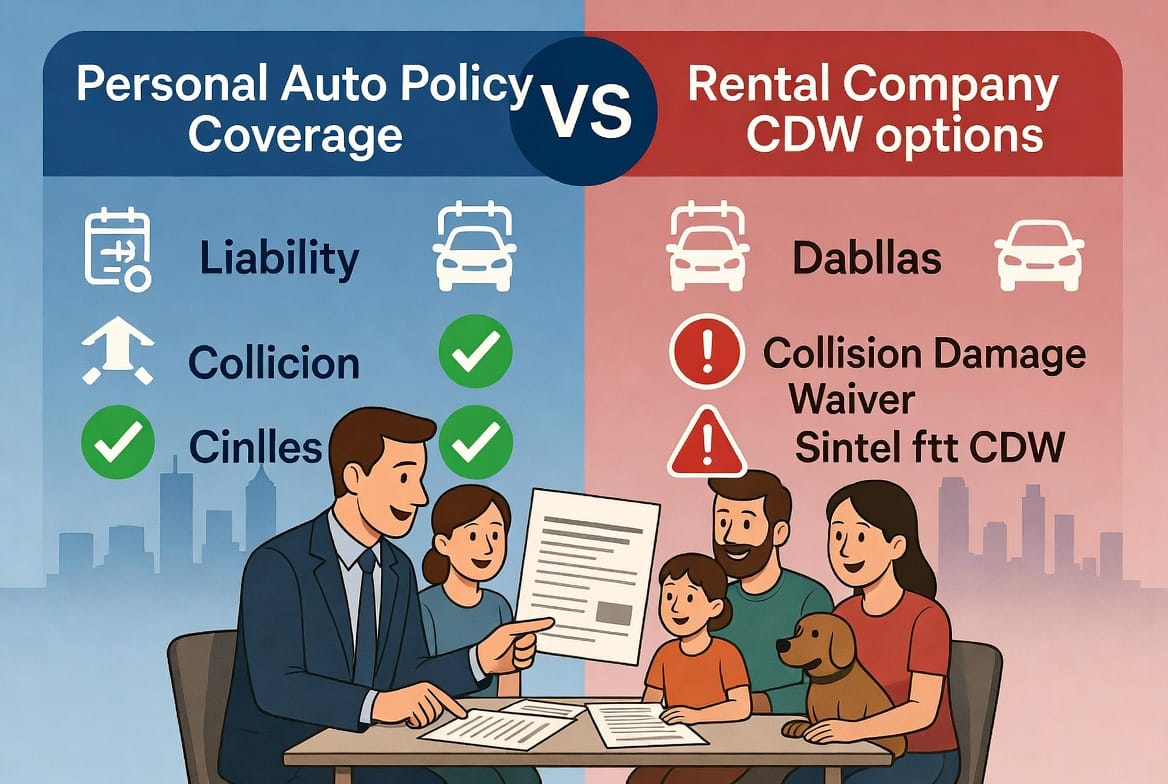
What Your Personal Policy Typically Covers — And What It Doesn’t
Your personal auto policy provides strong foundational protection, but it’s essential to understand the boundaries.
Commonly covered areas include:
- Liability for accidents you cause
- Collision damage to the rental vehicle
- Comprehensive protection against theft, fire, or natural disasters
- Medical payments or personal injury protection (PIP) where applicable
Important gaps to know about:
- Loss of use fees — Many personal policies do not cover the rental company’s lost revenue while their vehicle is being repaired.
- Administrative and claims processing fees — These extra charges from rental agencies often fall outside standard auto coverage.
- Diminished value after repairs — Your policy may not compensate for reduced resale value of the rental car.
- Off-road or exotic vehicle exclusions — Specialty or high-performance rentals may not be covered.
Being aware of these limitations helps you decide whether to purchase the rental company’s Collision Damage Waiver (CDW) or Loss Damage Waiver (LDW) for added peace of mind.
When Should You Consider Buying the Rental Company’s CDW?
Even with solid personal coverage, there are situations where the rental company’s CDW provides valuable supplemental protection. This waiver typically eliminates your financial responsibility for damage to the rental vehicle, often with little or no deductible.
Consider purchasing CDW when:
- Your personal policy has a high deductible that could create cash-flow challenges
- You’re renting in a high-risk area with challenging driving conditions
- The rental involves international travel where policy extensions may be limited
- You prefer zero out-of-pocket responsibility for vehicle damage
The CDW is not technically insurance but a waiver of the rental company’s right to seek damages from you. Understanding this distinction prevents confusion at the counter.
Many experts recommend declining CDW if your personal collision coverage is robust and your deductible is manageable. This approach frequently saves $20–$40 per day on rental costs.
The Role of Credit Card Coverage for Rental Cars
Many premium credit cards offer rental car insurance as a valuable perk, providing secondary or primary coverage depending on the issuer. These benefits can complement or even replace portions of your personal auto policy.
Typical credit card benefits include:
- Collision damage coverage for most rental vehicles
- Protection against theft in many cases
- Automatic activation when you decline the rental company’s CDW and pay with the eligible card
Always review the specific terms of your credit card’s rental coverage. Most require you to decline the rental company’s insurance and use the card for the entire rental transaction. Coverage limits, exclusions for certain countries, and claim procedures vary widely.
Combining your personal auto policy with smart credit card usage creates layered protection that addresses most potential risks during travel.

Practical Steps for Protecting Yourself When Renting a Car
Preparation is the cornerstone of stress-free rental car experiences. Follow these authoritative recommendations:
- Review your personal policy thoroughly before every trip. Note coverage limits, deductibles, and any rental-specific clauses.
- Call your insurer to confirm extension to rental vehicles and ask about international coverage if needed.
- Compare costs of declining CDW versus purchasing it, factoring in your personal coverage.
- Examine the rental agreement carefully, documenting any existing damage with photos before driving away.
- Understand credit card benefits and ensure you meet all activation requirements.
- Keep important documents accessible, including proof of insurance and emergency contact numbers.
These proactive steps minimize surprises and maximize protection.
Common Rental Car Insurance Scenarios and Real-World Examples
Consider Sarah, a remote worker from Dallas traveling for a conference. Her personal policy provided full collision coverage, so she confidently declined the rental company’s expensive CDW. When a minor parking lot incident occurred, her insurer handled the claim efficiently after her deductible.
In another case, a family vacationing internationally discovered their policy had geographic limitations. They opted for the rental company’s full coverage package, ensuring complete protection throughout their journey.
These examples highlight why personalized evaluation matters more than one-size-fits-all advice.
Bold reminder: Driving habits matter too. Maintaining safe, defensive driving practices reduces risk regardless of coverage layers.
Additional considerations include:
- Multi-vehicle rentals or additional drivers — Verify all parties are covered under your policy or the rental agreement.
- Business travel — Corporate policies or employer-provided coverage may interact differently with personal insurance.
- High-value rentals — Luxury or specialty vehicles often require separate arrangements.
Long-Term Benefits of Understanding Rental Car Coverage
Mastering rental car insurance strategies goes beyond single trips. It builds financial resilience and travel confidence over time. Travelers who consistently use their personal policies wisely often report significant savings that compound across multiple journeys.
This knowledge also strengthens overall auto insurance management. Regular policy reviews can reveal opportunities for better rates, improved coverage, or valuable discounts like low-mileage programs for those who drive less frequently.
Empowering fact: Informed consumers make better decisions that protect both their wallets and their peace of mind on the road.
Final Advice: Know Your Coverage Before You Rent
The freedom of rental car travel should never come with uncertainty about insurance. By understanding how your personal auto policy applies, recognizing potential gaps, and evaluating supplemental options like CDW or credit card benefits, you position yourself for safer, more affordable adventures.
Always prioritize verification over assumptions. A few minutes of preparation can prevent thousands of dollars in unexpected expenses.
For personalized guidance on optimizing your auto insurance coverage, including rental car protections and other valuable discounts, reach out to experienced professionals who can review your specific situation.
Protect your journeys with confidence and enjoy every mile with peace of mind.
Smart Rental Insurance Advice – Call Today!