The Refrigerator Water Leak: Condensation vs. Supply Line vs. Drain

Discovering water around your refrigerator can feel alarming. Puddles on the kitchen floor often trigger immediate concern about costly damage or major appliance failure. The good news is that most refrigerator water leaks fall into clear, identifiable categories. Understanding the difference between normal condensation, a faulty supply line, and a clogged defrost drain empowers you to respond calmly and correctly.
Stop Refrigerator Water Leaks Today – Call Now!
This guide walks through the most common leak sources with practical detail. You will learn how each type behaves, what warning signs to watch for, and the safest next steps. By the end, you will know exactly how to pinpoint the origin of the water and when professional help becomes the smartest choice.
Why Refrigerator Water Leaks Happen
Modern refrigerators handle cold temperatures, moisture, and continuous water flow for ice makers and dispensers. These systems work reliably for years, yet small issues can allow water to escape. The three primary sources account for the vast majority of household cases:
- Condensation that forms naturally and becomes noticeable under certain conditions
- Supply line connections that loosen or crack over time
- Defrost drain pathways that clog with debris or ice
Each produces water in different locations and quantities. Recognizing the pattern prevents unnecessary worry and helps avoid secondary problems such as floor damage, mold growth, or electrical hazards. Early identification keeps repairs simple and protects the long-term performance of your appliance.
Condensation: The Normal and Usually Harmless Cause
Condensation is the most frequent reason homeowners notice moisture near a refrigerator. Cold surfaces meet warmer, humid air, causing water vapor to turn into liquid droplets. This process is a natural result of how refrigerators operate.
Inside the fresh-food compartment, cold air circulates continuously. When the door opens frequently or the kitchen humidity rises, moisture can collect on the exterior walls, especially near the bottom edges or on the door seals. During the automatic defrost cycle, a thin layer of frost melts and should drain away. If ambient conditions are particularly humid, some of that moisture may appear as small beads of water under the unit.
Typical signs of condensation include:
- Light, intermittent dampness rather than a steady stream
- Water that appears mainly during hot, humid weather or after heavy door use
- Moisture concentrated around door gaskets or the lower front edge
- No continuous dripping once the surrounding air dries
In most cases, condensation does not indicate a mechanical failure. Simple habits reduce its visibility. Ensure the refrigerator sits level so doors seal tightly. Wipe excess moisture from the exterior after periods of high humidity. Keep the condenser coils clean so the appliance runs efficiently and maintains stable temperatures.
When condensation becomes excessive, check the door seals for gaps or cracks. A worn gasket allows warm air to enter constantly, increasing moisture buildup. Replacing a seal is straightforward and often resolves the issue without further intervention.
Condensation remains the least urgent of the three leak types. It rarely leads to significant water volume and usually disappears once environmental factors improve. Still, persistent dampness should be monitored because prolonged moisture can encourage mold on flooring or baseboards.
Supply Line Leaks: Connection Problems That Demand Attention
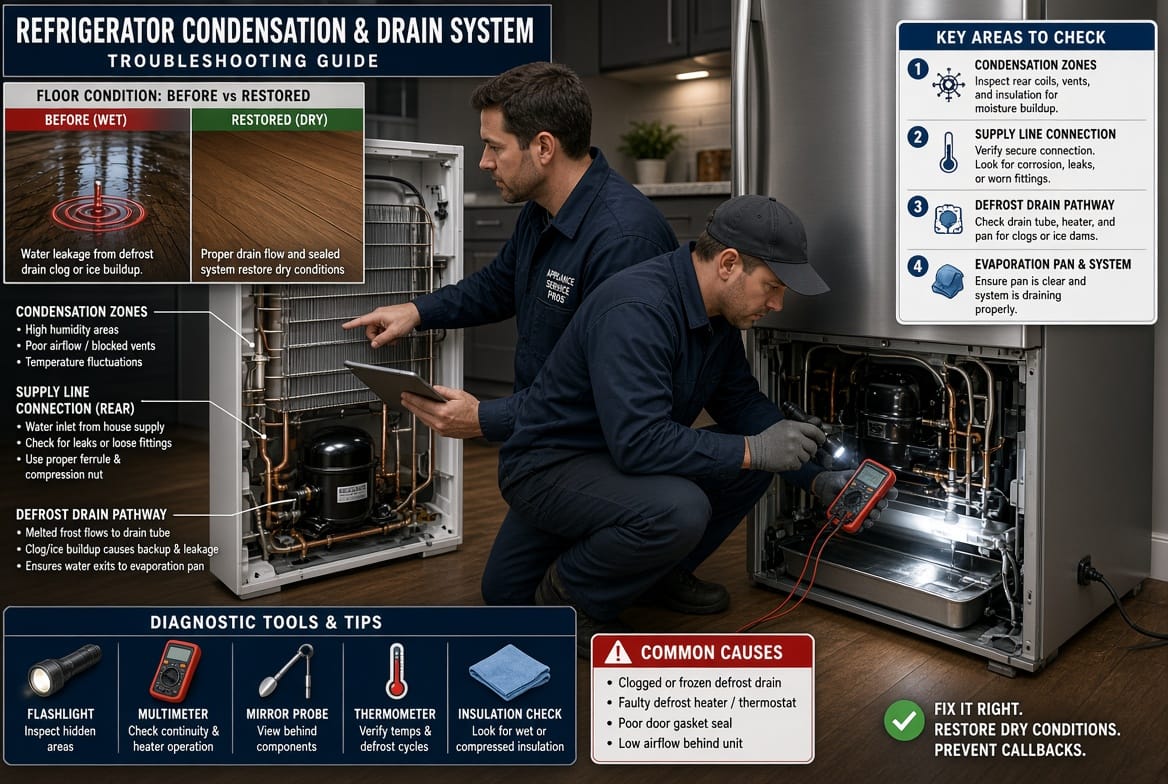
The supply line delivers water from the household plumbing to the refrigerator’s ice maker and water dispenser. This flexible tube—often plastic or copper—connects at the back of the unit and at the water valve under the sink or in the wall. Over time, connections can loosen, seals can harden, or the line itself can develop a small crack.
A supply line leak typically produces a steady drip or a more noticeable flow. Water often appears at the rear of the refrigerator or spreads underneath from the back forward. Because the line carries pressurized water, even a minor breach can release a surprising amount of liquid over several hours.
Key indicators of a supply line issue include:
- Continuous dripping even when the ice maker and dispenser are not in use
- Water pooling primarily behind or directly under the refrigerator
- Visible moisture or mineral deposits at the connection points
- A sudden increase in water after the appliance has been pulled out for cleaning
The risk level rises quickly with supply line leaks. Uncontrolled water can damage flooring, cabinetry, and nearby electrical outlets. Standing water near power cords also creates a potential electrical hazard.
Immediate steps help limit damage. First, locate the shut-off valve for the refrigerator water supply—usually under the sink or behind the unit—and turn it off. This stops the flow while you inspect the connections. Examine the fittings at both ends of the line for looseness or corrosion. A simple tightening of the compression nut sometimes solves the problem. If the line shows cracks, kinks, or brittleness, replacement becomes necessary.
Never ignore a supply line leak. The pressurized nature of the water means the situation can worsen rapidly. Professional technicians carry the correct replacement lines and fittings rated for continuous pressure and can verify that the water inlet valve inside the refrigerator is also functioning properly.
Defrost Drain Clogs: The Hidden Internal Pathway
Every refrigerator periodically enters a defrost cycle. Heaters melt accumulated frost from the evaporator coils, and the resulting water flows through a small drain tube into a pan beneath the unit where it evaporates. When food particles, ice, or mineral deposits block this defrost drain, water backs up and eventually overflows onto the floor.
A clogged defrost drain often produces water that appears at the front of the refrigerator, near the bottom of the fresh-food compartment, or under the vegetable drawers. The leak may occur intermittently—especially after a defrost cycle—rather than constantly.
Common symptoms of a defrost drain problem include:
- Water collecting inside the refrigerator, particularly under the crisper drawers
- Ice buildup in the freezer that seems excessive
- A musty odor indicating trapped moisture
- Puddles that form hours after the compressor has run
Because the defrost drain sits inside the sealed system, clearing it requires careful access. Homeowners sometimes attempt to flush the tube with warm water, but incomplete clearing can leave residual debris that quickly reclogs the path. Improper tools risk damaging the delicate plastic tubing or the surrounding insulation.
Left unresolved, a clogged defrost drain can lead to repeated water exposure, encouraging mold inside the appliance and on surrounding surfaces. Ice that forms around the drain can also affect cooling efficiency, forcing the compressor to work harder and potentially shortening its lifespan.
Professional service technicians use specialized tools to locate the exact blockage, clear the entire pathway, and test the drain under operating conditions. They also check the drain pan and the heater elements that initiate the defrost cycle, ensuring the entire moisture-management system functions as designed.
Comparing the Three Leak Types Side by Side
Understanding the distinctions helps you match symptoms to the correct source:
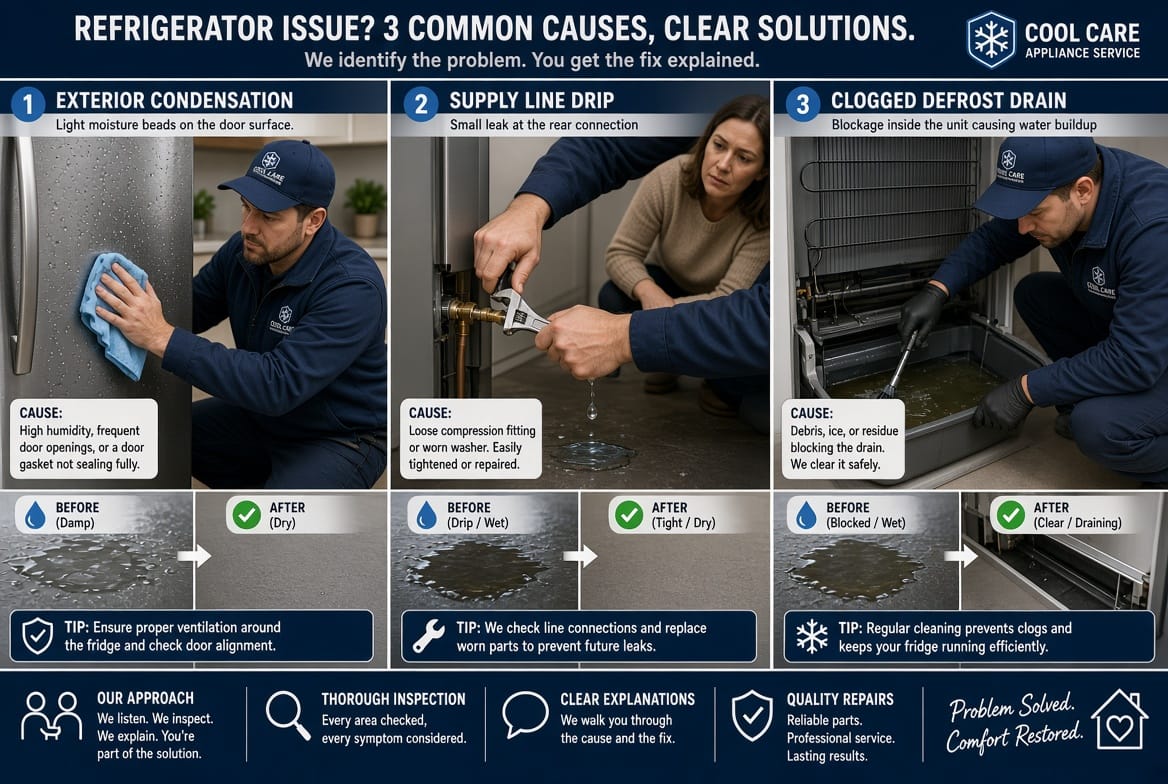
- Condensation produces light, weather-related dampness mainly at the exterior edges and seals; volume remains low and often temporary.
- Supply line leaks create steady or pressurized dripping that originates at the rear connections and can spread quickly across the floor.
- Defrost drain clogs generate intermittent water that frequently starts inside the compartment and later appears underneath, often accompanied by ice or odor.
Location, timing, and volume serve as reliable clues. Observe whether the water appears continuously or only after certain cycles. Note whether it begins at the back, the front, or inside the unit. These observations narrow the possibilities dramatically and prepare you for an accurate conversation with a technician if needed.
Practical Steps to Identify the Leak Source
Before calling for service, a few careful observations provide valuable information:
- Place paper towels or a dry cloth under different areas of the refrigerator and check which section becomes wet first.
- Note the time of day or the operating cycle when water appears.
- Inspect the door gaskets for gaps and the rear connections for visible moisture.
- Listen for the sound of water running when the ice maker is not filling.
- Check whether the refrigerator is level; an uneven stance can worsen both condensation and drain issues.
These simple checks take only minutes yet supply clear evidence about the origin. Avoid moving the refrigerator excessively until the water source is controlled, because shifting the unit can stress the supply line further.
Risks of Delaying Action
Ignoring any refrigerator water leak carries progressive consequences. Continuous moisture softens wood flooring, loosens tile adhesive, and creates ideal conditions for mold. Water near electrical components raises the chance of short circuits or electrical hazards. Over time, even minor leaks can increase energy consumption as the appliance struggles to maintain temperature.
Early intervention keeps repairs modest and prevents secondary damage that often costs more than the original fix. Most importantly, addressing the issue promptly restores the reliability you expect from a major household appliance.
When Professional Repair Is the Best Choice
While light condensation often resolves with basic maintenance, supply line and defrost drain problems usually benefit from expert attention. Technicians arrive equipped with pressure-rated replacement lines, specialized drain-clearing tools, and diagnostic equipment that confirms the exact failure point. They also verify related components—the water inlet valve, defrost heater, and door seals—so the repair addresses the full system rather than a single symptom.
Attempting complex internal work without proper training risks voiding warranties or creating new issues. A qualified technician completes the job efficiently, tests the appliance under normal operating conditions, and leaves the area clean and dry.
Final Advice for Lasting Peace of Mind
The most effective approach to any refrigerator water leak is accurate identification of the source before taking further action. Distinguish normal condensation from a pressurized supply line problem or a blocked defrost drain. Simple observation often reveals the answer and guides the appropriate response.
Once you know the origin, you can decide whether routine maintenance will suffice or whether professional service is required. Acting promptly protects your flooring, prevents mold, eliminates electrical hazards, and keeps your refrigerator operating at peak efficiency.
If the leak persists, the source remains unclear, or you prefer the confidence of expert diagnosis, professional help is only a phone call away. Experienced technicians will pinpoint the exact cause, complete the necessary work, and restore a completely dry, reliable kitchen environment.
Your refrigerator is designed for years of quiet, dependable service. Understanding the difference between condensation, supply line, and defrost drain leaks ensures that a small water issue never grows into a larger concern.
Get Professional Refrigerator Leak Repair – Call Today!