The Refrigerator Thermostat Calibration: Adjusting Temperature Accuracy

Maintaining the correct temperature in your refrigerator is essential for food safety, energy efficiency, and extending the life of your appliance. Many homeowners overlook the importance of refrigerator thermostat calibration, yet a simple adjustment can prevent costly food spoilage, reduce energy bills, and avoid unnecessary repairs. In this comprehensive guide, we’ll walk you through why calibration matters, how to identify problems, and the straightforward steps to adjust your thermostat for optimal performance.
Fix Refrigerator Temperature Issues – Call Now for Expert Help!
Whether you’re a busy family in a suburban Dallas home or managing a larger kitchen setup, understanding this basic maintenance task empowers you to take control of your appliance’s efficiency. Let’s explore everything you need to know about achieving temperature accuracy in your refrigerator.
Why Refrigerator Temperature Accuracy Matters
Your refrigerator operates within a narrow ideal range—typically between 35°F and 38°F (2°C to 3°C)—to keep perishable foods safe while preventing freezing in the main compartment. An inaccurately calibrated thermostat can lead to significant issues:
- Food safety risks: Temperatures above 40°F allow harmful bacteria to multiply rapidly.
- Energy waste: A unit running too cold works harder, increasing electricity consumption.
- Appliance longevity: Constant overworking strains the compressor and other components.
Proper calibration ensures consistent performance, protects your family’s health, and saves money over time. Many modern refrigerators have reliable factory settings, but over years of use, door openings, power fluctuations, and normal wear can cause drift. Regular checks and adjustments keep everything running smoothly.
Common Signs of an Inaccurate Refrigerator Thermostat
Recognizing the symptoms early can save you from bigger headaches. Watch for these telltale indicators that your thermostat may need calibration:
- Food freezing unexpectedly in the refrigerator section, especially near the back or on lower shelves.
- Premature spoilage of produce, dairy, or leftovers despite recent purchase dates.
- Excessive running of the compressor, leading to higher energy bills and unusual noise.
- Inconsistent temperatures between different areas inside the fridge.
- Frost buildup in unexpected places or difficulty maintaining set temperatures.
If you notice any of these issues, don’t panic. A simple thermostat adjustment often resolves the problem without professional intervention.
How to Accurately Test Your Refrigerator Temperature
Testing is straightforward and requires minimal tools. Here’s the recommended method:
- Prepare a test setup: Fill a glass with water and place it on a middle shelf in the refrigerator. Avoid the door or areas near vents for the most accurate reading.
- Wait for stabilization: Leave the glass undisturbed for at least 8–24 hours to allow the temperature to equalize.
- Measure precisely: Insert a reliable thermometer (digital or analog) into the water and check the reading.
- Compare to ideal range: The water temperature should read between 35°F and 38°F.
Repeat the test in different sections if needed to identify hot or cold spots. This water-in-glass method provides a more stable measurement than checking air temperature directly, as water holds temperature consistently.
Pro Tip: Perform this test during normal household conditions—avoid times immediately after grocery shopping or large door openings.
Step-by-Step Guide to Refrigerator Thermostat Calibration
Once you’ve confirmed an issue, calibration is often a simple screw adjustment. Always consult your specific model’s manual first, as designs vary slightly.
Locating the Thermostat Control
Most refrigerators have the thermostat dial inside the main compartment, often near the top or at the back. Some models feature electronic controls on the exterior panel.
Making the Adjustment
- Unplug the refrigerator or turn off power for safety during adjustment.
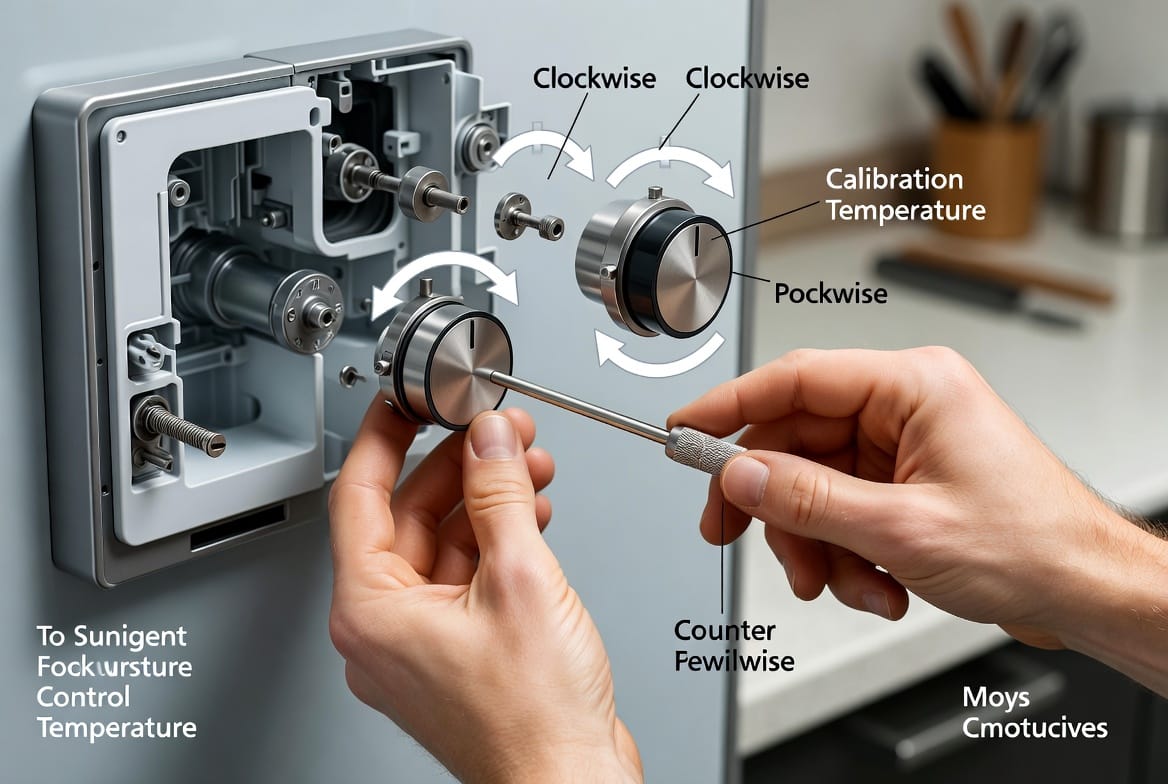
- Locate the calibration screw behind the temperature dial (usually a small Phillips or flathead screw).
- Turn the screw in small increments: clockwise typically lowers the temperature, while counterclockwise raises it.
- Make quarter-turn adjustments, then reassemble and wait 24 hours before retesting.
- Monitor and fine-tune as needed until the thermometer confirms the ideal range.

Safety Precautions and Best Practices
Your safety comes first when working with appliances:
- Unplug before adjustments to eliminate electrical hazards.
- Use proper tools and avoid forcing components.
- Work in a well-lit area and keep children away.
- Document changes: Note your adjustments for future reference.
Avoid over-adjusting, as extreme changes can damage the thermostat. If your refrigerator has a built-in digital control without an accessible screw, professional service may be required.
Additional Refrigerator Maintenance Tips for Optimal Performance
Calibration works best as part of a broader maintenance routine:
- Clean coils regularly: Dust buildup forces the unit to work harder.
- Check door seals: Worn gaskets cause temperature loss.
- Organize contents: Proper airflow prevents hot/cold spots.
- Avoid overloading: Leave space for air circulation.
- Monitor humidity: Use crisper drawers correctly for produce.
These habits complement thermostat calibration and extend your appliance’s lifespan significantly.
Benefits of a Properly Calibrated Refrigerator
Homeowners who maintain accurate temperatures enjoy:
- Reduced food waste and lower grocery costs.
- Lower energy bills through efficient operation.
- Peace of mind knowing food stays fresh and safe.
- Fewer emergency repairs and extended appliance life.
- Better overall kitchen efficiency.
In warmer climates like Texas, where ambient temperatures fluctuate, consistent calibration becomes even more valuable for reliable performance.
When to Call a Professional for Refrigerator Issues
While many calibration tasks are DIY-friendly, certain situations warrant expert help:
- Persistent temperature problems after multiple adjustment attempts.
- Unusual noises, leaks, or error codes on digital models.
- Older appliances with suspected worn thermostats or compressors.
- Uncertainty about your specific model’s components.
Professional technicians have specialized tools, diagnostic equipment, and experience to address complex issues safely and efficiently.
Final Advice: Taking the time to calibrate your fridge is a smart investment in food safety and household efficiency. Regular checks ensure your refrigerator operates at peak performance, protecting everything stored inside.
For expert diagnosis and professional refrigerator repair services, including advanced thermostat calibration and full system maintenance. Our experienced technicians are ready to help restore your appliance’s accuracy and reliability.
Stop Food Spoilage & Freezing – Call for Professional Repair