The Refrigerator Thermistor Location: Finding and Testing the Temperature Sensor

Maintaining consistent temperatures in your refrigerator is essential for food safety and energy efficiency. When your fridge struggles with cooling, one often-overlooked component is the refrigerator thermistor — also known as the temperature sensor. Understanding its location, function, and testing methods can help you diagnose issues quickly and confidently.
Restore Perfect Refrigerator Cooling – Call Now for Expert Help
In this comprehensive guide, we'll walk through everything you need to know about this critical part. Whether you're troubleshooting a warm fridge or erratic temperatures, proper identification and testing of the thermistor can save you time and money.
What Is a Refrigerator Thermistor?
A refrigerator thermistor is a precise temperature-sensitive resistor that plays a vital role in your appliance's cooling system. Unlike traditional thermostats, a thermistor provides continuous, accurate temperature readings to the refrigerator's electronic control board.
Key functions include:
- Monitoring internal temperatures in real-time
- Sending resistance-based signals to the control board
- Allowing the compressor and fans to cycle on and off efficiently
- Helping maintain separate zones for fresh food and freezer sections
When the thermistor functions correctly, your refrigerator maintains stable temperatures between 35°F and 38°F (2°C to 3°C) in the fresh food section and 0°F (-18°C) in the freezer. A faulty sensor disrupts this balance, leading to potential food spoilage or excessive energy consumption.
Common Symptoms of a Failing Thermistor
Recognizing the signs early prevents bigger problems. Watch for these indicators:
- Fridge too warm despite correct settings
- Freezing food in the fresh food compartment
- Inconsistent temperatures that fluctuate throughout the day
- Compressor running continuously or not starting at all
- Error codes displayed on digital control panels
- Excessive frost buildup or condensation inside

Where to Find the Refrigerator Thermistor Location
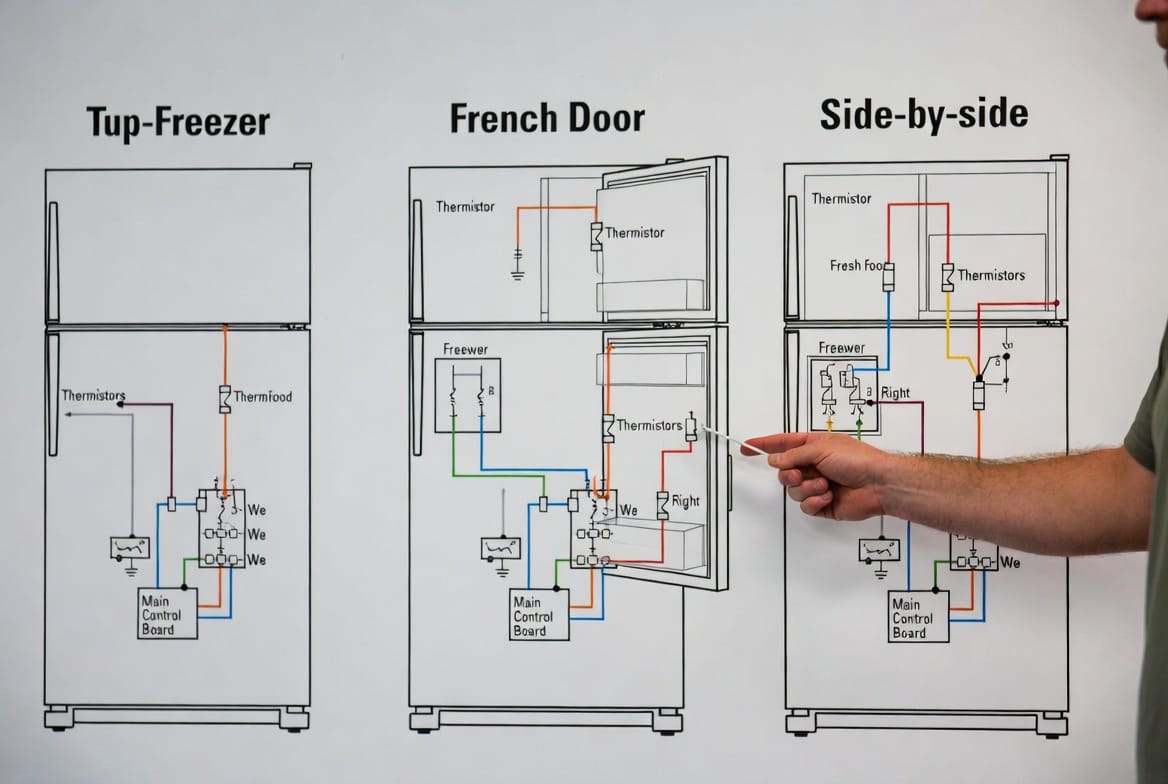
The refrigerator thermistor location is typically in the fresh food section. Manufacturers place it strategically to monitor the main compartment's temperature accurately.
Common locations include:
- Behind the rear panel or back wall of the fresh food compartment
- Near the top or middle of the interior, often behind a plastic cover
- Adjacent to the light housing or evaporator fan
- In some models, integrated near the control board or damper assembly
Pro Tip: Always unplug your refrigerator before attempting any inspection or removal to ensure safety. Consult your specific model's service manual for exact positioning, as designs vary between brands like Whirlpool, GE, Samsung, and LG.
Tools Needed for Inspection and Testing
Gather these basic tools for safe and effective diagnosis:
- Screwdriver set (Phillips and flathead)
- Multimeter capable of measuring resistance (ohms)
- Flashlight
- Gloves and safety glasses
- Replacement thermistor (if needed)
- Service manual for your model
Step-by-Step Guide to Locating the Thermistor
- Unplug the refrigerator and empty the affected shelves for better access.
- Remove any covers — Look for plastic panels secured by screws or clips in the fresh food section.
- Locate the sensor — It appears as a small cylindrical or disc-shaped component with thin wires attached.
- Carefully disconnect the wiring harness (note the connection for reassembly).
- Remove the thermistor from its housing clip or adhesive mount.
This process typically takes 15-30 minutes for most homeowners with basic DIY experience.
How to Test a Refrigerator Thermistor
Testing verifies whether the sensor is sending accurate readings. Resistance testing is the standard method.
Expected resistance values:
- At 32°F (0°C): Approximately 25,000 - 30,000 ohms
- At 50°F (10°C): Around 15,000 - 20,000 ohms
- At room temperature (70°F/21°C): Roughly 8,000 - 12,000 ohms
Testing procedure:
- Set your multimeter to the ohms (Ω) setting.
- Touch the probes to the thermistor terminals.
- Compare readings against manufacturer specifications at known temperatures.
- Test at multiple temperature points for accuracy — use ice water for cold testing and room air for warmer readings.
A good thermistor shows decreasing resistance as temperature increases (Negative Temperature Coefficient behavior). Significant deviations indicate failure.
Understanding Thermistor Readings and Control Board Communication
The thermistor acts as a bridge between physical conditions and electronic controls. It converts temperature into electrical resistance, which the control board interprets to regulate cooling components.
When resistance falls outside normal ranges, the board may:
- Overcompensate by running the compressor longer
- Shut down cooling prematurely
- Trigger diagnostic error codes
This precise communication ensures energy-efficient operation and prevents temperature swings that compromise food safety.
DIY vs Professional Repair: Making the Right Choice
While locating and testing a thermistor is within reach for many, complex issues often benefit from professional expertise.
Consider professional service when:
- You're uncomfortable working with electrical components
- The thermistor is hard to access
- Testing reveals multiple failing parts
- Your refrigerator is still under warranty
- Error codes persist after replacement
Certified technicians bring specialized tools, model-specific knowledge, and warranties on parts and labor — giving you peace of mind.
Replacing a Bad Thermistor
If testing confirms failure, replacement is straightforward:
- Install the new thermistor in the exact original position
- Secure wiring and covers properly
- Plug in the unit and monitor temperatures for 24 hours
- Allow time for the system to stabilize
Proper installation restores reliable temperature control and prevents recurring issues.
Preventive Maintenance for Long-Term Reliability
Extend the life of your refrigerator's sensors and components with these habits:
- Keep coils clean and ensure proper ventilation
- Avoid overloading shelves that block air circulation
- Maintain consistent door closures
- Schedule annual professional inspections
Routine care minimizes stress on the thermistor and control systems.
Why Temperature Stability Matters
Consistent refrigeration protects your family's health by preventing bacterial growth. The refrigerator thermistor is key to this stability. Addressing issues promptly safeguards your investment and food supply.
Final Thoughts and Expert Help
A bad thermistor commonly causes frustrating temperature swings, leading to spoiled food, higher energy bills, and unnecessary stress. Early diagnosis through proper location identification and resistance testing resolves most problems efficiently.
While DIY testing provides valuable insights, expert intervention ensures lasting results.
For reliable refrigerator repair services. Our experienced technicians specialize in thermistor diagnosis, replacement, and full system restoration — getting your appliance back to peak performance quickly and affordably.
Don't let temperature issues compromise your kitchen. Professional help is just a phone call away.
Stop Temperature Swings – Call for Reliable Fridge Repair Today