The Refrigerator Temperature Fluctuation: Diagnosing the Cause

Maintaining a steady temperature inside your refrigerator is essential for protecting the quality and safety of your food. When temperatures begin to rise and fall unpredictably, the risk of spoilage increases and the appliance itself can suffer long-term stress. Temperature fluctuation is one of the most common yet often misunderstood refrigerator problems. The good news is that most causes can be identified through careful, methodical troubleshooting. This guide walks you through the primary sources of the issue—faulty thermostat, dirty coils, door seal issues, and compressor problems—and provides clear diagnostic steps for each. By following these steps you can determine whether a simple home adjustment will restore stability or whether professional service is the safer path forward.
Fix Fridge Temperature Fluctuations Today – Call Now!
Why Stable Refrigerator Temperatures Matter
A refrigerator is designed to hold a consistent range, typically between 35 °F and 38 °F. When the temperature drifts outside this window, bacteria multiply more rapidly, dairy products sour sooner, and frozen items near the refrigerator section can partially thaw and refreeze. Beyond food safety, repeated temperature swings force the cooling system to work harder, raising energy costs and shortening the life of critical components. Recognizing the early signs of fluctuation—softened butter, unexpected ice crystals on fresh produce, or a thermometer that refuses to settle—allows you to act before minor problems become major repairs.
The four most frequent culprits are the thermostat that regulates cooling cycles, the condenser coils that release heat, the door seals that keep cold air inside, and the compressor that drives the entire refrigeration process. Each has its own set of diagnostic indicators. Approaching them one by one keeps the process organized and prevents unnecessary part replacements.
Faulty Thermostat: The Control Center Gone Awry
The thermostat acts as the brain of the refrigerator’s temperature management system. It senses the interior air temperature and signals the compressor to turn on or off. When the thermostat begins to fail, it may call for cooling too frequently, too infrequently, or at the wrong moments, producing the classic pattern of temperature fluctuation.
Diagnostic Steps for a Faulty Thermostat
- Place an accurate appliance thermometer on a middle shelf and record readings every thirty minutes for several hours while the door remains closed.
- Listen carefully for the compressor. If it cycles on and off in irregular intervals that do not match the thermometer’s swings, the thermostat is likely sending incorrect signals.
- Locate the temperature control dial or electronic control panel. Gently turn the setting a few degrees warmer or cooler and observe whether the compressor responds promptly. A delayed or absent response often points to internal contact wear.
- For mechanical thermostats, carefully unplug the refrigerator and inspect the capillary tube that runs into the freezer or fresh-food section. Kinks, corrosion, or loose mounting can cause false readings.
- If the unit has an electronic control board, note any error codes that appear on the display; many modern thermostats communicate faults this way.
When these checks confirm inconsistent control behavior, replacing the thermostat usually restores steady temperatures. Because the part is calibrated to the specific model, matching the exact specification is critical for long-term reliability.
Dirty Coils: Hidden Heat That Forces Extra Work
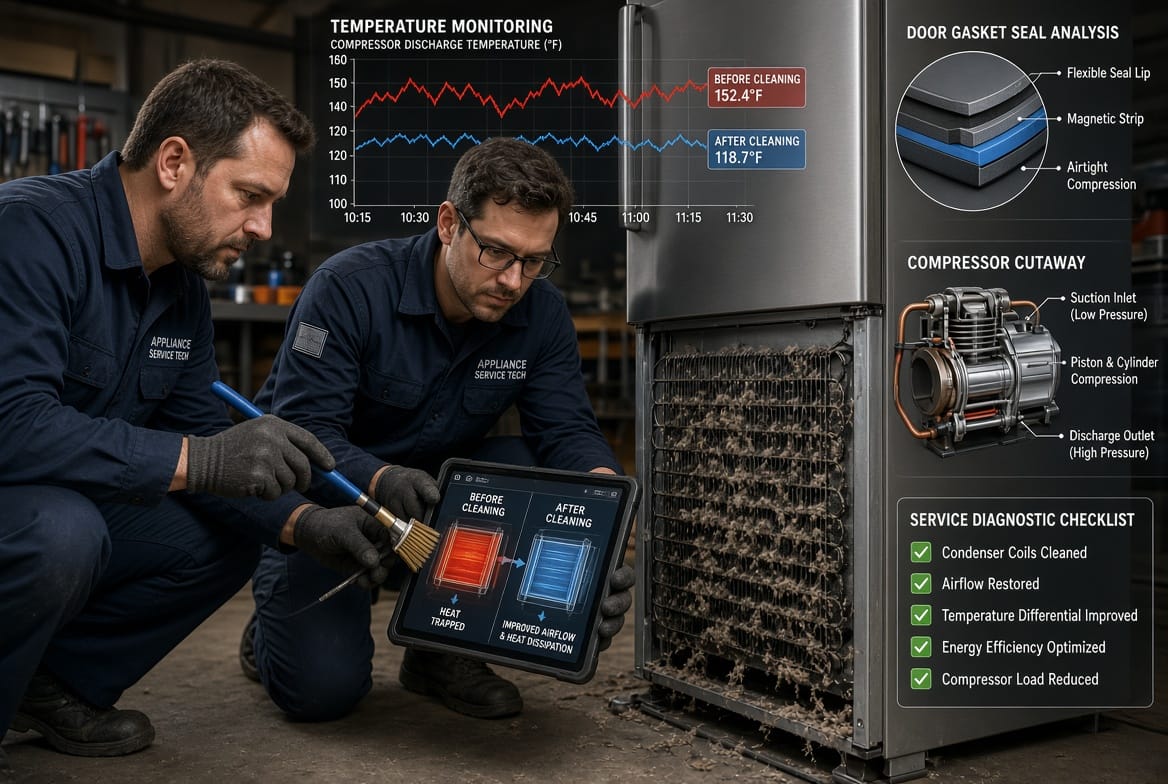
Condenser coils sit at the back or beneath the refrigerator and dissipate the heat extracted from the interior. Over months of normal use, dust, pet hair, and kitchen grease accumulate on these coils, insulating them and preventing efficient heat transfer. The compressor must then run longer to achieve the same cooling effect, leading to noticeable temperature fluctuation as the system struggles and recovers.
Diagnostic Steps for Dirty Coils
- Unplug the refrigerator for safety.
- Locate the coils—either on the rear panel or behind a front kick plate at the base.
- Shine a flashlight across the coils; a thick gray or black layer of debris is immediately visible.
- Use a soft brush or vacuum attachment designed for coils to remove the buildup, working gently from top to bottom so debris does not fall deeper into the unit.
- After cleaning, plug the refrigerator back in and monitor the interior thermometer for the next twenty-four hours. A return to stable readings confirms that restricted heat release was the primary cause.
- Check the condenser fan (if present) for free movement; a stalled fan compounds the effect of dirty coils.
Regular coil cleaning every six to twelve months prevents recurrence and keeps energy consumption lower. In households with pets or heavy cooking activity, more frequent attention is advisable.
Door Seal Issues: The Invisible Leak
The flexible gasket around the refrigerator door forms an airtight barrier that keeps cold air inside and warm kitchen air out. When the seal becomes cracked, warped, dirty, or loses its magnetism, warm air infiltrates and cold air escapes. The thermostat then detects the rising temperature and activates the compressor more often, producing repeated cycles of temperature fluctuation.
Diagnostic Steps for Door Seal Issues
- Close the door on a thin sheet of paper at several points around the perimeter. If the paper slides out easily, the seal is not making firm contact.
- Inspect the entire gasket for cracks, tears, or flattened sections. Run a finger along the surface to feel for hardness or gaps.
- Clean the seal thoroughly with mild soapy water and a soft cloth; residue and food particles can prevent a tight close.
- Test the magnetic strength by placing a lightweight metal object against the gasket; weak attraction indicates aging magnets.
- Observe the door alignment. If the refrigerator is not level, the door may sag and leave gaps at the top or bottom. Adjust the leveling feet until the door closes evenly.
- After any adjustment or cleaning, monitor the interior thermometer again. Stabilization within a few hours confirms that air leakage was the source.
Replacing a worn gasket is straightforward on most models and immediately improves efficiency. Keeping the seal clean and the cabinet level extends its service life considerably.
Compressor Problems: The Heart of the System Under Stress
The compressor is the mechanical pump that circulates refrigerant through the sealed system. When it begins to weaken, overheat, or cycle improperly, cooling capacity becomes inconsistent and temperature fluctuation follows. Compressor issues are less common than the previous three causes but more serious when they occur.
Diagnostic Steps for Compressor Problems
- Listen near the rear or bottom of the refrigerator. A healthy compressor produces a steady, low hum when running. Clicking, buzzing, or prolonged silence after the thermostat calls for cooling suggests trouble.
- Feel the exterior of the compressor housing (carefully—surfaces can be warm). Excessive heat combined with short run times often indicates internal wear or restricted refrigerant flow.
- Check the start relay and overload protector mounted on the side of the compressor. A burnt smell or visible scorching means these components may be preventing proper starts.
- Monitor the duty cycle: if the compressor runs continuously yet the interior temperature still swings, the unit may be losing capacity.
- Note any oil stains or refrigerant odor around the compressor area; these can signal a sealed-system leak that requires professional attention.
Because the compressor is part of a sealed refrigeration circuit, diagnosis beyond basic observation usually requires specialized gauges and recovery equipment. Attempting internal repairs without proper training can void warranties and create safety hazards.
Putting the Diagnostic Process Together
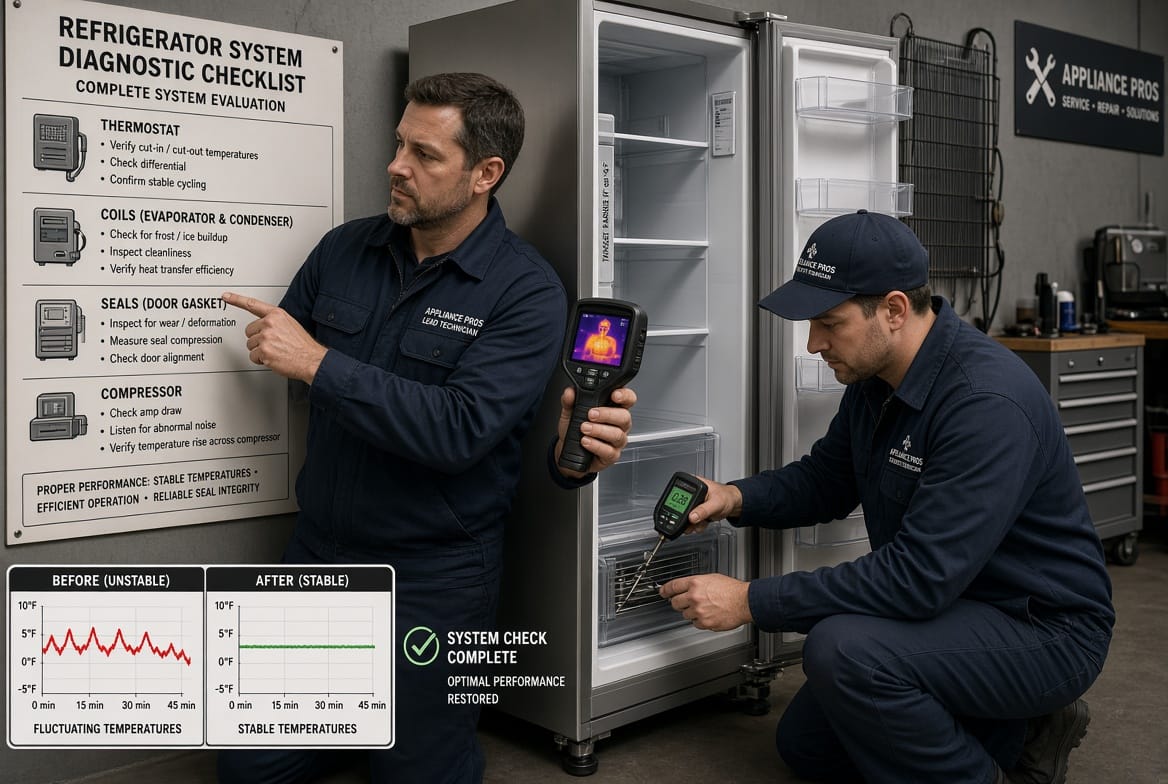
Begin with the easiest and most accessible checks—door seals and coil cleanliness—before moving to the thermostat and finally the compressor. Keep a simple log of thermometer readings, compressor run times, and any unusual sounds. This record becomes invaluable if professional service is later required. Always unplug the appliance before removing panels or cleaning internal components, and never force parts that resist gentle movement.
In many cases a combination of factors is at work: slightly dirty coils plus a marginally worn seal can produce the same symptoms as a failing thermostat. Addressing each element systematically removes variables and reveals the true root cause.
Preventing Future Temperature Fluctuations
Once stability returns, a few simple habits keep the refrigerator performing reliably. Clean the coils on a regular schedule, wipe the door seals monthly, avoid overloading shelves so that air can circulate freely, and keep the unit away from direct sunlight or heat-producing appliances. An inexpensive appliance thermometer left inside provides continuous confirmation that the temperature remains within the safe range.
If at any point the diagnostic steps become unclear or the temperature refuses to stabilize after basic maintenance, professional evaluation is the wisest next step. Modern refrigerators contain sophisticated electronic controls and sealed refrigerant circuits that benefit from trained expertise and the correct replacement parts.
Fluctuating temperatures can harm food by allowing bacteria to multiply and by degrading texture and flavor. Prompt diagnosis protects both your groceries and the longevity of the appliance itself. For accurate professional assessment and lasting repair. Experienced technicians can confirm the cause, perform the necessary service, and restore the steady cooling your household depends on.
Get Professional Refrigerator Diagnosis – Call Today