The Refrigerator Evaporator Fan Motor Noise: Chirping, Squealing, and Replacement
A refrigerator that suddenly begins making unusual sounds can disrupt the calm of any household. Among the most frequent culprits is the evaporator fan motor, a critical component responsible for circulating cold air throughout the fresh-food and freezer sections. When this motor starts chirping, squealing, or producing a loud hum, it signals that attention is required before food safety or energy efficiency is compromised. This comprehensive guide explores the causes of these noises, the clear warning signs, and the practical steps involved in replacement, all while emphasizing why timely professional intervention restores reliable performance.
Stop Refrigerator Fan Noise Today – Call Now!
Understanding the Role of the Evaporator Fan Motor
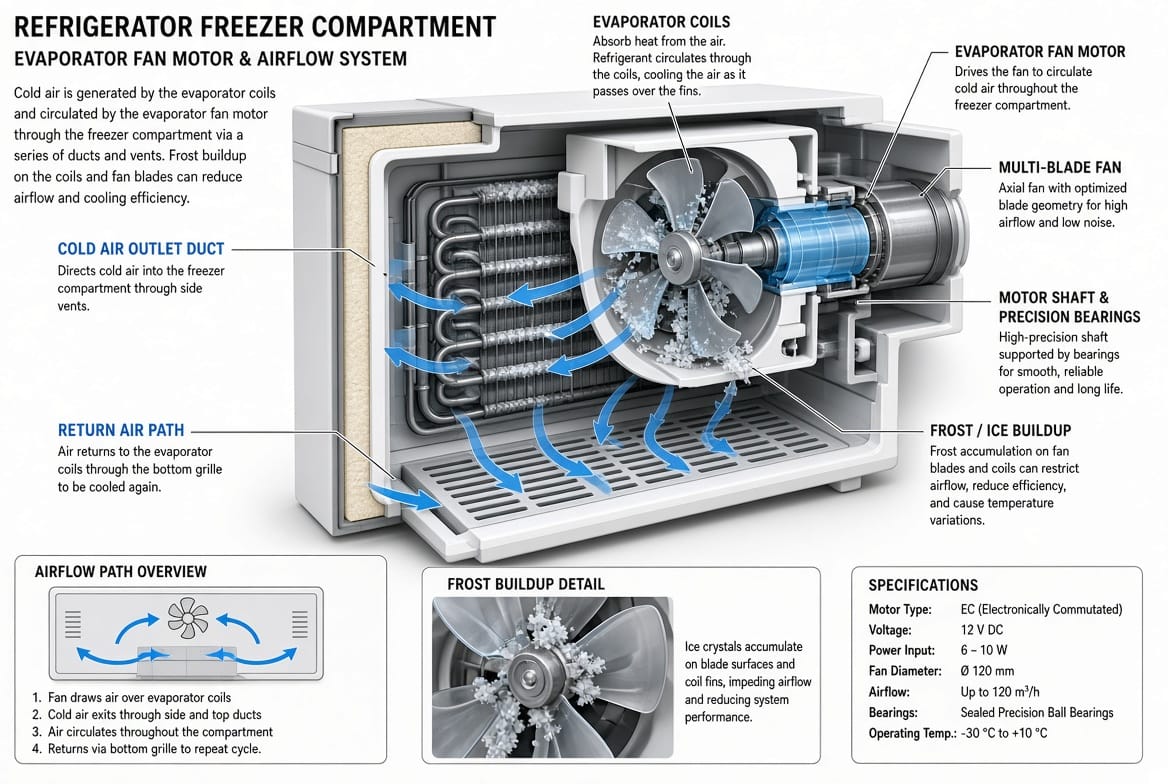
Inside every modern refrigerator sits an evaporator coil that absorbs heat from the interior. The evaporator fan motor sits directly behind or above this coil, usually within the freezer compartment, and drives a multi-blade fan that pushes chilled air through carefully designed ducts. Without consistent airflow, temperature stratification occurs: the freezer may stay adequately cold while the refrigerator section gradually warms.
The motor itself is a compact, sealed unit designed for continuous duty. It typically operates on low voltage and is engineered to run quietly for years. However, the environment is harsh—constant temperature cycling, occasional frost formation, and limited lubrication access place steady stress on internal components. Over time, these stresses produce the characteristic noises that homeowners first notice late at night or early in the morning when ambient household sounds are minimal.
Why Evaporator Fan Motors Develop Noise
Two primary factors account for the majority of chirping, squealing, and humming complaints.
Worn bearings represent the most common mechanical failure. The motor shaft spins on precision bearings that rely on factory-applied lubricant. After years of continuous rotation, the lubricant dries or migrates, allowing metal-to-metal contact. The result is a high-pitched chirp that often intensifies as the motor warms up or as the refrigerator cycles more frequently during warmer weather. In advanced cases the chirp evolves into a continuous squeal that can be heard from several rooms away.
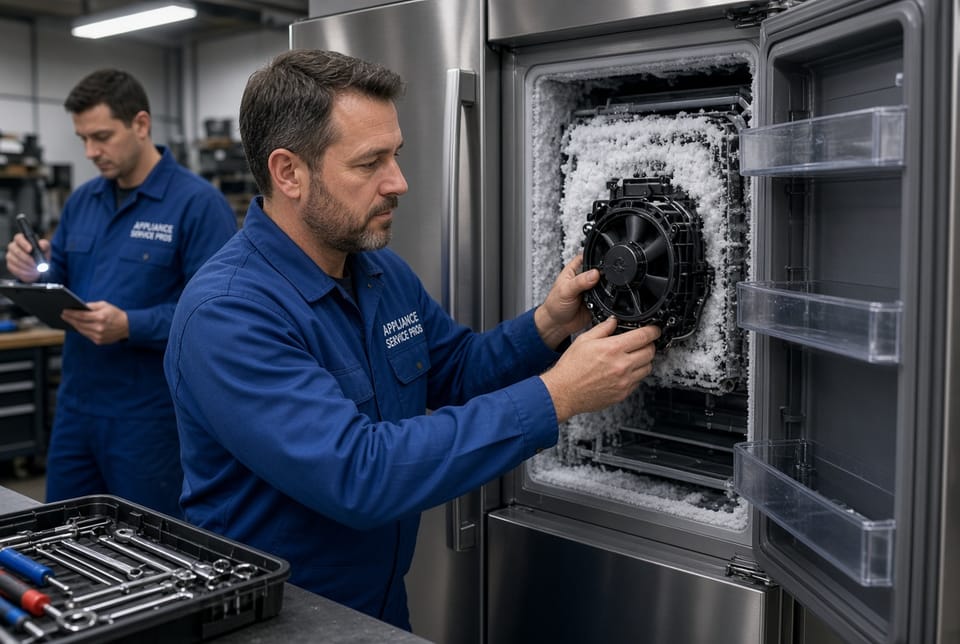
Ice buildup is the second major contributor. When the defrost system underperforms—whether from a failed heater, defective sensor, or clogged drain—frost accumulates around the fan blades and motor housing. The blades begin striking ice, producing a rhythmic scraping or chirping sound synchronized with each rotation. Even a thin layer of ice can unbalance the fan, forcing the motor to work harder and generating a low-frequency hum that vibrates through the cabinet walls.
Additional secondary causes include debris lodged in the fan blades, a failing start capacitor (on certain models), or mounting brackets that have loosened over time. Regardless of the exact trigger, the underlying message remains consistent: the motor is no longer operating within its designed parameters and is progressing toward complete failure.
Recognizing the Warning Signs
Homeowners can identify a failing evaporator fan motor through a predictable set of auditory and performance indicators.
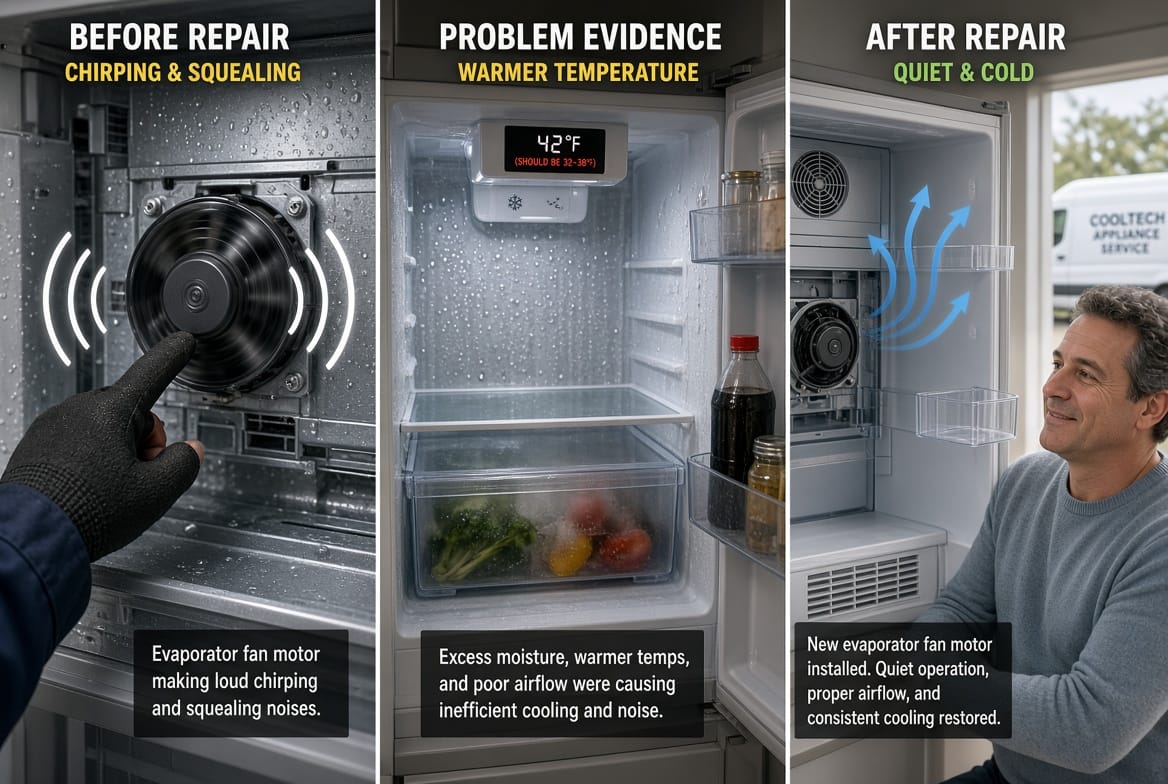
- Chirping is usually the earliest symptom. It resembles a cricket or small bird and occurs primarily when the compressor is running. The sound may disappear briefly after the door is opened, only to return once the thermostat calls for cooling again.
- Squealing develops as bearing wear advances. This higher-pitched, continuous tone is more urgent and often accompanies a noticeable drop in cooling efficiency.
- Loud humming or buzzing signals that the motor is struggling against increased resistance, whether from ice, debris, or internal friction. The vibration can sometimes be felt by placing a hand on the freezer wall.
Beyond sound, temperature changes provide confirmation. The freezer may still feel cold, yet items in the refrigerator section—especially those stored on upper shelves—begin to warm. Condensation may appear on the interior walls, and the compressor may run for longer cycles as the control system attempts to compensate for inadequate airflow. In extreme cases, the motor seizes entirely, leaving the refrigerator section above safe food-storage temperatures within a few hours.
Diagnosing the Problem with Confidence
Before committing to replacement, a systematic diagnosis eliminates other potential noise sources. Begin by unplugging the refrigerator for safety. Remove the rear freezer panel—usually secured by a few screws—and visually inspect the fan area. Look for obvious ice accumulation, bent blades, or foreign objects. Manually spin the fan; rough or gritty resistance confirms bearing wear, while free spinning accompanied by noise only under power points to electrical or balance issues.
A simple listening test can further isolate the source. With the panel still removed and power restored (taking care to avoid contact with live terminals), observe whether the noise originates directly from the motor housing. If the sound persists after the fan is temporarily disconnected, the problem may lie elsewhere—perhaps the condenser fan or compressor. Accurate identification prevents unnecessary parts replacement and ensures the correct component receives attention.
The Replacement Process: Access via the Freezer Compartment
Replacement of the evaporator fan motor is a straightforward yet precision-oriented task best performed by trained technicians. Access begins inside the freezer. After emptying shelves and ice bins, the rear access panel is removed to expose the evaporator assembly. On most models the motor mounts with two or three screws or clips and connects via a simple plug-in harness.
The old motor is carefully withdrawn, taking care not to damage adjacent wiring or the delicate evaporator fins. The new motor—matched exactly by part number for voltage, shaft diameter, and mounting configuration—is then seated, secured, and reconnected. Before reassembly, technicians typically verify free rotation of the new fan and confirm that the defrost heater and sensors remain undisturbed.
Once the panel is replaced and power restored, the refrigerator is allowed to stabilize. Temperature probes placed in both compartments confirm that airflow has returned to design specifications. The entire procedure, when performed correctly, restores quiet operation and prevents secondary damage such as compressor overwork or food spoilage.
Benefits of Professional Replacement
While the mechanical steps appear accessible, several factors favor professional service. Exact OEM or high-quality equivalent motors ensure correct airflow volume and electrical compatibility. Improper installation can introduce new vibration or leave gaps that allow warm air infiltration. Certified technicians also inspect related systems—defrost timers, thermistors, and drain lines—so that the root cause of any ice buildup is addressed simultaneously.
Furthermore, professional service includes warranty coverage on both parts and labor, providing peace of mind that the repair will last. Homeowners gain the reassurance that temperatures will remain stable, energy consumption will normalize, and the distinctive chirping or squealing will disappear completely.
Preventive Measures to Extend Motor Life
Although no component lasts forever, several habits significantly delay the onset of noise-related failures.
- Maintain consistent door seals so that excess moisture does not enter and freeze around the evaporator.
- Avoid overloading the freezer, which restricts airflow and forces the fan to work harder.
- Schedule periodic professional cleanings that remove dust from both the evaporator and condenser areas.
- Respond promptly to the first faint chirp rather than waiting for a full squeal; early intervention often allows lubrication or minor adjustment instead of complete motor replacement.
These simple practices keep the entire cooling system operating within design limits and reduce the likelihood of unexpected breakdowns.
The Cost of Delay
Ignoring evaporator fan noise carries progressive consequences. Reduced airflow forces the compressor to run longer cycles, elevating energy bills and accelerating wear on the sealed system. Food stored in the warmer refrigerator section may reach temperatures that encourage bacterial growth, creating both health and financial risks. In the most severe cases a seized motor can cause the refrigerator to shut down entirely, necessitating emergency service and potential loss of stored groceries.
Addressing the issue at the first clear sign—whether a soft chirp or an intermittent squeal—protects both the appliance investment and household routines.
Final Recommendations and Next Steps
A noisy evaporator fan motor is never merely an inconvenience; it is a clear indication that the component is progressing toward failure. The progression from occasional chirping through sustained squealing to complete stoppage follows a predictable timeline, and intervening early preserves both food safety and appliance longevity.
Replacement accessed through the freezer compartment restores proper airflow, eliminates the disturbing sounds, and returns the refrigerator to efficient, quiet operation. Homeowners who notice any of the described symptoms—chirping, squealing, loud humming, or unexplained warming—should not delay.
A noisy fan means it’s failing. Experienced technicians arrive equipped with the correct motor, diagnostic tools, and the expertise to complete the repair efficiently, restoring confidence that the refrigerator will continue protecting the household’s food supply for years to come.
Restore Quiet Cooling – Call for Evaporator Fan Service