The Refrigerator Door Gasket Magnet: Why the Seal Fails and How to Test

In every home, the refrigerator stands as a silent guardian of your family's food safety and energy efficiency. Yet, one small but critical component—the refrigerator door gasket magnet—often goes unnoticed until problems arise. A failing seal can quietly drive up your utility bills, compromise food freshness, and force your appliance to work harder than it should.
Stop Energy Waste – Call for Expert Gasket Repair Today
At Tradewinds Universal, we believe in empowering homeowners with practical knowledge. Understanding how your refrigerator door gasket works, recognizing the warning signs, and performing a simple test can save you significant money and hassle. In this comprehensive guide, we'll explore everything you need to know about this essential part and how a quick fix restores peace of mind.
Understanding the Role of the Refrigerator Door Gasket Magnet
The refrigerator door gasket is the flexible rubber strip that lines the edge of your fridge and freezer doors. Embedded within it is a magnetic strip that creates an airtight seal against the metal cabinet. This magnetic attraction ensures cold air stays inside while warm air stays out.
Without a properly functioning magnetic gasket, your refrigerator loses its ability to maintain consistent temperatures. This leads to unnecessary strain on the compressor and other components. Modern refrigerators rely on this seal for optimal performance, making it one of the most important yet overlooked maintenance areas.
Key benefits of a strong gasket seal include:
- Consistent internal temperatures for better food preservation
- Reduced energy consumption and lower electricity bills
- Prevention of frost buildup and moisture issues
- Extended lifespan of your entire appliance
When the seal weakens, these advantages disappear, turning a reliable appliance into a source of frustration.
How the Magnetic Gasket Creates an Effective Seal
The science behind the refrigerator door gasket magnet is elegantly simple yet highly effective. The gasket features a hollow tube or embedded magnet that generates a gentle but constant pull toward the refrigerator's metal frame.
This magnetic force compresses the flexible rubber against the surface, forming a barrier that blocks air exchange. High-quality gaskets use durable materials resistant to temperature fluctuations, oils from food, and everyday wear.
Over time, however, several factors can compromise this seal:
- Accumulated dirt and debris preventing full contact
- Deterioration of the rubber material from age and temperature changes
- Door misalignment from heavy items stored on shelves
- Physical damage from frequent opening and closing or accidental impacts
Recognizing these issues early helps you address them before they escalate into costly repairs.
Recognizing the Warning Signs of a Failing Door Seal
A deteriorating refrigerator door gasket rarely fails overnight. Instead, it shows progressive symptoms that attentive homeowners can catch early. Ignoring these signs often results in higher energy costs and potential food spoilage.
Common signs your gasket needs attention:
- Visible condensation or frost on the inside or outside of the door
- Warm spots in the refrigerator or freezer sections
- Unusually high energy bills without changes in usage
- Excessive noise from the compressor running more frequently
- Food spoiling faster than expected despite proper settings
- Cold air leaking noticeable when standing near the closed door
These symptoms indicate that warm air is infiltrating your appliance, forcing it to work overtime. Prompt action protects both your food and your wallet.

The Simple Dollar Bill Test: How to Check Your Seal
Testing your refrigerator door gasket magnet is remarkably straightforward and requires no special tools. The classic dollar bill test remains one of the most reliable methods recommended by appliance experts.
Step-by-step instructions for the dollar bill test:
- Close the refrigerator door on a dollar bill or thin piece of paper, positioning it at various points along the gasket.
- Gently tug on the bill. If it slides out easily with little to no resistance, the seal is compromised at that spot.
- Repeat the test around all four sides of the door, checking multiple points including corners where failures often begin.
- Perform the test on both refrigerator and freezer doors if applicable.
A healthy seal should grip the bill firmly, making it difficult to pull out without tearing. If the bill slips freely in multiple areas, it's time to consider replacing the refrigerator door gasket.
This quick test provides immediate insight without disassembly. Perform it monthly as part of routine appliance maintenance for best results.
Why Refrigerator Door Gaskets Fail Over Time
Several environmental and usage factors contribute to gasket degradation. Understanding these helps you take preventive measures.
Primary causes of seal failure:
- Natural aging of the rubber compound, typically after 5-10 years of service
- Temperature extremes causing the material to become brittle
- Buildup of food particles, mold, or grease interfering with the magnetic contact
- Frequent slamming or improper door closure stressing the gasket
- Manufacturing variations in lower-quality replacement parts
In humid climates or homes with heavy usage, these issues can accelerate. Regular cleaning with mild soap and warm water extends the life of your gasket significantly.
DIY Refrigerator Gasket Replacement: A Simple Repair Guide
Replacing a refrigerator door gasket is a manageable DIY project for many homeowners. With the right approach, you can complete the repair in under an hour.
Essential tools and materials needed:
- New compatible gasket (match your model number)
- Screwdriver set
- Mild soap solution and clean cloths
- Hair dryer (optional, for softening old gasket)
- Replacement screws if needed
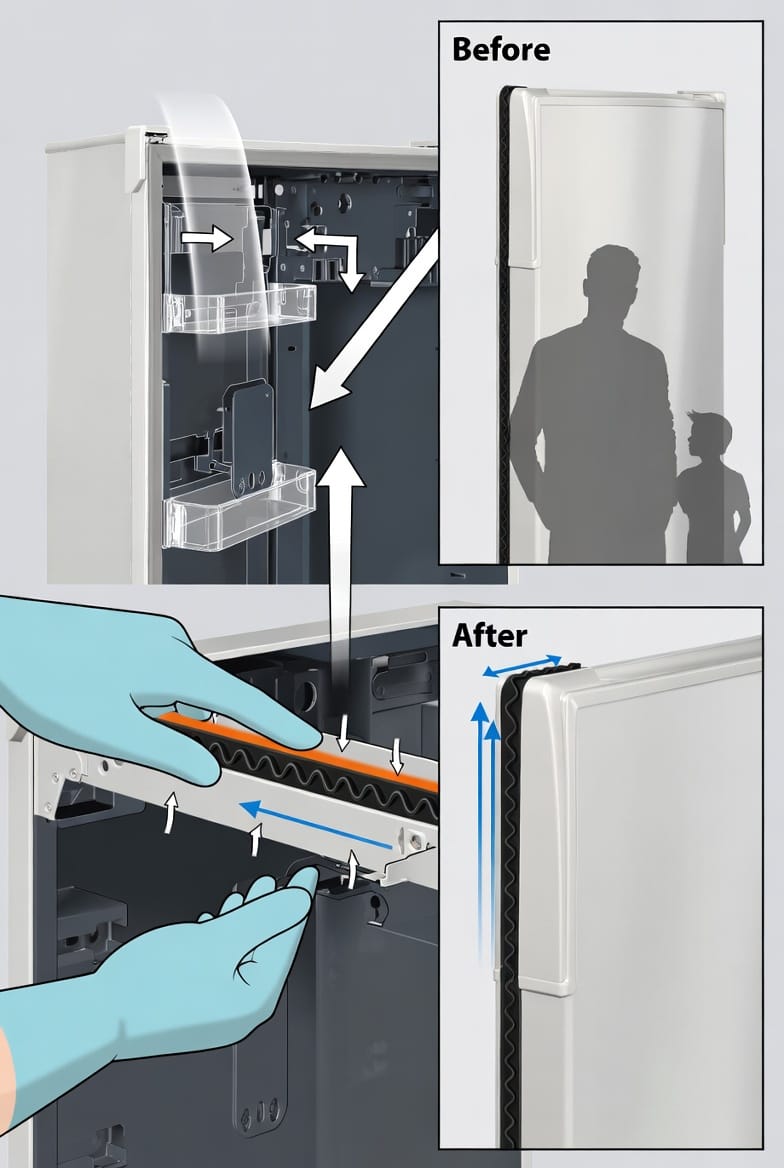
Detailed replacement steps:
- Unplug your refrigerator for safety.
- Remove the old gasket by loosening retaining screws or clips.
- Clean the door groove thoroughly to remove residue.
- Install the new gasket, starting from one corner and working around.
- Tighten screws evenly and test the seal with the dollar bill method.
- Plug in the appliance and monitor temperatures for 24 hours.
While DIY works for many, complex models or persistent issues benefit from professional service. Our experienced technicians ensure precise installation and optimal performance.
Benefits of Addressing Gasket Issues Promptly
Timely repair of your refrigerator door gasket magnet delivers multiple advantages beyond immediate fixes.
Long-term benefits include:
- Energy savings of up to 20-30% on appliance-related electricity
- Improved food safety through consistent temperature control
- Reduced wear on the compressor and cooling system
- Lower risk of major appliance breakdowns
- Enhanced peace of mind knowing your kitchen runs efficiently
Investing in this simple repair pays for itself quickly through reduced bills and extended appliance life.
When to Call Professional Appliance Repair Services
While the dollar bill test and basic replacement are accessible, certain situations call for expert intervention.
Seek professional help if:
- The new gasket fails to seal properly after installation
- Your refrigerator model requires specialized tools or programming
- You notice additional issues like uneven cooling or unusual noises
- You're uncomfortable working with electrical appliances
Professional technicians bring experience, genuine parts, and warranties that provide lasting confidence.
Maintaining Your Refrigerator for Optimal Performance
Prevention is always better than repair. Incorporate these habits to protect your door gasket:
- Clean the gasket monthly with a soft cloth and mild detergent
- Avoid overloading doors with heavy items
- Check door alignment periodically
- Keep the area around the refrigerator clean and well-ventilated
- Schedule annual professional maintenance checks
These small steps ensure your appliance operates at peak efficiency for years.
Frequently Asked Questions About Refrigerator Gaskets
How long do refrigerator door gaskets typically last?
Most last 5-10 years, depending on usage and maintenance.
Can I use any gasket for my model?
No—always match the exact part number for proper fit and magnetic strength.
Will a bad gasket damage my refrigerator?
Yes, prolonged operation with a poor seal increases strain on the compressor and can lead to premature failure.
How much does professional gasket replacement cost?
Costs vary by model but are generally affordable compared to full appliance replacement.
Take Action to Protect Your Refrigerator Today
A failing refrigerator door gasket magnet is a common but easily solvable issue. By recognizing the signs, performing the simple dollar bill test, and addressing problems promptly, you safeguard your food, reduce energy waste, and extend the life of your valuable appliance.
Don't let a small seal problem turn into a big headache. For expert diagnosis, quality parts, and professional installation, trust the team at Tradewinds Universal. Our technicians are ready to help with fast, effective solutions tailored to your home.
Restore Your Refrigerator Efficiency – Call Now!