The Refrigerator Defrost Drain: Why Water Is Leaking Inside
Water pooling on the bottom shelf of your refrigerator or forming unexpected puddles inside the fresh-food compartment is one of the most common—and most frustrating—appliance problems homeowners face. While many people immediately suspect a door-seal failure or a cracked water line, the true culprit is frequently a clogged refrigerator defrost drain. Understanding this small but critical component can save you from spoiled food, costly floor damage, and unnecessary service calls.
Stop Fridge Water Leaks Today – Call Now!
In this comprehensive guide we will explain exactly what the defrost drain does, how to recognize the early warning signs of a blockage, and the precise steps you can take to clear it safely. By the end you will know when a simple home cleaning is enough and when it is wiser to call a trained technician. The goal is to restore your refrigerator to reliable, leak-free operation with confidence.
What the Defrost Drain Actually Does
Modern frost-free refrigerators rely on an automatic defrost system. Several times a day a heating element warms the evaporator coils just enough to melt any accumulated frost. The resulting water must be removed quickly and completely; otherwise it refreezes or overflows into the cabinet. That is the job of the defrost drain.
Located at the lowest point of the freezer compartment—usually a small hole or channel near the back wall—the drain collects the melted frost and carries it through a narrow tube or channel. Gravity then directs the water into a shallow evaporation pan positioned above the compressor at the bottom rear of the unit. Warm air from the compressor helps the water evaporate, so you never see it under normal conditions.
When the drain remains open, the entire process is silent and invisible. When it becomes blocked, the water has nowhere to go. It backs up, freezes into a solid plug, or simply overflows into the refrigerator section below. The result is the familiar sight of water leaking inside the appliance.
How the Automatic Defrost Cycle Works
To appreciate why the drain is so important, it helps to understand the full defrost sequence:
- The refrigerator’s control board or timer initiates a defrost cycle every 6–12 hours.
- The compressor and fans shut off.
- A defrost heater activates for 15–30 minutes, raising the evaporator temperature just above freezing.
- Frost melts into liquid water.
- The water flows toward the drain opening.
- The drain tube carries the water to the evaporation pan.
- Once the cycle ends, normal cooling resumes.
Any interruption in the water’s path—especially at the drain—turns an efficient system into a source of leaks. Dust, food particles, ice crystals, and even small pieces of packaging can accumulate over months and years, gradually narrowing the passage until flow stops completely.
Clear Signs Your Defrost Drain Is Clogged
Recognizing the symptoms early prevents minor inconvenience from becoming major damage. Watch for these classic indicators:
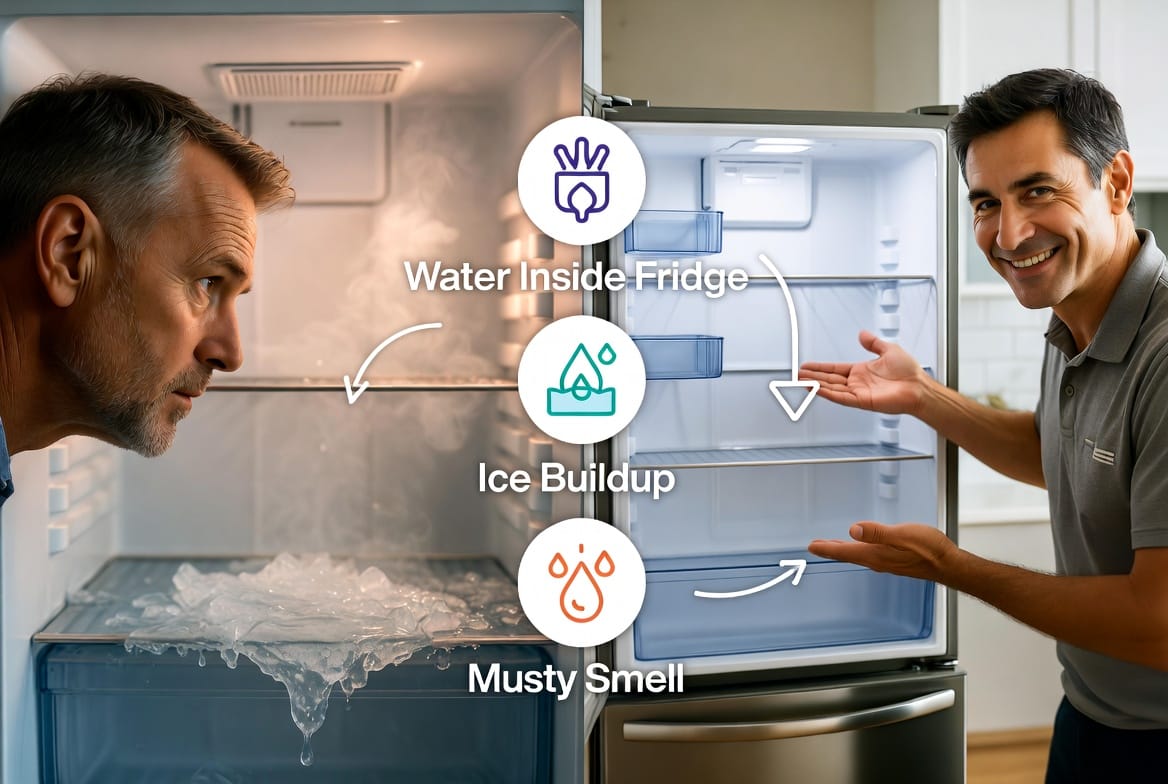
- Water pooling on the bottom of the refrigerator compartment or on the crisper drawers.
- A sheet of ice or a frozen mound forming at the back of the freezer floor.
- Water dripping from the freezer into the fresh-food section when the door is opened.
- A persistent musty smell caused by stagnant water that never reaches the evaporation pan.
- Frost building up faster than usual on the rear freezer wall.
- The refrigerator running longer cycles because the evaporator is partially iced over.
If you notice any combination of these issues, the defrost drain should be the first component you inspect. Ignoring the problem allows water to migrate under the unit, potentially damaging flooring or promoting mold growth in the surrounding cabinetry.
Why the Drain Becomes Clogged
Several everyday factors contribute to blockages:
- Tiny food particles that fall through the freezer shelves during loading or unloading.
- Ice crystals that form when the drain begins to slow and then freeze solid.
- Grease or residue from packaging that migrates into the drain channel.
- Mineral deposits left behind when water evaporates incompletely in hard-water areas.
- Dust and lint drawn in by the condenser fan that eventually settles near the drain tube.
Because the opening is small—often less than half an inch in diameter—even a modest accumulation can create a complete obstruction. Once ice forms around the clog, the blockage becomes self-reinforcing: more water freezes on top of the existing plug, making the problem worse with every defrost cycle.
Safe and Effective Cleaning Methods
The good news is that clearing a clogged defrost drain is a straightforward task for most homeowners. Follow these steps carefully to restore proper drainage.
Step 1: Prepare the Refrigerator
Unplug the unit or turn off the circuit breaker. Remove all food from the freezer and refrigerator compartments and place it in coolers. Take out the freezer shelves and any rear panels that give access to the drain opening. Keep a stack of towels ready to catch residual water.
Step 2: Locate the Drain Opening
Look at the lowest point of the freezer floor, usually centered or slightly toward the back wall. You will see a small circular or rectangular hole. In some models a removable plastic cover or grate sits over the opening; lift it out gently.
Step 3: Flush with Hot Water
Fill a turkey baster, squeeze bottle, or small funnel with very hot—but not boiling—water. Direct a steady stream into the drain opening. The heat softens any ice and begins to dissolve organic debris. Continue flushing until the water flows freely through the tube and into the evaporation pan. You may hear or see water exiting beneath the refrigerator; that is a positive sign.
Step 4: Use a Pipe Cleaner or Flexible Brush
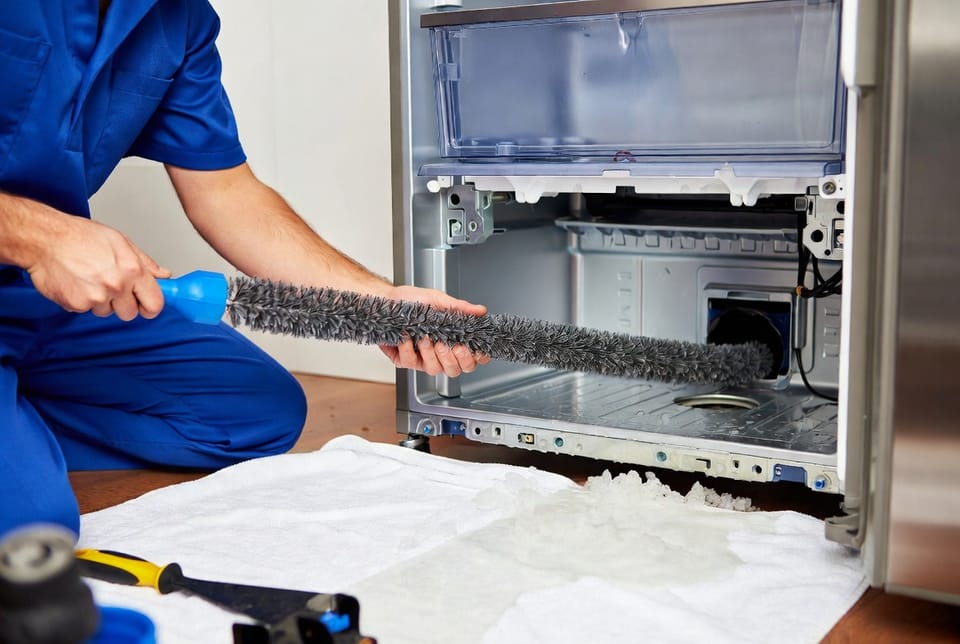
If the flush alone does not clear the blockage, insert a long, soft pipe cleaner, plastic drain brush, or a piece of flexible plastic tubing. Gently work it up and down the drain channel to dislodge stubborn particles. Avoid metal wires or stiff objects that could puncture the plastic tube. After brushing, flush again with hot water to wash away the loosened material.
Step 5: Check the Evaporation Pan
While the refrigerator is still open, inspect the pan located near the compressor. Remove any standing water or debris with a sponge. A clean pan ensures that future drainage evaporates properly and does not create secondary odors.
Step 6: Reassemble and Test
Replace all panels, shelves, and food. Plug the unit back in and allow it to reach normal temperature. Monitor the freezer floor and refrigerator bottom for the next 24 hours. If no new water appears, the drain is clear.
These steps resolve the majority of defrost-drain clogs. They require only common household items and about thirty to forty-five minutes of careful work.
Prevention Strategies That Keep the Drain Clear
Once the drain is functioning again, a few simple habits dramatically reduce the chance of future blockages:
- Wipe up spills inside the freezer immediately so particles never reach the drain.
- Avoid storing uncovered liquids or messy packages near the rear wall.
- Periodically pour a cup of hot water mixed with a teaspoon of baking soda down the drain every three to four months as preventive maintenance.
- Ensure the refrigerator is level so water flows toward the drain rather than pooling elsewhere.
- Keep the condenser coils clean; restricted airflow can alter defrost timing and increase ice formation.
Consistent attention turns an occasional repair into a rare event.
When Professional Service Is the Smarter Choice
Although many clogs respond to home cleaning, certain situations call for trained help:
- The drain tube is inaccessible without removing major components.
- Water continues to appear after repeated flushing and brushing.
- You notice electrical issues, unusual noises, or error codes on the control panel.
- The evaporation pan itself is cracked or the drain heater (present on some models) has failed.
- You simply prefer not to work inside the appliance.
In these cases a qualified technician can diagnose secondary problems—such as a faulty defrost thermostat or heater—that may be contributing to excessive frost and subsequent clogs. Professional service also includes a full system check that protects your warranty and prevents repeat visits.
The Cost of Ignoring a Clogged Drain
Leaving a blocked defrost drain untreated leads to more than wet shelves. Continuous moisture encourages mold and mildew growth on door gaskets and interior walls. Food can spoil faster because of temperature fluctuations caused by ice-insulated evaporator coils. Water that escapes the cabinet may damage hardwood, laminate, or tile flooring and can even reach nearby cabinetry or baseboards. In extreme cases the compressor works harder to maintain temperature, shortening its lifespan and raising energy bills.
Addressing the issue promptly protects both the appliance and the surrounding kitchen environment.
Final Thoughts and Next Steps
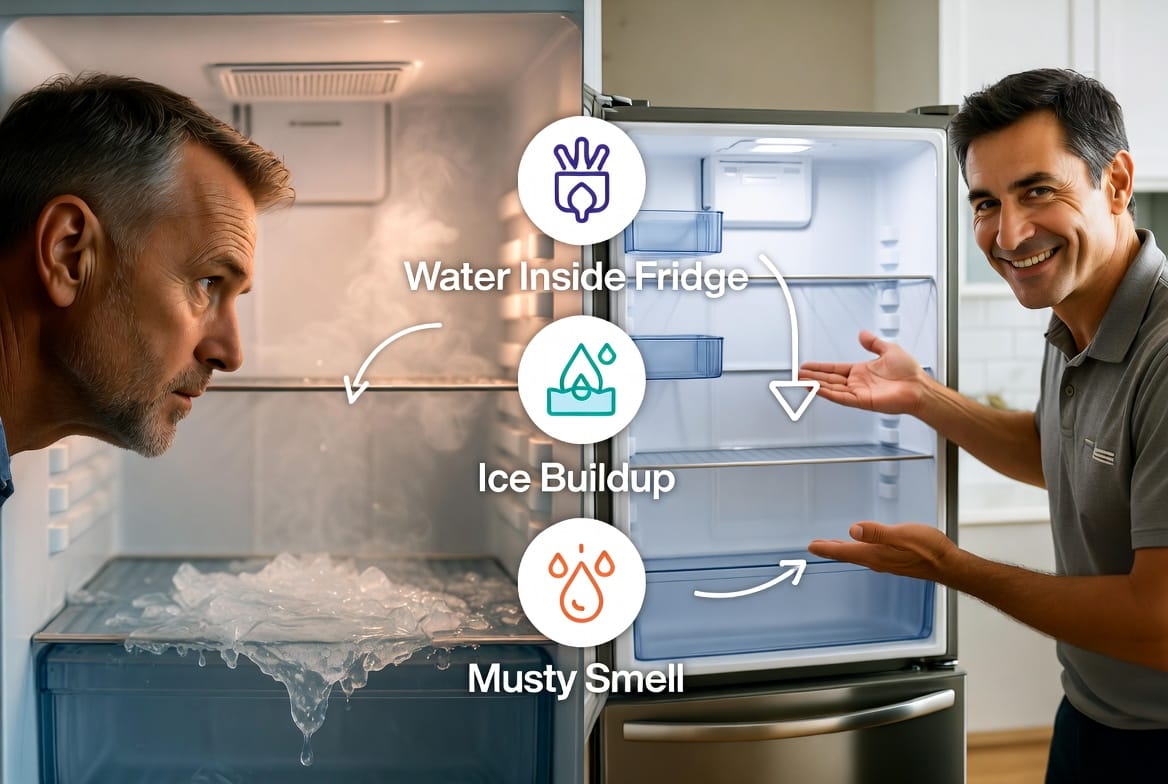
A clogged refrigerator defrost drain is the most frequent reason water appears inside an otherwise healthy refrigerator. The drain’s simple job—carrying melted frost to the evaporation pan—becomes impossible once debris or ice blocks the path. Recognizing the classic signs of pooling water, ice buildup, and musty odors allows you to act before secondary damage occurs.
Most homeowners can restore proper function by flushing the drain with hot water and carefully working a soft brush or pipe cleaner through the channel. Regular preventive rinsing keeps the passage open for years. When the blockage proves stubborn or additional components are involved, professional assistance ensures a complete and lasting repair.
Clean the defrost drain to prevent leaks and keep your refrigerator operating at peak efficiency. If you prefer expert help or the problem persists after your best efforts. A trained technician will arrive prepared to diagnose, clear, and verify the entire defrost system so you can enjoy a dry, reliable appliance once again.
Professional Defrost Drain Cleaning – Call Now!