The Refrigerator Compressor Relay: Clicking Sounds and No Cooling
When your refrigerator suddenly starts making persistent clicking sounds and fails to keep food cold, the problem often traces back to one small but critical component: the refrigerator compressor relay. This affordable part plays a vital role in starting the compressor, and when it fails, the entire cooling system can grind to a halt. The good news is that identifying and addressing a bad relay is straightforward for trained technicians, restoring reliable performance without the need for a full appliance replacement.
Stop Refrigerator Clicking Sounds Today – Call Now!
In this comprehensive guide, we explore exactly what the compressor relay does, the clear signs that it has failed, and why replacement remains one of the most cost-effective solutions available. Understanding this common issue empowers homeowners to act quickly, protect their food supply, and maintain peace of mind.
Understanding the Role of the Compressor Relay
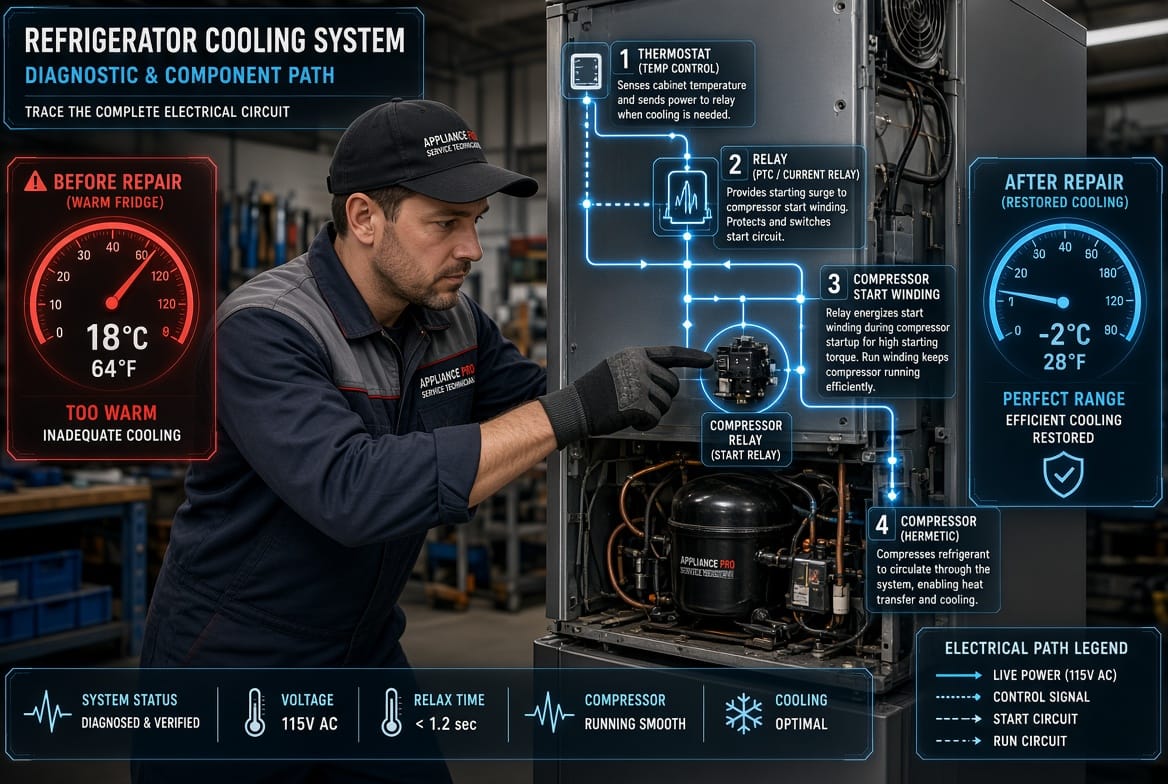
The compressor is the heart of your refrigerator’s cooling system. It circulates refrigerant through the coils, removing heat from the interior and keeping temperatures consistently low. However, the compressor cannot start on its own under normal household voltage conditions. That is where the compressor relay—sometimes called the start relay—comes into play.
The relay acts as a precise electrical switch. When the thermostat signals that the refrigerator needs cooling, the relay momentarily supplies an extra boost of power to the compressor’s start winding. This surge allows the motor to overcome initial resistance and begin running. Once the compressor reaches operating speed, the relay disengages the start circuit and allows the run winding to take over for continuous operation.
Without a properly functioning relay, the compressor either fails to start entirely or attempts to start repeatedly, producing the characteristic clicking sounds that many homeowners notice. The result is no cooling, a gradually warming interior, and the risk of food spoilage if the issue is left unaddressed.
This component is designed for durability, yet years of repeated cycling, voltage fluctuations, or normal wear can cause the internal contacts or the small overload protector often paired with it to fail. Because the relay is relatively inexpensive and accessible, it ranks among the most frequently replaced parts during refrigerator service calls.
Recognizing the Clear Signs of Relay Failure
A failing refrigerator compressor relay produces distinctive symptoms that set it apart from other potential problems such as a faulty thermostat or sealed-system leak. Paying attention to these indicators helps narrow the diagnosis quickly.
Common warning signs include:
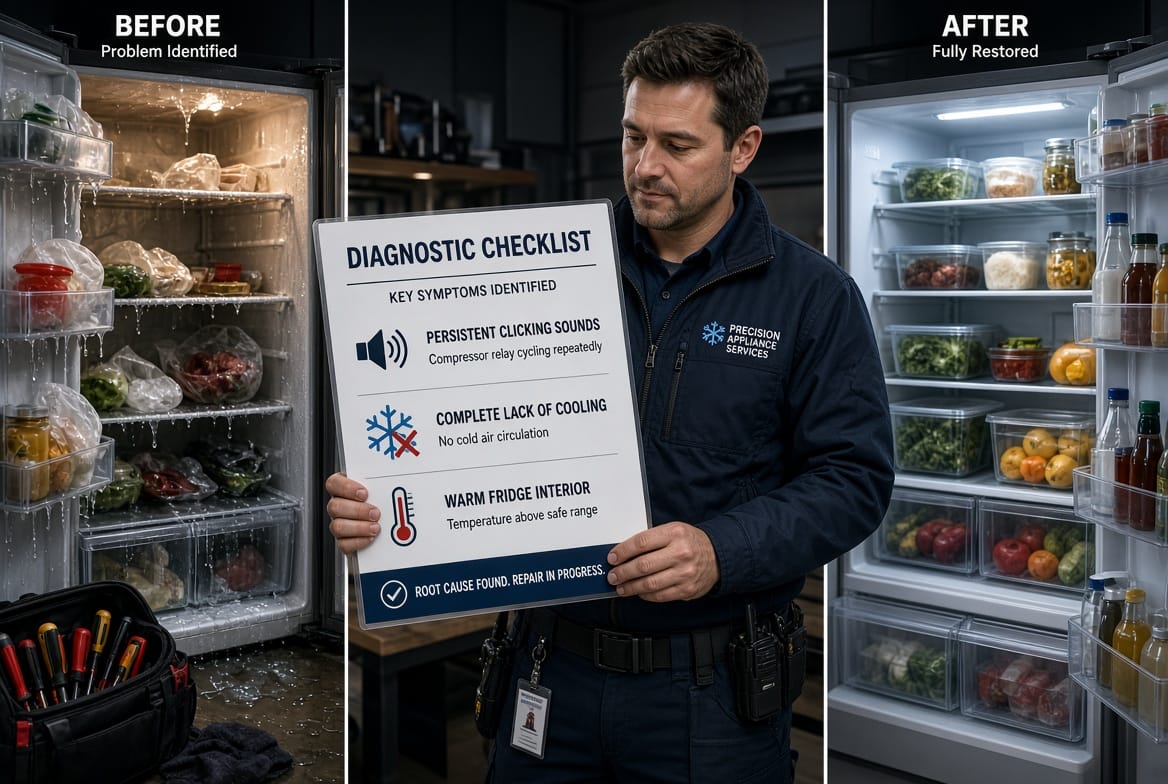
- Repeated clicking sounds coming from the lower rear of the refrigerator, often occurring every few minutes as the unit tries and fails to start the compressor
- The compressor remaining silent or humming briefly without ever fully engaging
- A noticeable rise in internal temperature, leading to no cooling and a warm fridge compartment
- Condensation forming on the exterior or soft, melting frozen items in the freezer
- The refrigerator running for short periods then shutting off, only to click again shortly afterward
- An unusual increase in energy usage as the system struggles inefficiently
These symptoms typically appear gradually. At first the clicking may be infrequent; over days or weeks it becomes more persistent, and cooling performance declines steadily. Homeowners who notice the pattern early can prevent more extensive inconvenience.
Why Clicking Sounds Point Directly to the Relay
The clicking sound is produced when the relay attempts to energize the compressor but the internal contacts cannot maintain the necessary connection. Each failed attempt creates an audible click as the relay armature engages and then drops out. In a healthy system this process happens once at the beginning of a cooling cycle and remains silent thereafter. When the relay is defective, the cycle repeats continuously, generating the rhythmic clicking that draws attention.
This behavior differs from other noises. A failing fan motor produces a whirring or grinding tone, while refrigerant issues may create hissing. The distinct, regular click localized near the compressor housing is a reliable marker of relay trouble. Combined with the absence of cold air, it forms a classic diagnostic pair that experienced technicians recognize immediately.
Ignoring these signals allows the problem to worsen. Continuous failed start attempts can place additional stress on the compressor motor windings, potentially leading to more expensive damage if the underlying relay issue is not corrected promptly.
The Real Impact of No Cooling on Your Household
A refrigerator that delivers no cooling quickly moves from inconvenience to genuine concern. Perishable foods begin to warm within hours. Dairy, meats, and leftovers enter the temperature danger zone where bacterial growth accelerates. Frozen goods thaw, losing texture and safety. The financial cost of discarded groceries can mount rapidly, especially for larger households.
Beyond food loss, a non-functioning refrigerator disrupts daily routines. Meal planning becomes difficult, and the need to rely on coolers or neighborly help adds stress. In warmer climates or during summer months the interior temperature climbs even faster, compressing the window for effective intervention.
Fortunately, because a bad relay is such a common and straightforward cause, restoration of normal cooling is usually measured in hours rather than days once professional service begins. Acting at the first signs of clicking and warm air protects both your food investment and your peace of mind.
How Technicians Diagnose a Faulty Compressor Relay
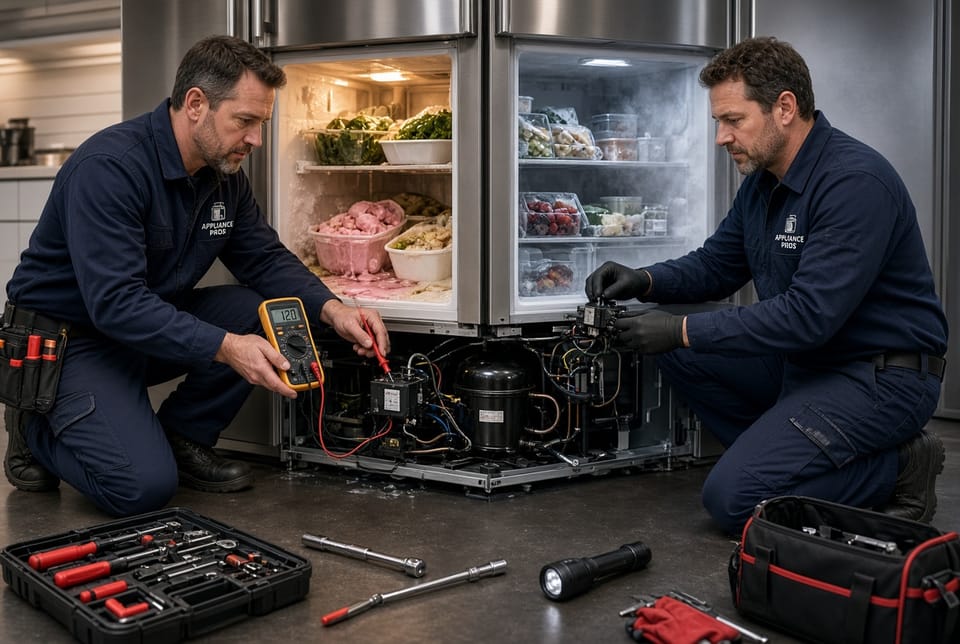
Professional diagnosis begins with a visual and auditory inspection. The technician listens for the characteristic clicking while observing whether the compressor attempts to start. Next, the rear access panel is removed to expose the compressor and its attached relay.
Using a multimeter, the technician tests continuity across the relay terminals and checks the overload protector that is frequently integrated into the same housing. A reading that shows an open circuit or inconsistent resistance confirms the component has failed. Additional tests rule out related issues such as a defective start capacitor or low voltage supply, ensuring the relay is isolated as the root cause.
This methodical approach prevents unnecessary parts replacement and keeps repair costs focused on the actual problem. Because the relay sits outside the sealed refrigerant system, diagnosis and correction remain non-invasive and relatively quick.
Why Relay Replacement Is Affordable and Straightforward
One of the most reassuring aspects of this repair is its accessibility. The compressor relay itself is an inexpensive part, typically representing only a modest portion of the overall service cost. Labor time is also limited: once the refrigerator is safely unplugged and the rear panel removed, the old relay unplugs or unscrews from the compressor terminals, and the new unit installs in its place within minutes.
Technicians carry common relay styles on their service vehicles, allowing many repairs to be completed in a single visit. There is no need to open the refrigerant lines, recover gas, or perform complex brazing. The process remains mechanical and electrical rather than involving the sealed system, which keeps both time and expense well below those of major compressor or evaporator work.
Homeowners sometimes wonder whether they can attempt the replacement themselves. While the physical steps appear simple, safety considerations—including proper electrical isolation, correct terminal orientation, and verification of related components—make professional service the wiser choice. Incorrect installation can damage the new relay or the compressor itself, turning a simple fix into a larger expense.
A Closer Look at the Replacement Process
Although exact procedures vary slightly by refrigerator model, the general sequence remains consistent and efficient:
- The appliance is disconnected from power and pulled carefully away from the wall.
- The rear lower access panel is removed to reveal the compressor.
- The existing relay and overload assembly are gently detached from the compressor pins.
- Terminals and the compressor shell are inspected for signs of overheating or debris.
- The new relay is aligned and seated firmly, ensuring solid electrical contact.
- The panel is reinstalled, power is restored, and the unit is monitored through a full cooling cycle.
Within a short time the compressor starts smoothly, the clicking ceases, and cold air begins circulating again. Temperature recovery inside the cabinet usually occurs within a few hours, returning the refrigerator to normal operation.
Additional Factors That Influence Relay Longevity
Several everyday conditions can accelerate wear on the compressor relay. Frequent power fluctuations, especially in areas with unstable electrical service, stress the contacts. Dirt and dust accumulation around the compressor area can raise operating temperatures, shortening component life. In some cases an oversized or undersized relay installed during a previous repair creates chronic mismatch and early failure.
Regular maintenance helps mitigate these risks. Keeping the condenser coils clean, ensuring adequate ventilation behind the refrigerator, and addressing any unusual noises promptly all contribute to longer relay and compressor life. Many service professionals recommend a preventive inspection every few years, particularly for refrigerators approaching the decade mark.
Distinguishing Relay Failure from Other Common Issues
Not every cooling problem originates with the relay. A failed defrost timer, clogged drain, or malfunctioning evaporator fan can produce warm temperatures as well. However, the combination of clicking sounds with a non-starting compressor remains highly specific. When the compressor runs continuously yet the interior stays warm, attention shifts toward sealed-system concerns or airflow restrictions. Accurate differentiation prevents misdiagnosis and unnecessary expense.
Experienced technicians rely on both symptom patterns and instrument readings to isolate the true cause. This precision is one of the strongest arguments for professional evaluation rather than guesswork.
The Value of Prompt Professional Attention
Delaying service after the first appearance of clicking and rising temperatures increases the chance of secondary damage and higher food-loss costs. A timely repair restores normal operation quickly, limits inconvenience, and preserves the overall health of the appliance. Because the relay is such a common wear item, most technicians encounter and correct the issue regularly, bringing both familiarity and efficiency to the job.
Modern refrigerators are built for long service lives when key components like the relay receive attention at the right moment. Addressing the problem early keeps the appliance performing as designed for years to come.
Final Guidance for Homeowners
A bad refrigerator compressor relay stops the compressor from starting, producing the telltale clicking sounds and resulting in no cooling. The component is affordable, the repair is relatively easy for trained professionals, and restoration of reliable cold storage is typically rapid once the new relay is in place.
If your refrigerator exhibits these symptoms, do not wait for the interior to warm further or for food to spoil. Professional replacement resolves the issue cleanly and returns your appliance to full function. Prompt action protects your food, your schedule, and the long-term performance of your refrigerator.
Professional Compressor Relay Replacement – Call Now!