The Refrigerant Line Set: Proper Sizing and Installation for Optimal Performance
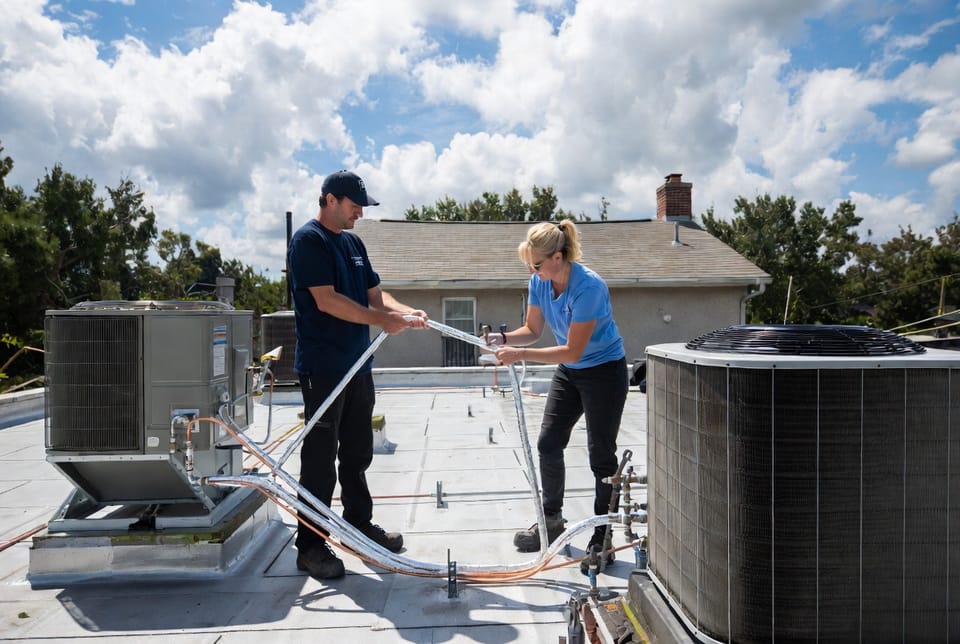
The refrigerant line set serves as the critical lifeline connecting your indoor and outdoor HVAC units. This often-overlooked component plays a pivotal role in how efficiently your air conditioning or heat pump system operates. When correctly sized and installed, it ensures smooth refrigerant flow, maintains system pressure, and protects your compressor from unnecessary strain.
Optimize Your HVAC Efficiency – Call Now for Expert Line Set Service
Improper line set practices can lead to reduced cooling capacity, higher energy bills, premature equipment failure, and even voided manufacturer warranties. Understanding the fundamentals of line set design and installation empowers homeowners to make informed decisions and avoid costly mistakes.
Why the Refrigerant Line Set Matters
The line set consists of two copper pipes: the larger suction line (vapor line) that carries refrigerant gas back to the compressor, and the smaller liquid line that delivers cooled refrigerant to the indoor coil. These lines bridge the gap between your indoor evaporator and outdoor condenser, allowing the refrigeration cycle to function seamlessly.
Key factors that determine line set performance include:
- Length of the run
- Diameter (pipe sizing)
- Insulation quality
- Routing and support methods
- Brazing and connection integrity
Each of these elements directly influences system efficiency, cooling capacity, and the long-term reliability of your HVAC equipment.
How Line Set Length Affects System Efficiency
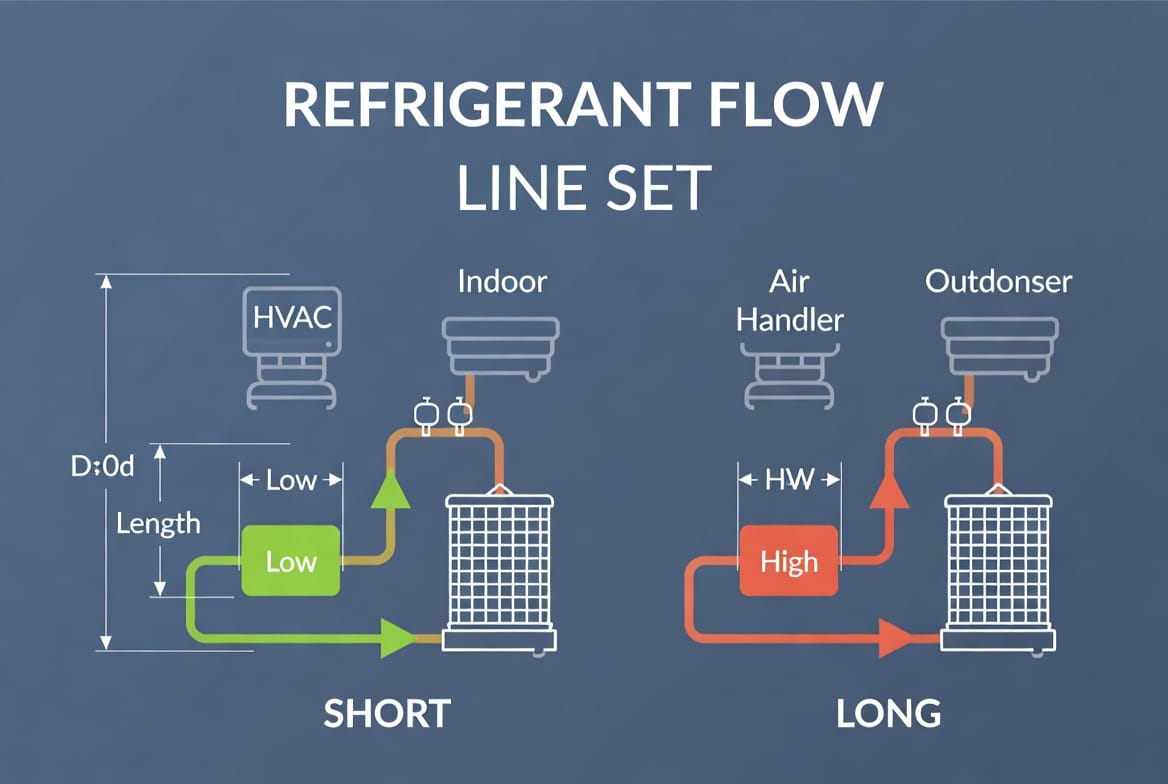
Longer line sets introduce refrigerant pressure drop, which forces the compressor to work harder. As distance increases, friction within the pipes reduces pressure and temperature differentials essential for effective heat transfer.
Excessive length can result in:
- Decreased cooling or heating capacity
- Higher energy consumption
- Increased compressor runtime
- Potential oil return issues
Manufacturers specify maximum line set lengths for each system tonnage. Exceeding these limits without proper adjustments (such as adding refrigerant or using larger diameters) compromises performance and may shorten compressor life significantly.
The Impact of Proper Line Set Diameter
Selecting the correct pipe diameter is essential for maintaining optimal refrigerant velocity and minimizing pressure losses.
- Undersized lines restrict flow, causing excessive pressure drop and reduced system capacity. The compressor must compensate by working harder, leading to higher head pressure and accelerated wear.
- Oversized lines can cause refrigerant velocity to drop too low, resulting in poor oil return to the compressor and potential liquid slugging.
Proper sizing ensures:
- Adequate refrigerant mass flow
- Efficient oil circulation
- Balanced system pressures
- Extended equipment lifespan
Always consult the manufacturer’s piping charts specific to your system model and tonnage when determining line set diameter.
The Critical Role of Insulation
High-quality insulation on the suction line prevents heat gain from the surrounding environment. Without proper insulation, the cold refrigerant gas absorbs ambient heat, forcing the system to work overtime and reducing overall efficiency.
Common insulation failures include:
- Thin or damaged insulation
- Gaps at joints and connections
- Use of inferior materials that degrade over time
Well-insulated lines maintain the refrigerant’s low temperature, preserving the system’s ability to absorb heat effectively indoors. This directly translates to lower energy costs and more consistent comfort levels throughout your home.
Best Practices for Refrigerant Line Set Installation
Professional installation follows strict guidelines to maximize performance and reliability. Here are the essential best practices:
- Minimize total length whenever possible by positioning indoor and outdoor units strategically
- Use swept bends or long-radius elbows instead of sharp kinks that restrict flow
- Install proper supports every 4-6 feet to prevent sagging and vibration damage
- Ensure slight downward slope toward the outdoor unit for proper oil return
- Apply high-quality armaflex or equivalent insulation with sealed joints
- Perform nitrogen purging during brazing to prevent oxidation inside the lines
- Conduct pressure testing and deep vacuum procedures before charging
- Verify correct refrigerant charge accounting for additional line set length
Expert technicians pay close attention to every detail during installation to prevent future service calls and ensure years of trouble-free operation.
Common Line Set Issues and Their Consequences
Many HVAC problems trace back to substandard line set practices. Recognizing these issues early can save significant repair costs.
Frequent problems include:
- Undersized lines leading to high head pressure and reduced capacity
- Kinks or sharp bends that create turbulence and pressure restrictions
- Insufficient or missing insulation causing efficiency losses and condensation issues
- Excessive line set length without proper sizing compensation
These issues often manifest as:
- Longer run times to reach desired temperatures
- Unusual noises from the outdoor unit
- Higher than expected utility bills
- Frequent system cycling
- Premature compressor failure
Addressing line set problems promptly through professional evaluation prevents cascading damage to other expensive components.
Professional Installation: Your Best Investment
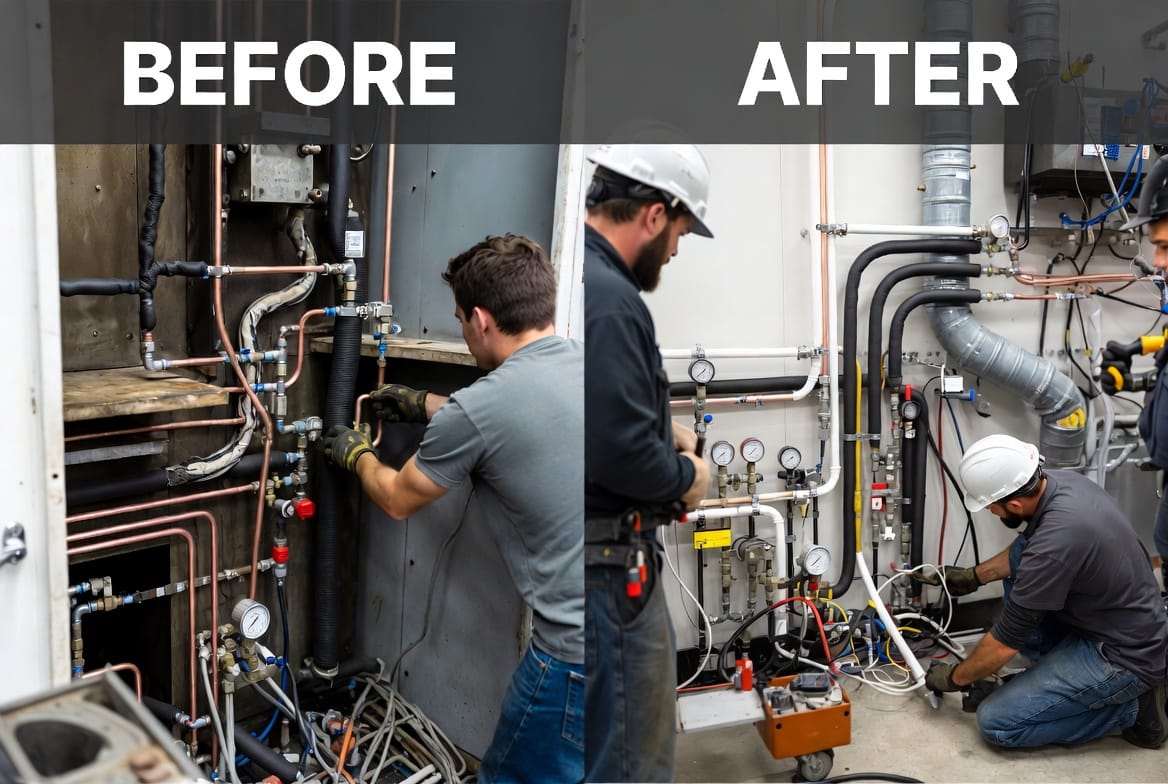
While DIY approaches may seem cost-effective initially, refrigerant line set installation involves specialized knowledge, tools, and safety protocols. Certified technicians understand local codes, manufacturer specifications, and the intricate relationship between line set design and system performance.
Professional installation guarantees:
- Compliance with all safety and building codes
- Optimal system efficiency from day one
- Protection of your equipment warranty
- Long-term reliability and reduced maintenance needs
Investing in proper line set design and installation pays dividends through lower energy costs, enhanced comfort, and extended HVAC system lifespan.
Conclusion
Proper piping ensures peak performance. A well-designed and expertly installed refrigerant line set forms the foundation of an efficient, reliable HVAC system. By prioritizing correct sizing, quality insulation, and professional installation practices, you protect your investment and enjoy consistent comfort for years to come.
For expert guidance on your refrigerant line set needs or complete HVAC system evaluation, contact our certified team today.
Protect Your Compressor & Boost Performance – Call Today