The HVAC Heat Exchanger: The Hidden Safety Hazard in Your Furnace
Your home’s furnace works quietly through cold months, delivering warmth that most families take for granted. Behind that reliable heat sits one of the most important and least visible components in the entire HVAC system: the heat exchanger. When this part remains intact, it performs a vital safety function. When it fails, it can allow carbon monoxide to mix with the air your family breathes. Understanding this component, recognizing warning signs, and scheduling a critical safety inspection are essential steps every homeowner should take.
Protect Your Family from Carbon Monoxide – Call Now
This article explains how a heat exchanger works, why a crack creates a serious risk, the most common warning signs, and why only trained professionals should perform the inspection. The goal is simple: give you clear, practical knowledge so you can protect your household with confidence.
What a Heat Exchanger Does Inside Your Furnace
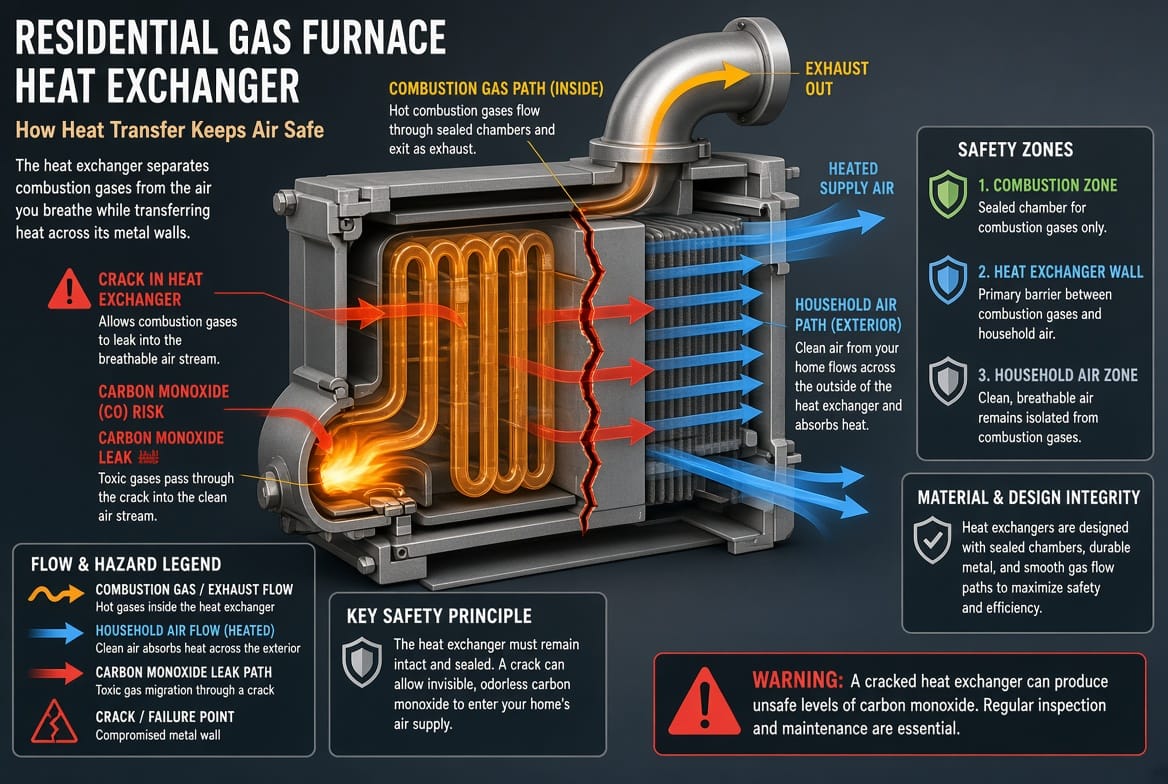
A heat exchanger is a metal chamber or series of chambers inside a gas furnace. Its job is straightforward yet critical. Combustion occurs inside the furnace burner assembly. The burning fuel produces hot gases that contain carbon monoxide, nitrogen oxides, and other byproducts that must never enter living spaces.
Those hot combustion gases travel through the interior of the heat exchanger. At the same time, household air from the return ducts passes over the outside surface of the same metal. Heat transfers through the metal wall into the circulating air, which then moves through the supply ducts and into your rooms. The two streams of air never mix—as long as the metal remains sealed.
Think of the heat exchanger as a sealed barrier. One side carries dangerous exhaust. The other side carries the air you breathe. That physical separation is the reason modern furnaces can operate safely indoors. When the metal develops a crack, hole, or separation at a weld, the barrier fails. Combustion gases can then leak into the circulating airstream.
Furnaces cycle thousands of times each heating season. Metal expands when hot and contracts when cool. Over years of this thermal stress, plus exposure to moisture and combustion chemicals, the metal can fatigue. A small crack that starts as a hairline opening can grow. That is why a heat exchanger inspection is not optional maintenance; it is a safety necessity.
Why a Cracked Heat Exchanger Is a Hidden Hazard
A cracked heat exchanger rarely announces itself with a loud noise or an obvious mechanical failure. The furnace may continue to produce heat. Thermostats still call for warmth. The blower still runs. From the living room, everything can appear normal.
The danger is invisible. Carbon monoxide is colorless, odorless, and tasteless. Even low-level exposure over time can cause headaches, fatigue, nausea, and confusion. Higher concentrations can be life-threatening. Because the leak occurs inside the heating system, the gas can travel through ductwork and reach bedrooms, living areas, and any space served by the furnace.
Older furnaces and units that have not received regular service face higher risk. Poor combustion, restricted venting, or dirty burners can raise operating temperatures and accelerate metal fatigue. A professional inspection looks for these contributing factors as well as the physical condition of the heat exchanger itself.
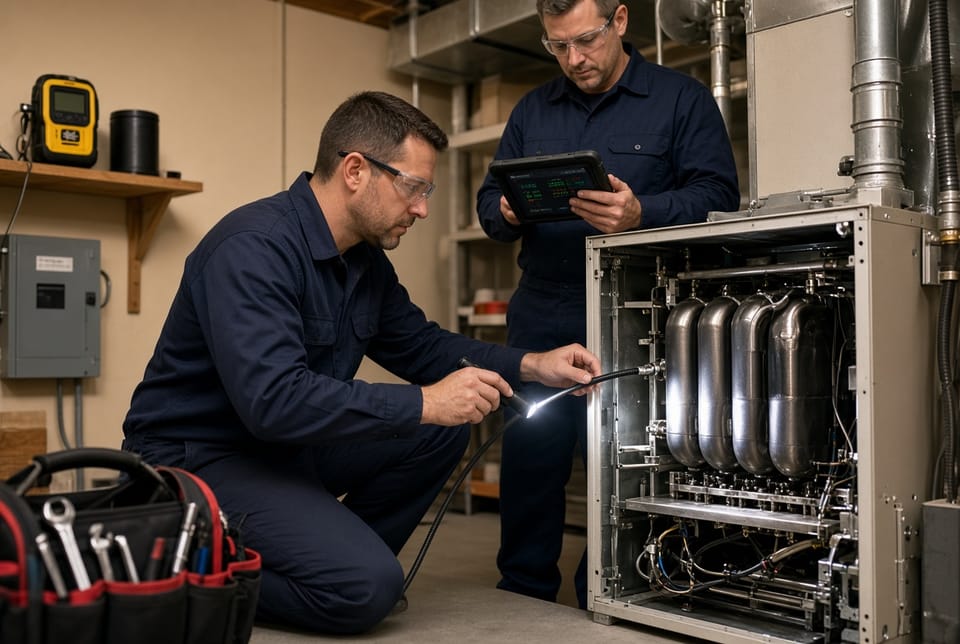
Homeowners cannot reliably see inside the chambers without specialized tools. Visual inspection through limited access ports often misses small cracks. That limitation is exactly why a critical safety inspection performed by trained technicians using cameras, lights, and combustion analyzers is the only dependable method.
Signs of a Cracked Heat Exchanger
Certain clues should prompt immediate attention. None of these signs prove a crack exists on their own, but together they form a pattern that demands professional evaluation.
- CO detector alerts — A carbon monoxide detector that sounds or displays elevated readings is the most urgent warning. Treat every alert as an emergency. Leave the home, call emergency services if anyone feels ill, and do not return until the source is identified and corrected.
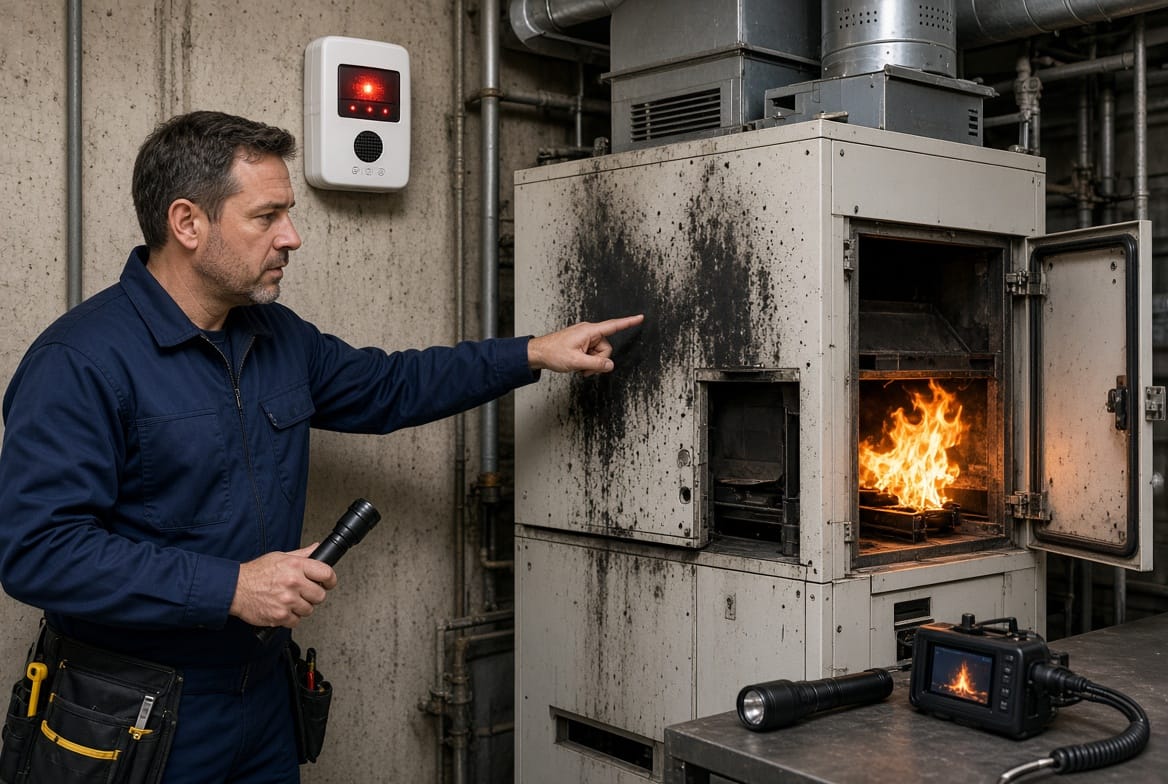
- Soot or unusual discoloration — Black or gray soot around the furnace cabinet, near the burner area, or on nearby walls can indicate incomplete combustion or leaking gases.
- Flame rollout — Flames that extend outside the normal burner compartment or appear to lick toward the front of the furnace signal a serious combustion or venting problem that can damage the heat exchanger.
- Persistent headaches or flu-like symptoms that improve when household members leave the house.
- Moisture or rust inside the furnace cabinet that cannot be explained by ordinary condensation.
- A furnace that cycles unusually or produces a sharp, chemical odor during operation.
If you notice any of these conditions, stop using the furnace if it is safe to do so and arrange an inspection without delay. Do not attempt to seal, patch, or “wait and see.” Temporary fixes cannot restore the integrity of a compromised heat exchanger.
Why Professional Inspection Is Essential
A thorough heat exchanger inspection goes far beyond a quick look with a flashlight. Qualified technicians follow a systematic process designed to find defects that homeowners and untrained observers routinely miss.
First, the technician shuts the system down and allows it to cool enough for safe access. Panels are removed so the burner assembly, inducer, and heat exchanger surfaces can be examined. A bright inspection light and a flexible camera (often called a borescope) travel into the chambers. The camera reveals interior walls, seams, and corners that cannot be seen from the outside.
Combustion analysis measures oxygen, carbon monoxide, and other gases in the flue. Abnormal readings can indicate a leak even when a crack is not immediately visible. Draft and pressure tests help confirm that exhaust is leaving the home as designed.
Technicians also evaluate related components: burners for proper flame pattern, the inducer motor, vent pipes, and the overall heat exchanger mounting. A crack is sometimes the result of another problem rather than the original cause. Addressing only the visible symptom leaves the household at risk.
Replacement of a damaged heat exchanger is a major repair. In many cases the cost and age of the furnace make a complete system replacement the more reliable long-term solution. A professional can explain the options clearly so you can make an informed decision based on safety first.
Annual maintenance visits should always include a visual and operational check of the heat exchanger. Homes with older equipment, high usage, or previous combustion issues benefit from more frequent or more detailed inspections. Never assume last year’s “looks fine” still applies after another season of thermal cycling.
How Regular Care Reduces Risk
Prevention starts with consistent professional service. A well-maintained furnace burns cleaner, runs closer to design temperatures, and places less stress on metal components. Filters that are changed on schedule keep airflow balanced. Restricted airflow can cause the heat exchanger to overheat, accelerating wear.
Install and maintain carbon monoxide detectors on every level of the home, especially near sleeping areas. Test them monthly and replace units according to manufacturer dates. Detectors provide an early warning layer; they do not replace mechanical inspection of the furnace itself.
Keep the area around the furnace clear. Combustible materials, stored boxes, or blocked return grilles can interfere with proper operation. If you smell gas, hear unusual rumbling, or see flames behaving abnormally, turn the system off at the thermostat and the service switch and call for help.
These habits do not eliminate the need for a dedicated heat exchanger inspection. They simply reduce the likelihood that a small problem becomes a hidden safety hazard.
What to Expect During a Safety Inspection Appointment
When you schedule a critical safety inspection, the technician should arrive prepared with the proper tools and a clear process. Expect the visit to take longer than a standard filter change. The extra time is spent examining the component that protects your indoor air.
The technician will explain findings in plain language. If the heat exchanger is sound, you receive confirmation and any recommended maintenance. If a defect is found, you receive documentation, photographs when possible, and a straightforward discussion of next steps. Reputable companies prioritize safety over sales pressure. You should feel informed, not rushed.
Keep records of every inspection. Dates, findings, and any repairs create a history that helps future technicians and can support warranty or insurance questions.
Protecting Your Household Year After Year
The heat exchanger does its job out of sight. That invisibility is precisely why it can become a hidden safety hazard. Knowledge, working detectors, and scheduled professional inspections form a practical defense.
Do not wait for symptoms. Do not rely on a furnace that “still heats.” Schedule a focused examination of the component that separates combustion gases from the air your family breathes. A cracked heat exchanger is not a problem that improves with time.
Protect your family from carbon monoxide.
Call Now for a Critical Heat Exchanger Check