The HVAC Compressor Overload Protector: Preventing Burnout in Extreme Heat
When temperatures soar, your air conditioning system works harder than at any other time of year. The compressor—the heart of the cooling cycle—faces tremendous thermal and electrical stress. One small but essential safety component stands between normal operation and catastrophic failure: the HVAC compressor overload protector. This device is designed to shut off the compressor if it overheats or draws excessive current, protecting both the equipment and your home from costly damage.
Protect Your HVAC Compressor Today – Call for Service
Understanding how the overload protector functions, recognizing the signs that it may be failing, and knowing why it becomes especially critical during heat waves can save homeowners thousands of dollars and prevent uncomfortable indoor conditions when relief is needed most.
What the Overload Protector Does
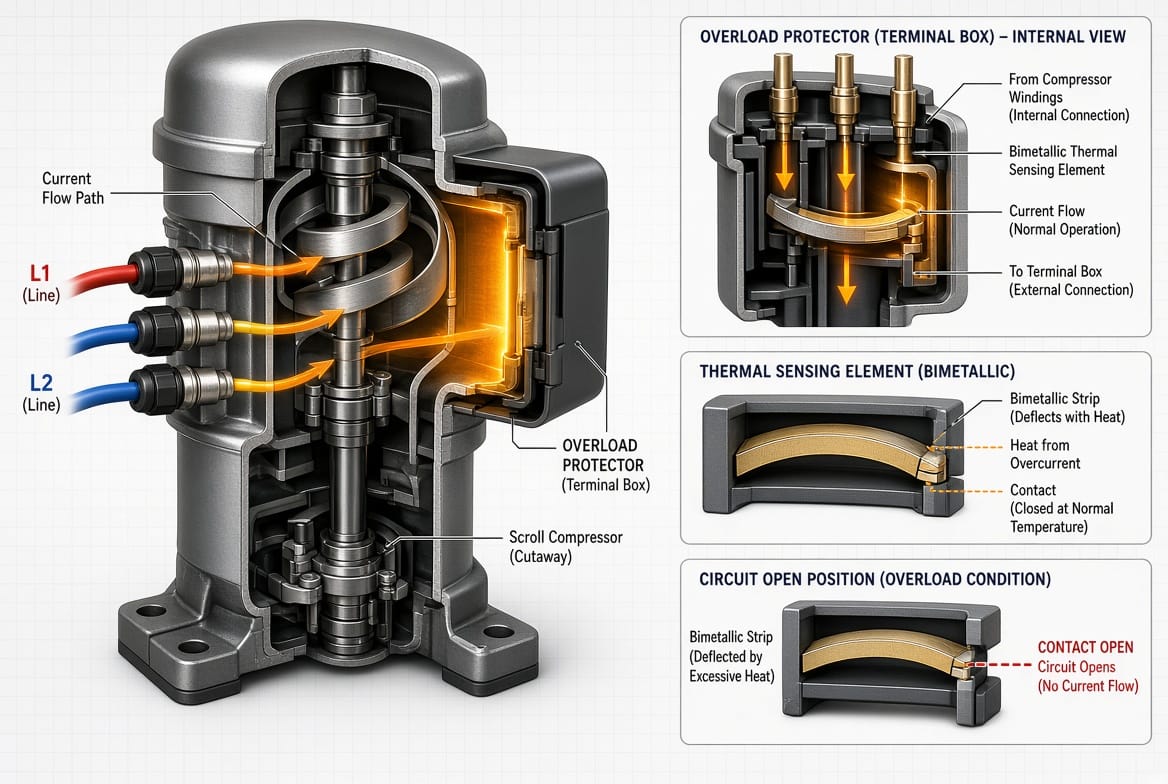
The compressor overload protector is a thermal and current-sensing device typically mounted directly on or inside the compressor housing. Its primary job is straightforward yet vital: it monitors temperature and amperage. If either exceeds safe limits, the protector opens the electrical circuit and stops the compressor from running.
- When the compressor windings become too hot, the thermal element inside the protector trips.
- When the motor draws more current than it is rated for—often caused by high head pressure, restricted airflow, or electrical issues—the current-sensing portion interrupts power.
This dual-protection design prevents the motor windings from burning out. Once conditions return to normal, many protectors automatically reset; others require manual reset or replacement. In either case, the device buys time and prevents irreversible damage.
Without a functioning overload protector, a compressor can continue running under dangerous conditions until the windings fail. Replacement of a burned-out compressor is one of the most expensive HVAC repairs a homeowner can face.
How Extreme Heat Increases Risk
Heat waves place extraordinary demand on air conditioning systems. Outdoor temperatures above 95°F force the condenser to reject more heat, raising refrigerant pressures and compressor operating temperatures. Indoor thermostats calling for continuous cooling keep the compressor running for long cycles with little rest.
These conditions create a perfect storm:
- Higher discharge temperatures stress the motor insulation.
- Elevated head pressure increases amperage draw.
- Reduced nighttime cooling means the system never fully recovers.
The overload protector is the last line of defense. It is engineered to trip before the compressor reaches the point of no return. During prolonged heat events, the protector may cycle more frequently. This is not a defect—it is the device performing its intended safety function.
Homeowners sometimes mistake frequent tripping for a nuisance. In reality, the protector is signaling that the system is operating near its limits. Ignoring these warnings or bypassing the protector can lead to sudden compressor failure precisely when cooling is needed most.
Signs That the Overload Protector Is Failing
A healthy overload protector should remain closed during normal operation and open only when genuine overheating or overcurrent occurs. When the protector itself begins to fail, several recognizable symptoms appear.
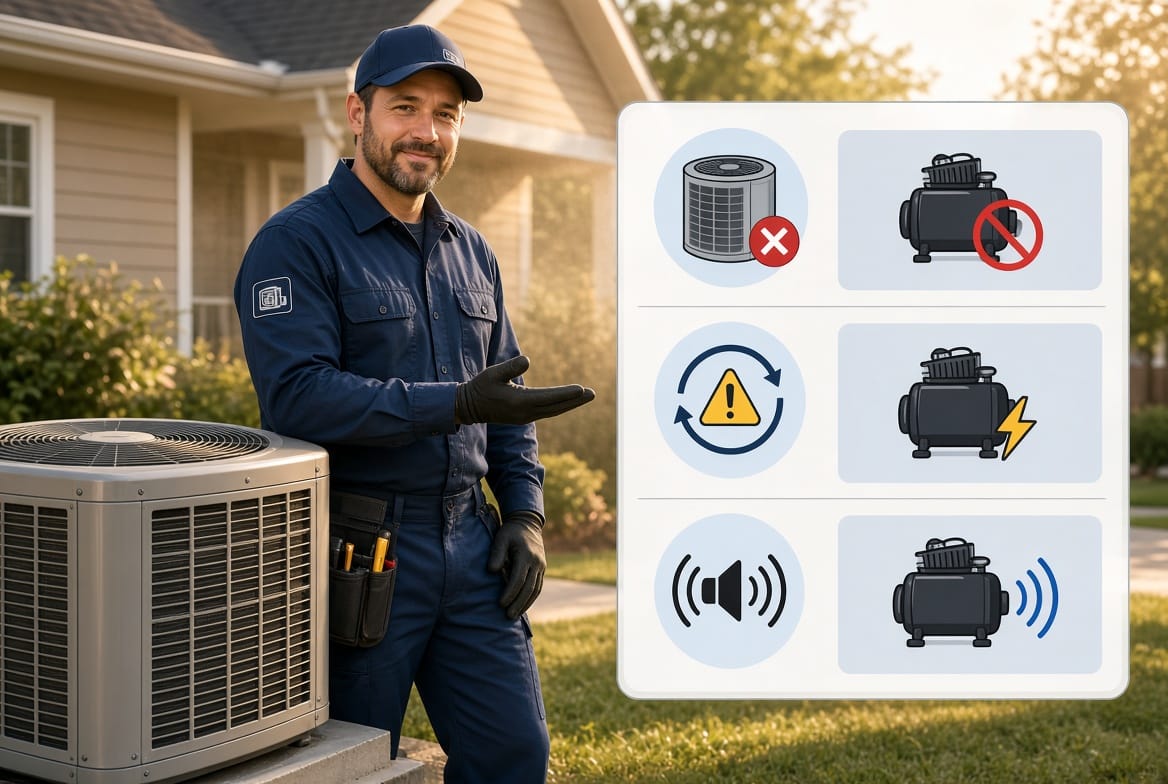
Compressor will not start
The most common indication is a compressor that simply refuses to run. The outdoor fan may spin, but the compressor remains silent. This happens when the protector has opened and will not reset, or when it has failed in the open position.
Repeated tripping
The compressor starts, runs for a short period, then shuts off. After a cooling period it may attempt to start again, only to trip once more. This pattern often occurs during the hottest part of the day.
Humming sounds without starting
A low humming noise from the compressor accompanied by no rotation usually means the motor is trying to start but the overload has already opened or is about to open. Continued humming can quickly damage the start windings.
Additional clues include:
- The outdoor unit cycling on and off every few minutes.
- Higher-than-normal electricity bills coinciding with hot weather.
- Warm air from indoor vents even though the system is running.
These symptoms should never be ignored. They indicate that either the protector is doing its job because of an underlying problem (dirty coils, low refrigerant, failing capacitor) or that the protector itself has reached the end of its service life.
Why the Protector Is Especially Critical During Heat Waves
Extreme heat does more than raise ambient temperature. It reduces the efficiency of heat rejection at the condenser coil. Even a moderately dirty coil that performed adequately in spring can become a serious restriction when outdoor temperatures climb into the triple digits.
Restricted airflow over the condenser causes:
- Rapid rise in discharge pressure
- Increased compressor amperage
- Higher winding temperatures
The overload protector responds by opening the circuit before these conditions destroy the motor. In many documented service calls, the protector has saved compressors that would otherwise have failed within hours.
During multi-day heat events, systems run almost continuously. The compressor receives little opportunity to cool between cycles. The protector’s ability to interrupt operation and allow a cool-down period becomes the difference between a temporary shutdown and a complete burnout.
Homeowners who schedule pre-season maintenance give the protector the best chance of performing correctly. Clean coils, proper refrigerant charge, and a verified capacitor all reduce the frequency of trips and extend compressor life.
Common Causes of Overload Protector Activation
Understanding why the protector trips helps distinguish between a healthy safety response and a failing component.
- Dirty condenser coils – The most frequent cause during summer. Dust, grass clippings, and cottonwood seeds insulate the coil and trap heat.
- Restricted indoor airflow – Clogged filters or closed vents raise evaporator pressure and force the compressor to work harder.
- Low refrigerant charge – Insufficient refrigerant reduces cooling of the compressor motor, causing overheating.
- Failing run capacitor – A weak capacitor increases current draw and starting stress.
- High outdoor temperatures combined with poor installation – Undersized systems or units installed in confined spaces have little margin.
Each of these conditions can be diagnosed and corrected by a qualified technician. The overload protector itself is rarely the root cause; it is usually the messenger.
Professional Diagnosis and Replacement
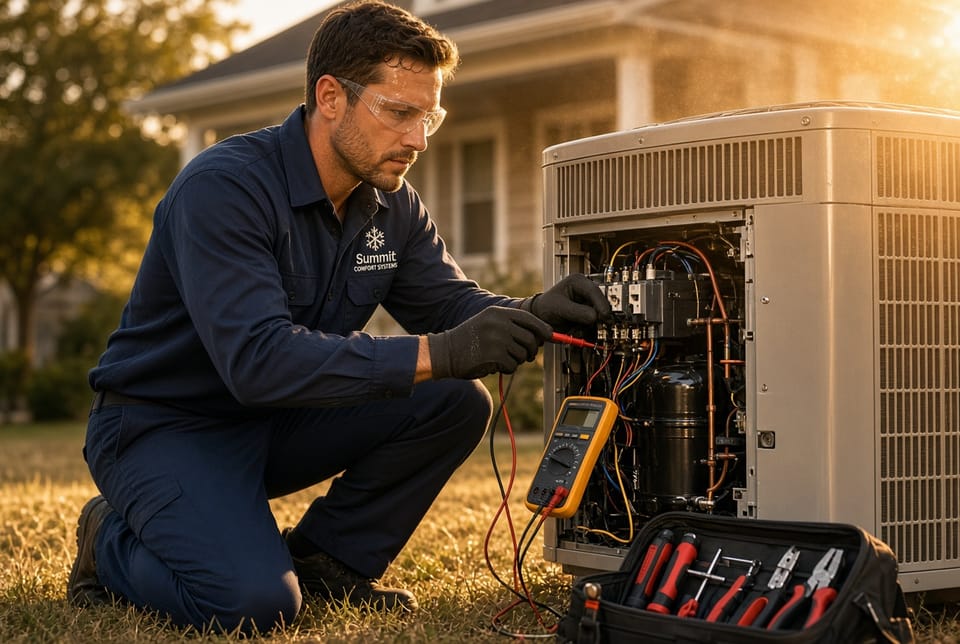
Testing an overload protector requires specialized knowledge and tools. A technician uses a multimeter to check continuity across the protector terminals when the compressor is cool. An open circuit when the unit is at ambient temperature indicates a failed protector.
Replacement is not a simple swap. The new protector must match the compressor’s exact specifications for current and temperature ratings. Using an incorrect part can leave the compressor unprotected or cause nuisance trips.
In many cases the technician will also inspect related components—capacitor, contactor, and wiring—because a failing protector often coexists with other electrical issues.
Attempting to bypass the protector with a jumper wire is extremely dangerous. It removes the only built-in safeguard against motor burnout and can create a fire hazard.
Preventive Steps Homeowners Can Take
While the overload protector is a professional-service item, homeowners can reduce the likelihood of activation:
- Change or clean indoor air filters every 30–60 days during cooling season.
- Keep outdoor condenser coils free of debris; rinse gently with a garden hose from the inside out if accessible.
- Ensure at least two feet of clearance around the outdoor unit.
- Schedule annual professional maintenance before the first heat wave.
- Monitor system performance on the hottest days and note any unusual cycling.
These simple actions lower operating temperatures and amperage, giving the protector fewer reasons to trip.
The Cost of Ignoring Warning Signs
A compressor that burns out because the overload protector was ignored or bypassed typically costs several thousand dollars to replace, plus labor and refrigerant. In older systems the entire outdoor unit may need replacement. During a heat wave, parts availability and technician wait times increase, leaving the home without cooling for days.
By contrast, diagnosing and replacing a failed overload protector is a relatively modest repair. More importantly, addressing the underlying cause—dirty coils, low charge, or electrical issues—restores efficient operation and prevents recurrence.
The overload protector is inexpensive insurance. Treating it as such is one of the smartest decisions a homeowner can make when facing extreme summer temperatures.
Conclusion: Stay Cool and Protected
The HVAC compressor overload protector is a small component with an outsized responsibility. It quietly monitors temperature and current, shutting the compressor down the moment conditions become unsafe. During heat waves this function becomes indispensable.
Recognizing the signs—compressor that will not start, repeated tripping, or unusual humming—allows timely intervention before burnout occurs. Professional testing and proper replacement keep the safety net intact.
Protect your compressor from burnout.
Stay Cool This Heat Wave – Call for HVAC Help