The HVAC Condensate Pump: Removing Water When Gravity Isn't Enough
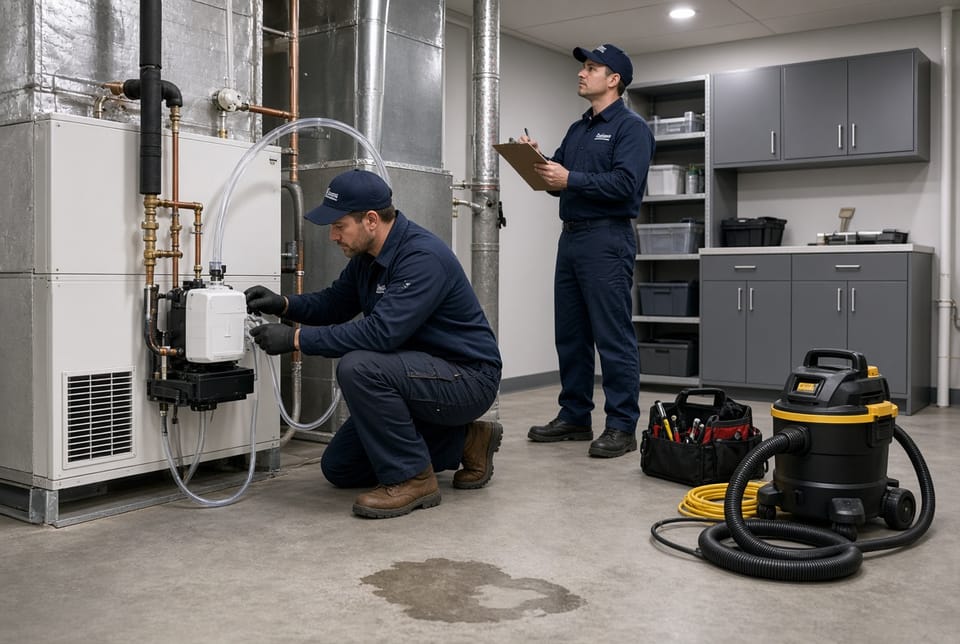
Every modern air-conditioning and high-efficiency heating system produces condensation. When that water can flow downhill into a nearby drain, gravity does the work. When the air handler sits in a basement, crawl space, or closet far from a suitable drain, gravity is no longer enough. That is precisely when a HVAC condensate pump becomes the critical component that protects your home from water damage.
Gravity Isn’t Enough? Get Your HVAC Pump Checked Today
A condensate pump is a small, electrically powered device that collects the water dripping from the evaporator coil and then lifts it several feet to a distant drain, sink, or outdoor discharge point. Without it, the condensate pan overflows, ceilings stain, floors warp, and mold begins to grow. Understanding how the pump works, recognizing early signs of failure, and knowing when replacement is required keeps your HVAC system reliable and your property dry.
What a Condensate Pump Actually Does
An air conditioner or high-efficiency furnace cools warm, humid air across a cold evaporator coil. Moisture in the air condenses on the coil surface and drips into a collection pan. In a gravity-drain installation the pan simply slants toward a nearby floor drain. In many homes that slope is impossible.
The condensate pump solves the problem by:
- Collecting water in a small internal reservoir
- Sensing the rising water level with a float switch
- Activating a compact impeller pump
- Pushing the water through ⅜-inch vinyl tubing up to 20 feet vertically or farther horizontally
- Shutting off automatically once the reservoir is empty
The entire cycle repeats every few minutes on a humid day. The pump therefore acts as a miniature, automatic lift station dedicated solely to HVAC condensate.
Because the pump is usually tucked beside the air handler, many homeowners never notice it until it fails. That hidden location is exactly why proactive awareness matters.
How the Pump Collects and Discharges Water
The process is simple yet precise. Condensate first flows by gravity from the evaporator drain pan into the pump’s reservoir. A float rises with the water. When the float reaches a preset height, it closes an electrical circuit that starts the pump motor. The spinning impeller creates pressure that forces water out through the discharge tubing. A check valve at the pump outlet prevents water from flowing backward when the pump stops.
Most residential pumps move 1 to 2 gallons per minute and can lift water 15–22 feet. Commercial units handle larger volumes. The discharge line must be pitched slightly downward after it reaches its highest point so residual water does not freeze or stagnate.
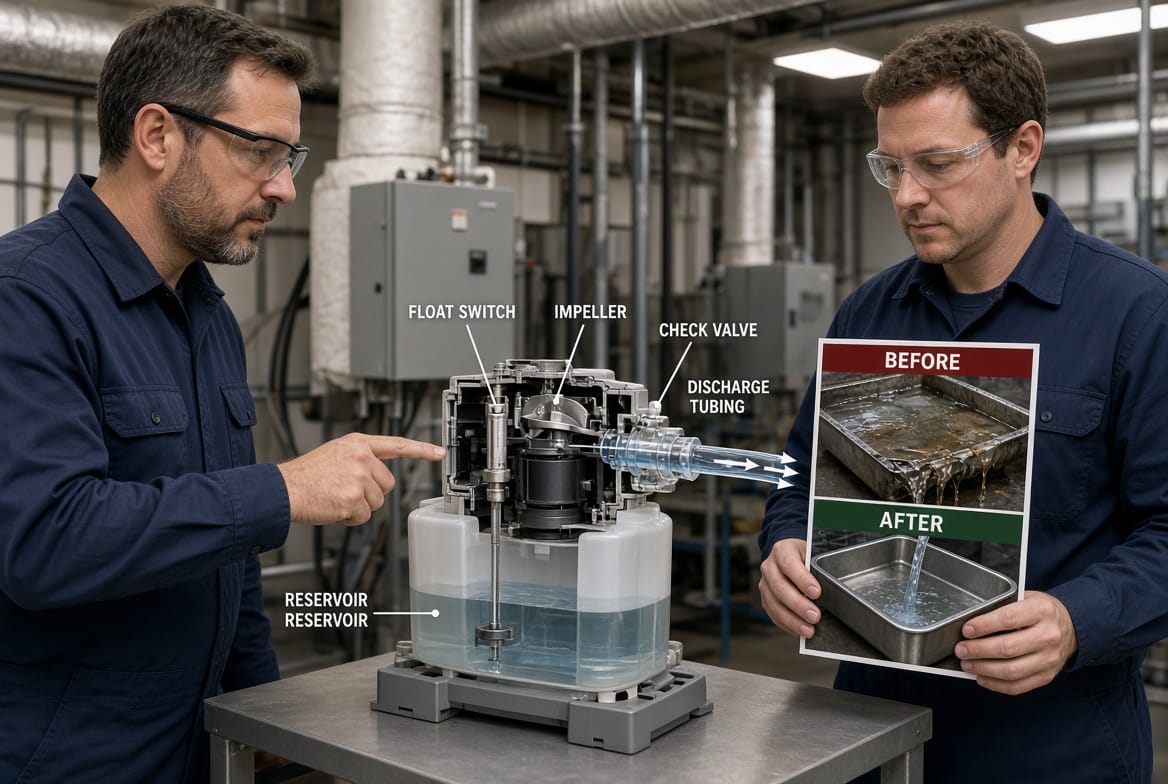
Proper installation also includes a secondary safety switch. If the primary pump fails and the reservoir continues to fill, the safety switch shuts the entire HVAC system off before water overflows. That fail-safe is one reason professional installation is strongly recommended.
Common Signs Your Condensate Pump Is Failing
A healthy pump is nearly silent and invisible. A failing pump announces itself in several unmistakable ways. Recognizing these signs early prevents expensive water damage.
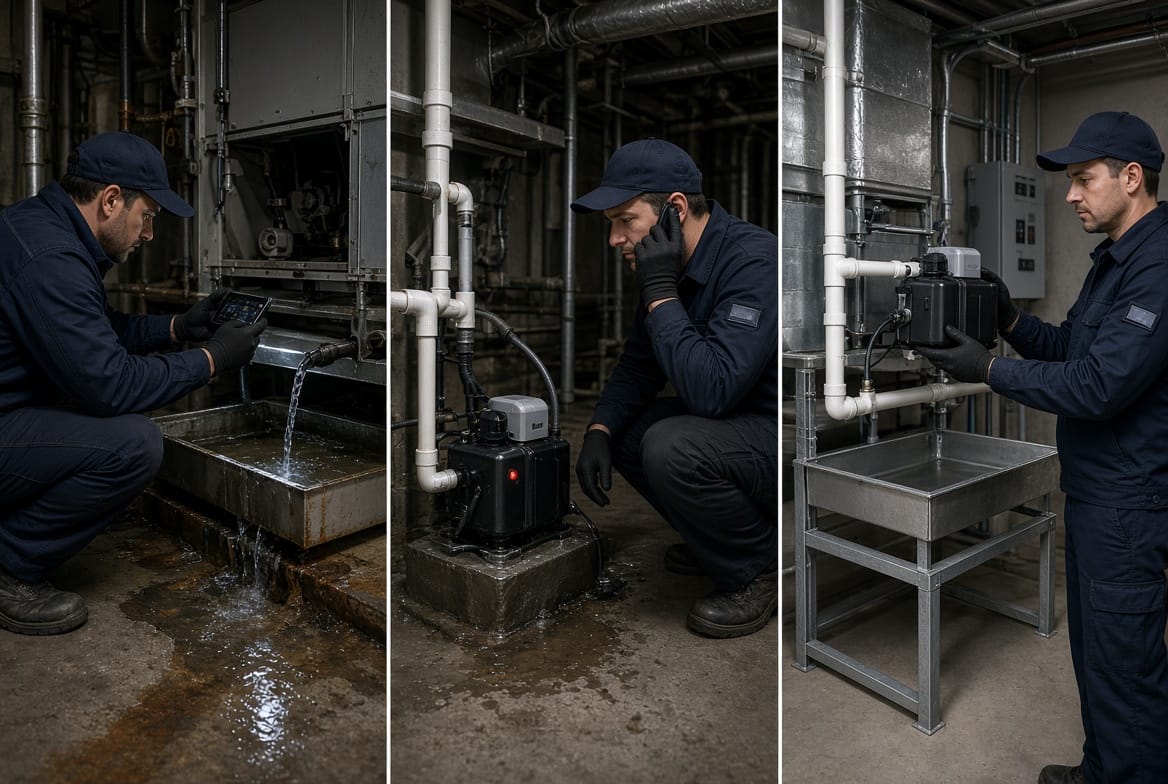
- Water leaks around the air handler or furnace — The most obvious warning. Water appears on the floor, ceiling below, or inside the cabinet itself.
- Overflowing condensate pan — The reservoir fills faster than the pump can empty it, or the pump never starts.
- Unusual noises — A healthy pump hums briefly then stops. Grinding, clicking, buzzing, or continuous running indicates a stuck float, worn impeller, or failing motor.
- HVAC system shutting off unexpectedly — The secondary safety switch has tripped because the pump did not keep up.
- Musty odor or visible mold — Chronic overflow creates the perfect environment for biological growth.
- High indoor humidity — When condensate is not removed, the air conditioner cannot dehumidify effectively.
Any one of these symptoms warrants immediate attention. Ignoring them turns a $150–$300 pump replacement into a multi-thousand-dollar restoration project.
When and How to Replace a Condensate Pump
Most residential condensate pumps last 5–8 years. Continuous operation in a humid climate, mineral buildup from hard water, or a power surge can shorten that life. Replacement is straightforward for a trained technician and usually completed in under an hour.
The typical replacement sequence is:
- Turn off power to the HVAC system at the breaker.
- Disconnect the existing discharge tubing and drain the reservoir.
- Unplug the pump and remove the mounting screws or Velcro straps.
- Install the new pump at the same height and orientation.
- Reconnect tubing, ensuring a slight downward pitch after the high point.
- Plug the new pump into a dedicated, grounded outlet (never an extension cord).
- Restore power and test by pouring a cup of water into the reservoir. The pump should start, discharge, and stop automatically.
- Verify the safety float switch also functions.
Homeowners sometimes attempt the swap themselves. While the mechanical steps are simple, incorrect tubing slope, missing check valve, or improper electrical connection can cause immediate overflow or a fire hazard. A licensed HVAC technician also confirms that the new pump’s lift capacity matches the original installation and that the secondary safety circuit is correctly wired.
After replacement, a short maintenance conversation is valuable. The technician can show you how to pour a cup of distilled vinegar into the reservoir twice a year to dissolve mineral scale, how to check the discharge line for kinks, and how to test the safety switch. These five-minute habits extend pump life and keep the system reliable.
Preventing Future Problems
A few simple habits keep the condensate pump working for years:
- Keep the area around the air handler clear so the pump remains accessible.
- Replace the inexpensive inline filter if your pump has one.
- Schedule annual HVAC maintenance; the technician will inspect the pump as part of the visit.
- Install a condensate overflow pan with its own safety switch if the unit is located above finished living space.
- Consider a pump with an alarm or Wi-Fi notification if the unit is in a rarely visited basement.
These steps cost little and eliminate most emergency calls.
A working condensate pump is inexpensive insurance against water damage. When gravity cannot carry the water away, the pump does the job silently and automatically—until it doesn’t. At the first sign of leaking, overflowing, or unusual noise, professional service restores protection quickly and affordably.
Prevent water damage with a working condensate pump.
Replace a Failing Condensate Pump Before It Overflows