The Receding Gums: Causes, Symptoms, and Treatment

Receding gums represent one of the most frequently encountered yet often overlooked challenges in modern oral health. When the soft tissue that surrounds and protects the teeth begins to pull away from the enamel, a cascade of concerns can follow. The good news is that early recognition and professional intervention can restore comfort, protect long-term tooth stability, and preserve a confident smile. This comprehensive guide explores the primary drivers of gum recession, the clear warning signs patients should watch for, and the full spectrum of effective treatment pathways—from gentle non-surgical approaches to advanced grafting procedures—available today.
Stop Gum Recession Today – Schedule Your Appointment
Understanding gum recession empowers individuals to take proactive steps rather than waiting for irreversible damage. Far from being an inevitable part of aging, this condition responds well to timely care delivered by experienced dental teams. The following sections deliver authoritative, practical insight so readers can move from awareness to decisive action with complete confidence.
Understanding Gum Recession as a Common Oral Health Concern
The gums serve as a protective seal around each tooth, anchoring it firmly while shielding the sensitive root surface from bacteria, temperature extremes, and mechanical wear. When this seal gradually migrates upward or downward, the result is receding gums. Exposed root surfaces lack the hard enamel covering found on the crown, making them more vulnerable to decay, sensitivity, and further tissue loss.
Although the process can develop slowly over years, many adults notice changes only after mild discomfort or visible changes appear. Modern dentistry views receding gums not as a cosmetic inconvenience alone but as a progressive condition that, left unaddressed, may compromise tooth support and overall oral function. Fortunately, contemporary diagnostic tools and refined treatment protocols allow clinicians to halt progression and, in many cases, regenerate lost tissue.
Patients who seek evaluation early frequently discover that simple adjustments combined with professional therapy produce excellent outcomes. The reassuring reality is that nearly every case of moderate recession benefits from individualized care plans designed to restore both health and appearance.
Primary Causes of Receding Gums
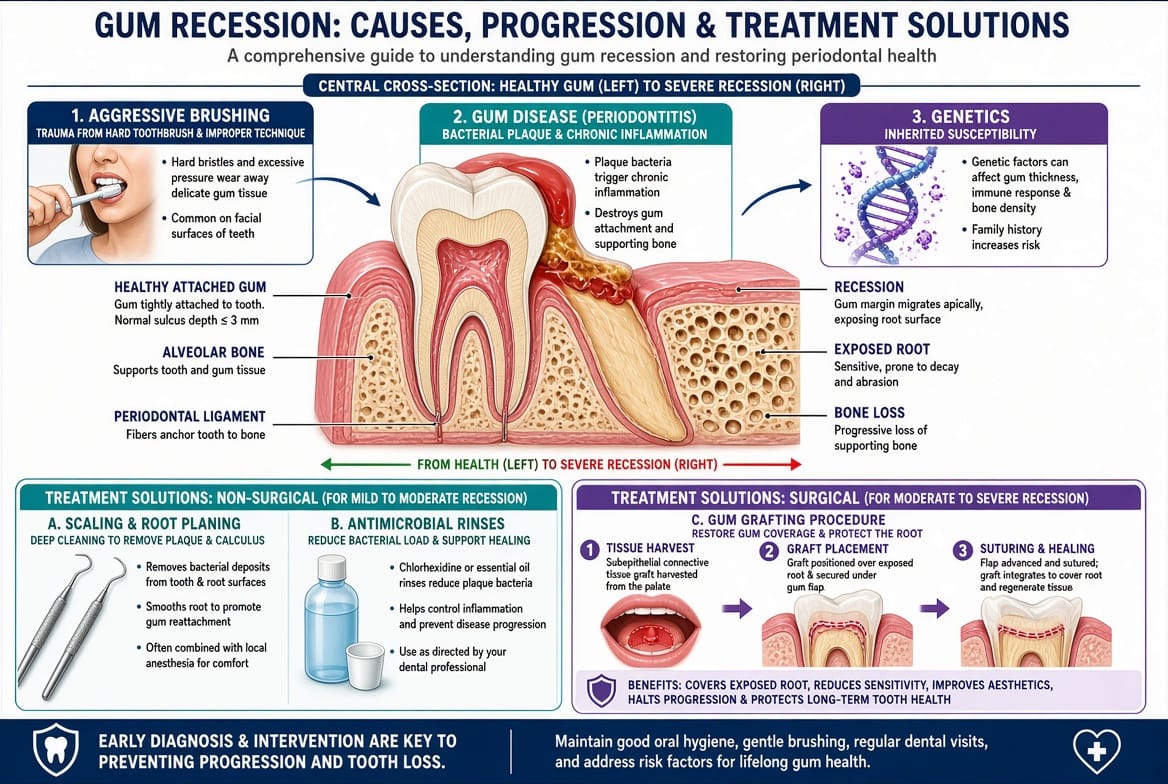
Several well-documented factors contribute to the development of gum recession. Identifying the dominant cause in each patient guides both treatment selection and long-term prevention strategies. The three most prevalent contributors—aggressive brushing, gum disease, and genetics—account for the majority of clinical presentations.
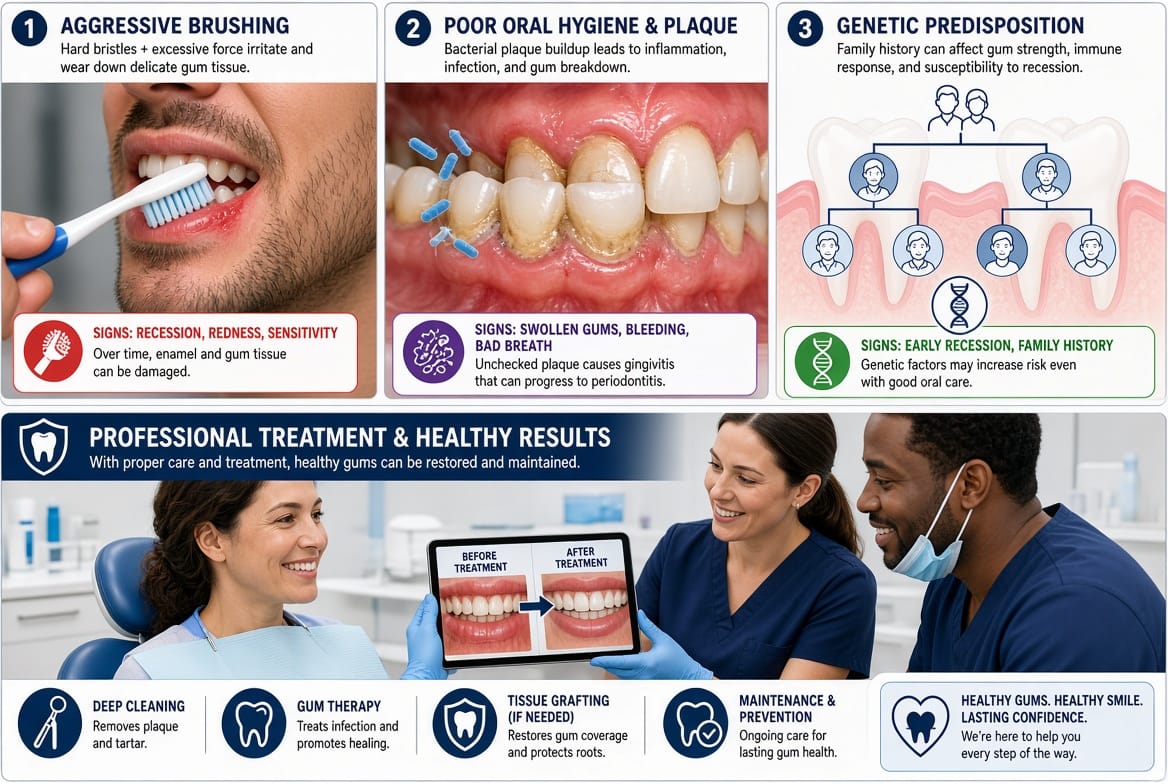
- Aggressive brushing remains a leading mechanical cause. Many well-intentioned individuals apply excessive force or use hard-bristled toothbrushes, gradually wearing away the delicate gum margin. Horizontal scrubbing motions, especially along the gum line, accelerate tissue abrasion and can expose root surfaces within a relatively short period. Switching to a soft-bristled brush and employing gentle circular techniques often slows or stops further recession when instituted early.
- Gum disease, particularly chronic periodontitis, triggers inflammatory destruction of the supporting tissues. Bacterial plaque that accumulates below the gum line provokes an immune response that breaks down collagen fibers and bone. As the attachment apparatus weakens, the gums separate from the tooth, creating pockets that deepen over time and leave roots increasingly exposed. Untreated periodontal infection ranks among the most aggressive drivers of progressive recession.
- Genetics influences tissue thickness, collagen density, and the inherent resistance of the periodontium. Some individuals inherit thin gingival biotypes that recede more readily under ordinary daily stresses. Family history of early gum recession frequently signals a genetic predisposition that requires heightened vigilance and customized maintenance protocols.
Additional contributing elements may include hormonal fluctuations, tobacco use, misaligned teeth that create uneven pressure, and certain orthodontic movements. A thorough clinical examination distinguishes primary from secondary factors, ensuring that treatment addresses root causes rather than symptoms alone.
Recognizing the Symptoms of Receding Gums
Early detection dramatically improves treatment success. Patients should remain alert to the following hallmark indicators:
- Tooth sensitivity often appears first. Sudden sharp responses to cold air, hot beverages, sweet foods, or even toothbrush contact signal that dentinal tubules on the newly exposed root surface have become accessible. This discomfort can range from mild and intermittent to persistent and disruptive.
- Visible tooth root constitutes a clear visual cue. As the gum margin retreats, the darker, yellower root surface becomes noticeable, especially along the front teeth. Many individuals first observe this change when smiling or examining their teeth in bright light.
- Additional signs include elongated-looking teeth, a notch or groove developing at the gum line, mild bleeding during brushing, or a sensation that floss catches more easily in certain areas. In advanced cases, teeth may feel slightly mobile or spaces may appear between previously tight contacts.
Because symptoms can progress quietly, routine professional evaluations remain essential. Dental teams employ calibrated probes, digital imaging, and detailed soft-tissue charting to quantify recession depth and monitor change over time. Catching recession at the first millimeter of exposure frequently allows non-invasive solutions to restore comfort and protection.
Comprehensive Treatment Approaches for Receding Gums
Contemporary periodontal therapy offers a graduated spectrum of options tailored to the severity of tissue loss, the underlying cause, and each patient’s aesthetic and functional goals. Treatment decisions rest on thorough diagnosis and open discussion of expected outcomes.
Non-Surgical Interventions
When recession remains mild and active inflammation is controlled, non-surgical measures frequently stabilize the condition and reduce sensitivity:
- Professional scaling and root planing removes bacterial deposits from root surfaces, allowing the gums to reattach more firmly.
- Desensitizing agents applied in-office or prescribed for home use occlude exposed dentinal tubules, providing rapid relief from temperature-triggered pain.
- Customized oral-hygiene instruction replaces harmful brushing habits with evidence-based techniques that protect remaining tissue.
- Adjunctive antimicrobial rinses or localized antibiotic placements help suppress residual bacteria and support healing.
- Occlusal adjustments or night-guard therapy reduce excessive forces that can exacerbate recession in susceptible individuals.
These conservative approaches require minimal recovery time and often produce noticeable improvement within weeks. Regular maintenance visits reinforce results and prevent recurrence.
Surgical Gum Grafting Procedures
When recession has progressed beyond the reach of non-surgical care, or when aesthetics and root coverage are primary concerns, grafting techniques deliver predictable tissue regeneration:
- Connective-tissue grafts harvest a thin layer of tissue from the palate and place it over the exposed root, creating a new band of attached gingiva that resists future recession.
- Free gingival grafts increase the zone of keratinized tissue in areas of thin biotype, enhancing long-term stability.
- Pedicle grafts reposition adjacent healthy gum tissue laterally to cover exposed roots without requiring a second surgical site.
- Allograft or collagen-matrix materials provide donor-free alternatives for patients who prefer to avoid palate harvesting, achieving comparable root coverage with reduced postoperative discomfort.
Modern microsurgical instruments, growth-factor enhanced matrices, and precise suturing techniques minimize trauma and accelerate healing. Most patients resume normal activities within a few days and observe progressive improvement in both comfort and appearance over subsequent months. Long-term studies confirm that properly executed grafts maintain root coverage for many years when paired with excellent home care.
Regardless of the chosen modality, successful outcomes depend on addressing the original cause—whether modifying brushing technique, controlling periodontal infection, or managing genetic susceptibility through enhanced maintenance. Collaborative care between patient and clinician produces the most durable results.
Supporting Daily Habits That Protect Gum Health
Prevention remains the most effective long-term strategy. Simple, consistent practices dramatically lower the risk of further recession:
- Select a soft-bristled toothbrush and employ gentle circular motions at a 45-degree angle to the gum line.
- Incorporate interdental cleaning daily with floss, interdental brushes, or water flossers to disrupt plaque below the contact points.
- Schedule professional cleanings and periodontal evaluations at intervals recommended by the dental team—often every three to four months for higher-risk individuals.
- Avoid tobacco products and limit acidic beverages that can soften root surfaces.
- Wear a custom night guard if grinding or clenching is present.
These habits, combined with prompt professional attention at the first sign of change, keep gums resilient and teeth securely supported.
Moving Forward with Confidence and Expert Support
Receding gums need not progress unchecked. Whether the contributing factors involve aggressive brushing, underlying gum disease, or an inherited predisposition, modern dentistry provides clear pathways to comfort, stability, and aesthetic restoration. Non-surgical therapies often suffice for early cases, while refined grafting procedures deliver reliable coverage and reinforcement when greater intervention is required.
The most important step is timely evaluation. Waiting until sensitivity intensifies or roots become extensively exposed only narrows treatment options and increases complexity. A comprehensive examination identifies the precise degree of recession, quantifies risk factors, and outlines a personalized plan that aligns with each patient’s lifestyle and goals.
Treat receding gums before they worsen. Expert care is ready to guide every stage of recovery with precision, compassion, and proven results.
Treat Receding Gums Before They Worsen – Call Now!