The Psychrometric Chart in Action: How Restorers Use Science to Calculate Precisely How to Dry Your Home
Water damage can strike unexpectedly, turning your safe haven into a soggy nightmare. But here's the good news: professional restorers don't rely on trial and error. Instead, they harness the power of psychrometrics—the science of air properties—to restore your home efficiently and safely. In this article, we'll dive into how restorers use the psychrometric chart to make data-driven decisions, ensuring your property dries quickly without risking secondary damage like mold growth or structural warping. Whether you're dealing with a burst pipe or flood aftermath, understanding this process can give you peace of mind. Let's explore the science behind effective drying.
Call Now for 24/7 Emergency Water Extraction!
Understanding Psychrometrics: The Foundation of Smart Drying
At its core, psychrometrics studies the relationships between air temperature, humidity, and dew point. These elements dictate how much moisture air can hold and when it will release or absorb water from surrounding materials.
- Temperature: Warmer air holds more moisture, which is why heaters are sometimes used in drying.
- Humidity: Measured as relative humidity (RH), it shows how saturated the air is with water vapor.
- Dew Point: The temperature at which air becomes fully saturated, leading to condensation.
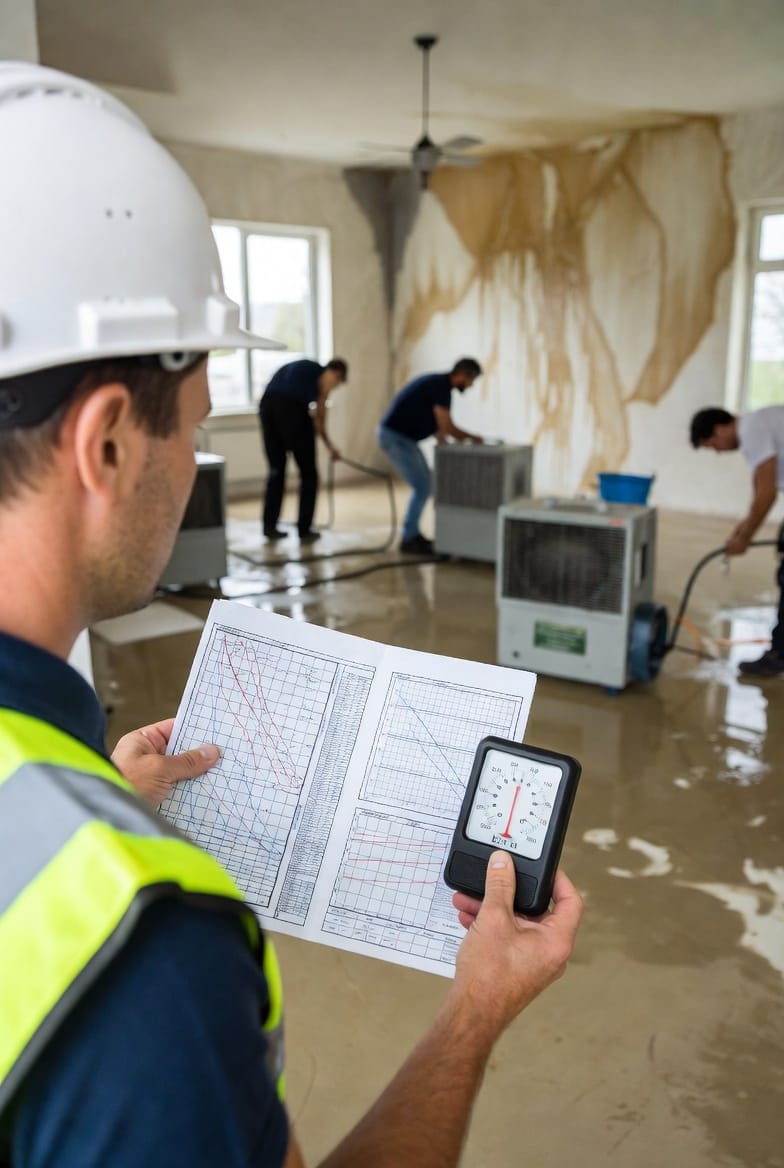
Restorers measure these with tools like thermo-hygrometers to assess the environment. By plotting these readings on a psychrometric chart, they visualize the air's state and plan the path to dryness. This scientific approach prevents over-drying, which can crack wood floors, or under-drying, which invites mold. It's reassuring to know that experts use proven methods to protect your home.
The Psychrometric Chart: Your Drying Roadmap
Imagine a detailed graph that looks like a treasure map for moisture control—that's the psychrometric chart. Developed over a century ago, it's a tool that plots dry-bulb temperature (regular air temp) against wet-bulb temperature (accounting for evaporation) to reveal key metrics like specific humidity and enthalpy.
Restorers start by taking initial readings in the affected area. They mark the current conditions on the chart, identifying if the air is too humid or cool. The goal? Move the air into the optimal drying zone—typically 30-50% RH and 70-90°F—where evaporation happens efficiently.
This chart isn't just theoretical; it's actionable. For instance, if the dew point is high, indicating moist air, restorers calculate how much dehumidification is needed. They avoid guesswork, ensuring every step is precise and effective.
Selecting the Right Equipment: Dehumidifiers and Air Movers
Once the chart reveals the air's profile, restorers choose equipment tailored to your home's needs. Here's how science guides these decisions:
- Dehumidifier Types: For high-humidity scenarios, refrigerant dehumidifiers cool air to condense moisture, ideal for warmer spaces. In cooler conditions, desiccant dehumidifiers use silica gel to absorb water vapor. The chart helps determine which type removes moisture fastest without wasting energy.
- Air Mover Settings: These fans create airflow to speed evaporation. By analyzing the chart, restorers set speeds and positions to target wet spots, like carpets or walls, preventing stagnant air pockets that could lead to secondary damage.
- Heaters and AC Units: If the chart shows low temperatures hindering drying, controlled heaters raise the air's capacity to hold moisture. Conversely, air conditioning might be used to lower dew points in humid climates.
This calculated approach means faster drying times—often reducing a job from weeks to days—while minimizing risks. It's authoritative expertise at work, backed by science.!

Preventing Secondary Damage: The Science of Balance
One of the biggest risks in water damage restoration is secondary damage. This includes mold proliferation, wood swelling, or drywall crumbling if drying isn't managed properly. The psychrometric chart acts as a safeguard by allowing restorers to monitor progress in real-time.
Restorers take daily readings and replot them on the chart to track improvements. If humidity spikes unexpectedly—perhaps from hidden leaks—they adjust equipment immediately. This proactive method ensures materials like hardwood floors or gypsum board dry evenly, avoiding cracks or buckling.
Consider a typical flood scenario: Initial RH might be 80% with a 60°F temperature, plotting outside the drying zone. By introducing dehumidifiers, restorers lower RH to 40% while gently warming the air, moving conditions into the sweet spot. The chart quantifies this shift, providing evidence-based reassurance that your home is on the path to recovery.
Real-World Application: A Step-by-Step Drying Process
Let's walk through how restorers apply psychrometrics in a real project, emphasizing efficiency and safety:
- Assessment Phase: Upon arrival, technicians use moisture meters and thermo-hygrometers to gauge water saturation in walls, floors, and air. These readings are plotted on the psychrometric chart to establish a baseline.
- Equipment Setup: Based on the chart, they deploy the exact number and type of dehumidifiers and air movers. For example, in a 1,000 sq ft basement with 70% RH, calculations might call for two large refrigerant units and six fans.
- Monitoring and Adjustment: Daily logs track changes. If the dew point drops too low, risking over-drying, heaters are dialed back. This iterative process uses the chart as a dynamic guide.
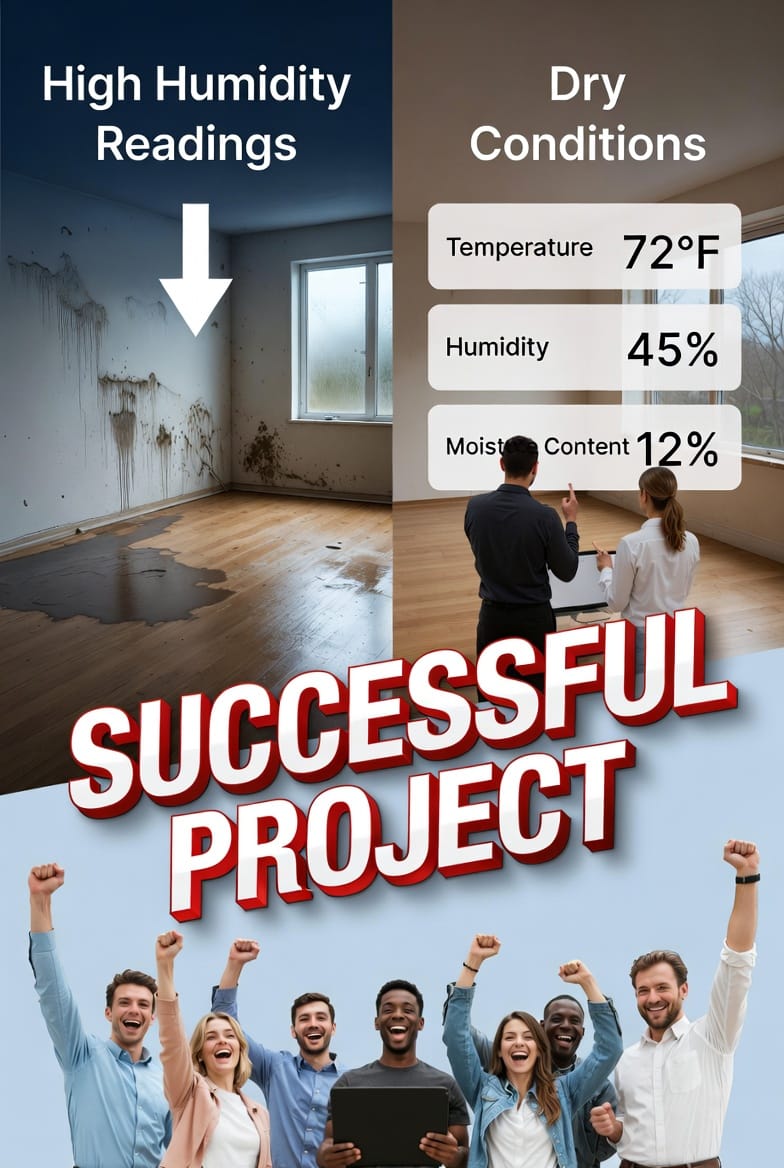
- Verification: Final readings confirm materials are below safe moisture levels (e.g., wood at 12-16% equilibrium moisture content), preventing future issues.
This methodical process not only dries your home but restores it to pre-loss condition, all while avoiding costly mistakes.
The Benefits of Science-Driven Restoration
Choosing restorers who use psychrometrics offers multiple advantages:
- Efficiency: Precise calculations reduce drying time by up to 50%, getting you back to normal faster.
- Cost Savings: Targeted equipment use lowers energy bills and prevents unnecessary demolitions.
- Health Protection: Controlled humidity curbs mold and bacteria, safeguarding your family's well-being.
- Insurance Compliance: Detailed charts and logs provide documentation for claims, streamlining approvals.
In an industry where shortcuts can lead to disasters, this scientific method stands out as reliable and professional
Common Myths Debunked: Drying Isn't Just About Fans
Many homeowners believe drying is simple—set up fans and wait. But without psychrometrics, this can exacerbate problems. For instance, fans alone in high-humidity air might spread moisture deeper into materials. The chart debunks this by showing how airflow must pair with dehumidification for true evaporation.
Another myth: All dehumidifiers are equal. Science reveals that selecting the wrong type—say, a desiccant in a warm room—wastes resources. Restorers' expertise ensures the right fit, every time.
When to Call the Pros: Recognizing Water Damage Signs
If you spot wet spots, musty odors, or bubbling paint, act fast. Delaying can turn minor leaks into major restorations. Professional teams equipped with psychrometric knowledge handle everything from extraction to final dry-out, using science to deliver results.
Remember, not all services are equal. Look for certifications like IICRC (Institute of Inspection, Cleaning and Restoration Certification), which emphasize psychrometric training.
Conclusion: Trust Science for a Dry, Safe Home
Water damage restoration is more than mopping up—it's a scientific endeavor. By leveraging the psychrometric chart, restorers calculate the perfect drying strategy, selecting equipment that works efficiently and prevents secondary issues. This approach offers reassurance: Your home is in capable hands, dried with precision, not guesswork.
If you're facing water damage, don't leave it to chance. We dry with science, not guesswork.
Stop Water Damage Today – Call Now!