The Psychodrama Therapy: Acting Out Emotions for Healing

In the journey toward mental wellness, some wounds run too deep for words alone. Psychodrama therapy offers a transformative path by inviting individuals to act out their emotions rather than simply discuss them. This experiential approach has helped countless people break free from patterns that talk therapy alone could not resolve.
Act Your Way to Healing – Call Now!
Psychodrama is an active, creative therapeutic modality developed by Jacob L. Moreno that uses role-playing and dramatic action to explore inner conflicts, process trauma, and rehearse healthier behaviors. Unlike traditional talk therapy, it engages the whole person—body, mind, and emotions—through structured yet spontaneous scenes.
What Exactly Is Psychodrama Therapy?
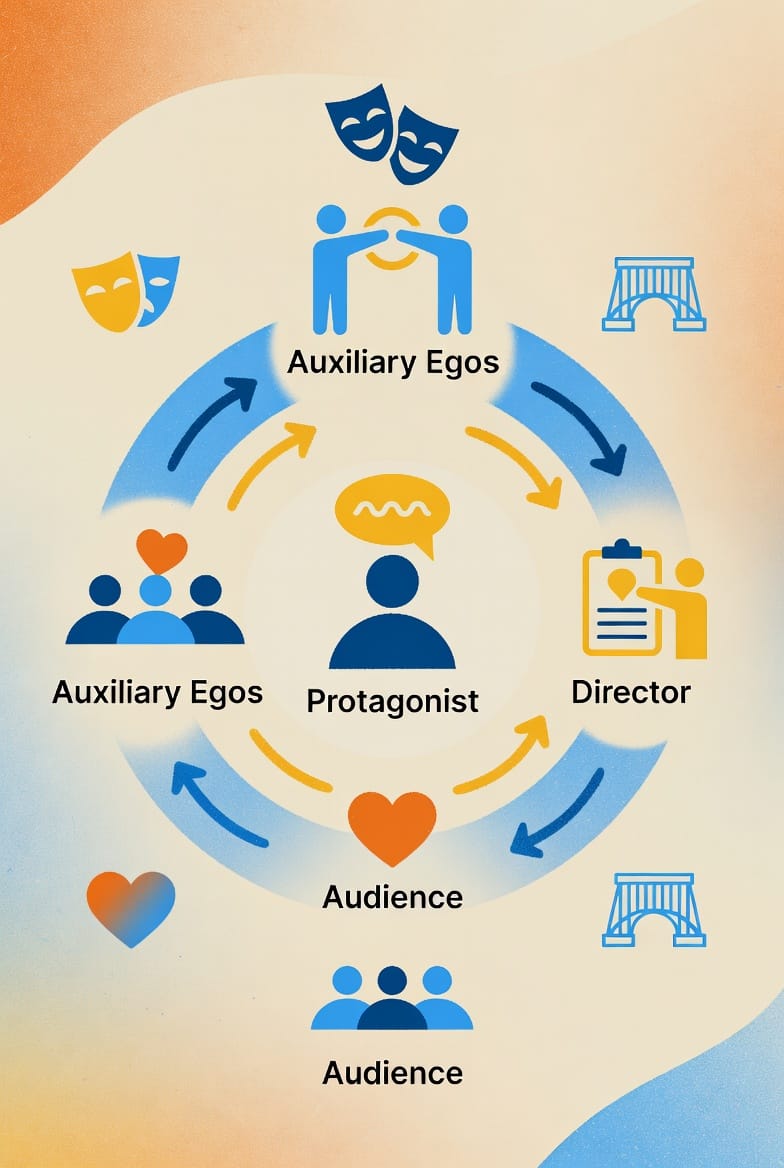
Psychodrama therapy combines elements of theater, psychology, and group dynamics. In a typical session, one person (the protagonist) steps into the center to explore a personal issue. Other group members serve as auxiliary egos, taking on roles of significant people in the protagonist’s life. A trained director (therapist) guides the process, while the group acts as a supportive audience.
Through this safe container, participants:
- Re-enact past events that continue to cause emotional pain
- Express suppressed feelings in a controlled, therapeutic environment
- Gain new perspectives by viewing situations from multiple angles
This method transforms abstract emotional struggles into concrete, visible experiences. By physically moving through scenarios, the brain processes trauma more completely than through verbal discussion alone.
Key benefit: The body keeps the score, and psychodrama helps release what words cannot reach.
How Psychodrama Helps Process Trauma and Build New Behaviors
Trauma often leaves individuals stuck in repetitive emotional loops. Psychodrama provides powerful tools to break these cycles:
- Emotional Catharsis: Safely expressing long-held anger, grief, or fear through action leads to genuine release and relief.
- Cognitive Reframing: Seeing a past event replayed with new responses creates fresh neural pathways.
- Behavioral Rehearsal: Participants practice difficult conversations or assertiveness before facing them in real life.
Many clients report that psychodrama therapy helps them move from feeling powerless to empowered. The experiential nature makes insights more lasting because they are felt rather than just understood intellectually.
Who Benefits Most from Psychodrama?
This modality is particularly effective for:
- Individuals who feel stuck despite years of traditional talk therapy
- Those processing childhood trauma, abuse, or neglect
- People struggling with relationship patterns and communication
- Adults working through grief, loss, or major life transitions
- Anyone who learns better through experience rather than discussion
Psychodrama shines when words fall short. It offers a bridge between insight and real-world change.
The Core Elements of a Psychodrama Session
Every psychodrama session follows a structured yet flexible format:
- Warm-Up – Building group trust and selecting the protagonist
- Action Phase – The core dramatic work where scenes are enacted
- Sharing & Processing – Group members share how the scene resonated with their own experiences
This flow creates safety while allowing deep therapeutic work.
Essential Psychodrama Techniques
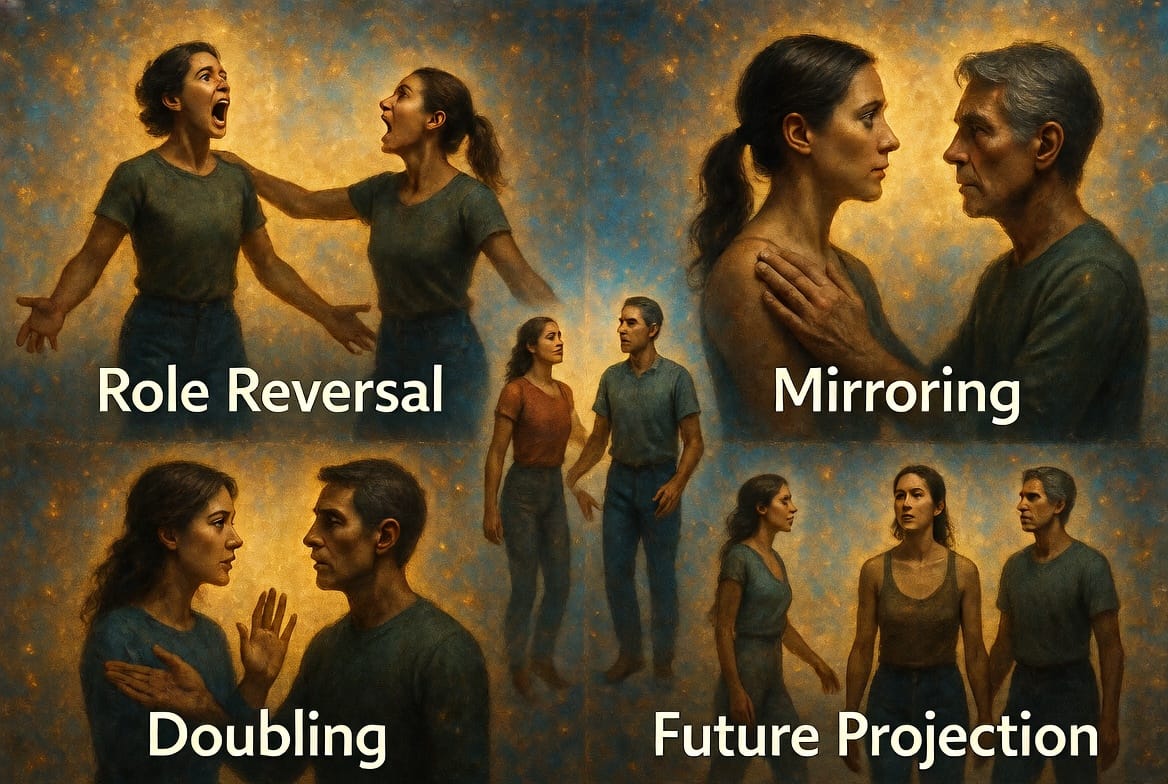
Several powerful techniques make psychodrama uniquely effective:
- Role Reversal: The protagonist switches places with another character to experience their perspective
- Mirroring: Another group member replicates the protagonist’s posture and behavior to provide external insight
- Doubling: A supporting member stands beside the protagonist and voices unspoken thoughts or feelings
- Future Projection: Participants act out desired future scenarios to build confidence and clarity
These methods create multiple layers of awareness and emotional processing that accelerate healing.
The Science Behind Acting Out Emotions
Modern neuroscience supports what Moreno discovered decades ago. When we physically enact emotional experiences, multiple brain regions activate simultaneously—those responsible for movement, emotion, memory, and decision-making. This full-body engagement creates stronger, more integrated healing compared to cognitive approaches alone.
Psychodrama therapy has shown promising results in treating:
- Post-traumatic stress disorder (PTSD)
- Anxiety and depression
- Addiction recovery
- Personality disorders
- Chronic relational difficulties
What to Expect in Our Psychodrama Program
At our center, safety and consent are paramount. All sessions are led by trained, certified psychodrama directors who create a non-judgmental space for growth. Group sizes are kept small to ensure everyone receives individual attention while benefiting from collective wisdom.
Participants often describe initial sessions as both challenging and liberating. The supportive environment quickly helps newcomers feel comfortable stepping into the work.
Common concerns addressed:
- “I’m not an actor” — No acting skills required. Authenticity matters more than performance.
- “It sounds intense” — The director carefully titrates the work to each person’s readiness.
- “What if I get too emotional?” — Trained facilitators are skilled at containing and processing strong feelings safely.
Long-Term Benefits of Psychodrama Therapy
Clients who engage consistently with psychodrama frequently report:
- Reduced emotional reactivity in triggering situations
- Improved ability to set boundaries and express needs
- Greater self-compassion and understanding of others
- Enhanced spontaneity and joy in daily life
- Stronger, more authentic relationships
The experiential learning creates embodied change that talk therapy often struggles to achieve.
Taking the First Step Toward Embodied Healing
Psychodrama therapy offers more than insight—it delivers transformation through action. By stepping onto the psychodrama stage, you give yourself permission to rewrite old stories and practice new, healthier endings.
The power of this work lies in its ability to bridge the gap between knowing and doing. When you act out new possibilities, they become real.
Act your way to healing.
Learn about our psychodrama program today. Discover how this powerful modality can support your unique healing journey.
Ready to move beyond talking and start transforming? Your breakthrough awaits.
Ready to Move Beyond Talk Therapy? Call Now