The Professional Drying Goal: Achieving Dry Standards for Insurance
When water damage strikes your property, the difference between a successful insurance claim and prolonged disputes often comes down to one critical factor: professional drying to established standards. At our restoration company, we don’t just remove visible water — we achieve documented, verifiable dryness that meets industry benchmarks and satisfies insurance requirements.
Call Now for Professional Drying to IICRC Standards
This comprehensive guide explores the professional drying goal, explains IICRC standards, and demonstrates why hitting precise moisture targets is essential for closing claims efficiently and preventing secondary damage.
Why Dry Standards Matter in Water Damage Restoration
Water damage restoration is both a science and a process. Simply running air movers and dehumidifiers for a few days is not enough. Insurance companies expect proof that the structure has returned to a pre-loss dry condition.
Failing to meet dry standards can lead to:
- Denied or reduced insurance payouts
- Hidden mold growth risks
- Structural integrity issues over time
- Extended claim processing delays
Our team follows rigorous protocols to ensure every project meets or exceeds these standards, giving you peace of mind and faster claim resolution.
Understanding IICRC S500 Standards
The Institute of Inspection, Cleaning and Restoration Certification (IICRC) sets the global benchmark for water damage restoration through its S500 Standard. This document provides the scientific foundation for determining when a structure is truly dry.
Key IICRC principles include:
- Drying to normal moisture content specific to each material
- Using scientific measurement tools rather than visual inspection alone
- Maintaining detailed documentation throughout the process
Professional restorers who hold IICRC certifications are trained to interpret these standards and apply them correctly in real-world scenarios. This expertise ensures that drying goals are not arbitrary but based on proven engineering data.
Specific Moisture Content Targets
Achieving the professional drying goal requires hitting precise targets for different materials:
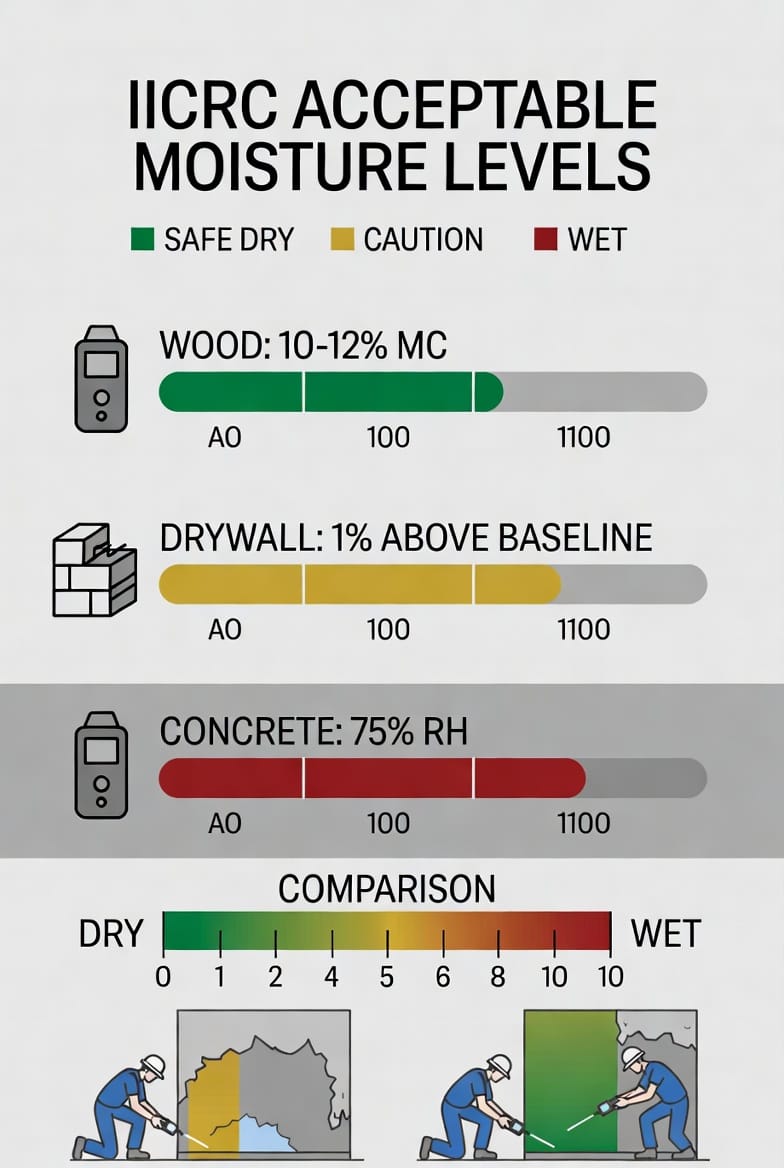
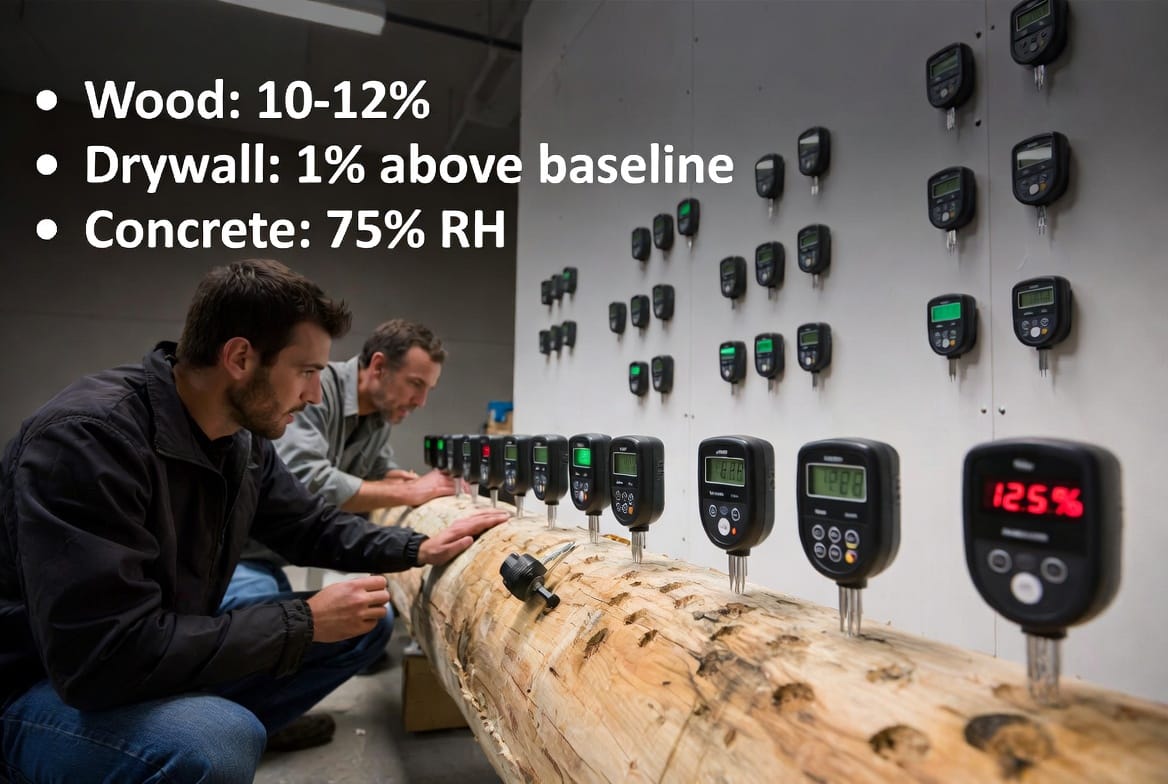
- Wood Materials: Target moisture content of 10-12%. This range matches typical equilibrium moisture content in most indoor environments and prevents warping, cupping, or decay.
- Drywall: Must reach 1% or less moisture content above baseline readings from unaffected areas. Excess moisture in gypsum board creates an environment where mold can thrive within 48-72 hours.
- Concrete and Masonry: Relative humidity (RH) levels should be below 75% using in-situ testing methods.
These numbers are not suggestions — they are measurable, verifiable targets that demonstrate the structure has returned to a stable, dry state.
The Critical Role of Moisture Meters and Drying Logs
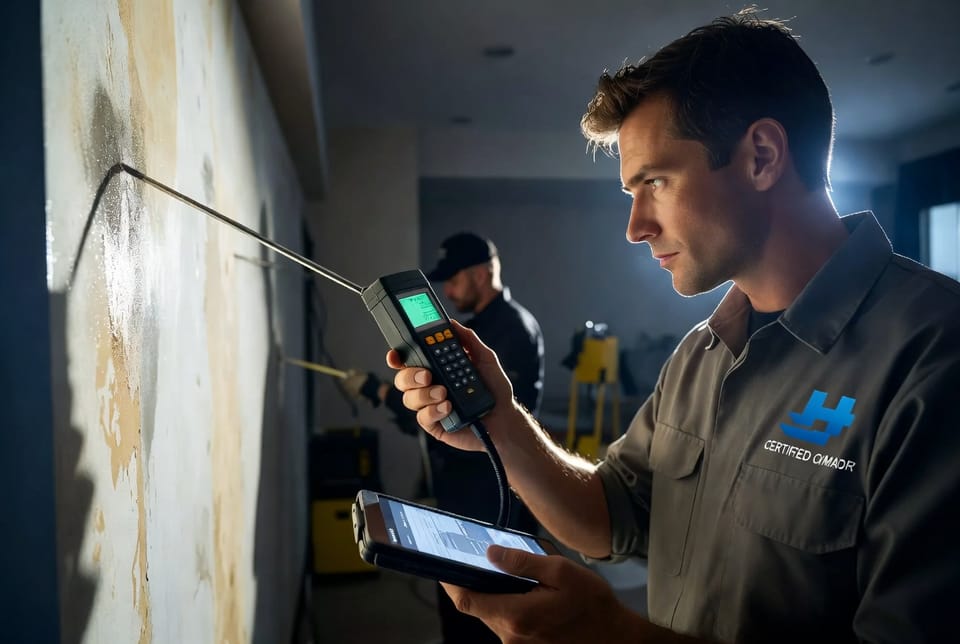
Why do meters and logs prove dryness? Because insurance adjusters require objective evidence, not opinions.
Professional tools include:
- Pin-type moisture meters for accurate invasive readings in wood and drywall
- Pinless meters for non-destructive surface scanning
- Thermo-hygrometers for measuring temperature and relative humidity
- Psychrometric charts for tracking drying progress
Every reading is recorded in detailed drying logs that track daily progress, equipment usage, and environmental conditions. This documentation creates an auditable trail showing that drying was performed systematically until standards were achieved.
When claims are reviewed, these logs become powerful evidence that the restoration was completed professionally and thoroughly.
How Meeting Standards Closes Insurance Claims
Insurance companies rely on IICRC standards because they provide clear, industry-accepted criteria for evaluating restoration work. When your restoration partner delivers documented proof of meeting these dry standards, claims typically move forward without unnecessary delays or reductions.
Benefits of standard-compliant drying include:
- Faster claim approvals
- Reduced likelihood of supplemental claims for hidden damage
- Protection against future liability for the property owner
- Higher customer satisfaction and fewer callbacks
Our approach ensures that every project is completed with the documentation needed to support full claim reimbursement.
Certification Criteria for Professional Restorers
Not all restoration companies are equal. Look for these certification criteria when choosing a partner:
- IICRC Certified Firm status
- Technicians with specific Water Damage Restoration (WRT) and Applied Structural Drying (ASD) certifications
- Ongoing training and adherence to current S500 standards
- Experience working directly with insurance carriers
These credentials demonstrate a commitment to professional standards rather than shortcuts. Certified teams understand not just how to dry a structure, but how to prove it was done correctly.
The Step-by-Step Professional Drying Process
- Initial Assessment — Comprehensive moisture mapping and documentation of affected areas
- Water Extraction — Removal of standing water using specialized equipment
- Structural Drying — Strategic placement of air movers, dehumidifiers, and heaters
- Daily Monitoring — Regular moisture readings and log updates
- Verification — Final testing to confirm all materials meet dry standards
- Documentation Package — Complete records provided for insurance submission
This methodical approach ensures consistent, repeatable results across residential and commercial properties.
Common Risks of Improper Drying
Failing to achieve professional drying standards can result in serious consequences:
- Mold growth within days of incomplete drying
- Material degradation leading to costly replacements
- Insurance claim disputes and potential denials
- Health concerns for occupants due to poor indoor air quality
By partnering with experts who understand and meet these standards, you protect both your property and your financial interests.
Technology and Tools That Ensure Success
Modern restoration uses advanced technology to achieve drying goals more efficiently:
- Wireless moisture sensors for continuous remote monitoring
- Thermal imaging cameras to detect hidden moisture
- Data logging software that automates record-keeping
- High-capacity drying equipment designed for specific material types
These tools allow us to work smarter, reduce drying times, and provide even more comprehensive documentation.
What Property Owners Should Expect
When you work with a professional restoration team committed to dry standards, you can expect:
- Transparent communication throughout the process
- Regular updates on moisture readings and progress
- Clear explanations of the science behind the work
- Complete documentation for your insurance company
- A thoroughly dry, safe property at project completion
We believe in educating our clients so they understand exactly what is being done and why it matters.
The Bottom Line: Standards Protect Everyone
Achieving the professional drying goal isn’t just about following rules — it’s about delivering results that last. By drying to IICRC standards, we ensure your property is truly restored, your insurance claim is properly supported, and future problems are prevented.
We dry to standard, not guess. Our certified team uses proven methods, precise measurements, and thorough documentation to achieve the professional drying goal on every project.
We’re available 24/7 to help secure your property and your insurance claim.
We Dry to Standard, Not Guess – Call for Immediate Help