The Flooded Kitchen Cleanup: Appliances, Cabinets, and Floors
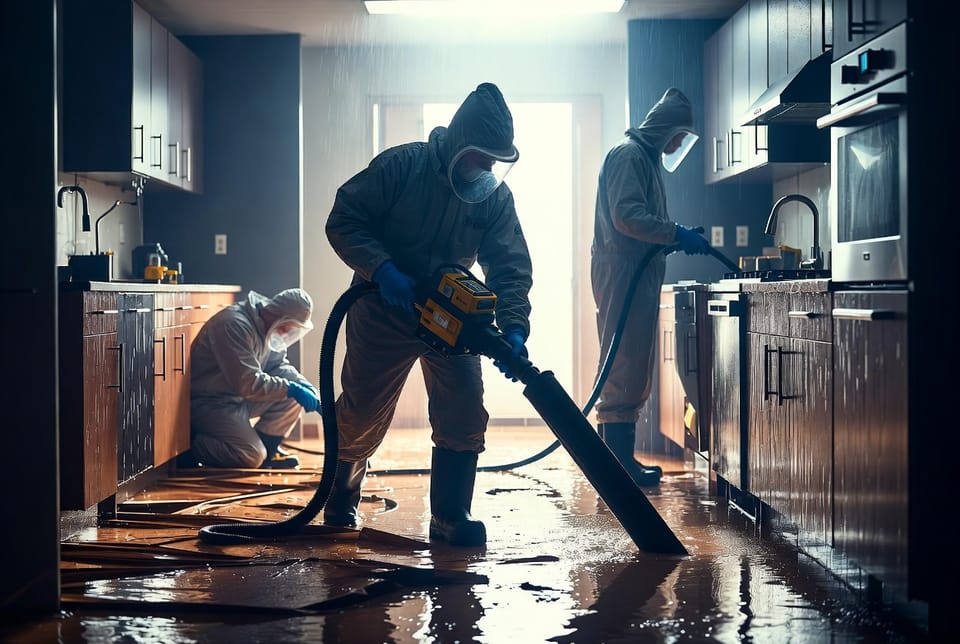
A sudden kitchen flood can turn an ordinary day into a high-stakes recovery situation. Whether the water comes from a burst supply line, a failed dishwasher, an overflowing sink, or a severe weather event that backs up into the home, the results are the same: standing water, compromised appliances, swelling cabinets, and flooring that may or may not survive. The good news is that rapid, methodical action dramatically improves the chance of salvaging major components and preventing secondary problems such as mold, structural weakening, and costly full replacements.
Get Your Flooded Kitchen Restored Today – Call Now!
This guide walks through a realistic flooded-kitchen scenario and explains exactly how to handle the three most vulnerable areas—appliances, cabinets, and floors—while keeping safety and long-term integrity as the top priorities. The advice is practical, sequential, and designed for homeowners who need clear direction in the first critical hours and days.
Immediate Safety: Securing Power and Gas Before Anything Else
The moment you discover standing water in the kitchen, the first and non-negotiable step is eliminating electrical and gas hazards. Water and electricity create a lethal combination. Appliances such as refrigerators, dishwashers, ranges, and garbage disposals often remain plugged in or hard-wired even after flooding begins.
Locate the main electrical panel and shut off the breakers that control the kitchen circuits. If the panel itself is in a wet area or you cannot safely reach it, leave the house and contact the utility company or a licensed electrician. For gas ranges or gas-powered appliances, turn the supply valve to the off position at the appliance and, if accessible, at the main gas shutoff. Never attempt to operate or even unplug a wet appliance while power is still live.
Once utilities are secured, open windows and exterior doors if outdoor conditions allow, creating cross-ventilation that begins the drying process. Avoid using fans that blow directly onto still-standing water; the goal at this stage is controlled air movement after the bulk water is removed.
Removing Standing Water: The Critical First Phase
Standing water must be extracted as quickly as possible. Every hour water remains in contact with wood, particleboard, and unfinished flooring increases the risk of permanent deformation and microbial growth.
Begin with the largest volumes. Use wet/dry vacuums rated for water, submersible pumps if the depth exceeds a few inches, or professional truck-mounted extraction equipment if the volume is substantial. Work systematically from the deepest areas toward the exits so water does not simply relocate. Mop residual moisture with absorbent towels, changing them frequently.
Pay special attention to the spaces under and behind appliances. Water often pools in these hidden zones and continues to feed moisture into adjacent cabinets and flooring long after the open floor appears dry. Move lighter appliances carefully once power is confirmed off; heavier units may need professional relocation to avoid damaging floors or injuring helpers.
After bulk water is gone, the remaining surface moisture and the water that has already wicked into porous materials become the next challenge. This is where thorough drying begins and where many homeowners underestimate the time and equipment required.
Kitchen Cabinets: Assessing Warping Risk and Drying Strategy
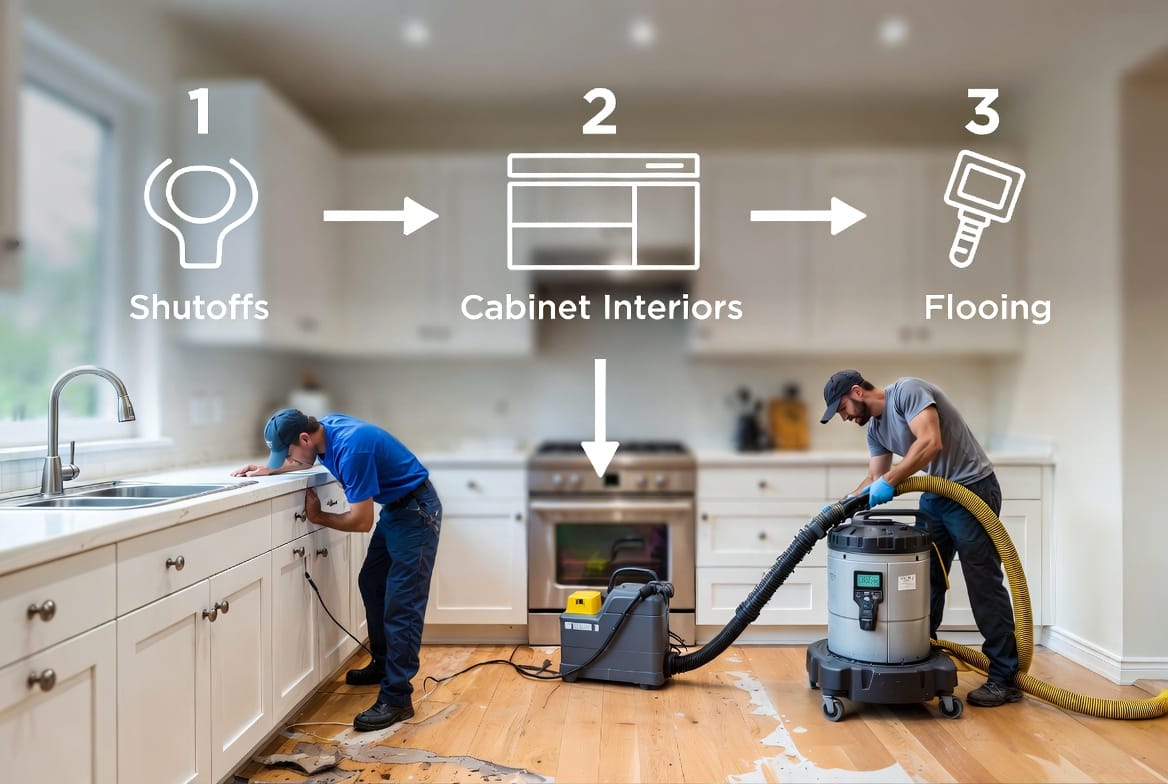
Cabinets are among the most vulnerable components in a flooded kitchen. Most base cabinets are constructed from particleboard or medium-density fiberboard with a thin veneer or laminate surface. These materials absorb water rapidly. Once saturated, they swell, lose structural integrity, and often delaminate. Upper cabinets usually fare better unless water rose high enough to reach them or splash-back occurred.
Empty every cabinet and drawer completely. Remove all contents, including items stored on the floor of base units. Inspect the interior for water lines, soft spots, and musty odors. Soft or crumbling particleboard generally cannot be saved and will require replacement. Solid wood or high-quality plywood cabinets have a better survival rate if drying begins immediately.
Promote drying by removing cabinet doors and drawer fronts where possible. This allows air to circulate on both sides of the panels. Place portable dehumidifiers and air movers in the kitchen, aiming airflow into the open cabinet boxes without forcing water deeper into wall cavities. In some cases, small holes drilled in inconspicuous locations on the underside of cabinets can relieve trapped water and improve airflow; these should be planned carefully so they do not compromise future repairs.
Monitor progress daily. Cabinets that remain damp after 48–72 hours of aggressive drying are unlikely to return to their original dimensions and may need professional evaluation for replacement versus repair. Even cabinets that appear to recover can develop hidden mold on the backside or against the wall, so continued monitoring with a moisture meter is essential.
Flooring Decisions: Tile Versus Wood and Everything In Between
Flooring response varies dramatically by material. Understanding these differences prevents unnecessary replacement and equally prevents leaving damaged material in place that will cause future problems.
Ceramic or porcelain tile set in thinset over a cement backer board or concrete slab is frequently salvageable. Water rarely damages the tile itself. The critical points are the grout lines and any underlying underlayment. If water has penetrated through cracked grout or failed sealant, the underlayment may stay wet long after the surface looks dry. In these cases, selective tile removal allows drying of the substrate, followed by reinstallation or replacement of only the affected sections.
Hardwood flooring, by contrast, is highly susceptible. Solid hardwood cups, crowns, or buckles when it absorbs moisture from below or from standing water. Engineered hardwood can delaminate. Once buckling occurs, the boards rarely return to a flat plane even after thorough drying. In many flooded kitchens the practical decision is removal of the affected hardwood, drying of the subfloor, and installation of new material. Attempting to force cupped boards flat with weights or fasteners usually leads to further damage and uneven results.
Luxury vinyl plank, laminate, and floating floors present mixed outcomes. Some high-quality waterproof vinyl products can withstand short-duration flooding if seams remain intact. Laminate and most floating floors typically swell at the edges and must be replaced. Always check manufacturer guidelines and inspect the locking mechanisms and underlayment.
Regardless of surface material, the subfloor must be evaluated. Plywood or OSB that has absorbed significant water loses strength and can harbor mold. Moisture meters and, when necessary, limited destructive testing reveal the true condition beneath the finished floor.
The Complete Cleanup Sequence in Practice
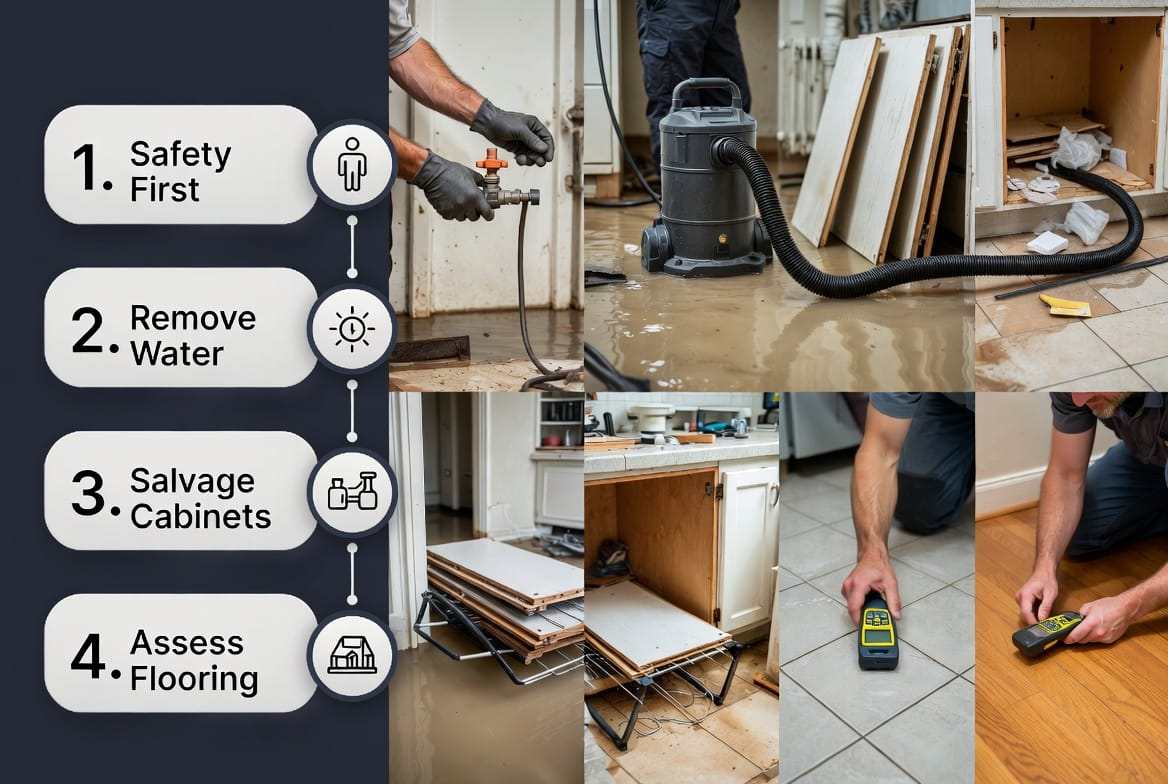
Putting the pieces together creates a reliable workflow:
- Confirm all electrical and gas sources serving the kitchen are isolated.
- Extract every drop of standing water using appropriate equipment.
- Remove contents from cabinets and relocate appliances as needed for access.
- Initiate high-velocity air movement and dehumidification focused on cabinets and flooring edges.
- Monitor moisture levels in wood components and subfloors with calibrated meters.
- Decide on salvage versus replacement for cabinets and flooring based on measured moisture content and structural condition rather than appearance alone.
- Clean and sanitize all surfaces that contacted floodwater, using products appropriate for the material.
- Continue drying until moisture readings stabilize within normal ranges for the specific materials involved.
- Only after thorough drying should reconstruction or refinishing begin.
Skipping any of these stages invites secondary damage. Mold can colonize damp particleboard or subflooring within 24–48 hours under warm conditions. Hidden moisture behind cabinets or under flooring can later cause odors, finishes to fail, or structural issues that cost far more than prompt professional intervention.
Why Specialized Handling Matters
Homeowners can and should take the first safety and extraction steps. Beyond that point, the variables multiply. Commercial-grade extraction equipment removes water far more thoroughly than consumer wet/dry vacuums. Professional drying systems maintain precise humidity and temperature control that residential dehumidifiers cannot match. Technicians trained in water damage restoration understand how different cabinet constructions and floor assemblies respond to moisture and can document the process for insurance purposes.
Attempting to rush reconstruction before materials are fully dry almost always leads to callbacks, further damage, and higher total cost. Conversely, a methodical approach that prioritizes safety, complete water removal, controlled drying, and accurate assessment frequently preserves more of the original kitchen than expected.
Kitchen floods demand specialized handling. The combination of electrical risk, porous cabinet materials, and variable flooring responses requires both immediate homeowner action and, in most cases, professional resources to achieve a lasting recovery. When the water has been extracted and the initial assessment completed, contact a qualified restoration team that understands the unique challenges of kitchen environments.
Prompt professional support protects your investment, restores safe use of the space, and gives you clear documentation of every step taken. A flooded kitchen is disruptive, but with disciplined action and the right expertise it does not have to become a total loss.
Stop Cabinet Warping & Floor Damage – Call Experts