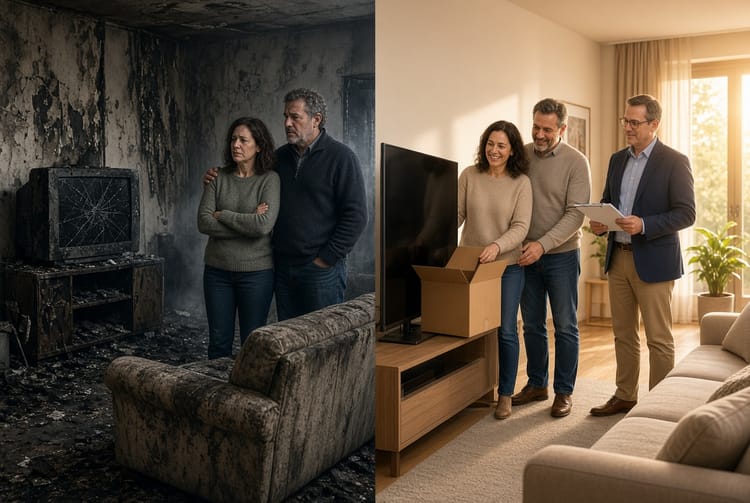
The Personal Articles Floater: Protecting High-Value Items
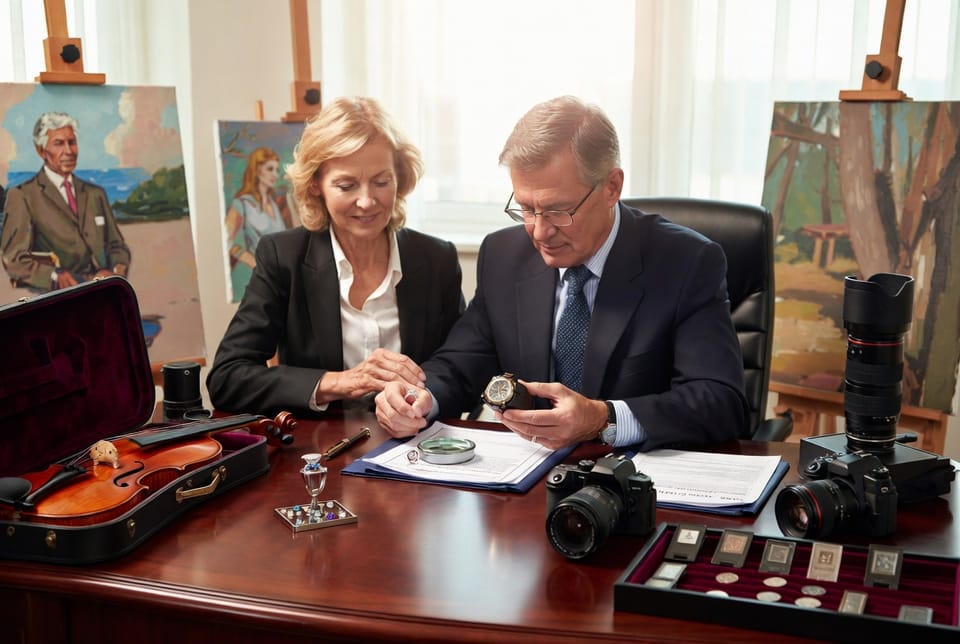
Homeowners and renters often assume their standard insurance policy fully shields every possession inside their walls. Yet when a cherished diamond ring disappears, a family heirloom painting is damaged, or a professional camera kit is stolen, many discover a harsh reality: standard home or renters insurance places strict limits on high-value personal property. Those limits can leave owners facing significant out-of-pocket losses.
Get Your Personal Articles Floater – Call Now!
A personal articles floater—also called a scheduled personal property endorsement—exists precisely to close that gap. This specialized coverage adds tailored protection for jewelry, fine art, cameras, musical instruments, and other valuable collectibles. It operates on an agreed-value basis, travels with the items, and delivers peace of mind that ordinary policies simply cannot match.
In the pages that follow, we examine exactly what a personal articles floater is, why standard policies fall short, how the coverage works, which items benefit most, and the practical steps to secure it. The goal is clear and reassuring: every high-value item you own deserves protection that matches its true worth.
Understanding the Limits of Standard Home Insurance
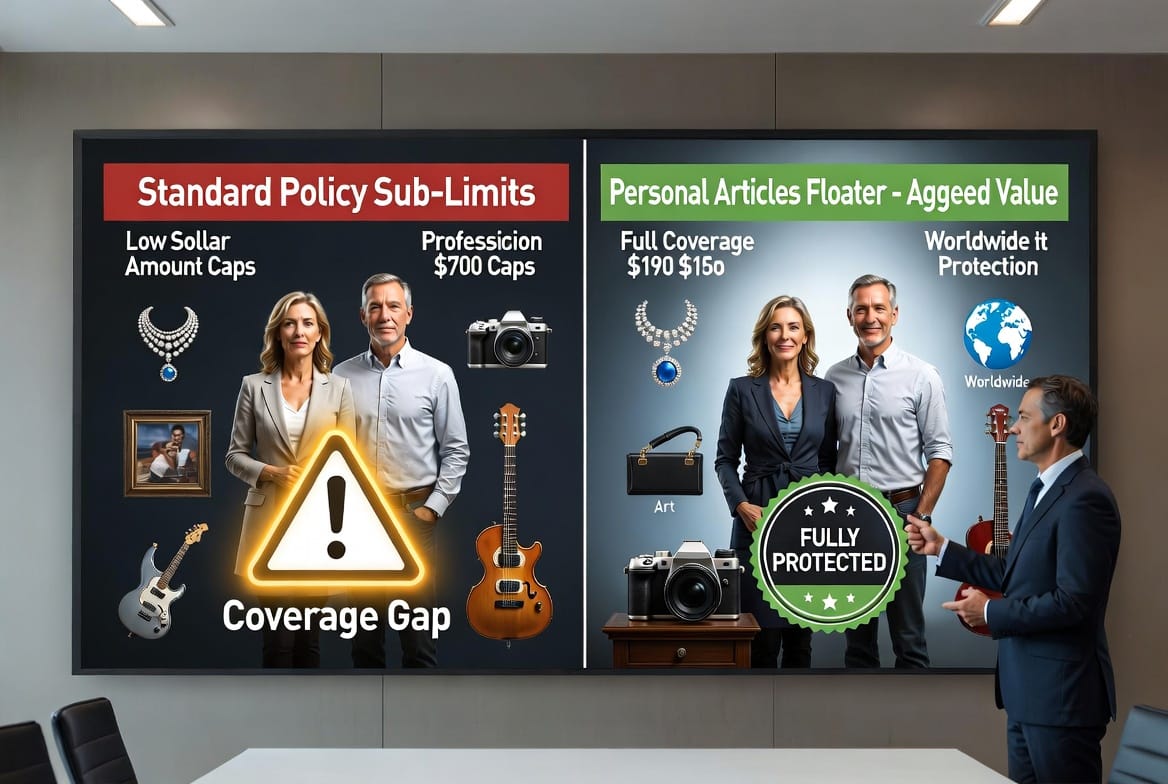
Most homeowners or renters policies cover personal property under broad categories—clothing, furniture, electronics—up to the overall contents limit. Within those categories, however, insurers impose sub-limits on specific high-value groups.
Typical sub-limits include:
- Jewelry, watches, and furs: often $1,000–$2,500 total
- Fine art and antiques: frequently $1,000–$5,000
- Cameras and photographic equipment: usually $1,000–$2,500
- Musical instruments: commonly $1,000–$2,500
- Collectibles such as stamps, coins, or rare books: similarly capped
These ceilings apply whether the loss occurs from theft, fire, accidental damage, or mysterious disappearance. Once the sub-limit is reached, the remaining value becomes the owner’s responsibility. Inflation in the luxury market, rising gold and diamond prices, and the increasing cost of professional equipment make these caps outdated for many households.
A personal articles floater removes those artificial ceilings by treating each scheduled item individually. The result is coverage that reflects actual replacement or agreed value rather than a generic policy maximum.
What Exactly Is a Personal Articles Floater?
A personal articles floater is a specialized insurance endorsement or standalone policy that provides all-risk coverage for specifically listed (scheduled) high-value items. Unlike the “named-peril” approach of many standard policies, all-risk protection covers virtually every cause of loss except those explicitly excluded—such as intentional damage, wear and tear, or nuclear hazards.
Key features include:
- Scheduled listing: Each item is described in detail, often with photographs, serial numbers, and professional appraisals.
- Agreed value: The insurer and policyholder agree in advance on the item’s value. In the event of a total loss, that amount is paid without depreciation or negotiation.
- Worldwide coverage: Protection travels with the item—whether at home, in a hotel, on a cruise, or in transit.
- No deductible options: Many floaters can be written with zero deductible for scheduled items, accelerating claim payments.
Because the coverage is item-specific, premiums are calculated according to the type of item, its value, storage conditions, and the owner’s claims history. The process feels personalized rather than one-size-fits-all, reinforcing the authoritative yet reassuring nature of the protection.
How a Personal Articles Floater Works in Practice
Obtaining and using a floater follows a straightforward, transparent sequence.
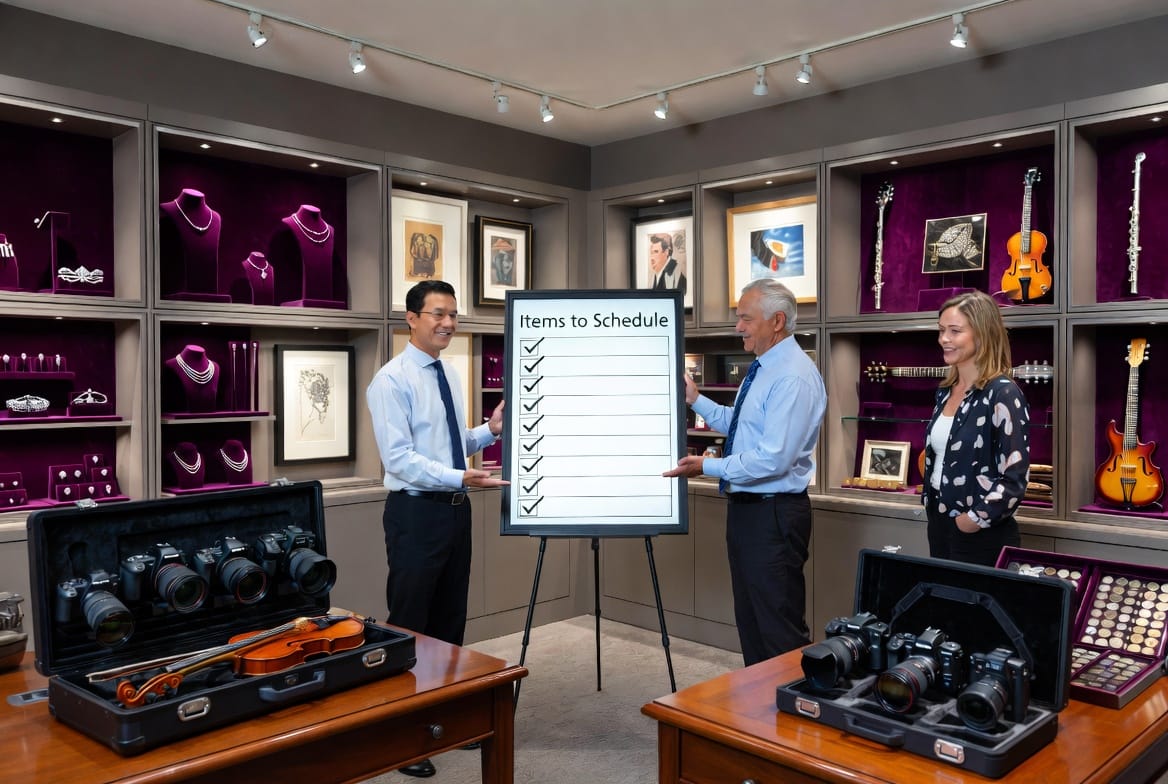
- Inventory and Appraisal
Compile a detailed list of items you wish to schedule. Professional appraisals from certified gemologists, art dealers, or instrument specialists establish current market values. Photographs and purchase receipts further document ownership and condition. - Scheduling the Items
The insurer adds each piece to the policy schedule, noting description, serial number if applicable, and agreed value. Once scheduled, the item is covered for its full listed amount. - Coverage Activation
Protection begins immediately upon policy issuance or endorsement. Losses are reported directly; the claims process focuses on verification rather than haggling over value. - Claim Settlement
For a total loss, the agreed value is paid. For partial damage, repair costs up to the scheduled amount are covered. Because the value was pre-agreed, settlement is typically faster and more predictable than under a standard policy.
This structure eliminates the uncertainty that accompanies open-ended personal-property claims. Owners know exactly what recovery to expect, and insurers know precisely what exposure they have assumed.
Why Standard Policies Intentionally Limit High-Value Coverage
Insurers design standard policies for the average household. High-value items introduce elevated risk of theft, specialized repair costs, and fluctuating market values. Without sub-limits, premiums for every policyholder would rise to subsidize the few who own significant jewelry or art collections.
By isolating these risks into optional floaters, the industry keeps base premiums affordable while still offering robust solutions for those who need them. The existence of the floater is therefore not a restriction but an invitation: owners of valuable items can purchase precisely the protection required without burdening others.
Additional reasons for separate scheduling include:
- Accurate underwriting based on individual risk profiles
- Ability to require enhanced security measures (safes, alarm systems) for certain items
- Flexibility to adjust coverage as collections grow or change
- Clearer loss-prevention incentives for both parties
Understanding this design philosophy removes any sense of penalty and reframes the floater as a sophisticated tool tailored to modern ownership of precious belongings.
Items Commonly Protected by a Personal Articles Floater
While nearly any movable personal property of significant value can be scheduled, certain categories appear most frequently:
- Jewelry and Watches: Engagement rings, heirloom necklaces, luxury timepieces
- Fine Art and Antiques: Paintings, sculptures, rare furniture, porcelain
- Cameras and Photographic Equipment: Professional bodies, lenses, drones, lighting kits
- Musical Instruments: Violins, pianos, guitars, brass and woodwind instruments of professional grade
- Collectibles: Rare coins, stamps, sports memorabilia, wine collections, classic firearms (where legal)
Each category benefits from the floater’s all-risk, agreed-value structure. A single scheduled violin, for example, can travel to rehearsals and performances worldwide without the owner worrying about the low musical-instrument sub-limit of a standard policy.
Practical Benefits That Deliver Real Peace of Mind
Beyond higher limits, a floater offers several concrete advantages:
- No depreciation: Agreed value means full recovery, not actual cash value after wear.
- Mysterious disappearance coverage: Many floaters include loss without evidence of forced entry—an exclusion common in standard policies.
- Pair and set coverage: If one earring of a matched pair is lost, the entire set’s value can often be recovered.
- Newly acquired items: Automatic coverage for a limited period (commonly 30–90 days) after purchase, giving time to schedule formally.
- Lower overall risk profile: Proper scheduling and security recommendations can sometimes reduce the cost of the base home policy.
These features transform potential financial setbacks into manageable events, reinforcing the authoritative confidence that comes with specialized protection.
Steps to Secure Your Own Personal Articles Floater
- Contact your current insurer or an independent agent and request a floater quotation.
- Gather appraisals, photos, and receipts for each item.
- Discuss security measures—home safes, monitored alarms, or bank vault storage—that may influence rates.
- Review the proposed schedule carefully to confirm descriptions and values.
- Decide on deductible options and any additional endorsements (such as inflation guard).
- Bind the coverage and keep digital and physical copies of the schedule accessible.
Annual reviews keep values current as markets shift and collections expand. Many owners find the process surprisingly straightforward once the first appraisal is complete.
Addressing Common Concerns and Misconceptions
Some owners worry that scheduling items invites higher scrutiny or higher premiums. In reality, transparent documentation often streamlines underwriting and can stabilize rates over time. Others assume floaters are only for the ultra-wealthy; modest collections of a few thousand dollars routinely benefit.
A frequent misconception is that a floater replaces the need for a home inventory. On the contrary, a well-maintained inventory complements the floater by simplifying claims for both scheduled and unscheduled property.
The Cost of Protection Versus the Cost of Loss
Premiums for personal articles floaters typically range from a fraction of one percent to a few percent of the scheduled value annually, depending on item type and location. When weighed against the sudden loss of an irreplaceable family heirloom or professional equipment essential to livelihood, the cost is modest.
Moreover, the emotional relief of knowing that a theft or accident will not also create a financial crisis is difficult to quantify yet deeply valuable.
Maintaining Coverage Over Time
Life changes—marriages, inheritances, new purchases, moves—require corresponding updates to the schedule. Setting a calendar reminder for annual review ensures that newly acquired items receive prompt protection and that outdated values are adjusted upward. Digital appraisal services and cloud-based inventory apps have made this ongoing maintenance simpler than ever.
Final Thoughts on Specialized Protection
High-value personal property represents more than monetary worth; it often carries emotional, professional, and generational significance. Relying solely on the limited sub-limits of a standard homeowners or renters policy leaves those treasures exposed. A personal articles floater closes the gap with precision, transparency, and worldwide reach.
By scheduling jewelry, art, cameras, musical instruments, and collectibles at their true agreed values, owners convert uncertainty into confidence. The process is professional, the coverage is comprehensive, and the outcome is lasting peace of mind.
Protect Your High-Value Items Today – Call Now!