The Oven Door Hinge: Why Your Door Won't Close Tightly
A loosely closing oven door is one of the most common yet overlooked appliance problems in American kitchens. Homeowners often notice it first as a faint line of escaping heat or a door that no longer sits flush. The root cause is almost always worn or damaged oven door hinges. When these components lose tension or alignment, the door sags, gaps appear, and valuable heat escapes. This article explains exactly how the hinges function, the clearest warning signs, and the proper replacement process so you can decide whether a simple repair will restore performance.
Call Today to Fix a Sagging Oven Door Fast
A door that fails to close tightly does more than look unsightly. It lengthens cooking times, raises energy bills, and can even create a mild burn hazard around the frame. Understanding the mechanics and acting promptly keeps your oven efficient and safe.
How Oven Door Hinges Actually Work
Every conventional oven door is surprisingly heavy. Glass, insulation, and metal combine to create a panel that would slam shut or drop open without assistance. The oven door hinges solve this problem with a carefully engineered spring-and-arm system.
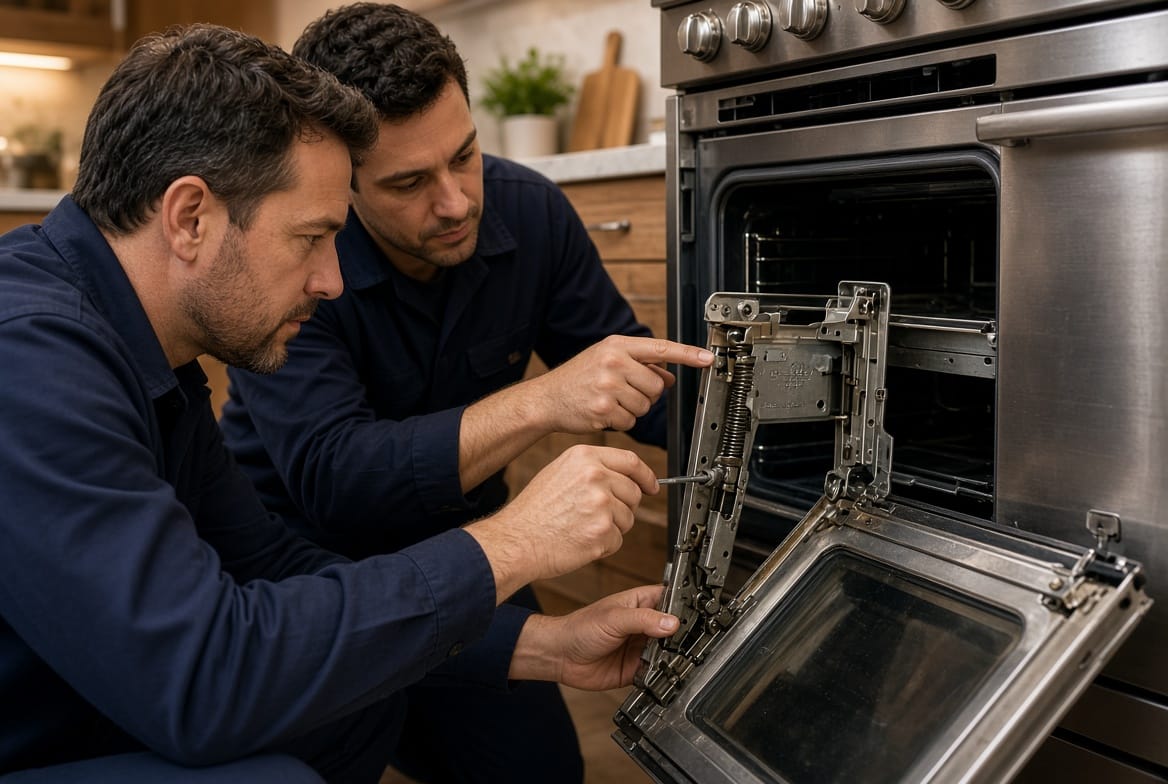
Two hinges—one on each side—attach the door to the oven chassis. Each hinge contains a high-tension spring (coil or torsion style) that counterbalances the door’s weight. When you open the door, the spring stores energy; when you close it, the spring helps lift the door into the final sealed position. Most designs also include intermediate stops so the door can rest at a 30-degree “broil” angle or stay fully open for cleaning.
The hinge arms themselves slide into matching slots or rollers on the door. Small locking clips or tabs keep the door from lifting off during normal use. Over thousands of cycles the springs gradually lose tension, the metal arms can bend microscopically, and the pivot points wear. The result is a door that no longer meets the gasket with even pressure.
Because left and right hinges are usually mirror-image parts, they must be replaced as a matched pair. Using only one new hinge almost always produces uneven closing and premature failure of the remaining old hinge.
Clear Signs Your Hinges Are Worn
Recognizing wear early prevents bigger problems. Watch for these specific indicators:
- Door sagging on one side or both, so the top edge sits lower than the oven frame.
- Visible gaps between the door and the gasket, especially at the top corners.
- Heat escaping that you can feel with the back of your hand when the oven is at temperature.
- The door no longer stays closed under its own weight or pops open a fraction of an inch.
- A sudden drop when the door is opened past the first stop, indicating spring failure.
- Uneven browning or longer-than-usual preheat times caused by lost heat.
If two or more of these signs appear together, the hinges have reached the end of their useful life. Continuing to use the oven in this condition wastes energy and stresses the remaining components.
Why Ignoring a Poor Seal Costs You Money and Safety
A door that will not close tightly allows heated air to leak continuously. The oven’s thermostat then calls for more energy to maintain set temperature. Over a year this extra runtime can add a noticeable amount to your utility bill. In gas ovens the leak also means incomplete combustion products may linger longer near the front of the range.
From a safety standpoint, the escaping heat raises the temperature of nearby cabinet surfaces and can make the handle itself hotter than intended. Children or pets brushing against the frame face a greater burn risk. Finally, the extra strain on the remaining hinge and the door gasket accelerates wear on those parts as well.
The good news is that hinge failure is almost never an emergency. You can continue using the oven for a short period while you schedule service, provided you stay alert to the extra heat around the door.
Step-by-Step Replacement: Remove the Door, Then Replace the Hinges
Professional replacement follows a consistent, safe sequence. Attempting the job without the correct procedure can damage the porcelain interior or the new parts.
First, disconnect power at the breaker or unplug the range. For gas models, turn the shut-off valve behind the unit. Allow the oven to cool completely.
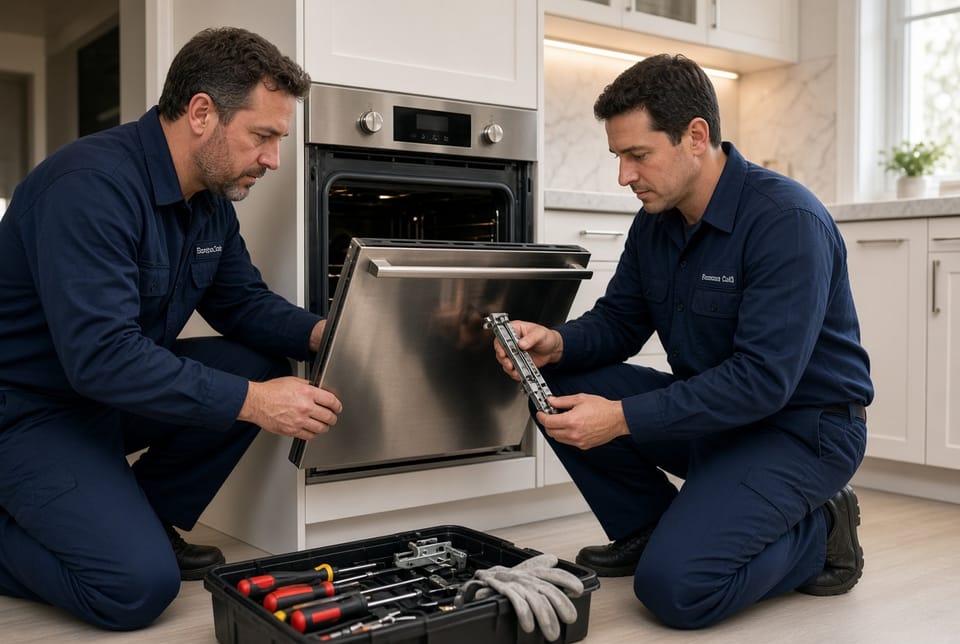
Next, open the door to the first stop (usually about 15–20 degrees). Most modern hinges have small locking tabs or require plastic clips that hold the hinge arms in the service position. Engage those locks. Then lift the door straight up and off the hinge arms. The door is heavy; two people make the lift safer and prevent twisting.
With the door removed, the hinge arms remain attached to the oven chassis. Each hinge is held by two or three screws. Remove the screws, slide the old hinge out, and compare it side-by-side with the new part to confirm identical length, spring orientation, and mounting holes. Install the new hinges one at a time, tightening the screws evenly so the arms sit square.
Re-hang the door by aligning the slots with the new hinge arms and lowering it until it seats fully. Disengage the locking clips, then test the door through its full range of motion. It should close with even pressure on the gasket and stay shut without extra force.
A final check is to run the oven at 350 °F for fifteen minutes and feel around the door perimeter. No heat should leak. If a small gap remains, the hinges may need a minor adjustment of the mounting screws.
Because hinge geometry is model-specific, using generic or mismatched parts almost always produces a door that binds or fails to seal. Matching the exact OEM or high-quality aftermarket pair is essential.
DIY Considerations Versus Calling a Technician
Homeowners with mechanical experience and the correct parts can complete the job in under an hour. However, several factors favor professional service:
- The door is heavy and awkward; dropping it can crack the glass or chip the enamel.
- Some wall ovens require partial removal of trim or side panels for hinge access.
- Incorrect spring tension on the new hinges can make the door slam or refuse to stay open.
- Warranty coverage on many ranges is voided by unauthorized repairs.
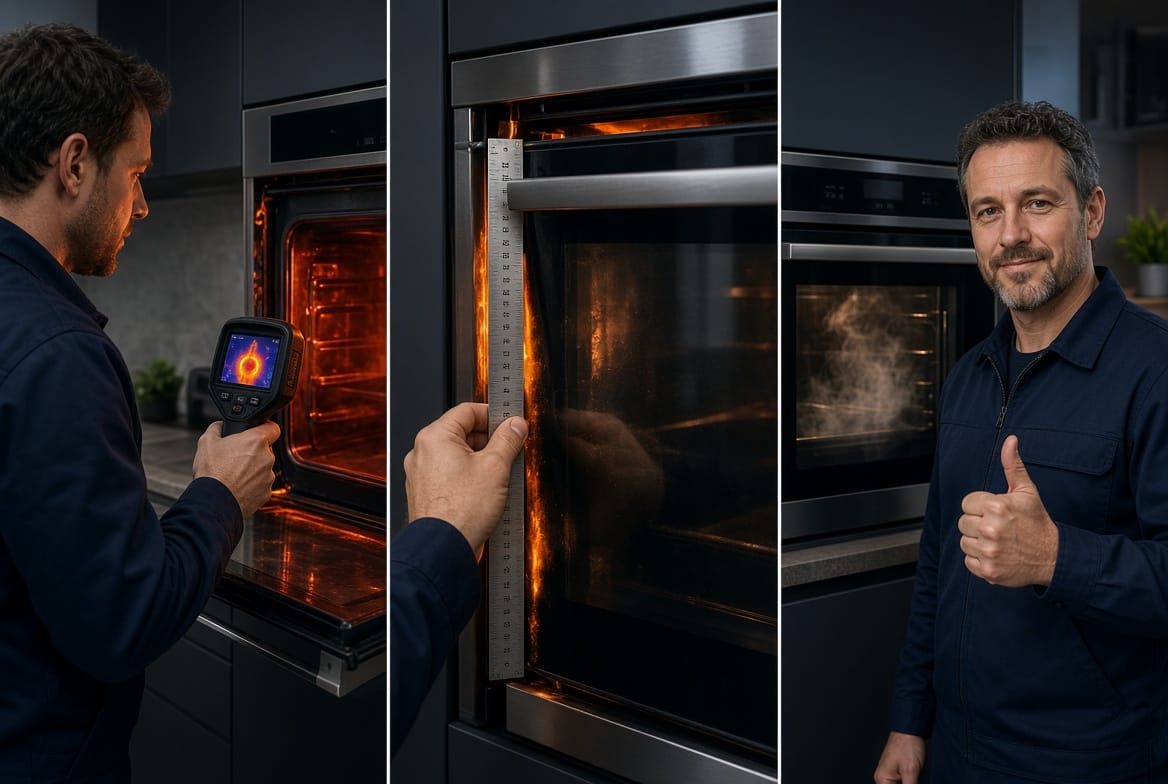
A trained technician arrives with the exact hinges, the proper lifting technique, and the ability to verify the door seal with an infrared thermometer. The entire visit typically lasts less than ninety minutes and includes a full function test.
Simple Habits That Extend Hinge Life
Prevention is straightforward. Avoid slamming the door; let it close under spring tension. Do not hang towels or heavy oven mitts on the handle, as the extra weight accelerates sagging. Wipe spills from the hinge area promptly so sugar or grease does not bake onto the pivot points. Once a year, inspect the door alignment while the oven is cold; a small adjustment of the hinge screws can restore even contact before wear becomes severe.
If you bake frequently or use the self-clean cycle often, consider having the hinges inspected during routine maintenance. Self-clean temperatures place extra thermal stress on the springs.
When Replacement Is the Only Practical Solution
Springs cannot be economically rebuilt. Once they lose tension or the arms bend, the entire hinge assembly must be swapped. Attempting to “stretch” an old spring or bend an arm back into shape produces an unreliable repair that fails again within weeks.
The cost of a matched pair of quality hinges is modest compared with the ongoing energy waste of a leaking door. Combined with professional installation, the repair typically pays for itself through lower utility bills within a single heating season.
Final Advice: Restore the Seal and Save Energy
A poor seal wastes energy every time you use the oven. The moment you notice sagging, gaps, or escaping heat, schedule hinge service. Prompt replacement returns the door to factory-tight closure, shortens cooking times, and eliminates the extra heat around the frame.
A technician can usually diagnose the exact hinge pair needed, perform the replacement the same day, and leave your oven sealing tightly again. Acting now protects both your energy budget and the safety of everyone who uses the kitchen.
Call Now for Fast, Professional Oven Door Hinge Replacement