The Outdoor Motion Sensor Light: Choosing Between Passive Infrared and Microwave
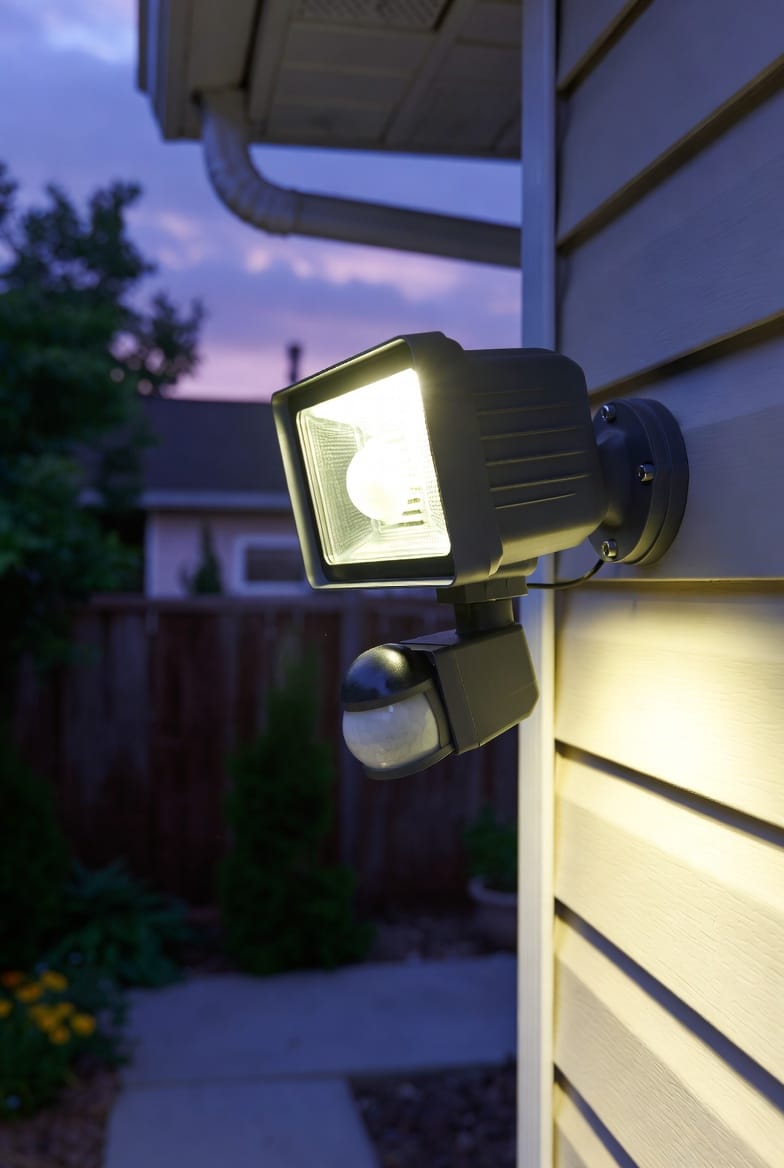
In today's security-conscious world, outdoor motion sensor lights have become essential for protecting homes and businesses. These intelligent fixtures provide automatic illumination when movement is detected, deterring intruders while offering convenience and energy savings. However, not all motion sensors perform the same. The two primary technologies—Passive Infrared (PIR) and Microwave—offer distinct advantages depending on your specific needs.
Get Reliable Outdoor Security Lighting Today – Call Now!
This comprehensive guide compares both technologies to help you make an informed decision for your property.
Understanding Motion Sensor Technology Basics
Modern outdoor motion sensor lights rely on advanced detection methods to identify activity without constant operation. Choosing the right sensor prevents unnecessary activations while ensuring reliable performance when it matters most.
Passive Infrared (PIR) and Microwave sensors represent the leading solutions in residential and commercial lighting. Each uses fundamentally different principles to detect motion, affecting their sensitivity, reliability, and ideal applications.
How Passive Infrared (PIR) Sensors Work
PIR sensors are the most common technology found in residential outdoor motion sensor lights.
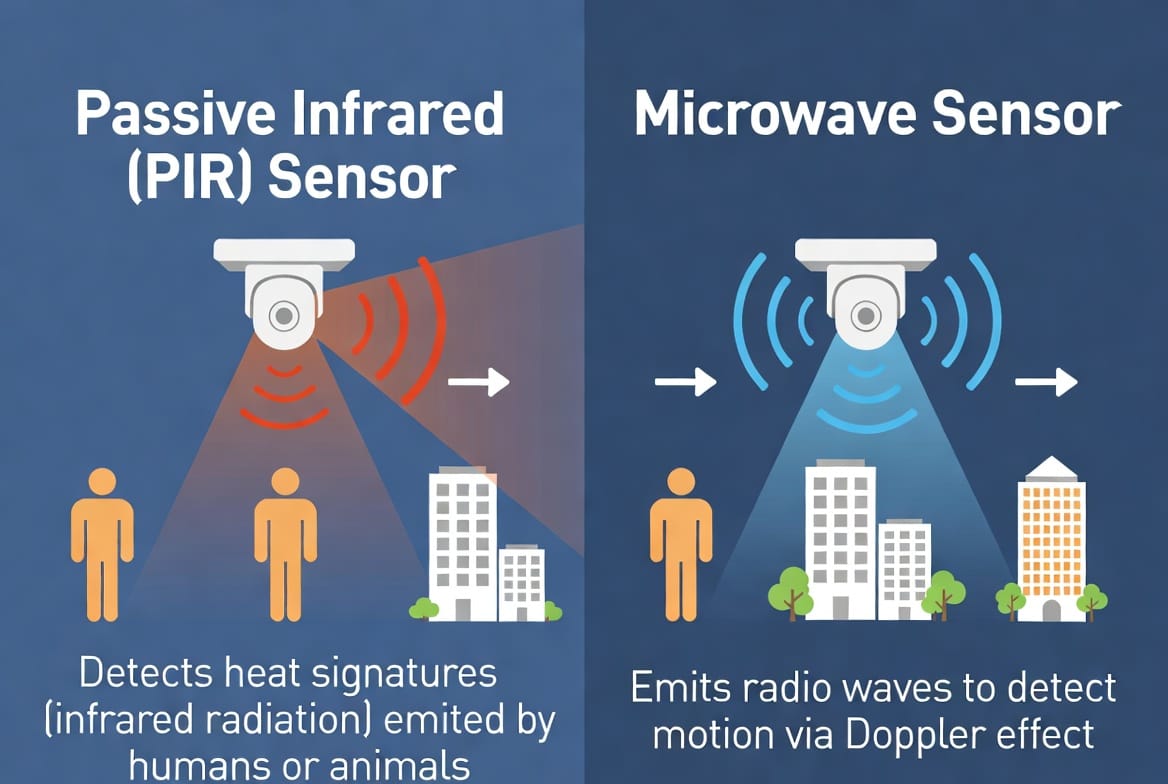
These sensors detect changes in infrared radiation—essentially body heat—within their field of view. When a warm object like a person or animal moves across the sensor's detection zones, it triggers the light.
Key features of PIR sensors:
- Line-of-sight detection only
- Excellent for detecting human and animal movement
- Temperature-sensitive operation
- Lower power consumption
PIR technology excels in controlled environments where direct visibility is available. The sensor divides its viewing area into multiple zones, and movement between these zones creates the heat signature change that activates the light.
How Microwave Motion Sensors Operate
Microwave sensors, also known as radar-based sensors, work on a completely different principle. They emit low-power microwave signals and measure the reflection patterns of these waves.
When an object moves within the detection field, it alters the reflected waves (Doppler effect), triggering the sensor. Unlike PIR, microwave sensors can detect motion through non-metallic barriers such as thin walls, glass, or foliage.
Key characteristics of microwave sensors:
- High sensitivity to any movement
- 360-degree coverage potential
- Consistent performance regardless of temperature
- Ability to detect through obstacles
This technology proves particularly valuable in challenging environments where traditional sensors might fail.
Key Differences: PIR vs Microwave Sensors
Understanding the technical distinctions helps homeowners and property managers select the most suitable outdoor motion sensor light technology.
Sensitivity and Detection Range
PIR sensors offer reliable detection within 30-50 feet, depending on the model. They perform best when detecting larger heat sources moving across their zones.
Microwave sensors typically provide longer detection ranges and higher sensitivity. They can identify smaller movements and operate effectively in larger areas.
False Trigger Management
False alarms represent a significant concern with motion lighting:
- PIR sensors: Less prone to false triggers from wind, rain, or small animals when properly calibrated. However, they can be affected by sudden temperature changes or direct sunlight.
- Microwave sensors: More susceptible to false activations from moving branches, passing vehicles, or even small animals due to their high sensitivity and ability to detect through barriers.
Environmental Performance
PIR sensors may experience reduced effectiveness in extreme temperatures, while microwave sensors maintain consistent performance across various weather conditions.
Power Efficiency and Longevity
PIR technology generally consumes less power, making it ideal for solar-powered or energy-conscious installations. Microwave sensors require slightly more energy but offer robust detection capabilities.
Ideal Applications for Each Technology
PIR Sensors: Perfect for Residential Use
Passive Infrared sensors shine in typical home security scenarios:
- Backyard and garden lighting
- Driveway and pathway illumination
- Porch and entryway security
- Garage exterior lighting
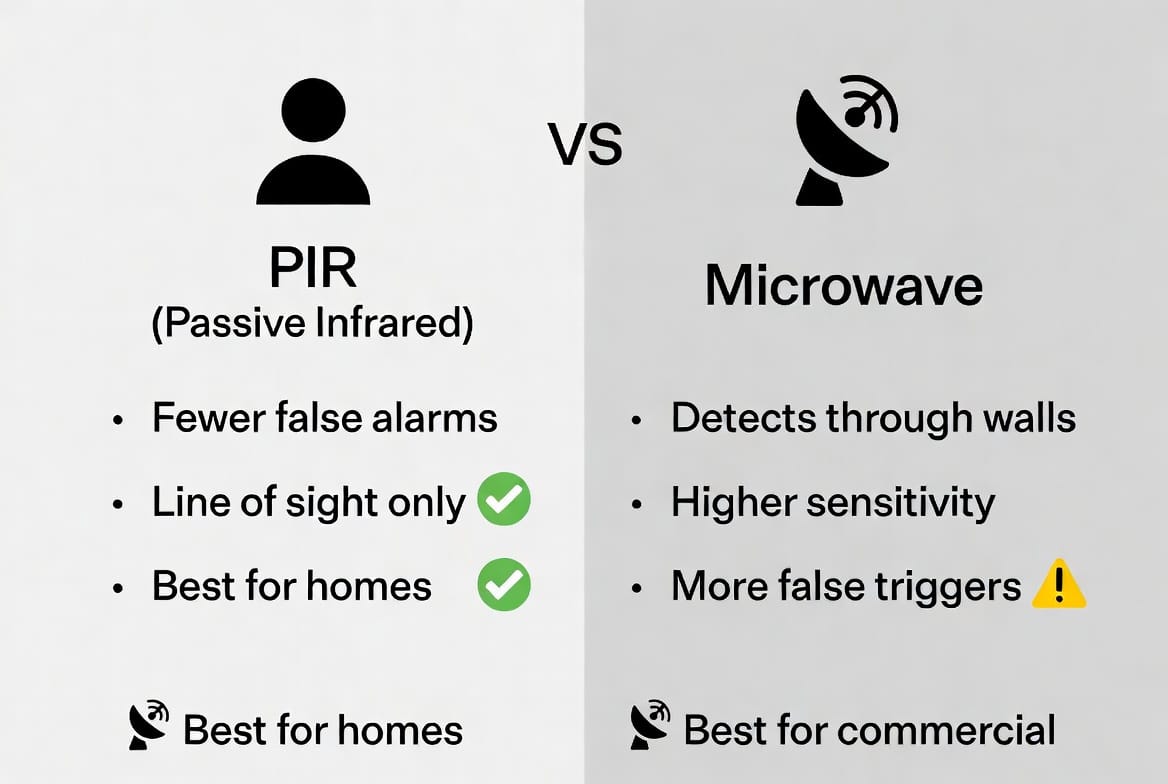
Their balanced sensitivity and lower false alarm rates make PIR sensors the preferred choice for most homeowners seeking reliable outdoor motion sensor lights.
Microwave Sensors: Built for Industrial and Commercial Settings
Microwave technology excels in demanding environments:
- Large warehouse perimeters
- Construction site security
- Commercial property grounds
- Multi-unit building exteriors
- Areas with obstacles or poor visibility
The ability to detect motion through walls and foliage makes microwave sensors valuable for complex installations.
Pros and Cons Comparison
PIR Motion Sensors:
- Advantages: Cost-effective, energy-efficient, fewer false alarms, easy installation
- Disadvantages: Limited by line-of-sight, affected by temperature extremes
Microwave Motion Sensors:
- Advantages: Highly sensitive, works through obstacles, consistent performance, wide coverage
- Disadvantages: Higher cost, more false triggers, slightly higher power use
Factors to Consider When Choosing Your Sensor
When selecting an outdoor motion sensor light, evaluate these critical elements:
- Property size and layout
- Environmental conditions in your area
- Desired detection range
- Tolerance for potential false alarms
- Budget constraints
- Installation location specifics
Bold consideration: Many modern outdoor motion sensor lights now combine both PIR and microwave technologies in dual-sensor systems, offering the best of both worlds with adjustable sensitivity settings.
Installation Best Practices
Proper installation significantly impacts sensor performance regardless of technology. Position lights to maximize coverage while minimizing potential false triggers from roads or neighboring properties.
Adjust sensitivity and timer settings according to your specific needs. Regular maintenance, including cleaning sensor lenses, ensures optimal long-term performance.
Making the Right Choice for Your Property
The decision between PIR and microwave motion sensors ultimately depends on your unique requirements. For most residential applications, PIR technology provides the ideal balance of reliability, cost-effectiveness, and performance.
However, properties with complex layouts or specific security demands may benefit from microwave or dual-technology solutions.
Expert recommendation: Start with a professional assessment of your property's lighting needs. Understanding the strengths and limitations of each technology ensures you invest in a solution that delivers years of dependable service.
Enhancing Your Outdoor Security Today
Outdoor motion sensor lights represent a smart investment in safety, convenience, and energy efficiency. By choosing the appropriate sensor technology, you create a well-lit, secure environment tailored to your lifestyle.
Warning: Incorrect sensor selection can lead to poor performance, excessive energy use, or inadequate security coverage. Always match the technology to your specific application.
Ready to upgrade your property's security lighting? Our experienced team specializes in professional outdoor motion sensor light installations using the latest PIR and microwave technologies.
Protect what matters most with reliable, intelligent outdoor lighting solutions.
Choose the Right Motion Sensor Light – Call for Expert Help!