The Outdoor GFCI Outlet: Weatherproof Covers and Safety
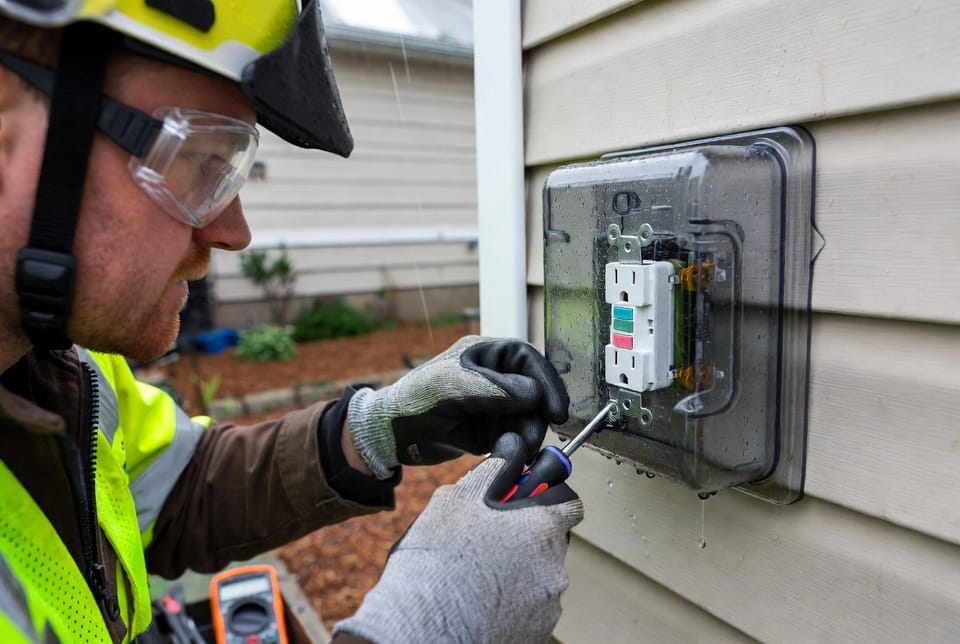
Outdoor electrical outlets provide essential convenience for powering tools, holiday lighting, patio equipment, and garden devices. Yet exposure to rain, snow, humidity, and temperature extremes creates serious risks if protection is incomplete. Proper code compliance centers on three non-negotiable requirements: GFCI protection, weatherproof while-in-use covers (also called in-use covers), and proper sealing of the box and connections to prevent moisture damage. When these elements work together, outdoor outlets deliver reliable, safe power for years. Ignoring any one of them invites shock hazards, equipment failure, or fire risk.
Get Your Outdoor GFCI Fully Protected – Call Now!
This guide explains each requirement in detail, shows why they matter, and outlines best practices for installation and maintenance. Homeowners and property managers who follow these standards protect people and property while meeting the expectations of modern electrical safety codes.
Understanding the Unique Challenges of Outdoor Outlets
Outdoor environments differ sharply from indoor ones. Moisture can enter receptacles through openings, condensation forms with temperature swings, and physical impact from weather or accidental contact increases wear. Water and electricity form a dangerous combination that can lead to ground faults, short circuits, or electrocution.
A standard indoor outlet lacks the design features needed outdoors. Even a basic outdoor-rated receptacle requires additional layers of protection. Code compliance addresses these realities by mandating specific devices and installation methods that keep water out and interrupt dangerous current flow instantly when a fault occurs.
Key risks include:
- Direct water intrusion during rain or irrigation
- Condensation inside the box from day-night temperature changes
- Corrosion of contacts and terminals over time
- Accidental contact with live parts when covers are open
- Ground faults caused by damaged insulation or wet conditions
Addressing these risks begins with the right components and correct installation techniques.
GFCI Protection: The First Line of Defense
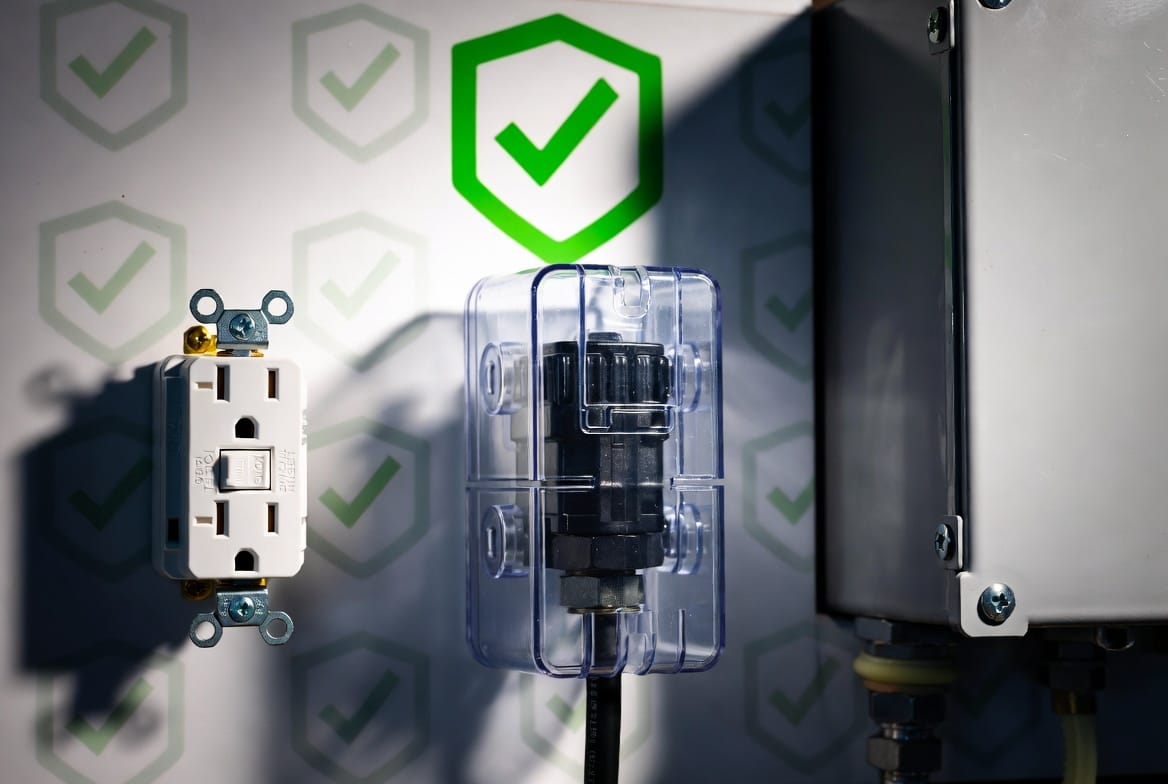
GFCI (Ground Fault Circuit Interrupter) protection is mandatory for virtually all outdoor receptacles. A GFCI monitors the current flowing to and returning from a device. If it detects even a small imbalance—typically 4 to 6 milliamps—it trips within milliseconds, cutting power before a dangerous shock can occur.
This rapid response is critical outdoors because moisture lowers the resistance of the human body and surrounding surfaces, making ground faults more likely and more severe. Without GFCI protection, a person standing on damp ground who touches a faulty tool or wet cord faces a high risk of serious injury.
Code compliance requires GFCI protection for outdoor outlets through one of several methods:
- A GFCI receptacle installed at the outdoor location
- A GFCI breaker protecting the entire circuit
- An upstream GFCI device that covers the outdoor outlets
Many installations use a combination approach for convenience and reliability. The outdoor receptacle itself is often a weather-resistant GFCI model that withstands UV exposure and temperature extremes while providing local reset and test buttons.
Testing is essential. Press the “Test” button monthly and verify that power cuts off, then press “Reset” to restore service. After any significant storm or if the outlet has been unused for long periods, perform an additional test. A GFCI that fails to trip must be replaced immediately.
Proper GFCI protection does more than meet code—it provides peace of mind every time outdoor power is used.
Weatherproof While-in-Use Covers: Protection That Stays On
A standard flip cover that only seals when nothing is plugged in leaves the outlet vulnerable the moment a cord is connected. Weatherproof while-in-use covers, often called in-use covers or bubble covers, solve this problem. These robust enclosures feature a deep, clear or opaque lid that closes and latches over a plugged-in cord, maintaining a weather-tight seal even during active use.
Code compliance specifically requires “weatherproof while in use” covers for outdoor receptacles in wet locations. The cover must remain effective when cords are inserted, preventing rain, snow, and debris from reaching the receptacle face.
Quality in-use covers offer several design advantages:
- Durable polycarbonate or similar impact-resistant materials
- UV stabilizers that resist yellowing and cracking
- Secure latching mechanisms that stay closed in wind
- Generous internal volume that accommodates various plug sizes and cord angles
- Gasketed edges that form a continuous seal against the wall box
Installation requires careful attention to the gasket and mounting screws. The cover must sit flush and compress the gasket evenly. Over-tightening can distort the seal; under-tightening leaves gaps. After mounting, verify that the lid opens and closes smoothly and that the cord exits through the designated opening without forcing the seal open.
When selecting covers, match the rating to the location. Covers listed for wet locations provide the highest level of protection. In partially sheltered areas the requirements may differ, but using a full in-use cover remains the safest choice.
These covers transform a vulnerable point into a protected connection, allowing continuous outdoor power use without compromising safety.
Proper Sealing: Keeping Moisture Completely Out
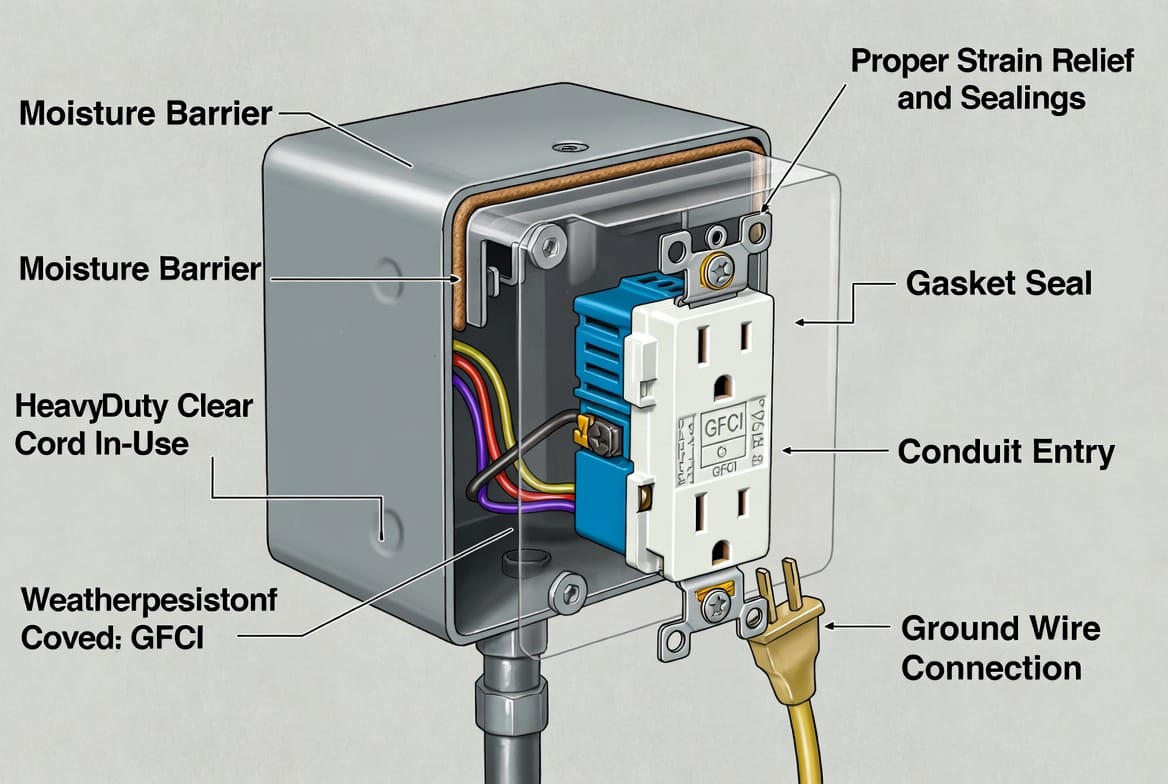
Even with a GFCI and an in-use cover, water can still enter through the box, conduit fittings, or cable entries if sealing is incomplete. Proper sealing prevents moisture damage that leads to corrosion, insulation breakdown, and eventual failure of the entire assembly.
Sealing begins with the outdoor-rated box itself. Choose a weatherproof box designed for wet locations, typically made of non-metallic material or corrosion-resistant metal with a gasketed cover. The box must be securely mounted and oriented so that any residual moisture drains away rather than pooling inside.
Critical sealing points include:
- Cable or conduit entries – Use listed weatherproof fittings, locknuts, and sealing compound or rubber gaskets
- Mounting screws and hardware – Apply appropriate sealant where fasteners penetrate the box or siding
- Receptacle-to-box interface – Ensure the receptacle gasket or foam seal is intact and compressed
- Cover gasket – Inspect and replace if cracked, flattened, or missing
- Exterior wall penetration – Seal around the box with exterior-grade caulk compatible with the siding material
Conduit systems require particular care. Rigid or intermediate metal conduit needs proper thread sealant. PVC conduit uses solvent cement and listed adapters. Flexible liquid-tight conduit provides excellent moisture resistance when fittings are tightened correctly.
Inside the box, keep wire connections tight and use wire connectors rated for the environment. Avoid excess wire that can trap moisture. If the installation includes a GFCI receptacle, follow the manufacturer’s instructions for line and load connections carefully so that downstream protection functions as intended.
After installation, a simple visual and tactile check confirms success: the cover should close fully, no gaps should appear around fittings, and the assembly should feel solid and weather-tight. Periodic inspection after severe weather helps catch any seal degradation early.
Proper sealing completes the protective system. Together with GFCI protection and weatherproof in-use covers, it creates a durable outdoor power point that resists the elements year after year.
Installation Best Practices for Long-Term Reliability
Successful outdoor outlet installation follows a logical sequence that prioritizes safety and code compliance from the start.
First, plan the circuit. Determine the load requirements and ensure the branch circuit can handle the expected demand. Outdoor circuits often benefit from dedicated breakers, especially when powering multiple outlets or higher-draw equipment.
Next, select components rated for outdoor and wet-location use. Look for the “WR” (Weather Resistant) marking on receptacles and the appropriate wet-location listing on covers and boxes. Avoid mixing indoor-rated parts into outdoor assemblies.
Mount the box at a height and location that minimizes exposure while remaining convenient. Avoid low spots where water can collect. Maintain required clearances from windows, doors, and grade level as specified by local adoption of the electrical code.
Run wiring with appropriate protection. Underground runs typically use direct-burial cable or conduit systems with proper depth and warning tape. Above-grade runs need secure support and UV-resistant materials.
Make all terminations secure and torque screws to manufacturer specifications. Loose connections generate heat and increase failure risk. Bond the equipment grounding conductor properly so the GFCI can function correctly.
Finally, test the completed installation thoroughly. Verify GFCI operation, check for proper polarity, and confirm that the in-use cover seals around a test cord. Document the installation for future reference.
When these steps are followed carefully, the outdoor GFCI outlet becomes a dependable part of the property’s electrical system rather than a maintenance liability.
Common Mistakes That Compromise Safety
Even well-intentioned installations can fall short of full protection. Recognizing frequent errors helps avoid them.
One common oversight is using a standard flip cover instead of a true weatherproof while-in-use cover. The difference becomes obvious the first time a cord is plugged in during rain.
Another frequent issue is incomplete sealing at conduit or cable entries. A single unsealed knockout can allow enough moisture to cause corrosion over a single season.
Relying solely on an indoor GFCI without ensuring the outdoor receptacle and box are weather-rated leaves the physical components vulnerable even if the electrical protection is present.
Neglecting regular testing of the GFCI is equally problematic. Devices can fail silently after lightning storms or prolonged inactivity.
Using non-rated extension cords or daisy-chaining multiple cords outdoors multiplies risk and often violates the intent of the protective system.
Correcting these mistakes restores the full safety margin that code compliance intends.
Maintenance and Seasonal Care
Outdoor outlets require simple but consistent attention. At the start of each season, inspect covers for cracks or UV damage and replace them if needed. Clean debris from around the gasket and test the GFCI. After winter, check for ice damage or freeze-related movement of the box.
If the outlet will remain unused for extended periods, some owners prefer to install a blank weatherproof cover over the receptacle face in addition to the in-use cover. This extra barrier further reduces exposure.
Any sign of water inside the box, discoloration of the receptacle, or intermittent power calls for immediate professional evaluation. Continuing to use a compromised outdoor outlet is never worth the risk.
The Value of Professional Installation
While many electrical tasks appear straightforward, outdoor work involves nuanced judgments about wet-location ratings, sealing methods, and coordination with the overall grounding and bonding system. A qualified electrician brings experience with local code interpretations, proper torque values, and the latest listed products.
Professional installation also includes verification that the circuit is correctly protected and that all components interact as designed. The result is an outdoor power solution that homeowners can trust in every weather condition.
Warning and Next Steps
Outdoor outlets need proper protection. Incomplete GFCI protection, missing weatherproof while-in-use covers, or inadequate sealing leave people and property exposed to preventable hazards. Moisture damage and electrical faults do not announce themselves until it is too late.
Ensure every outdoor receptacle on the property meets the full standard of code compliance. When installation, upgrade, or inspection is required, professional service delivers the reliability and peace of mind that temporary fixes cannot match.
Trained technicians will assess existing outlets, recommend the correct combination of GFCI devices, in-use covers, and sealing methods, and complete the work to current safety expectations. Protect your outdoor spaces today with solutions built for lasting performance and safety.
Call Now for Expert Outdoor GFCI Safety Upgrades