The Office Building Cleanout: Dumpsters for Commercial Moves
Relocating an office or closing a commercial space creates a unique set of challenges that residential cleanouts simply do not match. Businesses face tight deadlines, sensitive documents, bulky furniture, outdated electronics, and the constant pressure to keep operations running until the final hour. Dumpster rental for commercial moves solves these problems by giving companies a controlled, scalable, and compliant way to remove large volumes of materials without disrupting daily work or violating building rules.
Get Office Cleanout Dumpsters Today – Call Now!
Whether you are consolidating floors, relocating headquarters, or preparing a property for new tenants, the right dumpster strategy turns a chaotic cleanout into a predictable, professional process. This guide explains exactly how businesses use dumpsters during office cleanouts, the key considerations that protect schedules and budgets, and the practical steps that keep everything organized from the first box to the final haul.
Why Commercial Office Cleanouts Demand Specialized Dumpster Solutions
An office cleanout is rarely a single-day event. File cabinets full of records, rows of desks, conference tables, computers, monitors, printers, and years of accumulated paperwork create a volume that standard trash service cannot handle. Commercial dumpsters provide the capacity and flexibility required for these projects.
Businesses typically need dumpsters for three primary reasons:
- Speed and scale. A single large container can accept the equivalent of dozens of individual loads, reducing the number of trips and the risk of delayed move-out dates.
- Compliance and liability. Proper containers keep debris contained, protect parking lots and sidewalks, and support documentation required by landlords or environmental regulations.
- Cost control. Renting the right size for a defined period prevents the expensive last-minute scramble for extra trucks or labor.
When companies treat dumpster placement as part of the overall relocation plan rather than an afterthought, the entire cleanout becomes more efficient and less stressful for staff and management alike.
Common Materials Generated During an Office Building Cleanout
Office debris falls into predictable categories. Understanding these categories helps determine the number, size, and type of dumpsters required.
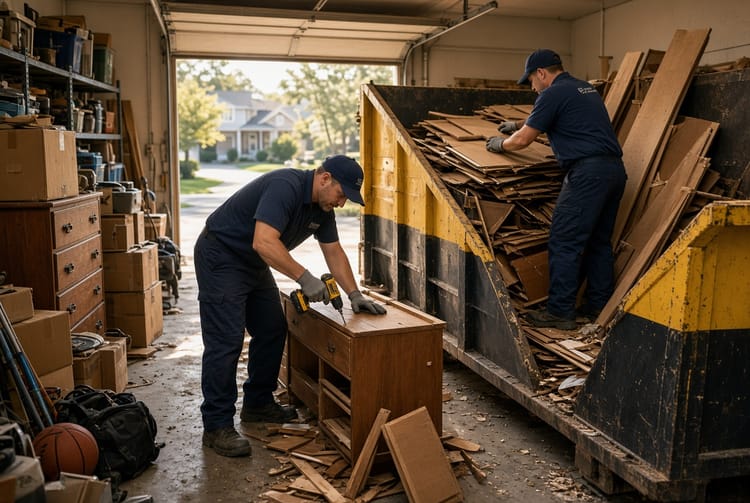
Furniture and fixtures form the largest physical volume. Desks, chairs, bookcases, cubicle panels, conference tables, and reception counters must leave the building before new tenants arrive. Many of these items are heavy and awkward; a roll-off dumpster positioned close to the loading dock or freight elevator reduces manual handling and the chance of injury.
File cabinets and storage systems create both bulk and weight. Metal cabinets filled with paper can exceed safe lifting limits for ordinary trash crews. Emptying drawers into designated containers first, then loading the empty cabinets, keeps the process orderly.
Electronics and technology equipment require special attention. Computers, monitors, servers, printers, copiers, and networking gear often contain data and components that cannot simply be thrown into a general waste stream. Many companies stage these items separately so they can be wiped, recycled, or donated according to company policy.
Paperwork and records appear in every cleanout. Boxes of archived files, marketing materials, and outdated manuals add significant weight. Secure handling and, when appropriate, shredding or recycling protect confidentiality while reducing landfill volume.
Miscellaneous office debris includes carpet tiles, partitions, signage, break-room appliances, and leftover supplies. These smaller items fill gaps in larger containers and can push a dumpster past its weight limit if not monitored.
By identifying these material streams early, facility managers can order the correct combination of dumpsters and avoid mid-project shortages.
Scheduling Dumpsters Around Business Hours and Building Constraints
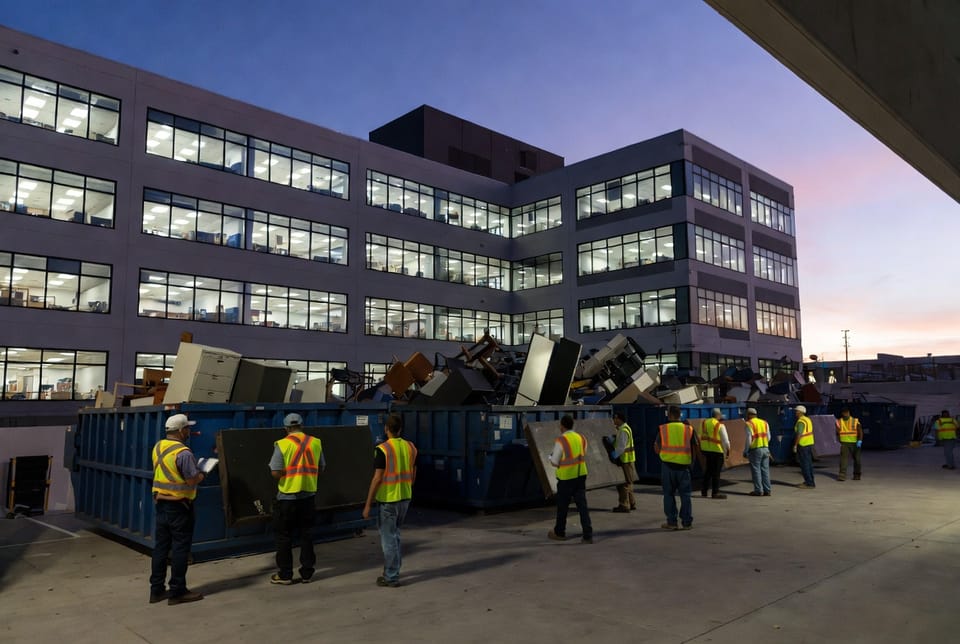
Most commercial properties restrict noisy or high-traffic work during core business hours. After-hours dumpster delivery and loading therefore becomes a critical planning element.
Successful cleanouts often follow this schedule pattern:
- Delivery of empty dumpsters in the late evening or early morning when elevators and docks are free.
- Loading activity overnight or on weekends so daytime staff remain productive.
- Final hauling scheduled before the next business day begins, ensuring the site is clear for regular operations or for the incoming tenant’s preparations.
Building management may require certificates of insurance, specific placement locations that do not block fire lanes, and advance notice for freight-elevator use. Communicating these requirements to the dumpster provider early prevents last-minute conflicts and keeps the project on timeline.
For multi-floor buildings, staging dumpsters at different loading points or using internal carts to move materials to a central container reduces elevator wait times and protects interior finishes.
Using Multiple Dumpsters for Sorting, Recycling, and Donation
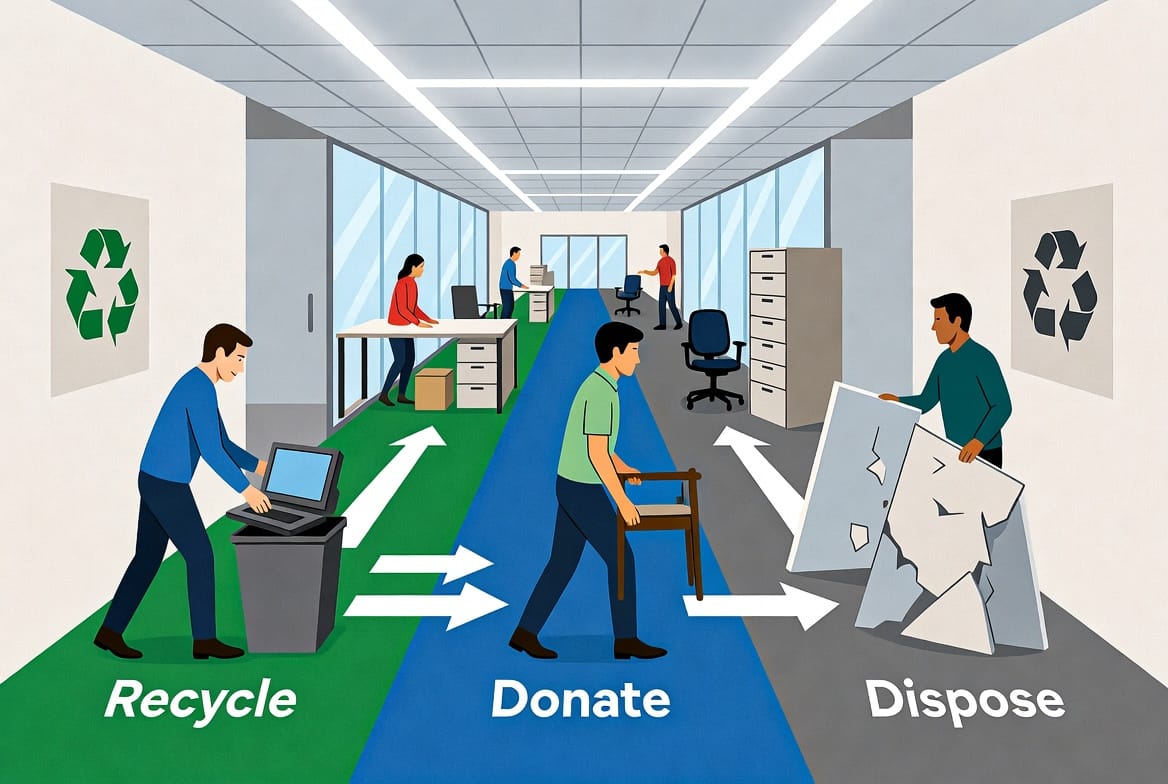
One of the most effective strategies in commercial office cleanouts is the deployment of multiple dumpsters dedicated to different material streams. This approach supports corporate sustainability goals, reduces disposal fees, and creates clear accountability for staff and contractors.
A typical multi-dumpster layout includes:
- General waste container for non-recyclable items such as broken furniture, stained carpet, and contaminated materials.
- Recycling container for clean cardboard, metal filing cabinets, aluminum, and certain plastics.
- Electronics or e-waste container that meets local recycling standards and allows for data-bearing devices to be tracked.
- Donation or reuse container for desks, chairs, and office equipment still in usable condition; many nonprofits and schools accept these items when coordinated in advance.
Color-coded signage and brief staff briefings keep the sorting process consistent. When employees know exactly which container receives which material, contamination drops and recycling rates rise. The result is a cleaner environmental footprint and often lower overall project cost because recyclable loads are lighter or eligible for reduced tipping fees.
Practical Considerations for Weight, Size, and Placement
Commercial dumpsters come in a range of sizes measured in cubic yards. Selecting the correct capacity requires a realistic estimate of the material volume plus a safety margin. Overfilling creates safety hazards and may trigger overweight charges; underestimating forces expensive mid-project swaps.
Weight limits matter as much as volume. File cabinets, metal shelving, and electronics can quickly approach maximum payload. Spreading dense materials across multiple containers or scheduling intermediate hauls prevents exceedances.
Placement decisions affect both efficiency and safety. Ideal locations offer:
- Direct access for the delivery truck without tight turns or overhead obstacles.
- Minimal interference with remaining tenant operations or neighboring businesses.
- Protection of landscaping, sidewalks, and pavement through the use of boards or mats when required by the property owner.
Clear communication between the facilities team, the moving company, and the dumpster provider ensures every container arrives at the right time and the right spot.
Integrating Dumpster Service with the Broader Relocation Timeline
An office cleanout does not exist in isolation. It must align with the larger commercial move schedule that includes IT shutdowns, furniture disassembly, final walk-throughs, and lease-end inspections. Dumpster availability should be locked in at the same time as elevator reservations and moving-truck arrivals.
A well-coordinated sequence often looks like this:
- Final data backup and equipment labeling.
- Delivery of sorting dumpsters.
- Systematic packing and separation of recyclable, donate-able, and disposable items.
- Loading of large furniture into designated containers.
- Secure handling of remaining records and electronics.
- Final sweep and removal of the last dumpster before the keys are returned.
When each step has a dedicated window and the dumpster schedule supports rather than competes with other trades, the entire project finishes on time and under budget.
Risk Management and Safety During Commercial Cleanouts
Heavy furniture, sharp edges, and limited dock space create potential hazards. Professional dumpster providers mitigate these risks by supplying containers with secure doors, clear weight ratings, and experienced drivers who understand commercial sites. On-site teams should wear appropriate personal protective equipment, maintain clear pathways, and never climb inside a partially filled dumpster.
Document retention policies and data-security protocols must also be respected. Items destined for disposal should be reviewed according to the company’s records-management schedule; anything containing confidential information is shredded or destroyed before it reaches a general waste container.
These practices protect both the business and its employees while demonstrating responsible stewardship to landlords and regulators.

Long-Term Benefits of a Professional Dumpster Strategy
Beyond the immediate task of emptying the space, a well-executed dumpster plan delivers lasting advantages. Clean, documented removal supports smoother lease terminations and reduces the chance of deposit disputes. Higher recycling and donation rates strengthen corporate environmental reporting. Predictable costs and timelines free internal resources for higher-value work. Most importantly, staff experience less disruption and stress when the physical cleanout is handled with clear processes and reliable equipment.
Businesses that treat dumpster rental as a strategic component of the move—rather than a last-minute necessity—consistently report better outcomes on schedule, budget, and team morale.
Choosing the Right Partner for Commercial Dumpster Needs
Not every provider understands the unique demands of office building cleanouts. Look for a service that offers:
- Flexible delivery and pickup windows that accommodate after-hours work.
- A range of container sizes and the ability to stage multiple units.
- Clear communication about weight limits, prohibited materials, and local recycling options.
- Experience with commercial properties, freight elevators, and building management requirements.
- Responsive support if volume estimates change mid-project.
A provider who asks detailed questions about material types, access constraints, and timeline is more likely to deliver the right solution the first time.
Final Thoughts on Streamlining Your Next Office Cleanout
Office building cleanouts succeed when planning, sorting, and logistics work together. Dumpsters supply the essential capacity and structure that turn mountains of furniture, file cabinets, electronics, and paperwork into manageable streams. Scheduling after hours, deploying multiple containers for recycling and donation, and coordinating tightly with the overall move timeline protect both the budget and the people involved.
By treating the dumpster phase with the same professionalism applied to IT migration or space planning, businesses complete commercial moves cleanly, compliantly, and with minimal disruption.
Call Now for Multi-Dumpster Sorting & Recycling Solutions