The Non-Owner Car Insurance: Coverage for Borrowed Cars
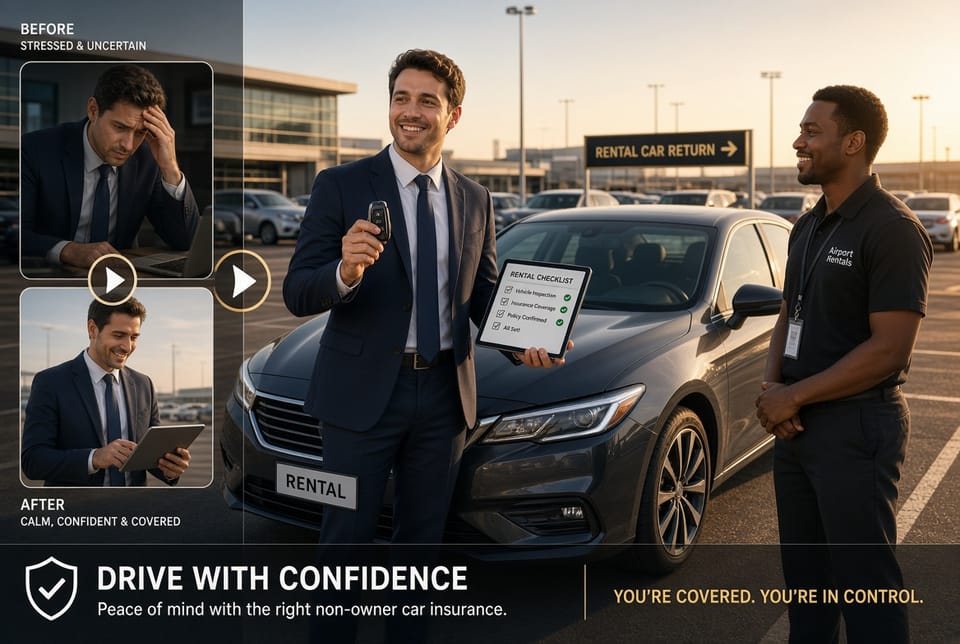
In today’s flexible world of shared mobility, many people drive regularly without owning a vehicle of their own. Whether you rely on rental cars for business trips, borrow a friend’s vehicle for weekend errands, or use car-sharing services in the city, the question of protection remains critical. Non-owner car insurance exists precisely for these situations. This specialized policy delivers essential liability coverage when you operate a vehicle you do not own, giving you the confidence to drive without the financial risks that can arise from an unexpected incident.
Stay Covered Without Owning a Car – Call Today!
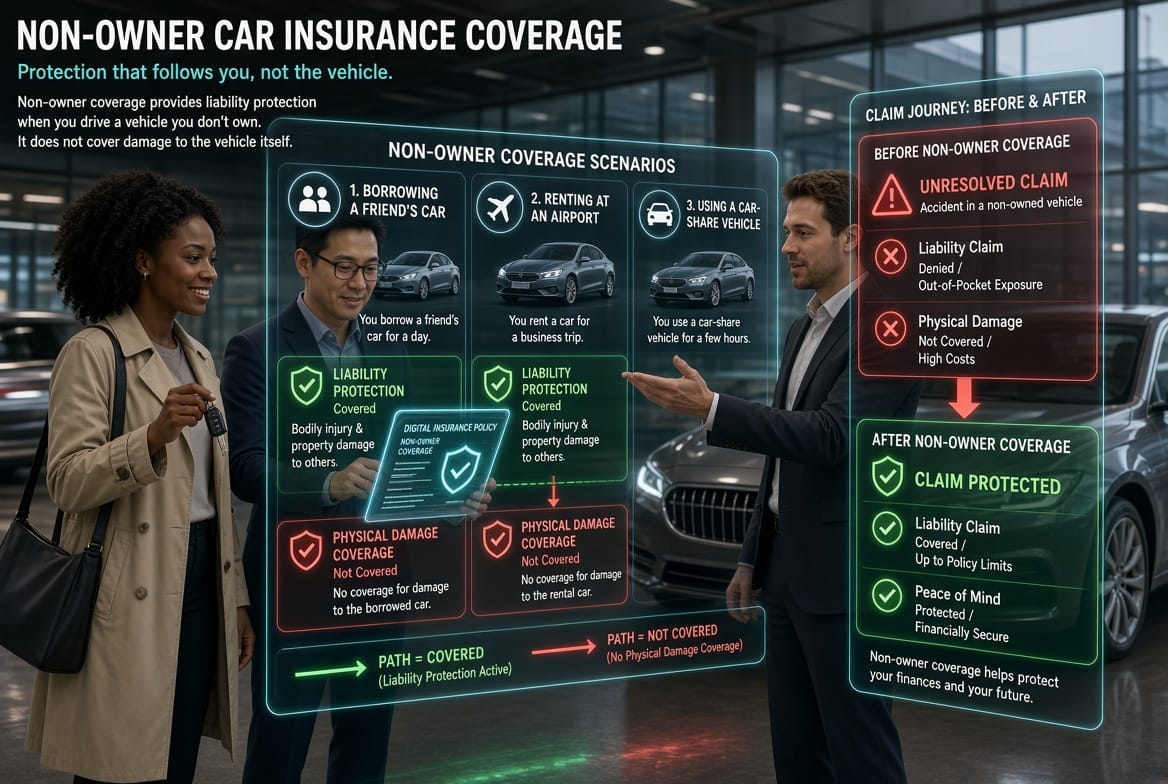
This niche form of auto insurance fills a gap that standard policies leave open. Traditional car insurance follows the vehicle, not the driver. When you step behind the wheel of a borrowed or rented car, that vehicle’s policy may provide primary protection—but gaps often appear, especially regarding your personal liability. Non-owner coverage steps in to shield you. It focuses exclusively on liability protection, meaning it addresses bodily injury and property damage you might cause to others. Importantly, it does not include physical damage coverage for the car you are driving itself. Understanding this distinction is the first step toward making informed decisions about your mobility needs.
What Exactly Is Non-Owner Car Insurance?
Non-owner car insurance is a standalone liability policy designed for individuals who drive infrequently owned vehicles. It activates when you operate a car that belongs to someone else—whether a rental agency, a friend, a family member, or a car-share platform. The core purpose is straightforward: if an accident occurs while you are behind the wheel, this policy helps cover the costs associated with injuries to other people or damage to their property.
Unlike a full auto policy that might include collision, comprehensive, or uninsured motorist physical damage options, non-owner coverage deliberately excludes protection for the vehicle itself. That means repair costs for the borrowed or rented car fall outside its scope. Instead, the emphasis remains on protecting your personal assets and future earnings from claims brought by third parties. This focused approach keeps premiums more affordable while still addressing the most significant financial exposure drivers face.
The policy typically follows you as the named insured, regardless of which qualifying vehicle you drive. Coverage generally extends to:
- Private passenger vehicles you borrow with permission
- Rental cars obtained from recognized agencies
- Certain car-sharing vehicles, depending on the insurer’s guidelines
It does not extend to vehicles you own, vehicles used for commercial delivery or rideshare work (unless specifically endorsed), or situations where you lack permission to drive. These boundaries keep the policy clear and targeted.
Because the coverage is liability-only, drivers who want protection against damage to the borrowed vehicle itself often need to explore additional options such as the rental company’s collision damage waiver or a personal credit card benefit. Still, the liability shield provided by non-owner car insurance remains the foundational layer that many frequent drivers overlook—until an incident makes the gap painfully clear.
Who Benefits Most from This Niche Policy?
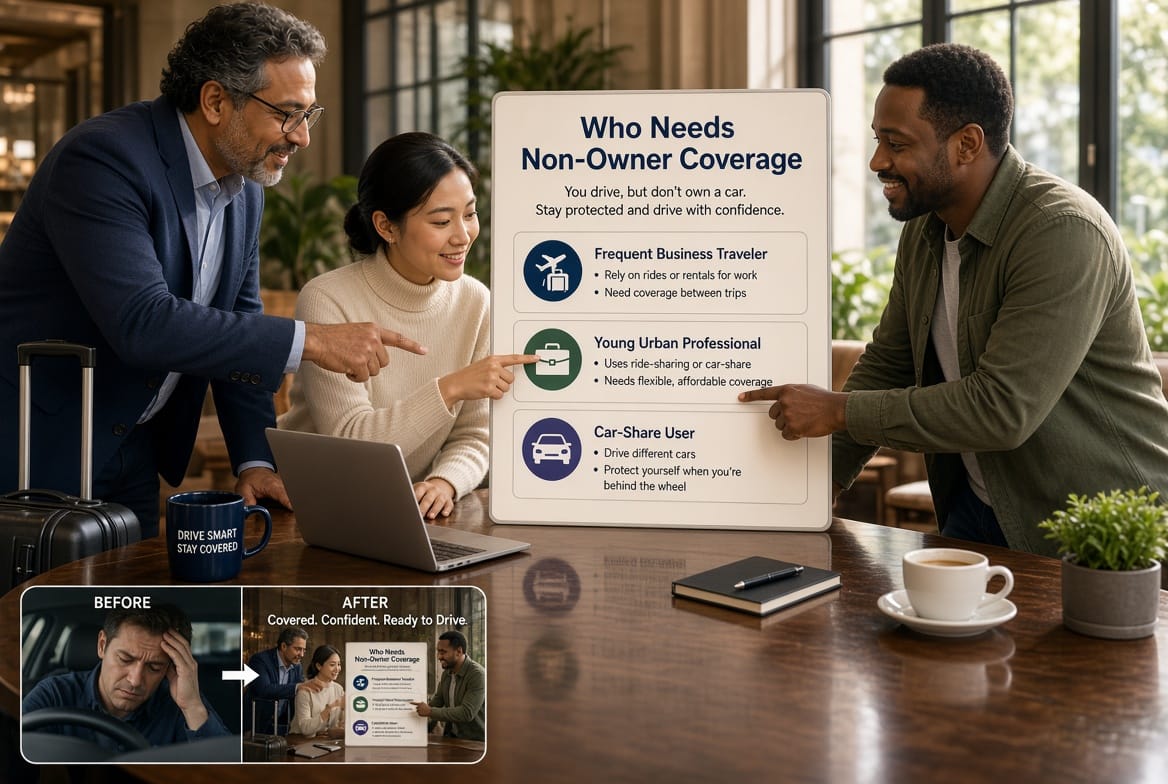
Not everyone requires non-owner car insurance, yet for specific lifestyles it becomes nearly indispensable. The policy shines brightest for people whose driving patterns center on vehicles they do not possess.
Consider these common profiles:
- Frequent renters who travel for work or leisure and regularly pick up cars at airports or local agencies
- Individuals who have sold their personal vehicle and now rely on borrowing from friends or family
- City dwellers who prefer public transit or rideshares most days but occasionally need a full-size vehicle
- Young adults living at home who drive parents’ cars but are not listed as primary operators
- Professionals whose employers occasionally ask them to use a company car without providing separate coverage
In each case, the absence of a personal auto policy leaves a vulnerability. If an accident occurs, the vehicle owner’s insurance may respond first, yet many policies contain exclusions or limited limits for permissive users. When those limits prove insufficient, the at-fault driver can face personal lawsuits. Non-owner coverage closes that exposure, ensuring the driver retains protection even when the primary policy falls short.
People who never drive rarely need this product. Conversely, anyone who anticipates operating a non-owned vehicle more than a few times a year should evaluate it seriously. The decision ultimately rests on frequency, risk tolerance, and the value of personal assets that could be threatened by a liability claim.
Understanding Coverage Limits and How They Work
Every non-owner car insurance policy carries defined limits that dictate the maximum amount the insurer will pay for covered claims. These limits usually appear as split figures, such as 100/300/50 or higher combinations, representing:
- Bodily injury liability per person
- Bodily injury liability per accident
- Property damage liability per accident
Selecting appropriate limits requires thoughtful consideration of personal circumstances. Drivers with substantial savings, home equity, or future earnings potential often choose higher limits to create a stronger financial barrier. Those with more modest assets may find state-minimum limits adequate, though many experts recommend exceeding the legal floor for greater security.
Because the policy is secondary in most situations, it typically responds only after the vehicle owner’s insurance has paid its share. This excess or contingent nature means the non-owner limits serve as an additional layer rather than the first line of defense. In rare cases where the owner’s policy excludes the permissive driver entirely, the non-owner policy may step forward as primary. Understanding this hierarchy prevents unpleasant surprises after an incident.
Premiums for these policies remain relatively modest compared with full auto insurance because the insurer assumes risk only when the named insured drives a non-owned vehicle. Factors influencing cost include driving record, geographic location, chosen limits, and the anticipated frequency of use. Maintaining a clean record and selecting reasonable limits usually produces the most attractive rates.
It is also wise to review any exclusions carefully. Common restrictions involve intentional acts, racing, or using the vehicle for hire. Clarifying these points at the outset ensures the policy performs exactly as expected when needed.
Practical Scenarios That Highlight the Value
Picture a business traveler who rents a mid-size sedan for a three-day client visit. During a rain-slicked evening drive, a minor collision occurs. The rental company’s insurance covers the car’s damage under the purchased waiver, yet the other driver claims significant medical expenses. Without personal liability protection, the traveler’s savings and future wages become exposed. Non-owner coverage steps in to manage those third-party claims, preserving financial stability.
Another common situation involves a college graduate living at home who occasionally borrows a parent’s vehicle for job interviews. An at-fault accident could otherwise pull the family’s policy into higher rates or even cancellation risk. With a separate non-owner policy in place, the young driver carries independent protection, reducing strain on the household policy.
Car-share users encounter similar dynamics. Many platforms provide only basic liability that may not meet every driver’s needs. Supplementing with non-owner insurance creates a personal safety net that travels with the individual from one shared vehicle to the next.
In each example the pattern remains consistent: the driver gains peace of mind, the vehicle owner’s policy faces less pressure, and potential lawsuits find a dedicated source of recovery. That combination of benefits explains why this niche product continues to grow in relevance as mobility options multiply.
How to Obtain and Maintain Effective Protection
Securing non-owner car insurance follows a straightforward process. Most major carriers and independent agencies offer the product. The application typically requires:
- Personal identification and driving history
- Confirmation that the applicant does not own a vehicle
- Selection of desired liability limits
- Disclosure of expected driving frequency and types of vehicles
Once issued, the policy remains in force as long as premiums are paid and the named insured continues to meet eligibility rules. Annual reviews help ensure limits stay aligned with changing assets or lifestyle. If circumstances shift—such as purchasing a personal vehicle—the policy can usually be converted or canceled without penalty.
Keeping proof of coverage readily accessible proves useful. Digital cards stored on a phone or printed documents carried during rental transactions provide quick verification if questions arise. Some drivers also notify rental agencies or vehicle owners that they carry independent liability protection, fostering transparency and smoother interactions.
Addressing Common Concerns with Clarity
Prospective buyers often wonder whether non-owner coverage duplicates benefits already present on a rental contract. In reality, rental agreements frequently limit liability amounts or impose conditions that leave residual risk. The personal policy provides higher or more flexible limits tailored to the individual rather than the rental transaction.
Another frequent question involves cost versus benefit. Because premiums stay modest relative to the potential cost of an uncovered liability claim, most drivers who use non-owned vehicles more than occasionally find the investment worthwhile. The reassurance of knowing a dedicated layer of protection exists often outweighs the modest annual expense.
Finally, some drivers assume that credit-card rental benefits eliminate the need for separate insurance. While certain premium cards offer valuable collision damage waivers, they rarely supply robust liability coverage. Combining card benefits for physical damage with non-owner liability creates a more complete safety net.
Building Long-Term Driving Confidence
Mobility freedom should never come at the expense of financial security. Non-owner car insurance removes a silent vulnerability that many drivers discover only after an incident occurs. By focusing on liability protection for borrowed and rented vehicles, the policy delivers targeted peace of mind without the complexity or cost of full ownership coverage.
Whether your lifestyle involves frequent airport rentals, occasional borrowing from friends, or selective use of car-share platforms, this specialized product stands ready to support responsible driving. Reviewing personal exposure, selecting appropriate limits, and maintaining continuous coverage transform uncertainty into confidence.
Stay covered even when you don’t own a car.
Secure Coverage for Borrowed Vehicles – Call Now!